 Photo: geehairimages, CC BY 2.0, via Wikimedia Commons
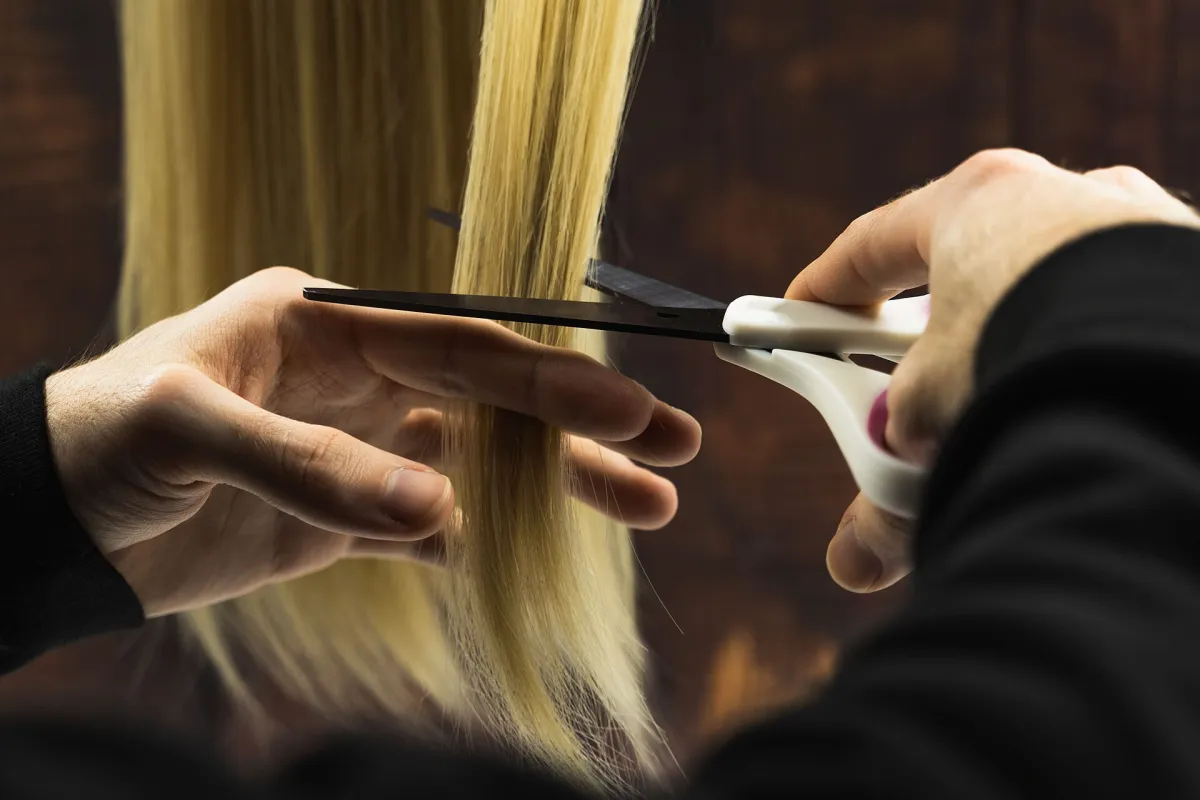
No product, natural or salon, can glue split ends back together: the only solution for an end that has already split is a trim, usually 0.5-1 cm every 8-12 weeks. What natural remedies can do is prevent new splits: oils that reduce protein loss (coconut oil in particular), conditioner at every wash, less heat and chemical treatment, and gentle brushing.
Split ends (trichoptilosis, in medical terms) are a sign that the hair shaft, which is dead tissue, has worn out. The longer the hair, the older the ends: shoulder-length hair has ends that have “lived” through 2-3 years of washing, drying, brushing and sun. Once you understand that, it becomes clear why prevention matters more than any emergency treatment.
Key takeaways
- A split end cannot be repaired; silicone serums only seal it temporarily for looks.
- Coconut oil applied before washing reduces protein loss from the hair, according to laboratory studies.
- Heat above 180 °C, bleaching and brushing wet hair are the main causes.
- Regular trims stop splits from travelling up the shaft.
- Breakage all along the hair, not just at the ends, may point to iron deficiency or a thyroid problem.
What split ends are
A hair has three layers: the cuticle (protective scales, like roof tiles), the cortex (keratin fibres that give strength) and the medulla. When the cuticle wears away at the tip, the cortex is left exposed and its fibres start to come apart. The result: a hair that splits into two or more branches, sometimes over several centimetres.
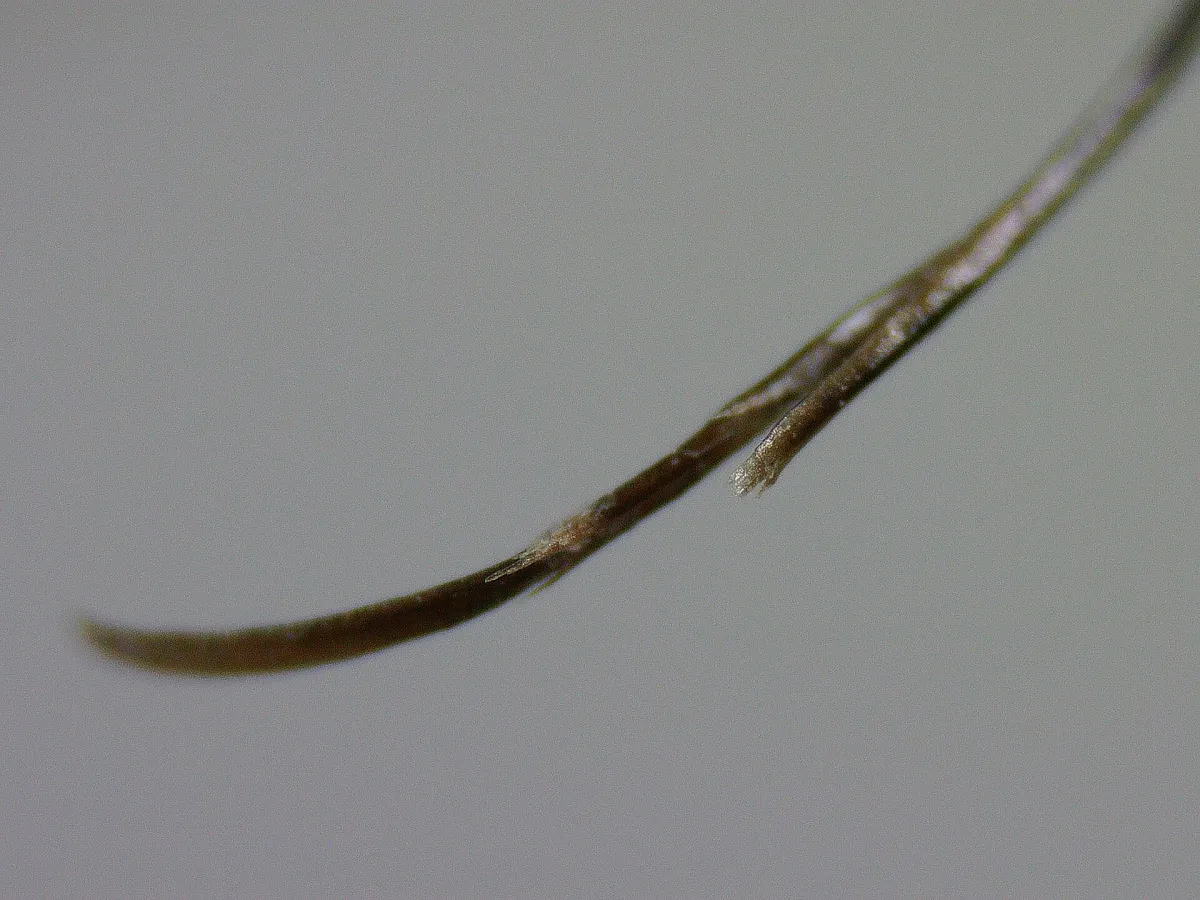 Photo: RealGatba, CC0, via Wikimedia Commons
If it is not trimmed, the split can travel up the shaft and the hair breaks higher up, which makes hair look thin and uneven at the ends.
Causes
- Heat: straighteners, curling tongs, and hair dryers held close on the highest setting.
- Chemical treatments: bleaching, repeated colouring, perms, chemical straightening.
- Mechanical friction: rough brushing, especially when wet, towel rubbing, tight hair ties.
- Dryness: hard water, strongly stripping shampoos, dry winter air, sun and chlorine.
- Length and age of the hair: the ends of long hair have the longest “history” of wear.
- Nutritional gaps: low intake of protein, iron, zinc or biotin makes hair more fragile, although for most people the cause is mechanical, not dietary.
Natural remedies and what the evidence says
Coconut oil before washing
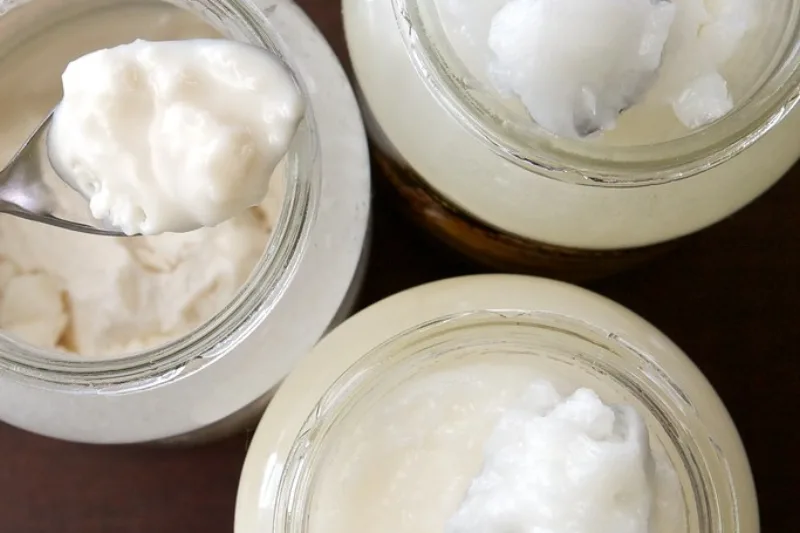
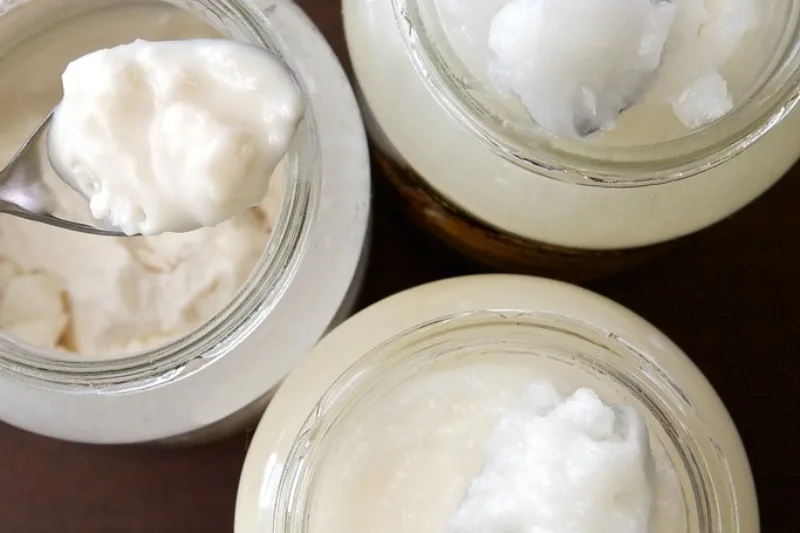
Coconut oil is one of the few oils that penetrate the hair shaft, thanks to the structure of lauric acid. Laboratory studies on hair fibres have shown that applied before and after washing it reduces protein loss in both healthy and damaged hair, better than mineral or sunflower oil. More recipes are in our guide to coconut oil for hair.
How to use it: warm 1 teaspoon (short hair) to 1 tablespoon (long hair) between your palms and apply to the lengths and ends 30-60 minutes before washing. Wash with a mild shampoo. On fine hair, use less so it does not weigh it down.
Argan oil and other light oils
Argan oil and jojoba oil do not penetrate as well as coconut oil, but they form a protective film that reduces friction and moisture loss. 1-2 drops on the ends, on damp or dry hair, are enough.
Aloe vera
Aloe vera gel moisturises and can be used as a light leave-in conditioner, especially on curly hair. It does not repair the hair, but it reduces frizz and tangling.
Protein and fat masks
Eggs, yoghurt and avocado are traditional ingredients. Small proteins can temporarily fill damaged areas of the cuticle, and fats soften them. The effect is cosmetic and temporary, but pleasant.
Mask recipes for the ends
Avocado and honey mask
- ½ very ripe avocado, finely mashed
- 1 teaspoon of honey
- 1 tablespoon of olive or argan oil
Apply to the lengths and ends, cover with a shower cap and leave for 20-30 minutes. Rinse well, then wash with a mild shampoo. Once a week.
Yoghurt and egg mask (for normal or oily hair)
- 3 tablespoons of plain yoghurt
- 1 egg yolk
Apply to the lengths for 15-20 minutes, then rinse with lukewarm, not hot water (otherwise the egg sets). Every 1-2 weeks.
Evening serum for the ends
Mix 2 tablespoons of jojoba oil and 1 tablespoon of argan oil in a small bottle. In the evening, rub 1-2 drops between your palms and smooth them over the last 5 cm of the hair only.
Comparing treatments
| Method | What it does | How long the effect lasts | How often |
|---|---|---|---|
| Trimming the ends | Removes the split | Permanent for that end | Every 8-12 weeks |
| Coconut oil pre-wash | Reduces protein loss | Preventive, cumulative | 1-2 times a week |
| Argan or jojoba oil | Protective film, shine | Until the next wash | Daily, sparingly |
| Avocado mask | Softens and smooths | A few days | Weekly |
| Silicone serum | Seals ends temporarily | Until washing | As needed |
| Heat protectant | Reduces heat damage | Each styling | Always with a straightener |
For a complete routine, see also our remedies for healthy hair.
Habits that protect your ends
- Conditioner at every wash, applied to lengths and ends, not the scalp.
- Detangle wet hair with a wide-tooth comb, starting at the ends and working up.
- Pat dry with a soft cotton or microfibre towel, without twisting.
- Hair dryer on medium heat, 15-20 cm away, and straightener below 180 °C, only on fully dry hair.
- Metal-free hair ties, worn loosely, and a silk or satin pillowcase.
- Protection from sun and chlorine: a hat in summer, hair wetted with clean water and a little oil before swimming.
- Spacing between bleaching: leave at least 6-8 weeks between chemical treatments.
Contraindications and precautions
- Food allergies (egg, avocado, honey): do not use them in masks either; they can cause scalp reactions.
- Oily scalp or seborrhoeic dermatitis: apply oils to the lengths only, not the roots.
- Essential oils added to masks must be diluted (1-2% maximum) and avoided in pregnancy without a doctor’s approval.
- Honey and oils on very light bleached hair can leave a slight yellow tone; test on one strand.
When to see a doctor
Split ends are a cosmetic problem. A check-up (GP or dermatologist) is worthwhile if:
- hair breaks all along its length, not just at the ends, or you are shedding a lot (see also our article on hair loss);
- you also have fatigue, brittle nails, pallor or always feel cold: these may be signs of iron-deficiency anaemia or hypothyroidism;
- you have followed a very restrictive diet or lost a lot of weight;
- patches of short, broken hair appear with an irritated or flaky scalp.
Common mistakes
Believing in products that “repair” split ends. Silicones and polymers glue the split temporarily. It looks good but it is not a repair.
Putting off trims to grow your hair. The split travels up and the hair breaks higher; you lose more than you would have trimmed.
Brushing wet hair with a brush. Wet hair is more elastic and snaps more easily.
Too much oil. Excess weighs hair down and leads to more washing, which dries it again.
Straightening damp hair. Water in the shaft boils and forms “bubbles” that weaken the cortex.
Conclusion
Split ends are trimmed, not repaired. The rest of the strategy is prevention: coconut oil before washing, consistent conditioning, less heat and chemicals, gentle brushing and sun protection. Natural masks with avocado, honey or yoghurt make hair softer and easier to detangle, but they do not replace scissors. With a small trim every 2-3 months and the right habits, hair can grow long and healthy at the ends.
Frequently asked questions
Can I repair split ends without cutting them? No. No product rebuilds the hair’s structure. Serums only seal the split temporarily until the next wash.
How often should I trim my ends? Usually every 8-12 weeks, 0.5-1 cm at a time. If you use a straightener often or bleach your hair, every 6-8 weeks.
Does coconut oil help split ends? It helps prevent them, because it reduces protein loss from the hair. It does not repair ends that are already split.
What is “dusting”? A technique that trims only the split ends sticking out of twisted strands, without reducing length. It is useful between regular haircuts.
Does diet affect split ends? Indirectly. Protein, iron, zinc and fatty acids support healthy hair, but wear at the ends is mainly mechanical and thermal.
Does a silk pillowcase really matter? It reduces friction during sleep. It is a detail, but it helps, especially with long and curly hair.
Does coloured hair split more easily? Yes, especially after bleaching, which opens the cuticle. Oil and conditioner care become even more important.
Sources
- Rele AS, Mohile RB: study on the effect of coconut, sunflower and mineral oil on protein loss from hair (Journal of Cosmetic Science, 2003).
- American Academy of Dermatology (AAD): tips for preventing hair damage.
- PubMed reviews on cosmetic hair care and the effects of heat on hair keratin.
Informative content only. It does not replace medical or dermatological advice.