
Allspice: Benefits for Digestion, Uses and How to Use It
IMPORTANT: Allspice is generally safe when used in the usual culinary amounts. However, in large medicinal doses (concentrated essential oils or extracts) it can irritate mucous membranes and is not recommended. Eugenol, its main active compound, can have a mild anticoagulant effect, so people taking blood-thinning medication, those with clotting disorders or anyone scheduled for surgery should be cautious and talk to their doctor. Allspice essential oil should never be applied undiluted to the skin or taken internally. Pregnant and breastfeeding women should limit themselves to culinary amounts and avoid concentrated extracts. People with an active stomach ulcer, severe reflux or a known allergy to cloves or cinnamon should introduce allspice cautiously. Allspice does not replace medical treatment: for persistent digestive problems, severe abdominal pain or unclear symptoms, see a doctor.
Grandma Veta, from the Sibiu region, kept a little tin box next to the black pepper and bay leaves, holding a few round, rough berries she called “English pepper.” She would take them out in winter, when she made aspic or put up jars of pickles, and she would scatter one or two into the pot of stewed plum compote. “These are good for the belly,” she used to say, and after the heavy holiday meals she would give us a cup of warm water in which she had crushed an allspice berry with a little sugar. In her own way she was right: that complex aroma, which seemed to gather cloves, cinnamon, nutmeg and pepper all in one, was not only pleasant but also soothing for a tired stomach.
Many years later I came to understand the fascinating story behind that humble berry. Allspice (Pimenta dioica) is not a blend of spices, as some assume because of its many-layered aroma, but a single plant: the dried fruit of a tropical tree from Central America and the Caribbean. The English name “allspice” literally means “all the spices,” because a single berry seems to concentrate an entire drawer of seasonings. Folk tradition has always valued it not only for its taste but also for its ability to make food easier to digest and to soothe stomach discomfort.
Table of Contents
- What allspice is and where it comes from
- Composition and active compounds
- Health benefits
- Allspice and digestion
- Traditional uses
- How to prepare it: tea, infusion and other recipes
- Allspice in the kitchen
- Dosage and how to take it
- How to choose and store it
- Practical tips and common mistakes
- Precautions and contraindications
- Conclusion
- Frequently Asked Questions
What allspice is and where it comes from
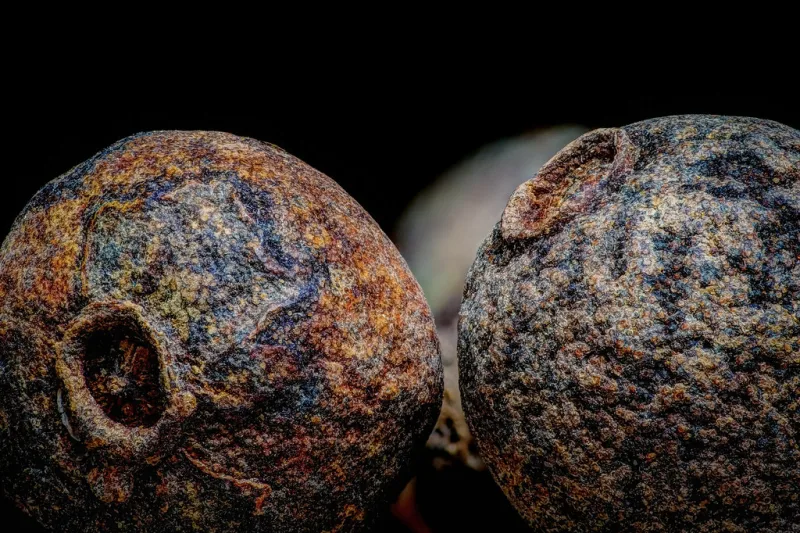
Allspice comes from the fruit of the Pimenta dioica tree, an evergreen of the Myrtaceae family — the same family as cloves and eucalyptus. The tree grows in the tropical forests of Jamaica, Mexico, Guatemala and Honduras, and Jamaica remains famous today for the exceptional quality of its allspice. The fruits are picked green, before they ripen fully, then dried in the sun until they become brown, round, slightly rough berries about the size of a dried pea — a little larger than black peppercorns.
The Spaniards who discovered it in the New World called it “pimienta” because it resembled pepper, which is the source of a confusion that sometimes persists even today. The English gave it its most descriptive name, “allspice,” after an aroma that simultaneously recalls cloves, cinnamon, nutmeg and a hint of pepper. In Romanian it is known as “ienibahar,” a word that reached the language through Turkish (from the Persian yeni bahar, “new spice”) and says a great deal about how it was perceived over time: something new, exotic, bringing an aroma all its own.
Unlike many other exotic spices, allspice has kept a close connection to its place of origin: most of the world’s production still comes from Central America and the Caribbean, because the tree is temperamental and does not acclimatize easily to other regions. That is precisely why good-quality allspice berries are prized by cooks and remedy enthusiasts alike.
Composition and active compounds
The aroma and effects of allspice are largely due to its essential oils, which are rich in a compound called eugenol — the same compound that gives cloves their characteristic aroma and properties. Eugenol often makes up the largest part of the berries’ essential oil and is responsible for the slightly numbing, warm, aromatic sensation it leaves in the mouth.
Besides eugenol, the berries contain other volatile compounds such as methyl eugenol, caryophyllene and cineole, which contribute to the complex aromatic profile. There are also tannins, astringent substances that explain the tradition of using allspice to “tighten” and tone the digestive lining, as well as a quantity of polyphenols with antioxidant roles. Studies suggest that these phenolic compounds help combat oxidative stress, the process by which unstable molecules (free radicals) damage cells.
Nutritionally, allspice provides small but useful amounts of minerals such as manganese, iron, calcium and potassium, plus fiber — but since it is used in small quantities, its direct nutritional contribution remains modest. Its real value lies in the bioactive compounds in its essential oil, which work even in tiny amounts.
Health benefits
Supports digestion and soothes the stomach
The best-known benefit of allspice, the one Grandma Veta invoked, concerns the digestive system. Folk tradition in the Caribbean and in Europe uses the berries to stimulate appetite, ease the digestion of heavy foods and reduce bloating. The volatile and bitter compounds appear to stimulate the secretion of gastric juices and bile, helping the body break down fats and proteins more efficiently. That is why allspice is often recommended after rich, hearty meals, when the stomach needs extra support.
Carminative properties against bloating
Allspice is considered a carminative spice, that is, one that helps expel gas from the digestive tract and reduce the cramps it can cause. Its essential oils gently relax the smooth muscle of the intestine, which can ease the feeling of tension and discomfort in the abdomen. Folk tradition recommends a warm allspice infusion when bloating, flatulence or a feeling of being “overly full” appears after a meal.
Antioxidant effect
Thanks to eugenol and polyphenols, allspice has recognized antioxidant properties. Laboratory studies suggest that allspice extracts can neutralize free radicals, helping protect cells against premature aging and oxidative damage. Although a single spice cannot replace a diet rich in vegetables and fruit, regularly including aromatic spices in a balanced diet adds an extra source of protective compounds.
Anti-inflammatory and soothing support
Eugenol has a long-standing reputation as a substance with a local soothing effect and mild anti-inflammatory action. For this reason, traditional medicine has used allspice in the form of warm poultices to ease muscle and joint pain and the stiffness caused by cold or effort. The warming sensation produced by external application has always helped relax tense areas.
An aroma that freshens breath and taste
Like many spices rich in eugenol, allspice has an aromatic and mildly antiseptic effect on the mouth. Chewing a berry or rinsing the mouth with a diluted infusion was traditionally used to freshen breath and soothe sensitive gums. The slightly numbing sensation of eugenol explains why it was also valued for minor toothaches.
Comfort on cold days
Because of its warm, warming character, allspice is a beloved ingredient in winter drinks — mulled wine, spiced teas, warm compotes. Tradition associates it with a feeling of comfort and inner warmth, which is why it appears so often in cold-season recipes alongside cinnamon, cloves and orange peel.
Allspice and digestion
It is worth dwelling on the link between allspice and digestive health, because this is its most established traditional use. Its bitter-aromatic profile acts on the digestive tract in several ways.
First, it stimulates digestive secretions. The bitter and volatile compounds signal the body to produce more saliva, more gastric juice and more bile, preparing the ground for efficient digestion. This effect is especially useful before or right after a meal high in fat.
Second, through its carminative properties, allspice helps reduce gas and bloating. Many abdominal discomforts arise from the buildup of gas in the intestine, and the gentle relaxation of the intestinal muscle facilitated by the essential oils can bring real relief.
Third, the astringent tannins help tone the digestive lining. Folk tradition used mild allspice infusions to calm bouts of stomach upset and to “tighten” an overly accelerated transit. It is important, however, that these uses remain within the bounds of gentle support rather than treatment: any serious or persistent digestive problem requires medical evaluation.
Traditional uses
Over time, allspice has had many uses beyond the kitchen. In Jamaica, where the most prized allspice comes from, the leaves and berries were used in aromatic baths and warm compresses for rheumatic pain. The wood of the allspice tree (known as “pimento”) was used to smoke meat, giving Jamaican dishes their unmistakable flavor.
In Europe, allspice found its place above all in food preservation — in pickles, marinades and aspic — both for its aroma and for its mildly preservative tannins. Cooks of old would add it to jars of pickles and to flavored vinegars, knowing from experience that it helps preserve and season the contents.
Romanian folk tradition integrated it especially into winter dishes: aspic, stewed compotes, mulled wine and pickles. A few berries in a large pot were enough to enrich the aroma and, according to grandmotherly conviction, to make the food easier to digest.
How to prepare it: tea, infusion and other recipes
Allspice infusion (tea) for digestion
This is the simplest and most widespread way to use allspice as a digestive remedy.
You will need:
- 3-4 whole allspice berries
- 250 ml water
- optional: a teaspoon of honey, a slice of lemon
How to prepare:
- Gently crush the allspice berries with the back of a spoon or in a mortar, to release the essential oils.
- Place the berries in a cup and pour boiling water over them.
- Cover the cup and let it infuse for 8-10 minutes. Covering is important: it prevents the aromatic volatile oils from evaporating.
- Strain, sweeten with honey if you like, and sip the infusion warm, in small sips, after the meal.
This infusion can be drunk after heavy meals to support digestion and ease bloating.
Spiced digestive blend
For a more complex effect, allspice combines beautifully with other carminative spices.
You will need:
- 2 crushed allspice berries
- 1 small cinnamon stick
- 2-3 lightly crushed cardamom pods
- a thin slice of fresh ginger
- 300 ml water
How to prepare:
- Put all the spices in a pot with cold water.
- Bring to a gentle boil and simmer slowly for 5 minutes.
- Turn off the heat, cover and let it infuse for another 5 minutes.
- Strain and drink warm. It is a warming beverage, perfect for cold days and a tired stomach.
Warm poultice for muscle pain
For external use, tradition employed allspice in the form of a poultice.
You will need:
- 1-2 tablespoons of ground allspice
- enough warm water to form a paste
- a piece of clean cotton cloth
How to prepare:
- Mix the ground allspice with a little warm water until you obtain a paste.
- Spread the paste on the cloth and apply it to the painful area (tense muscles, joints).
- Leave for 15-20 minutes, then remove and rinse the skin.
Caution: test first on a small patch of skin, since eugenol can irritate sensitive skin. Do not apply to open wounds or irritated skin.
Allspice in the kitchen
Allspice is a versatile spice that suits both sweet and savory dishes. In savory cooking, it adds flavor to meats (especially game, beef and pork), stews, soups and pickles. A few berries in a pot of goulash or stew add a warm, aromatic depth. It is indispensable in pickling spice blends and marinades.
In sweet dishes, ground allspice is used in cakes, spiced biscuits (especially winter ones), compotes, jams and warm drinks. It pairs wonderfully with cinnamon, cloves, nutmeg and orange peel. A teaspoon of ground allspice in a gingerbread dough or an apple loaf transforms the flavor, giving it a distinctive aromatic warmth.
A practical tip: ground allspice loses its aroma faster than whole berries. For the best results, buy whole berries and grind them fresh, just before use, in a small grinder or mortar.
Dosage and how to take it
For culinary use, allspice is used in small amounts — a few berries per pot, or half a teaspoon to a teaspoon of powder for a whole recipe. These quantities are safe for daily consumption and provide the aromatic and digestive benefits without risk.
For use as a digestive remedy, a cup of infusion made from 3-4 berries, drunk after a meal, is usually enough. It can be taken once or twice a day during periods of digestive discomfort. It is not advisable to consume large amounts of allspice over long periods, nor to use the essential oil internally without specialist supervision, since concentrated eugenol can be irritating.
How to choose and store it
To choose good-quality allspice, look for whole berries, uniform in size, reddish-brown in color, with a slightly rough surface. A fresh berry, when crushed, immediately releases a strong, complex aroma. Avoid crumbled, faded berries or ones that no longer smell — a sign that they have lost their essential oils.
Store allspice (both berries and powder) in an airtight container, away from light, heat and moisture. Whole berries keep their aroma far longer — even for several years — than the powder, which degrades within a few months. That is why the best strategy is to buy whole berries and grind them as needed.
Practical tips and common mistakes
Mistake no. 1: Confusing allspice with a spice blend. Many people believe, because of the English name “allspice,” that it is a blend. In reality, it is a single plant. You should not look for a blend, but for Pimenta dioica berries.
Mistake no. 2: Using old powder. Ground allspice loses its aroma quickly. If your powder no longer smells strong, replace it — otherwise you are only adding a flavorless dust to your food.
Mistake no. 3: Adding whole berries without straining. If you put whole berries in a stew or soup, remember to remove them before serving or use a spice bag, to keep anyone from biting into a whole, very intense berry.
Mistake no. 4: Overdoing the quantity. Allspice is powerful. Too much can dominate an entire dish with a bitter, astringent aroma. Start with a little and adjust to taste.
Mistake no. 5: Using undiluted essential oil. Allspice essential oil is very concentrated and can irritate skin and mucous membranes. It is never applied neat or ingested without specialist guidance.
Mistake no. 6: Ignoring precautions for people with clotting issues. Eugenol can have a mild anticoagulant effect. If you take blood-thinning medication, limit yourself to culinary amounts and talk to your doctor.
Precautions and contraindications
Allspice used in the usual culinary amounts is safe for most people. Still, there are a few situations that call for caution. People allergic to cloves, cinnamon or other spices in the same family may also react to allspice because of its eugenol content. Those with an active stomach ulcer or severe reflux should introduce allspice gradually, watching how their stomach responds.
Because of the mild anticoagulant effect of eugenol, people taking blood-thinning medication, those with clotting disorders or anyone scheduled for surgery should avoid large medicinal doses. Pregnant and breastfeeding women can consume allspice in normal food amounts but should avoid concentrated extracts and the essential oil. In all cases, if you have a chronic health condition or take medication regularly, talk to your doctor before using allspice as a remedy.
Conclusion
Allspice is more than an exotic spice with a striking name. This humble berry, with an aroma that gathers cloves, cinnamon and nutmeg all in one, has a long tradition as an ally of digestion and as an ingredient that makes heavy foods easier to handle. Rich in eugenol, tannins and polyphenols, allspice supports digestive secretions, eases bloating and brings a pleasant aromatic warmth to cold-season drinks and dishes. Used in moderation, in the usual culinary amounts or as a gentle infusion after a meal, it is a safe and pleasant support. Like all natural remedies, however, it does not replace medical treatment, and for serious problems a specialist’s advice remains essential.
Frequently Asked Questions
What exactly is allspice — a blend or a plant? Allspice is a single plant: the dried fruit of the Pimenta dioica tree. The English name “allspice” comes from its complex aroma, which simultaneously recalls cloves, cinnamon and nutmeg, but it is not a blend.
What can I substitute for allspice? If you do not have allspice, you can use a mixture of cinnamon, cloves and nutmeg in roughly equal parts. The combination mimics the aromatic profile fairly well, though it does not perfectly reproduce the berries’ characteristic astringent note.
How does allspice help digestion? Its bitter and volatile compounds stimulate the secretion of digestive juices and bile, while its carminative properties help reduce gas and bloating. A warm infusion after a meal can bring relief to the feeling of a heavy stomach.
How much allspice infusion can I drink per day? A cup made from 3-4 berries, drunk once or twice a day during periods of digestive discomfort, is usually enough. Consuming large amounts over long periods is not recommended.
Can I use allspice during pregnancy? In the usual food amounts, allspice is generally considered safe during pregnancy. Concentrated extracts and the essential oil should be avoided. For any uncertainty, ask your doctor.
Why are whole berries better than powder? Whole berries keep their essential oils and aroma far longer — sometimes for years — while powder degrades within a few months. For the best flavor, grind the berries fresh, just before use.
Does allspice have any contraindications? Yes, in specific cases. People allergic to cloves or cinnamon, those with an active ulcer, with clotting problems or taking anticoagulants should be cautious. The essential oil is not used undiluted or internally without supervision.
How do I use allspice in the kitchen? A few berries in a stew, soup or jar of pickles, or half a teaspoon of powder in a sweet dough. It suits both savory dishes (meat, marinades) and sweet ones (cakes, compotes, mulled wine). Start with a little, because the aroma is intense.