
Bay Leaves: Benefits, Uses and How to Use Them for Digestion
IMPORTANT: Bay leaves are safe in the ordinary amounts used in cooking, but as a concentrated remedy (teas, strong infusions, oil) they call for caution. Pregnant and breastfeeding women should avoid drinking bay leaf tea in medicinal quantities, as folk tradition associates it with uterine stimulation. People with diabetes who take blood-sugar-lowering medication should be careful, since bay leaf may intensify the drop in blood glucose. Also, the whole leaf should never be swallowed — its edges remain hard and sharp even after boiling and can scratch or pierce the digestive tract. If you are on medication, suffer from kidney or liver conditions, or have surgery scheduled, talk to your doctor before using bay leaf as a remedy. Bay leaf does not replace a medical diagnosis or treatment.
The story of a leaf from grandmother’s pantry
Aunt Veronica, a short, energetic woman from a village in the Olt Valley, kept a bunch of bay leaves tied with cotton thread in a glass jar on the top shelf of her pantry. They were brought to her each autumn by a niece who worked in the city, because the laurel never survived the winter in her own garden. “This leaf,” she would say, gently tapping her palm on the table, “makes the food tastier and the belly calmer.” Whenever someone in the house complained of heaviness in the stomach after a big meal — after stuffed cabbage rolls or beans with smoked pork — Aunt Veronica would boil two leaves in a cup of water, let the brew cool a little, and serve it with a teaspoon of honey.
I also remember how, after the pig was slaughtered, the whole house smelled of bay and pepper, because without that fragrant leaf neither the liver sausage, nor the head cheese, nor the meat jelly were “just right.” For her, bay was not merely a spice — it was a kind of guardian of digestion, a leaf that brought balance both to the table and to the stomach. This pantry wisdom, passed from mother to daughter, actually hides reasons we understand better today: the aromatic oils in the laurel leaf really do affect the digestive system.
What is the bay leaf
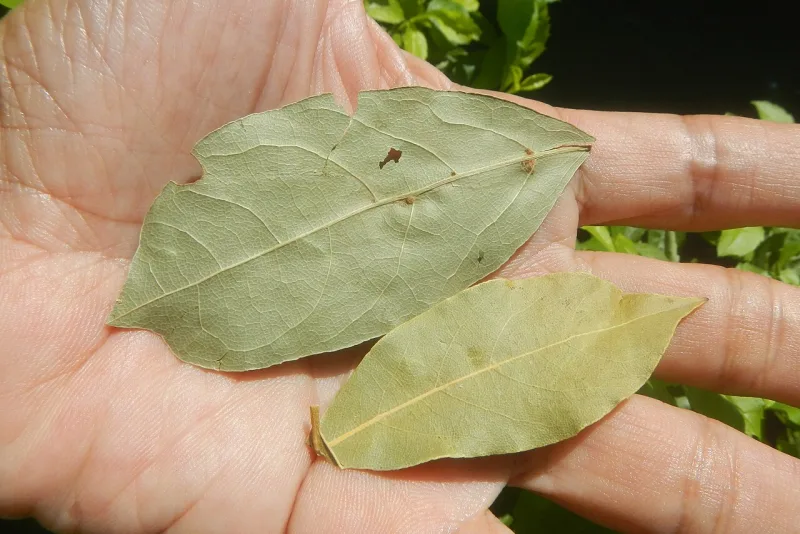
The bay leaf comes from the laurel tree, known botanically as Laurus nobilis, an evergreen shrub native to the Mediterranean region. The leaves are glossy, dark green and elliptical, with a strong, aromatic scent that intensifies as the leaf dries. In Romanian and European cooking, bay is one of the oldest and most widespread spices, used in soups, stews, marinades, pickles and meat dishes.
Laurel has a noble history, as its Latin name suggests. In antiquity, laurel leaves were woven into wreaths that crowned victors, poets and emperors — hence the expression “to rest on one’s laurels.” Beyond the symbolism, bay has always been prized for its aromatic properties and its effects on digestion, being regarded in traditional medicine as a “warming” plant that helps the stomach process heavy foods.
Table of Contents
- Where laurel grows and how the leaves are harvested
- The composition and active principles of bay
- Health benefits
- Traditional household uses
- How to prepare bay leaf tea and infusion (step-by-step recipes)
- Bay leaf in the kitchen: how to use it correctly
- Dosage and how to take it
- Lifestyle and practical tips
- Practical Tips and Common Mistakes
- Conclusion
- Frequently Asked Questions
Where laurel grows and how the leaves are harvested
The noble laurel is a shrub or small tree that can reach several meters in height, thriving in mild, sunny climates free of hard frosts. In Romania it grows well in the south and in sheltered spots, but in many households it is kept in a pot, moved outside in summer and sheltered in winter in a cool, bright room. It prefers well-drained soil and cannot tolerate standing water at its roots.
The leaves can be harvested all year round, but tradition says that those gathered in the warm months, before flowering, have the strongest aroma. After harvesting, the leaves are dried in the shade, spread out on a cloth or paper in an airy place. Drying takes a few weeks; a good bay leaf stays grayish-green and aromatic, not brown and scentless. Dried leaves are kept in airtight jars, away from light and moisture, where they hold their aroma for a year or even longer.
The composition and active principles of bay
The intense aroma of bay is due to its rich essential oils, dominated by cineole (eucalyptol), a substance known for its effect on the respiratory tract and digestion. Besides cineole, bay oil contains pinene, linalool, terpineol and other terpenic compounds that give the leaf its characteristic scent, slightly camphorous and balsamic.
The leaves also contain bitter substances and tannins, which explain their stimulating effect on digestive secretions, as well as flavonoids with an antioxidant role. In folk tradition, it is precisely this combination of aromatic oils and bitter principles that makes bay a leaf “good for the stomach”: the bitterness stimulates appetite and gastric juices, while the volatile oils help calm bloating and the feeling of heaviness. Studies suggest that extracts from laurel leaves also have antioxidant activity, which is why bay is valued as a spice that “works” beyond its aroma.
Health benefits
Support for digestion
The best-known benefit of bay, recognized by both folk tradition and cooks alike, is its effect on digestion. The laurel leaf is considered a mild carminative — that is, it helps expel gas and reduce bloating. After a meal rich in fats or protein, a cup of bay brew was the go-to remedy in many households for that “stone in the stomach” feeling. The bitter compounds stimulate the secretion of bile and gastric juice, thereby supporting the breakdown of heavy foods.
Gastric comfort and soothing the stomach
In addition to fighting bloating, bay was traditionally used to calm mild cramps and gastric discomfort. The volatile oils have a slight antispasmodic effect, meaning they can relax the muscles of the digestive tract. That is why a warm bay infusion was recommended after copious meals, at celebrations or feasts, when the stomach was put to the test.
Antioxidant and general supportive effect
The flavonoids and phenolic compounds in the laurel leaf have, according to studies, antioxidant activity, helping to neutralize free radicals. In folk medicine, bay was considered a “strengthening” plant, used in winter tonic blends to support the body during cold and tiring periods.
Support for appetite
In people with a poor appetite, especially during convalescence, tradition recommended a few drops of bay brew or a lightly bitter tea before meals, precisely to stimulate the digestive juices and reopen the appetite. This effect is attributed to the bitter substances in the leaf.
An aroma that soothes and clears
The scent of bay, rich in cineole, has a pleasant, refreshing and slightly decongestant effect. The steam from a pot in which a few bay leaves are simmering was popularly used to “clear the head” during mild colds, though here we are talking more about the comfort of the inhalation than about an actual treatment.
Traditional external applications
In folk tradition, the oil in which bay leaves were macerated was rubbed onto joints and tired muscles, especially after hard work or cold weather. The sensation of warmth and the balsamic aroma were appreciated for their local relaxing effect. Today, bay oil is found in the composition of certain traditional soaps, such as the famous Aleppo soap.
Traditional household uses
Beyond cooking and remedies, bay had other practical uses in Romanian homes. Dried leaves were placed among beans, peas or flour to keep beetles and pantry moths away — the strong scent acting as a natural repellent. Likewise, a few leaves placed in the wardrobe or in drawers of linen freshened and protected the fabrics.
In some regions, bay was also used in house purification rituals, the leaves being burned on a hot stone slab so that the fragrant smoke would “cleanse the air.” These practices, though more a matter of custom than of medicine, show just how prized the laurel leaf was in everyday village life.
How to prepare bay leaf tea and infusion (step-by-step recipes)
Classic bay leaf decoction for digestion
This is the most commonly used remedy, simple and quick to prepare after a heavy meal.
- Put 2-3 dried bay leaves in a small saucepan.
- Pour about 250 ml of cold water over them.
- Bring to a boil and let simmer gently over low heat for 5 minutes.
- Turn off the heat, cover the pot and let it infuse for another 10 minutes.
- Strain and drink the brew lukewarm, optionally with a teaspoon of honey and a few drops of lemon.
Drink one cup after the main meal, when you feel heaviness in the stomach or bloating.
Light bay leaf infusion
For a gentler effect, without prolonged boiling:
- Put 2 bay leaves in a cup.
- Pour hot (not boiling) water over them.
- Cover and let steep for 10-15 minutes.
- Strain and drink.
Cold maceration
To better preserve the delicate volatile oils:
- Put 2-3 bay leaves in a jar with 250 ml of room-temperature water.
- Let macerate for 6-8 hours (overnight).
- Strain and drink in the morning, slightly warmed if you prefer.
Aromatic bay oil (for external use)
- Put a handful of dried bay leaves, lightly crushed, in a clean jar.
- Cover them completely with olive or sunflower oil.
- Close the jar and let it macerate for 2-3 weeks in a warm place, shaking it occasionally.
- Strain the oil and store it in a dark-colored bottle.
This oil is used for external use only, for rubbing tired muscles.
Bay leaf in the kitchen: how to use it correctly
In cooking, bay is added whole, at the beginning of cooking, so that the aroma has time to release gradually into the food. It pairs wonderfully with soups and broths, stews, mashed beans, tomato sauce, meat and fish marinades, pickles and pork dishes. A golden rule: the leaf must be removed from the food before serving, because it is not eaten.
The ideal amount is 1-2 leaves for a medium pot of food; more can give a bitter and overly pronounced taste. Bay works beautifully in the company of pepper, allspice berries, thyme and garlic. Precisely because it helps “digest” fatty and hearty dishes, its use in beans, cabbage or meat is no accident — traditional cooking combined the aroma with the digestive effect.
Dosage and how to take it
As a remedy, bay is used in moderation. A cup of bay tea (from 2-3 leaves) once or twice a day, after meals, is a reasonable amount for a healthy adult. Folk tradition does not recommend prolonged, daily consumption of large amounts of concentrated bay tea; it is rather a “spot” remedy, used occasionally, when digestive discomfort appears.
For children, bay as a remedy should be used with great caution and, ideally, only on a doctor’s advice. In the kitchen, however, the normal amount used as a spice is safe for the whole family. The important thing is not to confuse its use as a flavoring (safe) with its use as a concentrated remedy (which calls for restraint).
Lifestyle and practical tips
Bay shows its true measure within a context of balanced eating. If you often suffer from bloating and heaviness in the stomach, no bay leaf will replace healthy habits: smaller and more frequent meals, chewing slowly and thoroughly, avoiding overly fatty and heavily spiced foods in the evening, and a gentle walk after a meal instead of lying down on the couch.
Use bay as a pleasant ally: a cup of warm tea after a festive meal, a leaf in the bean pot, a drop of aromatic oil rubbed on the shoulders after a hard day. Always keep the leaves in tightly closed jars, away from light, and replace them yearly — an old, scentless bay leaf no longer has either aroma or effect.
Practical Tips and Common Mistakes
Mistake no. 1: Swallowing the whole leaf. The bay leaf stays hard with sharp edges even after boiling. Swallowed by mistake, it can scratch the throat or digestive tract. Always remove the leaf from the food before serving.
Mistake no. 2: Using too large an amount. More bay does not mean tastier food or a stronger remedy. Above 2-3 leaves, the taste turns bitter and unpleasant, and as a remedy it risks irritating the stomach instead of calming it.
Mistake no. 3: Storing the leaves in light and moisture. The aromatic oils evaporate quickly, and moisture encourages mold. An airtight jar, in the dark, is the key to preserving the aroma.
Mistake no. 4: Drinking concentrated tea daily, over a long period. Bay is an occasional remedy, not an everyday drink. Used at length and in large doses, it can have unwanted effects on the stomach.
Mistake no. 5: Using it as a remedy during pregnancy. In medicinal amounts, bay should be avoided during pregnancy and breastfeeding. As a simple spice in food, in small amounts, it is generally considered safe.
Mistake no. 6: Swallowing the external-use bay oil. The oil macerated for rubbing is intended exclusively for application on the skin and must not be consumed internally.
Conclusion
The bay leaf is much more than a green leaf tossed into the soup pot. It is a spice with a noble history and, at the same time, a pantry remedy prized for generations for its effect on digestion. Rich in aromatic oils and bitter substances, the laurel leaf helps fight bloating, calms gastric discomfort and reopens the appetite, making it the perfect ally of hearty meals. Used in moderation — a few leaves in food or a cup of tea after a heavy meal — it brings balance and comfort, exactly as Aunt Veronica used to say. The important thing is to respect it for what it is: a pleasant and traditional helper, not a substitute for a healthy diet or for medical advice when digestive problems persist.
Frequently Asked Questions
Can bay leaves be eaten? No. The bay leaf is added whole for aroma and removed from the food before serving. Its edges remain hard and sharp even after boiling and can injure the digestive tract if swallowed.
How often can I drink bay leaf tea for digestion? For a healthy adult, a cup once or twice a day, after meals, is enough. Bay is an occasional remedy, not a drink to be consumed daily over the long term.
Does bay leaf tea really help with bloating? Folk tradition and the carminative effect of the aromatic oils support its use for bloating and the feeling of heaviness after meals. Studies suggest digestive effects, but results vary from one person to another.
Can I use bay during pregnancy? As a simple spice, in small cooking amounts, it is generally considered acceptable. As a concentrated remedy (tea, strong infusion), bay should be avoided during pregnancy and breastfeeding. Ask your doctor.
How do I recognize a good-quality bay leaf? A good leaf is grayish-green, whole, free of brown spots, and has a strong, aromatic scent when you break it. Discolored, crumbly and scentless leaves have already lost their properties.
Does bay leaf interact with medication? It may intensify the effect of diabetes medication (lowering blood sugar) and has, theoretically, a mild sedative effect. If you are on treatment, talk to your doctor before using bay as a remedy.
How long do bay leaves keep? In an airtight jar, away from light and moisture, the leaves keep their aroma for about a year. After that, they become increasingly scentless and less effective.
Can I replace dried leaves with fresh ones? Yes, but fresh leaves have a more intense and slightly more bitter aroma, so use a smaller amount. Many home cooks prefer the dried leaf precisely for its more balanced aroma.