
Black Cumin (Nigella sativa): Benefits, Uses and How to Use It
IMPORTANT: Black cumin (Nigella sativa) is generally well tolerated as a food and spice, but the oil and concentrated extracts should be used with caution. Pregnant women should avoid large medicinal doses of the oil or seeds, since folk tradition and some observations suggest a possible stimulating effect on the uterus. People taking medication for diabetes, blood pressure, or blood thinners should talk to their doctor before using black cumin in therapeutic amounts, as it may intensify the effect of these treatments. Discontinue use at least two weeks before any surgery. This article is informational and does not replace medical advice.
I still remember Aunt Saveta, a small, sprightly woman from the far end of the village, who kept a little jar in a kitchen drawer filled with tiny, angular black seeds that looked like grains of coal. When a neighbor’s child started coughing in autumn, or when someone’s nose got “stuffed up” from the cold, she would take out the jar, crush a few seeds between her fingers, and stir them into a spoonful of honey. “Black seed, dear, cures everything except death,” she would say with a smile, repeating an old saying she had heard from her own grandmother. That faintly bitter, pungent aroma, like pepper mixed with oregano, lingered in the air for a long time.
Later I learned that Aunt Saveta had invented nothing. Those black seeds she called “black seed” are in fact black cumin, known botanically as Nigella sativa, a plant used for thousands of years across the Mediterranean, the Middle East, and North Africa. Its fame is so ancient that the seeds have been found in ancient Egyptian tombs, and Arab tradition calls it “the blessed seed.” Today, as we open the old books of remedies once more, we rediscover what our grandmothers knew: that such a tiny seed can offer real support for our health.
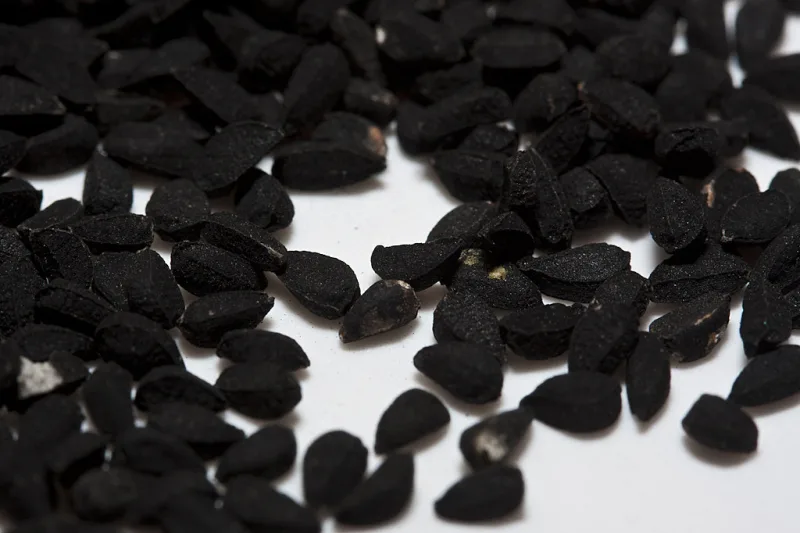
Black cumin is an annual plant with delicate, pale blue or white flowers, whose seed capsules hold small, slightly triangular black seeds with a powerful, distinctive aroma. It should not be confused with ordinary caraway (Carum carvi), with cumin (Cuminum cyminum), or with black sesame — these are completely different plants, even if the names sound similar. Black cumin is prized both as a fragrant spice, sprinkled on bread and into dishes, and as a traditional remedy used to support immunity, digestion, and respiratory health.
Table of Contents
- What black cumin is and where it grows
- Composition and active compounds
- Health benefits
- Traditional uses
- How to prepare and use it
- Dosage and method of use
- Black cumin in the kitchen
- Lifestyle and practical tips
- Practical Tips and Common Mistakes
- Conclusion
- Frequently Asked Questions
What black cumin is and where it grows
Black cumin (Nigella sativa) belongs to the Ranunculaceae family, the same as the buttercup. It is an annual plant that grows up to 30-60 centimeters tall, with finely divided, almost thread-like leaves and solitary flowers of pale blue or white, surrounded by a tuft of green filaments that give it an almost spider-like, delicate appearance. After flowering, the plant forms swollen, multi-chambered capsules in which the black seeds develop.
Native to southwestern Asia and the Mediterranean basin, black cumin is now cultivated widely in Egypt, Turkey, Syria, India, Iran, and the countries of the Middle East. In some parts of Eastern Europe, including Romanian villages, the plant was grown in gardens as an ornamental flower — under folk names such as “love-in-a-mist” — but also for the seeds used in cooking and remedies.
The seeds are harvested when the capsules dry out and turn brown. They are shaken loose, sifted, and stored in a dry place. They have a complex aroma in which notes of pepper, oregano, nutmeg, and a faint bitterness can be detected. It is precisely this aromatic richness that makes them so valued in Eastern cuisine.
Composition and active compounds
The strength of black cumin lies in its rich and varied composition. The seeds contain fatty oils, volatile oils, proteins, fiber, and a range of bioactive compounds that have drawn the attention of researchers around the world.
The best-known compound is thymoquinone, considered the main active principle of the volatile oil. Studies suggest that thymoquinone has antioxidant and immune-supporting properties, and it is the compound credited with most of the beneficial effects observed over time.
In addition to thymoquinone, the seeds also contain:
- Essential fatty acids, especially linoleic acid (omega-6) and oleic acid, which make up the cold-pressed oil.
- Aromatic volatile oils, such as p-cymene and other terpenes, responsible for the characteristic smell.
- Saponins and phytosterols, plant compounds with a role in supporting metabolism.
- Minerals such as iron, calcium, potassium, magnesium, and zinc.
- B-complex vitamins and modest amounts of vitamin C.
- Dietary fiber, useful for digestion.
This combination of healthy fats, aromatic compounds, and micronutrients explains why black cumin has been considered, over the centuries, far more than a simple spice.
Health benefits
Supporting immunity
The most valued benefit of black cumin, both in folk tradition and in the focus of modern research, is the support it offers the immune system. Studies suggest that thymoquinone and the other compounds in the seeds may help the body maintain its natural defense mechanisms. In traditional medicine, the seeds and oil were used especially during the cold season, when colds and flu were circulating.
Support for the respiratory system
Black cumin has been used since ancient times to ease breathing and calm coughs. Folk tradition recommended inhaling the steam from boiled seeds or taking the oil mixed with honey for a sore throat and a stuffy nose. Many people with seasonal respiratory sensitivities still use black cumin as support today, although it does not replace treatment recommended by a doctor.
Help for digestion
Like many aromatic spices, black cumin stimulates digestion. Tradition holds that a teaspoon of ground seeds, taken after a heavy meal, helps reduce bloating and the feeling of heaviness. The aromatic compounds appear to support the production of digestive juices and to soothe mild stomach discomfort.
Supporting metabolic health
Some observations suggest that regular use of black cumin may help maintain balanced values of blood sugar and blood fats, as part of a healthy lifestyle. This is precisely why people already taking medication for diabetes or cholesterol should be cautious and consult their doctor, to avoid too sudden a drop in their values.
Antioxidant effect
The antioxidants in the seeds help the body cope with oxidative stress, the process in which free radicals can damage cells. A regular intake of antioxidant-rich foods, black cumin among them, is considered support for overall health and for maintaining vitality.
Support for skin and hair
Applied externally, black cumin oil has been traditionally used for dry, irritated, or flaky skin, as well as for strengthening hair. Many old recipes combined it with olive oil for soothing scalp massages.
Traditional uses
In households of the past, black cumin had many uses. Here are some of the most widespread:
- Mixed with honey to support immunity during the cold season.
- Sprinkled on bread and pastries, both for flavor and as a digestive tonic.
- In the form of oil, massaged onto the chest and back to ease breathing.
- As an infusion, to soothe the stomach after heavy meals.
- Applied externally, in compresses, for irritated skin.
- Macerated in olive oil, as a remedy for the scalp and hair.
In many cultures, the seeds were also kept as a kind of universal “home remedy,” exactly the way Aunt Saveta kept them in her drawer.
How to prepare and use it
Ground seeds with honey
This is the simplest and oldest preparation. You will need:
- 1 teaspoon of black cumin seeds
- 1 tablespoon of natural honey
Step by step:
- Grind the seeds in a grinder or crush them in a mortar until they reach a fine texture.
- Mix the resulting powder with the honey until it forms a smooth paste.
- Take the mixture in the morning on an empty stomach, or in the evening before bed.
This mixture is traditionally used to support immunity and soothe a sore throat.
Black cumin infusion (tea)
For a light digestive tea:
- 1 teaspoon of lightly crushed seeds
- 250 ml of boiled water
Step by step:
- Lightly crush the seeds to release the aromas.
- Place them in a cup and pour the boiled water over them.
- Cover the cup and let it steep for 8-10 minutes.
- Strain and drink warm, sweetened with a little honey if you like.
Black cumin oil
Cold-pressed oil is available in health food stores and is the most concentrated form. It is used:
- Internally: 1/4 to 1/2 teaspoon per day, possibly mixed with honey or juice, never on a completely empty stomach if discomfort occurs.
- Externally: a few drops massaged onto the scalp, chest, or dry skin areas.
Macerated in olive oil (for external use)
If you do not have cold-pressed oil, you can make a simple macerate:
- Place 2 tablespoons of lightly crushed seeds in a clean jar.
- Cover them with good-quality olive oil.
- Leave the jar in a warm, bright spot for 2-3 weeks, shaking it daily.
- Strain and use the resulting oil for scalp or skin massages.
Dosage and method of use
As a food and spice, black cumin can be used freely, sprinkled on bread, in salads, and in dishes. As a remedy, however, moderation is recommended.
For ground seeds, the traditional dose is about 1/2 to 1 teaspoon per day. For the oil, usual doses start at 1/4 teaspoon and go up to a maximum of 1 teaspoon per day, depending on tolerance. It is wise to start with a small amount to see how your body reacts.
Using it in cures of 4-6 weeks, followed by a break, is preferable to continuous use over an unlimited period. Remember that supplements and natural remedies should not be used to replace medical treatment, but only as support for a balanced lifestyle.
Black cumin in the kitchen
Beyond its role as a remedy, black cumin is a splendid spice. In Turkish and Middle Eastern cuisine, the seeds are sprinkled on bread fresh from the oven, on simit (Turkish bagels), and on various savory pastries. In India, they are part of the five-spice blend known as panch phoron and perfume dishes with vegetables and lentils.
Here are some ideas for using them at home:
- Sprinkle the seeds over bread or roll dough before baking.
- Add a teaspoon to tomato and cucumber salads for an extra layer of flavor.
- Toast the seeds briefly in a dry pan, then sprinkle them over rice or baked potatoes.
- Stir them into cottage cheese or seasoned yogurt, alongside garlic and herbs.
- Use them in marinades for grilled meat and vegetables.
Lightly toasting the seeds before use brings out their nutty, peppery aroma. Be careful not to burn them, as they turn bitter.
Lifestyle and practical tips
Black cumin gives its best results when it is part of a healthy way of life, not when it is seen as a stand-alone miracle cure. To support immunity and overall health, it helps to combine the use of black cumin with simple but consistent habits:
- Quality sleep, 7-8 hours a night, since the body restores its defenses best during rest.
- Daily movement, even a half-hour walk, which stimulates circulation and mood.
- Proper hydration, to support digestion and the elimination of toxins.
- A varied diet, rich in vegetables, fruit, whole grains, and healthy fats.
- Reducing stress through mindful breathing, walks in nature, or time spent with loved ones.
Black cumin fits perfectly into this picture: a teaspoon of seeds sprinkled on breakfast or a warm tea in the evening become small rituals that, over time, contribute to the body’s balance.
Practical Tips and Common Mistakes
Mistake no. 1: Confusing black cumin with other seeds. Many people mistakenly buy cumin (Cuminum cyminum) or caraway (Carum carvi) instead of Nigella sativa. Always check the botanical name on the label and the appearance: black cumin seeds are small, black, and angular.
Mistake no. 2: Using doses that are too large from the start. “More” does not mean “better.” Excessive doses of the oil can cause digestive discomfort. Start with small amounts and increase gradually.
Mistake no. 3: Over-toasting the seeds. If you leave them too long in the pan, they turn bitter and lose their fine aroma. Toast them only until they start to release their scent, then take them off the heat immediately.
Mistake no. 4: Storing the oil in light and heat. Black cumin oil is sensitive to oxidation. Keep it in a dark glass bottle, in a cool place away from light, and use it within a reasonable period of time.
Mistake no. 5: Ignoring interactions with medications. If you take treatment for diabetes, blood pressure, or blood thinners, do not start a black cumin cure without talking to your doctor, as it can amplify their effect.
Mistake no. 6: Expecting immediate miracles. Natural remedies act gently and gradually. Consistent use, in cures, gives better results than chaotic, sporadic consumption.
Conclusion
Black cumin, or black seed, is one of those old remedies that combines culinary pleasure with support for health. Its warm aroma of pepper and oregano transforms a simple slice of bread into a delight, while its active compounds — led by thymoquinone — support immunity, digestion, and overall vitality. Folk tradition called it “the blessed seed” not without reason, and its rediscovery in modern kitchens is a welcome return to the wisdom of our grandmothers. Used in moderation, as part of a balanced lifestyle and with attention to the precautions mentioned, black cumin can become a discreet and trustworthy ally in every household’s pantry.
Frequently Asked Questions
What is the difference between black cumin and caraway? Black cumin (Nigella sativa) has black, angular seeds with a peppery, oregano-like aroma and belongs to the Ranunculaceae family. Cumin (Cuminum cyminum) and caraway (Carum carvi) have brown, elongated seeds and a completely different taste. They are distinct plants, easily confused because of their names.
How do you use black cumin for immunity? The simplest traditional way is to mix a teaspoon of ground seeds with a tablespoon of honey and take the paste in the morning on an empty stomach, especially during the cold season. Cold-pressed oil, in small doses, is also used for the same purpose.
Can I consume black cumin during pregnancy or breastfeeding? As a simple spice, in small amounts sprinkled on food, it is generally considered acceptable. Large medicinal doses of the oil or seeds should, however, be avoided during pregnancy, since tradition suggests a possible effect on the uterus. Always consult your doctor.
Does black cumin have side effects? For most people, used in moderation, it is well tolerated. Large doses of the oil can cause digestive discomfort or nausea. People with allergies should test a small amount first, especially for external use on the skin.
How long can I do a black cumin cure? Tradition recommends cures of 4-6 weeks, followed by a break. Continuous use without interruption over very long periods is not necessary. Listen to your body and, if needed, seek the advice of a specialist.
How do I store the seeds and the oil? The seeds are kept in an airtight jar, in a dry, cool place away from light — this way they keep their aroma for months. Cold-pressed oil is stored in a dark glass bottle, in a cool, dark place, because it oxidizes easily.
Can I give black cumin to children? In small culinary amounts, sprinkled on bread or in food, it is generally acceptable for older children. Medicinal doses and concentrated oil are not recommended without the advice of a pediatrician.
Does black cumin help with digestion? Yes, folk tradition uses it as a digestive tonic. A teaspoon of ground seeds after a heavy meal or a warm cup of black cumin tea can help reduce bloating and the feeling of heaviness, thanks to the aromatic compounds that stimulate digestion.