
Black Pepper: Benefits, Piperine and How to Use It Correctly
IMPORTANT: Although black pepper is a safe spice in the amounts normally used in cooking, consuming it in large doses (concentrated piperine supplements) may interact with certain medications, because piperine alters the way the liver metabolizes substances. People taking anticoagulants, blood-pressure medication, antidiabetics, antiepileptics, or undergoing cancer treatment should talk to their doctor before using supplements. In normal culinary amounts, pepper poses no risk for most people. Those with an active ulcer, severe gastritis, or strong reflux may feel some irritation and should moderate the amount. Consult your doctor if you have chronic conditions or are breastfeeding.
Grandma Veta from the Sibiu highlands kept a wooden grinder always within reach, next to the stove. She used to say that food without freshly ground pepper “has no soul.” When someone in the house caught a cold or complained of a heavy stomach after a holiday meal, she would prepare a glass of warm milk with a pinch of black pepper and a little honey. “It wakes up the guts and chases the cold out of your bones,” she would say, stirring the spoon. She never ground the pepper in advance — she ground it on the spot, right before adding it to the pot, because she had learned from her own mother that the aroma fades fast.
This habit, passed down from generation to generation, hides a truth that modern science confirms today. Black pepper is not just a spice that “stings” — it is one of the most studied spices in the world, prized both for its distinctive taste and for a remarkable active compound called piperine. From the ancient trade routes to the modern kitchen, black pepper was once so precious that it served as currency and was carefully weighed, grain by grain.
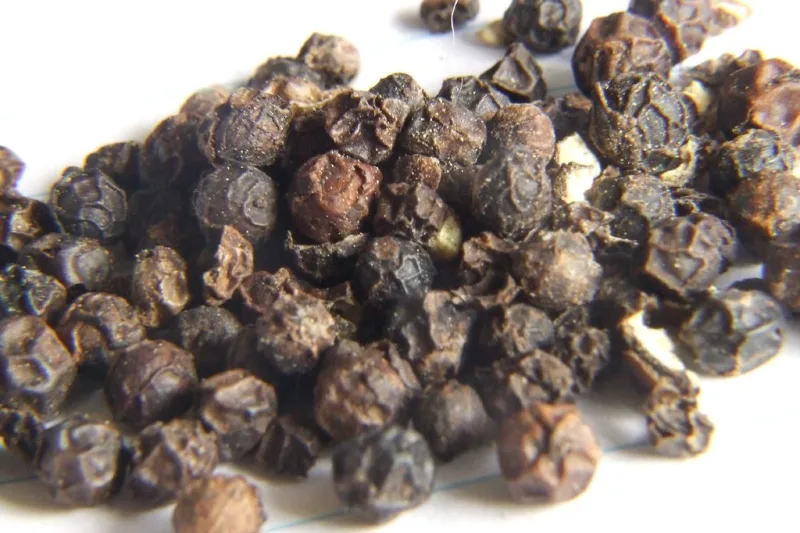
Black pepper (Piper nigrum) is the dried fruit of a tropical climbing plant native to the southwestern coast of India, the Malabar region. The berries are picked while still green, then briefly boiled and dried in the sun, a process that wrinkles and blackens their skin, giving them their characteristic appearance. It is prized worldwide not only for its penetrating aroma, but also for its ability to stimulate digestion and improve how the body absorbs nutrients from other foods.
Table of Contents
- What black pepper is and where it comes from
- Composition and active compounds: the role of piperine
- Health benefits
- Traditional uses in the Romanian village
- How to use it correctly: step-by-step recipes
- Dosage and administration
- Lifestyle: pepper in everyday eating
- Practical tips and common mistakes
- Conclusion
- Frequently Asked Questions
What black pepper is and where it comes from
Black pepper comes from a perennial vine that can reach several meters in height, clinging to trees or trellises. The plant produces long clusters of small berries that change color as they ripen — from green to yellow and then to red. Depending on when they are harvested and how they are processed, the same berries yield different types of pepper:
- Black pepper — berries picked while still green, briefly boiled and dried; the most aromatic and the spiciest.
- White pepper — berries left to ripen fully, soaked in water and peeled, keeping only the inner seed; a milder taste.
- Green pepper — unripe berries, preserved by drying or in brine; a fresh, herbal aroma.
India remains one of the largest producers, alongside Vietnam, Indonesia, and Brazil. The quality of pepper is judged by the size, weight, and uniformity of the berries, as well as by the intensity of the aroma. Good pepper has heavy, dense berries with a strong fragrance when crushed.
In Romanian folk tradition, pepper arrived relatively late and was considered a luxury. In wealthier households it was kept in wooden boxes, away from light and moisture, and used sparingly in sausages, head cheese, cabbage rolls, and sour soups. Today it is accessible to anyone, but those who truly value it still insist on grinding it fresh.
Composition and active compounds: the role of piperine
The unique character of black pepper comes from a combination of compounds. The most important of them is piperine, an alkaloid responsible both for the pungent taste and for most of the studied effects of pepper. Piperine makes up, on average, between 3% and 9% of the weight of the dried berry.
In addition to piperine, black pepper contains:
- Volatile (essential) oils — such as limonene, pinene, beta-caryophyllene, and sabinene, which give the characteristic woody and citrusy aroma.
- Polyphenolic antioxidants and flavonoids — compounds that help neutralize free radicals.
- Minerals — small amounts of manganese, iron, potassium, calcium, and magnesium.
- Fiber and starch — in small proportions, but present.
Piperine is especially interesting for one particular reason: it appears to improve the bioavailability of certain substances, meaning the degree to which the body can absorb and use them. The best-known example is the combination of black pepper and turmeric. Studies suggest that piperine can significantly increase the absorption of curcumin, the active compound in turmeric, which is otherwise very poorly absorbed by the body. This is why many traditional recipes and spice blends instinctively combine these two spices.
Health benefits
It stimulates digestion
The oldest and most widespread reason people use pepper is its effect on digestion. Piperine appears to stimulate the secretion of digestive enzymes and gastric acids, helping to break down food more efficiently. Folk tradition observed long ago that a dash of pepper “lightens” heavy meals rich in meat and fat. The mild pungency that pepper provides reflexively triggers the production of saliva and gastric juices, preparing the stomach for digestion.
It improves nutrient absorption
As mentioned, piperine has the remarkable ability to increase the absorption of certain nutrients and active compounds. Besides curcumin from turmeric, studies suggest it can also positively influence the absorption of some B vitamins, beta-carotene, and selenium. This is why adding a pinch of pepper to vegetable- and spice-based dishes can help the body make better use of their nutritional value.
A source of antioxidants
Black pepper is a concentrated source of antioxidants. Free radicals are unstable molecules that, in excess, contribute to oxidative stress and cellular aging. The antioxidant compounds in pepper, especially piperine and polyphenols, help neutralize them. Although the amounts consumed at a meal are small, the regular intake of spices rich in antioxidants contributes to a healthy dietary pattern overall.
Support for the respiratory system
Folk tradition in many cultures uses black pepper to clear the airways. The sensation of warmth and the mild pungency can help thin mucus and make breathing easier during colds. Grandma Veta with her glass of warm milk and pepper was not far from the truth: warm mixtures with pepper are a traditional remedy for a sore throat and a stuffy nose in many villages.
Effect on metabolism
The warming sensation that pepper provides is not accidental. Piperine appears to have a mild thermogenic effect, meaning it stimulates the production of heat in the body. Studies suggest it could modestly support an active metabolism, which is why pepper often appears in “energizing” spice blends. It is not, however, a weight-loss remedy in itself, but merely a support within a balanced dietary context.
Joint comfort and anti-inflammatory effect
In traditional Asian medicine, black pepper has been used for centuries to ease joint discomfort. Piperine has studied anti-inflammatory properties, and Romanian folk tradition sometimes applied warm poultices with pepper and other spices to painful areas. The local warming effect could bring a sense of relief.
Traditional uses in the Romanian village
In the peasant household, black pepper had roles that went beyond the kitchen. Here are some of the traditional uses:
- For preserving meat — pepper was indispensable in sausages, head cheese, blood sausages, and bacon, both for flavor and for its properties that help preserve the meat.
- In warm milk with honey — a remedy for colds, coughs, and a sore throat, drunk in the evening before bed.
- In winter teas — a pinch of pepper added to warm teas with ginger and honey to “warm” the body.
- In poultices — mixed with other warming spices and applied externally to areas of muscle discomfort.
- In soups and sour soups — added at the end to lift the aroma and support the digestion of the meal.
These practices, passed down orally, reflect an intuitive understanding of pepper’s properties, many of which align with what research confirms today.
How to use it correctly: step-by-step recipes
The golden rule: grind it fresh
The most important rule is to use freshly ground pepper, not old powder kept for months. The volatile oils that give the aroma evaporate quickly once the berry is crushed. A pepper grinder and whole peppercorns will give you, every time, an incomparably better aroma than industrial powder.
Warm milk with pepper and honey (traditional remedy)
A simple winter remedy, perfect for a sore throat.
- Heat a cup of milk (cow’s or plant-based) without boiling it hard.
- Remove from heat and add a pinch of freshly ground black pepper.
- Let it cool for a minute, then add a teaspoon of honey (honey should not be added to hot liquid, so it keeps its properties).
- Stir well and drink warm, preferably in the evening.
The pepper–turmeric combination (for maximum absorption)
To take advantage of the synergy between piperine and curcumin:
- In a tablespoon of oil (olive or coconut) mix half a teaspoon of turmeric powder with a quarter teaspoon of freshly ground black pepper.
- Gently heat the mixture for a few seconds — fat and heat help release the active compounds.
- Add to soups, stews, rice, or “golden milk” with warm milk.
Garlic sauce or dressing with pepper
- Crush a few cloves of garlic with a pinch of salt.
- Add oil, vinegar, or lemon juice to taste.
- Grate fresh black pepper on top and mix. Pepper added at the end, not during cooking, keeps more aroma.
Dosage and administration
For culinary use there is no strict “dosage” — it is added to taste, usually a pinch to a quarter teaspoon per serving. For traditional remedies, the amounts are small: a pinch in a cup of liquid is enough.
A few useful principles:
- Add pepper toward the end of cooking. Prolonged heat can turn the aroma into bitterness.
- Do not overdo it. Large amounts can irritate a sensitive stomach.
- Piperine supplements (concentrated capsules) should be used only on the advice of a specialist, never on a guess, because of drug interactions.
Lifestyle: pepper in everyday eating
Black pepper fits naturally into a balanced way of eating. A few ideas for including it daily, effortlessly:
- Grind fresh pepper over eggs, salads, soups, and roasted vegetables.
- Always combine it with turmeric when cooking with that spice.
- Keep a grinder on the table, to add it at the end, just like our grandmothers did.
- Use it in marinades for meat and fish, alongside aromatic herbs.
- Avoid old powder and invest in quality whole peppercorns.
Pepper does not replace a healthy diet, nor medical treatments, but it is a discreet ally that, used wisely, adds both flavor and benefits.
Practical tips and common mistakes
Mistake no. 1: Using old, industrially ground pepper. Powder bought pre-ground and kept for months loses almost all of its aroma. The solution: buy whole peppercorns and a grinder.
Mistake no. 2: Adding pepper at the start of prolonged cooking. Long boiling destroys the volatile oils and can give a bitter note. Add it toward the end.
Mistake no. 3: Storing pepper next to the stove or in the light. Heat and light degrade the aroma. Keep it in a closed container, in a cool, dark place.
Mistake no. 4: Overdoing the amount for people with a sensitive stomach. Those with gastritis, ulcers, or reflux should use pepper in moderation.
Mistake no. 5: Using piperine supplements without medical advice. Concentrates can interact with medications. For health effects, pepper used normally at meals is enough and safe.
Mistake no. 6: Ignoring the combination with turmeric. Many people cook with turmeric without pepper and lose much of the benefit. Always add a pinch of pepper.
Conclusion
Black pepper is far more than a simple spice that “stings.” Behind its penetrating aroma hides piperine, a remarkable substance that supports digestion, improves nutrient absorption, and provides a valuable intake of antioxidants. From Grandma Veta’s wooden grinder to the modern combination with turmeric, black pepper remains a trustworthy ally in the kitchen and in the tradition of natural remedies. Used in moderation, freshly ground, and added at the right moment, it adds both flavor to dishes and subtle but real benefits for health. As always, the key is moderation and common sense — and for serious conditions, a doctor’s advice remains irreplaceable.
Frequently Asked Questions
Is black pepper good for digestion? Yes, it is one of its most valued properties. Piperine stimulates the secretion of digestive enzymes and gastric acids, helping to break down food. This is why pepper is traditionally recommended with heavy meals rich in meat and fat.
Why is pepper combined with turmeric? Because the piperine in pepper significantly increases the absorption of curcumin, the active compound in turmeric, which is otherwise very poorly assimilated by the body. Studies suggest this combination can boost the bioavailability of curcumin several times over.
How much pepper can I safely use daily? In normal culinary amounts — a pinch to a quarter teaspoon per serving — pepper is safe for most people. Only concentrated piperine supplements require caution and medical advice.
Does black pepper help with colds? Folk tradition uses it to clear the airways and soothe a sore throat, usually in the form of warm milk with honey and pepper. The sensation of warmth and the mild pungency can help thin mucus.
What is the difference between black and white pepper? They come from the same berries, but are processed differently. Black pepper is made from green berries boiled and dried with the skin on, making it more aromatic and spicier. White pepper is the ripe, peeled berry, with a milder taste.
Why must it be ground fresh? Because pepper’s aroma comes from the volatile oils that evaporate quickly once the berry is crushed. Powder kept for a long time loses most of its aroma and properties.
Can I have problems if I eat too much pepper? Very large amounts can irritate the stomach, especially in people with gastritis, ulcers, or reflux. For them, pepper should be used in moderation. Otherwise, at the usual cooking amounts, there are no problems.
Does pepper have any interaction with medications? At ordinary culinary amounts the risk is negligible. However, concentrated piperine supplements can influence the metabolism of certain medications (anticoagulants, antidiabetics, cancer treatments). So if you are undergoing treatment, talk to your doctor before using such supplements.