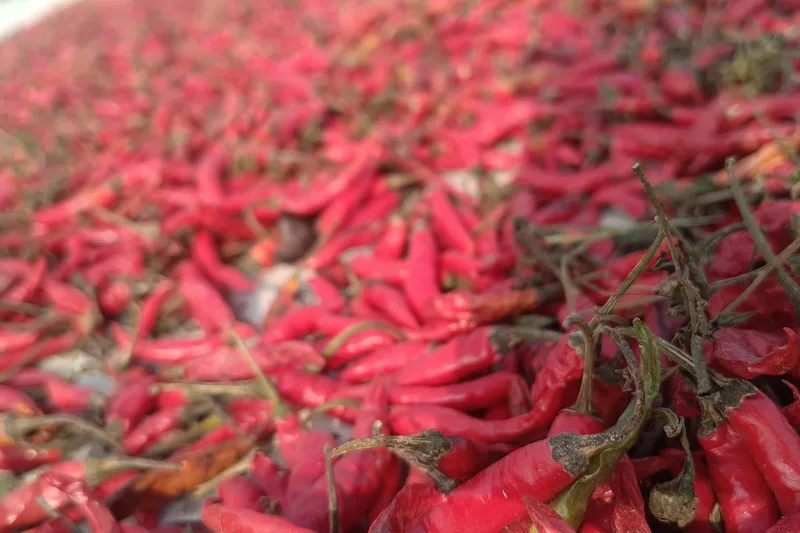

Cayenne Pepper: Benefits, Capsaicin and How to Use It
IMPORTANT: Cayenne pepper is a powerful spice, not a medicine. People with active stomach ulcers, severe acid reflux (GERD), acute gastritis, inflamed hemorrhoids or irritable bowel syndrome should avoid it or use it only in very small amounts. Capsaicin can interact with certain medications (blood thinners, blood pressure drugs, aspirin), may intensify their effect and can irritate mucous membranes. Pregnant and breastfeeding women should consume cayenne in moderation. Never apply capsaicin creams or oils to irritated skin, open wounds or near the eyes. If you have a chronic condition, are on medication or have any doubts, talk to your doctor before using cayenne pepper as a remedy.
Grandmother Saveta, from the foothills of the Carpathians, had a habit all her grandchildren remembered: in winter, when the damp cold “got into your bones,” she would rub her soles with a mixture of melted lard and a pinch of ground hot pepper, then pull on thick wool socks and go to bed. She used to say that “your feet have to burn so they stop freezing,” and the next morning she would set off cheerfully to her chores around the house. She also added a teaspoon of ground red hot pepper to her jars of pickles, “so they don’t spoil and to give strength to the stomach.”
Many years later, when the grandchildren had grown up and started reading about nutrition and plants, they realized that grandmother did nothing by accident. The capsaicin in hot pepper really does dilate the surface blood vessels and creates that sensation of warmth, while the folk tradition of using pepper for “stomach strength” rests on its effect of stimulating the digestive juices. This article brings together what tradition says, what modern studies suggest and, above all, how to use cayenne pepper sensibly, without harming yourself.
Cayenne pepper, often known by that commercial name, is the dried and ground fruit of certain varieties of Capsicum annuum (and related species). Native to Central and South America, where it was cultivated for thousands of years, the pepper reached Europe after the discovery of the New World and quickly became part of the cuisines of the Mediterranean, the Balkans and, of course, Romania, where paprika and hot pepper are never missing from the pantry. What makes it special is not just the hot taste, but the compound responsible for that sensation: capsaicin, a substance with surprisingly complex physiological effects.
Table of Contents
- What cayenne pepper is and where it comes from
- Capsaicin: the star substance and how it works
- Composition and active compounds
- Health benefits
- Traditional uses in folk medicine
- How to use cayenne pepper (step-by-step recipes)
- Dosage and how to take it
- Cayenne pepper in everyday eating
- Practical tips and common mistakes
- Conclusion
- Frequently Asked Questions
What cayenne pepper is and where it comes from
The name “cayenne” comes from the city of Cayenne in French Guiana and has come to refer, in common usage, to finely ground dried red hot pepper with a medium-to-high heat. In reality, several varieties of Capsicum hide behind this name, all characterized by elongated, thin fruits that turn an intense red when ripe.
The pepper plant is herbaceous, fond of heat and sun, and is grown widely all over the world. The fruits are harvested at full ripeness, when they have taken on their bright red color, then dried in the sun or in dryers and ground. The resulting powder varies in heat depending on the variety and growing conditions. Heat is measured on the Scoville scale, and cayenne usually sits at a medium-to-high level — hot enough to be felt clearly, but without the extremes of very hot peppers such as habanero.
In the traditional Romanian household, hot pepper appears in many forms: tied into “garlands” to dry under the eaves, placed whole into jars of pickles, ground and mixed with sweet paprika, or used as is for sausages, stews and sour soups. This constant presence turned hot pepper into not only a spice but also a handy remedy, used for all sorts of complaints.
Capsaicin: the star substance and how it works
Capsaicin is the compound that gives the pepper its heat. Chemically, it belongs to the capsaicinoid family and is concentrated mainly in the white membranes inside the fruit (the placenta), to which the seeds are attached — not in the seeds themselves, as many people believe. That is why, if you want to reduce the heat of a fresh pepper, you remove these white membranes.
The mechanism by which capsaicin produces the sensation of “fire” is fascinating. It binds to a receptor called TRPV1, present on the nerve endings in the mouth, skin and mucous membranes. This receptor is actually a detector of heat and potentially harmful stimuli. When capsaicin activates it, the brain “thinks” that the area is burned or heated, even though there is no real rise in temperature. Hence the burning sensation, the watering eyes, the reddening of the skin and the sweating.
In response to this stimulation, the body releases endorphins — the substances that create a feeling of well-being and have a mild pain-relieving effect. This is probably one of the reasons many people enjoy the sensation of heat: after the initial discomfort comes a pleasant state of relaxation and energy. Also through its action on TRPV1, capsaicin applied repeatedly to the skin can, over time, “deplete” a certain substance involved in transmitting pain, which explains its use in creams for muscle and joint pain.
Composition and active compounds
Beyond capsaicin, cayenne pepper is surprisingly rich in useful substances, especially relative to the small amount in which it is consumed:
- Capsaicinoids — capsaicin and its relatives, responsible for the heat and most of the physiological effects.
- Vitamin C — the fresh pepper is a remarkable source; some is lost during drying, but the powder retains useful amounts.
- Vitamin A and carotenoids — the red-orange pigments (especially capsanthin and beta-carotene) are powerful antioxidants and give the intense color.
- B-group vitamins — in modest amounts.
- Minerals — potassium, magnesium, iron, manganese.
- Flavonoids and phenolic compounds — with antioxidant roles.
Thanks to this combination, cayenne pepper is not just “empty fire” but also brings a concentrated dose of antioxidants. Its carotenoids are fat-soluble, which means they are better absorbed when the pepper is consumed together with a source of fat — one more reason why “a drop of oil” alongside paprika and hot pepper makes sense, and not only for taste.
Health benefits
Stimulating metabolism
The best-known effect of capsaicin, much discussed in the context of weight management, is its ability to slightly stimulate thermogenesis — that is, the body’s production of heat, which involves extra energy expenditure. Studies suggest that regular consumption of capsaicin can modestly increase the metabolic rate and may contribute to a better feeling of fullness, reducing appetite. It is important to understand: this is not a miracle weight-loss solution, but a small help that works only within a balanced diet and an active lifestyle.
Support for digestion
Contrary to the popular belief that hot pepper “burns the stomach,” tradition and some modern observations suggest that, in small amounts, it stimulates the secretion of digestive juices and saliva, helping to digest heavy meals more efficiently. Many cuisines from warm regions use hot spices precisely to make food easier to digest. In healthy people, capsaicin does not cause ulcers — on the contrary, certain studies suggest a possible protective role for the gastric lining in moderate doses. In those with pre-existing digestive problems, however, it can worsen symptoms.
Supporting circulation
The warm sensation that hot pepper gives is no accident: capsaicin promotes the dilation of surface blood vessels and stimulates peripheral circulation. That is exactly why, in folk medicine, hot pepper was used to “warm up” cold hands and feet. Studies also suggest a possible favorable effect on blood pressure and vascular health, through relaxation of the vessel walls, although more research is needed here.
Antioxidant and anti-inflammatory effect
Its richness in carotenoids, vitamin C and phenolic compounds makes cayenne pepper a food with antioxidant potential. Antioxidants help the body cope with oxidative stress, which is involved in aging and many chronic conditions. Capsaicin itself is studied for its anti-inflammatory properties, which could partly explain the effects observed at the joint and muscle level.
Pain relief (external use)
One of the best-documented uses of capsaicin is in creams and patches for muscular, joint and neuralgic pain. Applied locally and repeatedly, capsaicin gradually reduces the pain sensitivity of the area. Many pharmacy preparations for rheumatic pain or neuralgia contain capsaicin extract for exactly this reason. Our grandmothers intuited this when they rubbed an aching back with brandy and hot pepper.
Supporting immunity
Through its supply of vitamin C and antioxidants, along with the sensation of “clearing” the airways (capsaicin can thin nasal secretions), hot pepper has always been an ally of the cold season. A spicy, steaming sour soup, eaten at the first signs of a cold, remains a beloved home remedy.
Traditional uses in folk medicine
In Romanian households and beyond, hot pepper has been used in a wide range of remedies:
- For cold feet and hands — rubs with lard or alcohol infused with ground hot pepper, to “bring the blood” to the extremities.
- For back pain and rheumatism — poultices and external rubs with brandy and hot pepper.
- For colds and a stuffy nose — hot, spicy teas and soups that “bring on a sweat” and help clear secretions.
- For appetite and sluggish digestion — a pinch of hot pepper added to food to stimulate the appetite.
- For preserving pickles — added to jars both for taste and for its effect of slowing the growth of certain microorganisms.
How to use cayenne pepper (step-by-step recipes)
Warming rub for cold hands and feet (external use)
Why it works: capsaicin dilates the surface vessels and brings a wave of pleasant warmth. Ideal in the evening, before bed.
- Take 2-3 tablespoons of vegetable oil (olive or sunflower) or melted and cooled lard.
- Add a pinch (about 1/4 teaspoon) of ground hot pepper.
- Mix well and let it “settle” for 10-15 minutes.
- Apply a thin layer to the soles or palms, massaging gently. Do not apply to cracked or wounded skin.
- Wash your hands thoroughly right after applying and avoid touching your eyes.
- Put on cotton socks or gloves and rest.
Tonic “shot” with cayenne, lemon and honey
- Squeeze the juice of half a lemon into a small glass.
- Add a teaspoon of honey and a tiny pinch of ground hot pepper (very little at first).
- Top up with 100-150 ml of warm water (not boiling, so you don’t destroy the enzymes in the honey).
- Mix well and drink on an empty stomach in the morning. Start with a minimal amount of pepper and increase gradually.
Spicy flavored cooking oil
- Gently warm 200 ml of olive oil (without boiling it).
- Add 1-2 teaspoons of ground hot pepper and, optionally, a sliced clove of garlic.
- Keep it on very low heat for 5 minutes, then turn it off and let it infuse, covered, until it cools.
- Strain (optional) and store cold, in a closed bottle. Use a few drops over pasta, pizza, soups or grilled vegetables.
Spicy soup for cold days
Add a pinch of hot pepper to any vegetable or poultry soup, along with sweet paprika, toward the end of cooking. The gentle heat “opens” the sinuses and warms you from the inside. Serve hot.
Dosage and how to take it
Cayenne pepper does not have a strict “dosage” like a medicine, but common sense and the body’s habituation are essential:
- For food use: start with a pinch (under a quarter teaspoon) per serving and increase gradually, depending on tolerance. Many people comfortably reach 1/4–1/2 teaspoon per day, spread across meals.
- For tonic drinks: start with minimal amounts; more is not better, just more discomfort.
- For external use: first test on a small patch of skin to check the reaction, and do not leave the preparation on for more than 20-30 minutes on the first use.
The golden rule is gradual increase. Heat tolerance builds over time, and what seems like a lot today will become ordinary in a few weeks.
Cayenne pepper in everyday eating
The healthiest way to benefit from cayenne pepper is to integrate it naturally into your diet, rather than consuming it in extreme “cures.” Sprinkle it over eggs, into stews, into tomato sauces, into cream of vegetable soups or over legumes (beans, lentils, chickpeas), where it pairs beautifully. Combined with a source of healthy fat (olive oil, avocado, nuts), the absorption of carotenoids increases.
For a balanced lifestyle, cayenne pepper works best as part of a diet rich in vegetables, fruit, whole grains and good fats. Do not expect it alone to make up for an unbalanced diet. Instead, as a daily “accent,” it can add flavor, pleasure at the table and a small bonus of benefits.
Practical tips and common mistakes
Mistake no. 1: Overdoing the amount “for a bigger effect.” More hot pepper does not mean more health, just more risk of gastric irritation and discomfort. The benefits come from moderate, consistent consumption, not from large doses.
Mistake no. 2: Applying it to irritated skin or near the eyes. Capsaicin is intensely irritating to mucous membranes. Always wash your hands thoroughly after handling it and do not touch your eyes, nose or sensitive areas.
Mistake no. 3: Using water to “put out” the heat. Capsaicin does not dissolve in water, but in fat. If you have burned yourself too much, drink milk, eat yogurt or a piece of full-fat cheese — fat “washes off” the capsaicin far more effectively than water.
Mistake no. 4: Ignoring existing digestive problems. If you have an ulcer, severe reflux or gastritis, hot pepper can worsen the symptoms. Do not push through “thinking it will pass” — listen to your body.
Mistake no. 5: Storing the powder incorrectly. Ground hot pepper loses its aroma and color if it sits in light and heat. Keep it in a closed container, in a dark, cool place, and use it within a few months of buying it.
Mistake no. 6: Consuming it on an empty stomach without being used to it. For beginners, hot pepper on a completely empty stomach can cause burning. Start with small amounts, ideally after a bite of food.
Conclusion
Cayenne pepper is much more than a simple spice that “bites.” Behind the heat stands capsaicin, a substance with real effects on metabolism, digestion, circulation and even the perception of pain. Folk tradition intuited these virtues long ago, using hot pepper to warm cold extremities, to stimulate appetite and to fight off colds. Modern research cautiously confirms many of these observations, without turning it into a miracle cure.
The key, as always, is balance: cayenne pepper used in moderation, integrated into tasty and varied meals, can bring an extra measure of pleasure and benefit. Used excessively, or by people with contraindications, it can do harm instead. Treated with respect and common sense, cayenne pepper remains a trusted ally in the kitchen and in the remedy pantry, just as it was in grandmother Saveta’s day.
Frequently Asked Questions
Does cayenne pepper really help with weight loss? Capsaicin can slightly stimulate metabolism and may reduce appetite, but the effect is modest. Cayenne pepper can be a small help, not a weight-loss solution in itself. Results appear only alongside a balanced diet and physical activity.
Is it true that cayenne pepper causes ulcers? In healthy people, no. Studies even suggest that, in moderate doses, capsaicin might have a protective effect on the stomach lining. In those who already have an ulcer, gastritis or reflux, however, hot pepper can worsen symptoms and should be avoided.
How do I put out the heat when I have overdone it? With fats, not with water. Milk, yogurt, cheese or a spoonful of oil dissolve capsaicin far more effectively than water, which only spreads it around and prolongs the burning sensation.
Can I give cayenne pepper to children? With great caution and in very small amounts. Children’s digestive systems are more sensitive. It is better to introduce hot spices gradually and at older ages, watching each child’s reaction.
How much cayenne pepper can I safely consume daily? For most healthy adults, a pinch to half a teaspoon per day, spread across meals, is a reasonable amount. What matters is increasing gradually and listening to your own body.
Is fresh hot pepper better than ground? Both have value. The fresh one has more vitamin C and a vivid aroma, while the dried powder is more concentrated in capsaicin and easier to measure out. The powder keeps for much longer.
Does the capsaicin in creams really work for pain? Yes, it is one of the most studied uses. Applied locally and repeatedly, capsaicin gradually reduces pain sensitivity, which is why it is found in many preparations for muscular, joint and neuralgic pain.
Can cayenne pepper interact with medications? Yes, it can. Capsaicin may influence the effect of certain medications, such as blood thinners or blood pressure drugs. If you are on treatment, talk to your doctor before consuming large amounts of hot pepper or using capsaicin supplements.