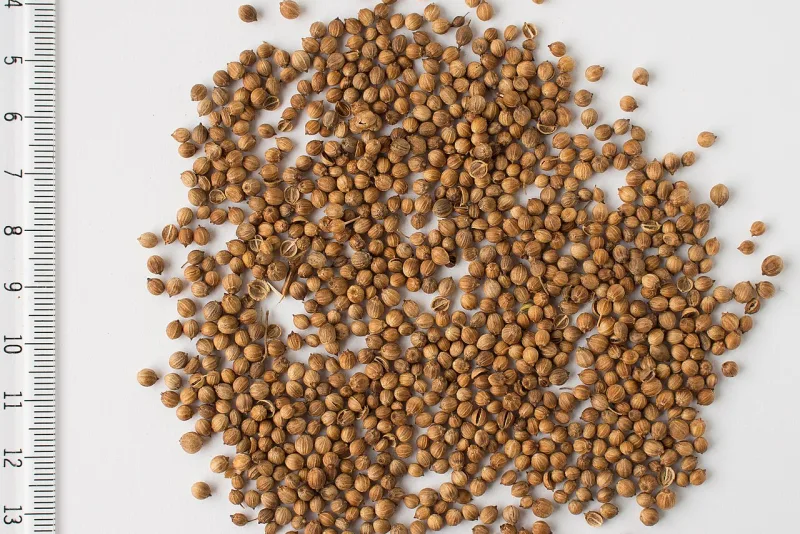

Coriander: Benefits, Uses and How to Use It
IMPORTANT: Coriander is generally safe when used as food and seasoning in the usual culinary amounts. However, some people are allergic to coriander and to other plants in the Umbelliferae family (celery, carrot, caraway, fennel, dill) and may develop reactions ranging from an itchy mouth to more serious responses. Consuming therapeutic quantities (concentrated teas, extracts, essential oil) is not recommended during pregnancy and breastfeeding, in young children, or in people taking medication for diabetes or blood pressure (coriander may amplify the lowering of blood sugar and blood pressure) without a doctor’s advice. Coriander essential oil should never be ingested undiluted and should not be applied neat to the skin. Coriander is not a substitute for treatment prescribed by your doctor; it is a support, not a miracle cure.
Grandma Veta, from her village at the foot of the hills, kept a small glass jar full of round, brown little beads right next to the bread box. “These are for the tummy,” she would say whenever someone in the house complained that “the food bloated them” after a heavy holiday meal. She would put a teaspoon of the seeds in a mug, pour boiling water over them, crush them gently with the back of a spoon, and let everything rest until it cooled a little. The aroma rising from the mug was warm, slightly sweet, with notes of citrus and wood, and after drinking the tea the guest almost always felt relieved.
She also used ground coriander in pickles, in homemade bread, and in autumn vegetable spreads, saying it “gives flavor and helps the stomach not to quarrel with the food.” Back then no one spoke of “volatile oils” or “digestive enzymes,” but folk wisdom had grasped exactly what the herbalist tradition still confirms today: coriander is one of the gentlest and most effective helpers for sluggish digestion. From that jar of Grandma Veta’s, many people first learned respect for this humble yet surprisingly powerful seed.
Coriander (Coriandrum sativum) is an annual aromatic plant in the same family as parsley, dill, and celery. Essentially, it is a single plant that gives us two spices with completely different personalities: the fresh leaves (known internationally as “cilantro”), with an intense, fresh, slightly citrusy and sometimes controversial taste (some people perceive them as “soapy” for genetic reasons), and the dried seeds, with a warm, sweet-woody aroma entirely different from that of the leaves. In this article we focus mainly on the seeds, the part most used in traditional remedies and in seasoning food, but we will also talk about the leaves.
Table of Contents
- What coriander is and where it comes from
- Composition and active compounds
- Health benefits
- Traditional uses
- How to prepare it: tea, powder, tincture, cold infusion
- Coriander in the kitchen
- Dosage and how to take it
- Lifestyle and practical tips
- Practical Tips and Common Mistakes
- Conclusion
- Frequently Asked Questions
What coriander is and where it comes from
Coriander is one of the oldest aromatic plants cultivated by humans. Its seed has been found in very old archaeological sites in the Near East and the Mediterranean basin, which shows that people prized it from the dawn of agriculture. From its Mediterranean and Asian cradle, coriander spread across the world, becoming an essential ingredient in Indian, Middle Eastern, Latin American, and Southeast Asian cuisines and, of course, in many traditional European recipes, including Romanian ones.
The plant grows 40–70 cm tall, with thin stems and two kinds of leaves: the lower ones, broad and lobed (the ones we use fresh), and the upper ones, finely divided like little threads. The flowers are small, white or slightly pink, grouped in the umbels characteristic of the family. After flowering, the globular fruits form — what we loosely call “seeds” — which, once dried, turn golden-brown with fine ridges on the surface and an unmistakable warm fragrance.
In Romania, coriander is grown both in gardens, for fresh leaves and seeds, and on larger areas as a technical and aromatic crop. The seeds are harvested in late summer, when the capsules have turned yellow; they are dried in the shade and stored in airtight jars. The quality of good coriander is recognized by its aroma: the more strongly and sweetly the beads smell of citrus when crushed between the fingers, the fresher and more valuable they are.
Composition and active compounds
Coriander’s strength lies in its rich and complex volatile (essential) oils. The dominant component of the seed oil is linalool, a substance with a floral-woody scent considered responsible for much of the calming effect on the digestive tract and for the pleasant aroma. Alongside linalool are geraniol, borneol, camphor, terpinene, pinene, and other terpenes, each with its own role in the plant’s aroma and action.
In addition to volatile oils, coriander seeds contain fatty acids (especially petroselinic acid), fiber, plant proteins, and a wide range of minerals such as iron, magnesium, manganese, calcium, and potassium. The fresh leaves are an appreciable source of vitamin K, vitamin C, vitamin A (as carotenoid provitamins), and antioxidant compounds such as quercetin and phenolic acids. This combination of aromatic oils, antioxidants, and minerals explains why coriander is traditionally considered both a seasoning and a small “home remedy.”
The antioxidants in coriander help the body cope with oxidative stress, the process in which unstable molecules (free radicals) strike healthy cells. Studies suggest that aromatic plants rich in polyphenols and terpenes, including coriander, may help protect cells, although we should not regard them as an isolated solution but as part of a varied and balanced diet.
Health benefits
Support for digestion and against bloating
The best-known and most traditionally documented benefit of coriander is the digestive one. The volatile oils, especially linalool, have a mild antispasmodic effect, meaning they relax the smooth muscle of the digestive tract. In practice, this means fewer cramps, a reduced feeling of bloating, and easier release of gas. Coriander is considered a classic “carminative” — an old term that describes exactly those plants that ease belly discomfort after heavy meals. That is why grandmothers added it to dishes with beans, cabbage, or legumes, foods known for their tendency to cause gas.
Stimulating appetite and digestive secretions
The aroma and bitter-aromatic principles of coriander stimulate the secretion of saliva and gastric juices, preparing the stomach for digestion. Folk tradition recommends it for people with poor appetite, convalescents, and those who feel that “the food just sits in their stomach.” A cup of coriander tea drunk before a meal can naturally awaken the appetite.
Support for gentle detoxification of the body
Coriander has a solid reputation in folk medicine as a “cleansing” plant. The fresh leaves in particular are associated with supporting the natural processes by which the body eliminates unwanted substances. The modern tradition of natural remedies values coriander as part of spring cures, alongside generous intake of water, fruits, and vegetables. It is important to understand that real “detoxification” is carried out by the liver and kidneys; coriander can support a healthy lifestyle but does not “flush out” the body on its own.
Balancing blood sugar
Studies on this topic suggest that coriander seeds may have a favorable effect on blood sugar levels, helping toward more stable glycemia within a healthy diet. That is exactly why people already taking diabetes medication should be cautious and discuss it with their doctor, to avoid too sudden a drop in blood sugar.
Support for the heart and cholesterol
The compounds in coriander, including fiber and antioxidants, are traditionally associated with maintaining cardiovascular health. A regular intake of aromatic plants instead of excess salt can help toward more balanced blood pressure and a more heart-friendly diet. Coriander, used to flavor food, allows you to reduce salt without dishes becoming bland.
Calming effect and sleep
Linalool, the main compound in coriander oil, is known for its relaxing properties. A warm cup of coriander tea drunk in the evening is valued in folk tradition for its soothing effect on both the stomach and the mind, helping bring a sense of calm before bed.
Mouth health and fresh breath
Chewing a few coriander seeds after a meal is an old habit in many cultures. The strong aroma helps freshen the breath, and the mildly antiseptic properties of the volatile oils are valued for keeping the mouth healthy. It is a natural and pleasant alternative to artificial chewing gum.
Traditional uses
In the traditional Romanian household, coriander was always at hand. Ground seeds went into homemade bread, into pretzels, into autumn pickles (especially green tomatoes and cucumbers), into sausages and vegetable spreads, where they gave a warm aroma and helped, it was said, toward better digestion of these classic, often heavy preparations. In other regions, coriander tea was the remedy for colic in children (used with great caution and in very small amounts) and for adults’ digestive discomfort.
Beyond borders, coriander is the soul of many spice blends: Indian garam masala, Egyptian dukkah, North African harissa, and countless curries owe much of their depth of flavor to coriander. In Latin American cooking, the fresh leaves are indispensable in salsa, guacamole, and soups. This global spread shows that, from one end of the world to the other, people have prized the same seed both for its taste and for its beneficial effects on the stomach.
How to prepare it: tea, powder, tincture, cold infusion
Coriander seed tea (infusion)
This is the simplest and most commonly used home remedy form. What you need: one teaspoon (about 3–5 g) of coriander seeds and one cup (200–250 ml) of water.
- Lightly crush the seeds in a mortar or with the back of a spoon. Crushing is the key step: it releases the volatile oils and makes the infusion far more aromatic and effective.
- Put the crushed seeds in a mug.
- Pour boiling water over them.
- Cover the mug with a small plate (very important, so the aromatic oils are not lost with the steam) and let it steep for 10–15 minutes.
- Strain and drink the tea warm, plain or sweetened with a little honey if you wish.
This tea is drunk after heavy meals or before a meal to stimulate the appetite.
Coriander powder
Grind the dried seeds in a clean coffee grinder or in a mortar right before use (freshly ground powder is far more aromatic than pre-ground). The powder can be sprinkled over food, added to yogurt, or mixed with honey. Half a teaspoon of powder stirred into a glass of warm water makes a quick “instant tea.”
Cold infusion for hot days
Put a teaspoon of crushed seeds into a carafe of cold water and leave it overnight in the fridge. In the morning you will have a finely flavored, citrusy water, perfect for hydration on summer days and gently soothing for the stomach. You can also add a few slices of lemon or cucumber.
Coriander tincture
For a concentrated, long-lasting form, put 20 g of crushed seeds into a jar with 100 ml of food-grade alcohol at 40–50 percent. Let it macerate for 2–3 weeks, shaking daily, then strain. It is taken in small doses (10–20 drops diluted in water), usually for digestive support. Tinctures, being concentrated, are used with caution and are not recommended for children, pregnant women, or those taking medication without a doctor’s advice.
Coriander in the kitchen
Coriander is an extremely versatile spice. Whole or ground seeds add depth to soups, stews, legume dishes, and meat preparations. A trick of experienced cooks is to lightly toast the dried seeds in a dry pan, without oil, until they begin to release an intense fragrance — only then grind them. This “waking up” of the aroma makes a huge difference.
Fresh coriander leaves are always added at the end of cooking, sprinkled over the nearly finished dish, because their delicate aroma is lost in high heat. They are wonderful in soups, over rice, in salads, in tomato salsa, and in many Asian and Mexican recipes. Anyone who dislikes the intense taste of fresh leaves can confidently use just the seeds, which have a completely different aroma — warm and sweet, pleasant to almost everyone.
Coriander pairs excellently with cumin (with which it forms a classic duo in many cuisines), with garlic, lemon, ginger, and peppers. Used in place of part of the salt, it helps prepare tasty and healthier dishes.
Dosage and how to take it
As a food and seasoning, coriander is used freely, to taste. As a home remedy, the usual doses are:
- Tea: one cup 1–3 times a day, after meals, for digestive support.
- Powder: half to one level teaspoon a day, sprinkled in food or dissolved in warm water.
- Tincture: 10–20 drops diluted in water, 1–2 times a day, for short periods.
For any long-term cure (more than 2–3 weeks of concentrated therapeutic use) it is good to take breaks and listen to your body’s response. Coriander used occasionally or as ordinary food poses no problems for healthy people.
Lifestyle and practical tips
Coriander gives the best results when integrated into a healthy lifestyle, not used in isolation. If you often suffer from bloating and digestive discomfort, try eating less often and more slowly, chewing each bite well, avoiding very heavy meals late at night, and taking a short walk after the main meal. Coriander, in this context, becomes a valuable ally: a cup of tea after lunch, seeds sprinkled in food, a few beads chewed after eating.
Proper storage is essential. Buy whole seeds rather than pre-ground powder whenever possible, because whole seeds keep their aroma far longer (even a year or two), while powder loses its volatile oils within a few months. Keep them in an airtight glass jar, in a dark, cool place, away from the steam of the stove. Grind only the amount you need, when you need it.
If you have room in a garden or even a pot on the balcony, coriander is easy to grow. Sown in late spring, it will give you fresh leaves within a few weeks, and if you let the plant flower and set seed, you will have your own homemade, completely natural spice.
Practical Tips and Common Mistakes
Mistake no. 1: Using whole, uncrushed seeds in tea. If you put whole seeds in water without crushing them, you will get a weak, flavorless tea. Crushing releases the essential oils and is the key to an effective tea.
Mistake no. 2: Boiling the tea for a long time. Many people boil the seeds for minutes on end. Wrong: prolonged heat destroys the delicate volatile oils. The right way is to pour boiling water over the seeds and let them steep covered, not to boil them.
Mistake no. 3: Adding fresh leaves at the start of cooking. Coriander leaves lose their aroma and color in high heat. Always add them at the end, over the nearly finished dish.
Mistake no. 4: Confusing leaves and seeds by taste. The two have completely different aromas. A recipe that calls for seeds cannot be rescued with leaves and vice versa. Those who dislike the taste of fresh leaves need not give up the seeds.
Mistake no. 5: Buying powder in large quantities. Coriander powder quickly loses its aroma. It is better to buy whole seeds and grind them fresh, in small amounts.
Mistake no. 6: Ignoring a possible allergy. People allergic to plants in the Umbelliferae family (celery, carrot, fennel) may also react to coriander. At the first signs of an itchy mouth or discomfort, stop using it.
Mistake no. 7: Expecting miracles. Coriander is a gentle support, not a medicine. For persistent digestive problems or other serious symptoms, see a doctor.
Conclusion
Coriander is one of those modest gifts of nature that manage to be, at the same time, a wonderful seasoning and a gentle, reliable home remedy. From Grandma Veta’s jar to the world’s refined kitchens, this round, golden seed has earned people’s respect through its warm, citrusy aroma and its beneficial effects on digestion. Used with measure and wisdom, integrated into a healthy lifestyle, coriander can make your meals tastier and your stomach calmer. Still, remember that however precious a natural remedy may be, it is a helper, not a replacement for medical advice when you need it.
Frequently Asked Questions
What is the difference between coriander and “cilantro”? They are the same plant. “Cilantro” is the international (especially American) name for the fresh coriander leaves, while “coriander” often refers to the seeds. The leaves and the seeds have completely different aromas.
Why do some people say coriander leaves taste like soap? For genetic reasons. A group of people perceive certain aromatic molecules in coriander leaves as having a soapy taste. These people can instead use the seeds, which have a warm, entirely different aroma that is pleasant to almost everyone.
Can I drink coriander tea every day? Yes, one or two cups a day is generally safe for a healthy adult. For longer or concentrated cures it is good to take breaks, and if you take medication, to discuss it with your doctor.
Does coriander really help with weight loss? Coriander is not a “diet pill.” It can, however, support a healthy lifestyle by aiding digestion, reducing bloating, and allowing you to cut salt from your food. Real weight loss comes from a balanced diet and physical activity.
Is coriander safe during pregnancy? In the normal amounts found in food, yes. Drinking concentrated teas, tinctures, or essential oil is not recommended during pregnancy and breastfeeding without a doctor’s advice.
How do I choose good-quality coriander seeds? Look for whole seeds, even in color (golden-brown), free of mold or dust. Crush a few between your fingers: if they smell strongly of sweet citrus, they are fresh and of good quality.
Can I give coriander tea to a child with colic? Tradition used very weak teas for this purpose, but in young children any remedy should only be given after consulting the pediatrician. Do not improvise dosages for infants.
How do I keep fresh coriander leaves longer? Put the bunch with its stems in a glass with a little water, like flowers, cover it loosely with a bag, and keep it in the fridge. This way it stays fresh and aromatic for several days.