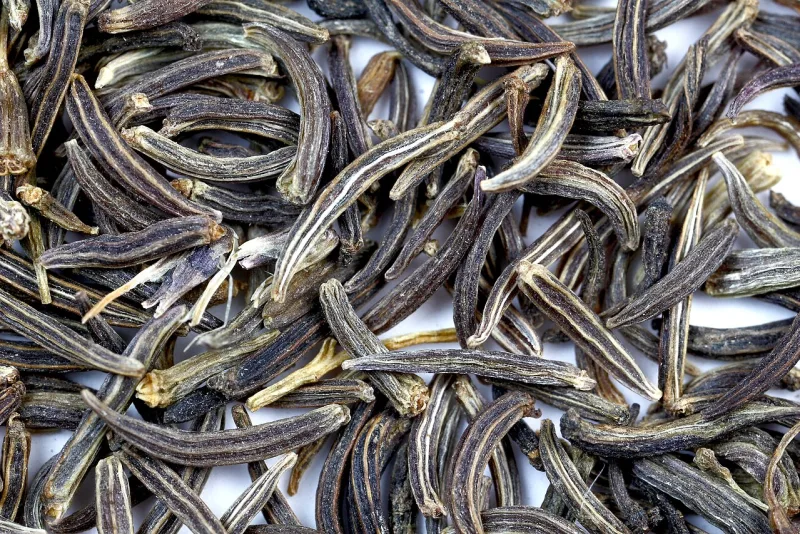
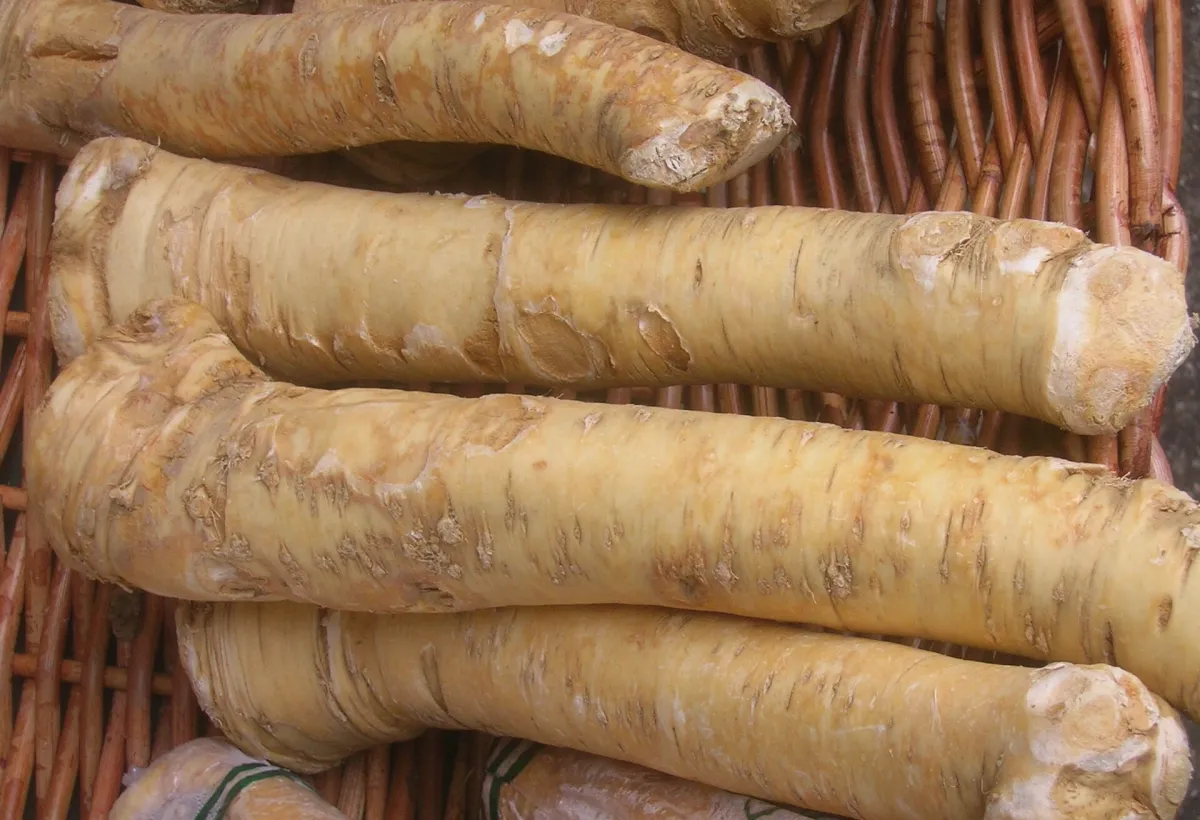
 Photo: Anna reg, CC BY-SA 3.0, via Wikimedia Commons
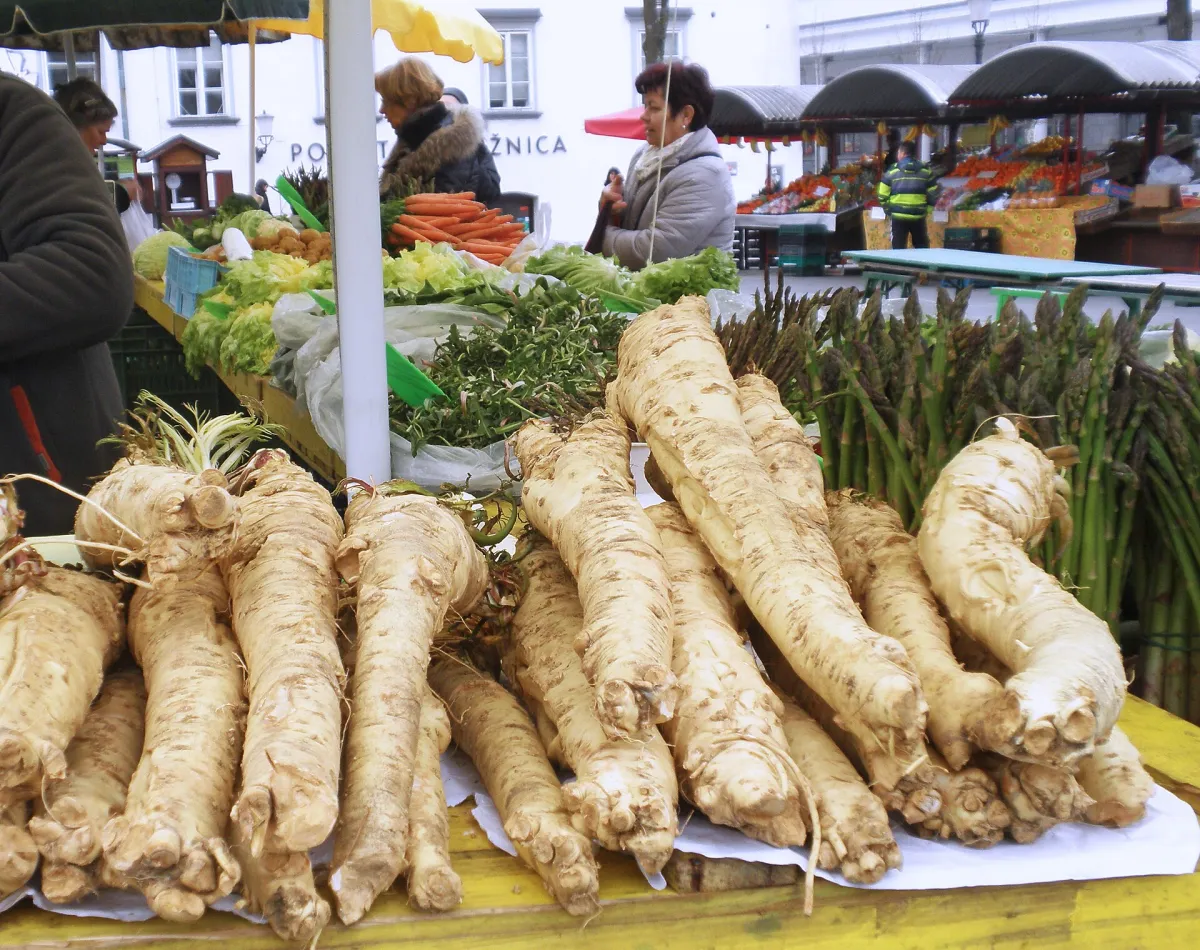
Horseradish (Armoracia rusticana) is a root from the cabbage family that, when freshly grated, releases allyl isothiocyanate, the same pungent compound found in mustard and wasabi. It stimulates nasal secretions, thins mucus and has antimicrobial activity, which is why horseradish is a traditional remedy for a blocked nose, mild sinusitis and colds. It is also irritating, so use small amounts and avoid it with gastritis, ulcers, kidney disease and in young children.
In Romania, horseradish has a fixed place on the Easter table next to lamb, as “horseradish with beetroot”. Its leaves keep pickles crunchy, and grandmothers grated it into honey for coughs. Below you will find what the research says, precise recipes and the safety rules.
Key takeaways
- The heat only appears after grating or crushing: the enzyme myrosinase converts sinigrin into allyl isothiocyanate.
- The EMA has assessed horseradish root and recognizes traditional use as an adjunct for colds and, externally, for minor muscle pain.
- German studies on horseradish combined with nasturtium (Tropaeolum) have shown effects in respiratory and urinary infections, as an adjunct.
- Usual amount: 1-2 teaspoons of freshly grated horseradish a day, with food or honey.
- Contraindicated with stomach ulcers, acute gastritis, kidney disease, untreated hypothyroidism and in children under 4.
What horseradish is
Horseradish is a perennial in the Brassicaceae (crucifer) family, related to cabbage, mustard, radish and wasabi. It grows wild at garden edges and along riverbanks and is easy to cultivate, sometimes too easy, as the root spreads aggressively. The root is harvested in late autumn or early spring, when it is richest in active compounds.
A whole root barely smells. The sharp smell and the tears only appear when the cells are broken by grating: that is when the enzyme myrosinase meets sinigrin and forms allyl isothiocyanate, a volatile substance that goes straight up your nose. This is why grated horseradish quickly loses its power unless you stabilize it with vinegar or lemon.
Active compounds
- Glucosinolates: sinigrin (the main one) and gluconasturtiin, which hydrolyze into allyl isothiocyanate and phenethyl isothiocyanate.
- Vitamin C: the fresh root contains a considerable amount, comparable to citrus by weight.
- Peroxidase: an enzyme from horseradish widely used in laboratories and diagnostics.
- Minerals: potassium, calcium, magnesium, plus fiber.
Benefits: what we know and what we don’t
Blocked nose and mild sinusitis
The volatile isothiocyanates mildly irritate the nasal lining and trigger abundant secretion, which thins mucus and helps drainage. You feel it immediately: eyes water, the nose runs, the sinuses “open”. It is a short-lived, symptomatic effect, useful as an adjunct in sinusitis and colds. It does not replace treatment for confirmed bacterial sinusitis.
Colds and the airways
The European Medicines Agency has assessed horseradish root (Armoraciae rusticanae radix) and considers it a plant with traditional use, as an adjunct for relieving cold symptoms. In Germany there are medicines combining horseradish and nasturtium, tested in clinical studies as an adjunct for respiratory infections (sinusitis, bronchitis) and for preventing recurrent urinary infections. The results are encouraging, but they concern standardized extracts, not the horseradish on your plate. For colds, see also our guide to colds and flu.
Antimicrobial effect
In the lab, horseradish isothiocyanates inhibit many bacteria and fungi, including strains involved in urinary infections. This is the source of horseradish’s “natural antibiotic” reputation. The label is exaggerated: it has neither the strength nor the precision of an antibiotic, and a real infection needs medical treatment.
Digestion
In small amounts, the heat stimulates saliva and stomach secretions, which explains why horseradish traditionally accompanies fatty and smoked meats. In large amounts, the same compounds irritate the stomach.
Muscle aches (external)
Applied to the skin, grated horseradish causes redness and local warmth (a rubefacient effect), like mustard. This is the origin of the traditional poultice for back pain and rheumatism. It requires great caution because it can cause chemical burns.
Horseradish in the kitchen
- Horseradish with beetroot (Easter style): grate 200 g horseradish and 300 g roasted beetroot. Mix with 3 tablespoons wine vinegar, 1 teaspoon salt, 1 teaspoon sugar and 2-3 tablespoons of the beet cooking liquid. Store in small jars in the fridge for up to 3 weeks.
- Horseradish cream: 2 tablespoons finely grated horseradish in 150 g sour cream, a pinch of salt and a few drops of lemon. Serve with boiled beef, smoked fish or potatoes.
- Horseradish in vinegar: grated horseradish covered with apple cider vinegar and a pinch of salt. Vinegar stops the enzymatic reaction and locks in the heat.
- Horseradish leaves in pickles: 1-2 leaves per 3-liter jar of cucumbers. The tannins in the leaves keep the vegetables crunchy.
- Quick sauce for roasts: 1 tablespoon grated horseradish, 2 tablespoons Greek yogurt, 1 teaspoon mustard.
Practical tip: grate horseradish by an open window or in a food processor with the lid on, and open the lid facing away. For maximum heat, add vinegar after 2-3 minutes; for a milder taste, add it immediately.
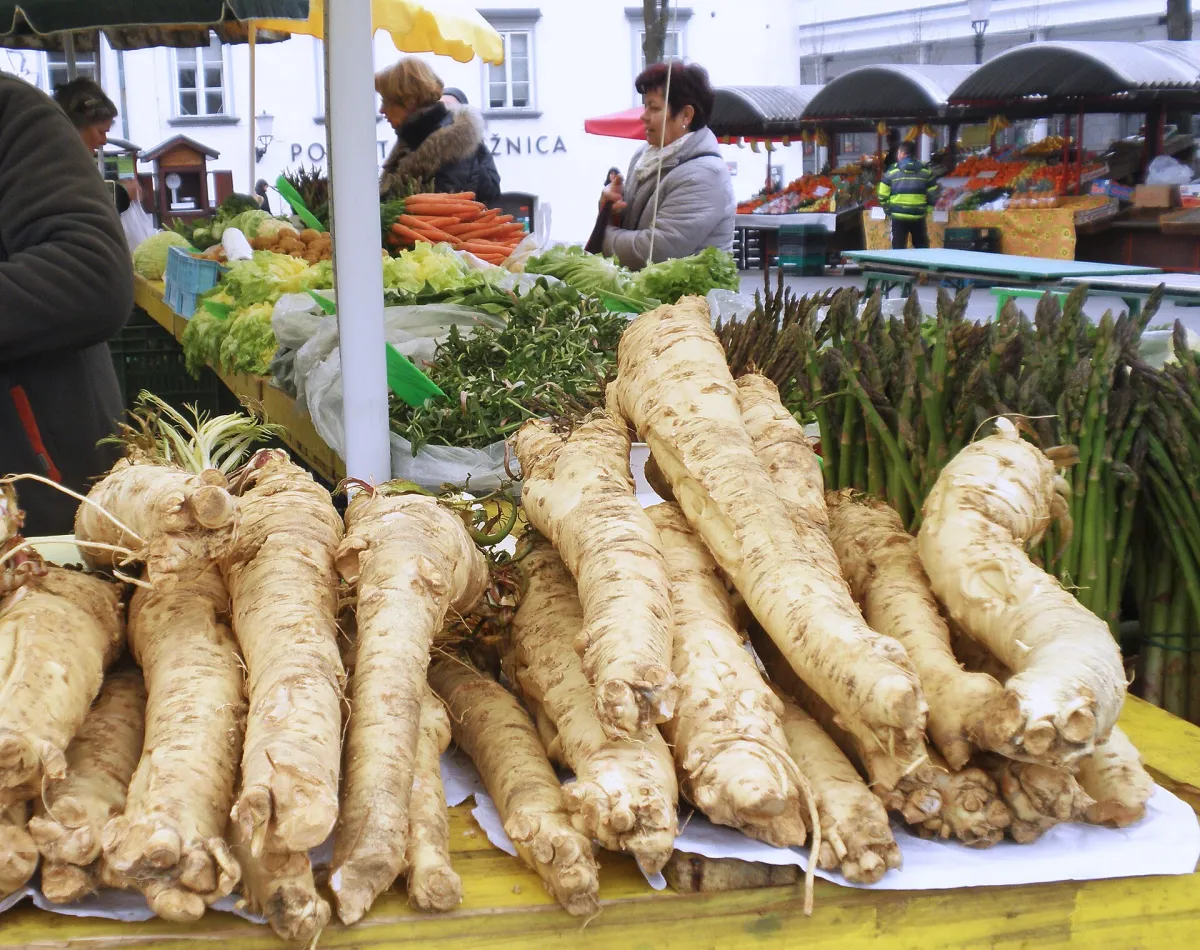 Photo: Amanda Slater from Coventry, West Midlands, UK, CC BY-SA 2.0, via Wikimedia Commons
Remedy recipes for adults
Horseradish and honey for coughs and colds
- Finely grate 50 g of peeled horseradish root.
- Immediately mix it with 100 g honey (1:2 ratio).
- Let it infuse for 12 hours in a closed jar in the fridge.
- Take 1 teaspoon 2-3 times a day after meals, for no more than 7 days.
The syrup keeps in the fridge for up to a week. For other variations, see our article on homemade cough syrups.
Short inhalation for a blocked nose
Grate a teaspoon of horseradish into a bowl, hold your face 20-30 cm away and breathe in gently 2-3 times. Do not put your nose into the bowl and do not prolong it: the vapors are very irritating to eyes and mucous membranes. This method is not for children or people with asthma.
Traditional poultice (external, with care)
Mix 2 tablespoons grated horseradish with 2 tablespoons flour or bran and a little lukewarm water. Spread the paste on gauze, place the gauze paste-side out (not directly on the skin) over the painful area and leave for 5-10 minutes at most. Remove immediately if you feel burning. Do not apply to broken skin, the face or children.
Dosage guide
| Form | Adult dose | Frequency | Notes |
|---|---|---|---|
| Freshly grated, with food | 1-2 teaspoons (5-10 g) | daily, as food | with meals, not on an empty stomach |
| Horseradish honey (1:2) | 1 teaspoon | 2-3 times a day | up to 7 days |
| Fresh root as a remedy | up to 20 g a day | divided | short courses |
| Inhalation | 2-3 breaths | occasionally | not for asthma or children |
| Poultice | 5-10 minutes | once a day | through gauze only |
Contraindications and interactions
- Stomach: gastric or duodenal ulcers, acute gastritis, reflux and irritable bowel syndrome are made worse by horseradish. See also heartburn.
- Kidneys: with inflammatory kidney disease, isothiocyanates may irritate; avoid medicinal amounts.
- Thyroid: glucosinolates are goitrogenic in large amounts, especially with iodine deficiency. Culinary amounts are considered safe, but avoid courses if you have hypothyroidism.
- Children: not used as a remedy in children under 4; avoid inhalation and poultices in all children.
- Pregnancy and breastfeeding: food amounts are fine; concentrated remedies are not recommended.
- Skin and eyes: direct contact with grated horseradish can cause burns and strong eye irritation.
- Medications: no significant interactions are known at culinary doses. If you take thyroid medication, talk to your doctor before courses.
When to see a doctor
- Sinusitis lasting more than 10 days, worsening after initial improvement, or fever above 39°C.
- Severe pain around the eyes, swollen eyelids or vision problems.
- A cough with wheezing or difficulty breathing, or one lasting more than 3 weeks.
- Burning on urination, fever or lower back pain.
- Stomach pain, vomiting or black stools after eating horseradish.
Common mistakes
- Horseradish on an empty stomach “for better effect”. It irritates the stomach lining. Take it with food.
- Inhaling too close. It can trigger bronchospasm and intense tearing.
- Poultice directly on the skin. It causes chemical burns within minutes.
- Keeping grated horseradish uncovered. It loses its heat within hours; stabilize it with vinegar or honey.
- Believing it replaces antibiotics. Lab antimicrobial activity does not treat a confirmed bacterial infection.
- Large amounts with an underactive thyroid. Small amounts are safe, long courses are not.
Choosing and storing horseradish
Choose firm, heavy roots without soft spots or green sprouts. Wrapped in a damp paper towel inside a bag, they keep 2-3 weeks in the fridge. For winter, you can bury them in moist sand in a cellar. Grated horseradish can be frozen in small portions, but it loses some heat.
Conclusion
Horseradish is one of the most powerful condiments in the Romanian kitchen: a freshly grated teaspoon opens the nose, stimulates digestion and adds vitamin C. As a remedy, it has European traditional-use recognition for colds and encouraging studies in standardized combinations, but it is not an antibiotic. Use it with food, in small amounts, and avoid it if you have a sensitive stomach, kidney disease or small children. If you like pungent spices, read also about mustard seeds, its close relative, and garlic, another cold-season classic.
Frequently asked questions
Does horseradish help with sinusitis? It helps with symptoms: the pungent vapors thin mucus and temporarily open the nasal passages. It is a good adjunct for discomfort, but sinusitis lasting more than 10 days or with high fever needs a doctor.
How much horseradish can I eat per day? As a food, 1-2 teaspoons of grated horseradish are enough for most adults. As a remedy, up to about 20 g of fresh root a day can be used in short courses, with food.
Can I give horseradish and honey to children? Not under age 4, and honey is never given to infants under 1 year. For older children, only very small amounts and only after talking to a pediatrician.
Why does grated horseradish turn bitter or lose its heat? Allyl isothiocyanate is volatile and evaporates within hours. Add vinegar or lemon 2-3 minutes after grating and keep it in a closed jar in the fridge.
Does horseradish affect the thyroid? Eaten in large amounts on a regular basis, glucosinolates can reduce iodine uptake by the thyroid. Normal food amounts are not a problem, but people with hypothyroidism should avoid courses.
Are horseradish leaves edible? Young leaves can be eaten cooked in small amounts, but they are mostly used in pickles for crunch and flavor. The main medicinal part is the root.
Is horseradish the same as wasabi? No, but they are relatives in the same family and share the same pungent compound. Many commercial “wasabi” pastes are actually horseradish colored green.
Sources and further reading
- European Medicines Agency (HMPC): assessment and monograph on Armoracia rusticana, radix.
- PubMed: German clinical studies on the combination of horseradish root and nasturtium (Tropaeolum majus) in respiratory and urinary infections.
- PubMed: reviews on glucosinolates, isothiocyanates and their antimicrobial activity.
Informational content only. It does not replace advice from your doctor or pharmacist.