 Photo: Tero Karppinen from Finland, CC0, via Wikimedia Commons
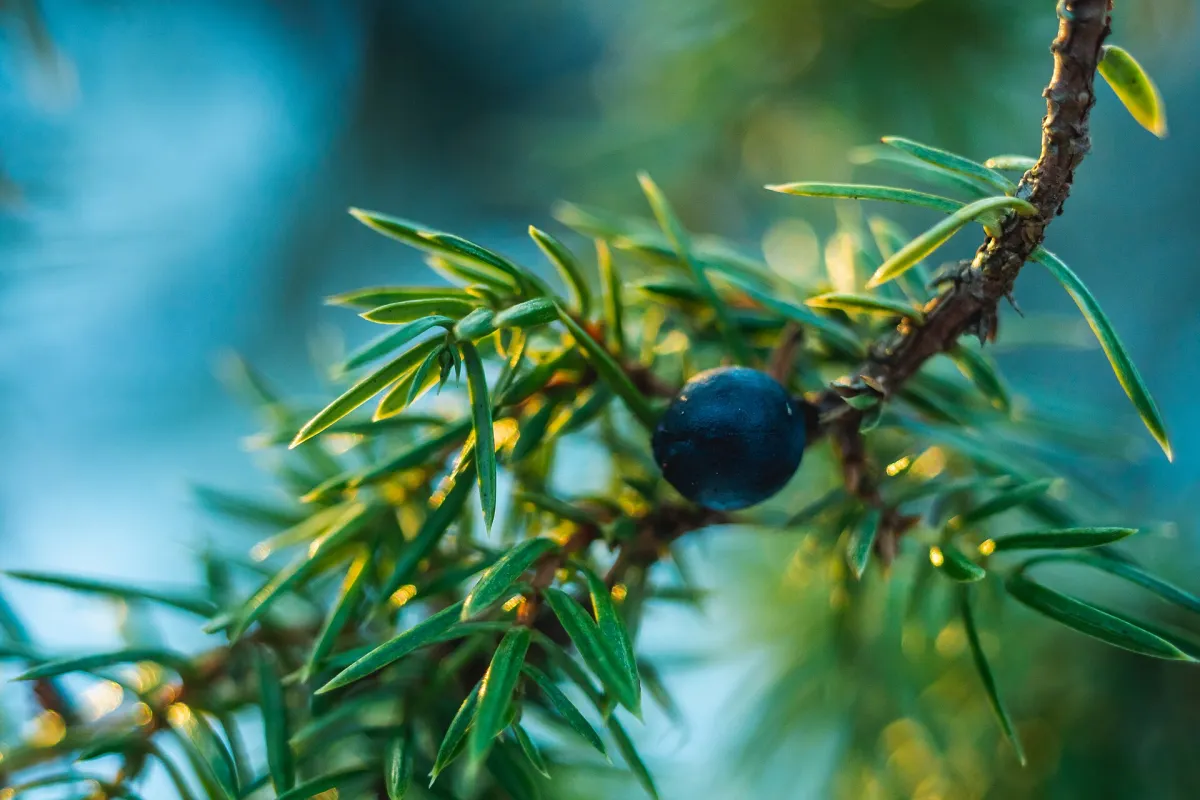
Juniper berries (Juniperus communis) are fleshy, blue-black cones with a resinous, slightly sweet and peppery taste. As a remedy, the European Medicines Agency recognizes their traditional use for bloating, sluggish digestion and for increasing urine output in minor urinary complaints. They should only be used in short courses, though, because in excess they irritate the kidneys, and they are contraindicated in pregnancy and kidney disease.
In the kitchen, juniper is the classic spice for sauerkraut and braised cabbage, game, smoked meats and, of course, gin. Below you will learn how to cook with it, how to prepare the tea, how much you can take, and the mistakes people make when they treat it as a “cleanse”.
Key takeaways
- Juniper berries contain an essential oil rich in alpha-pinene, sabinene and terpinen-4-ol, responsible for the diuretic and carminative effects.
- The EMA recognizes traditional use for dyspepsia, flatulence and for “flushing” the urinary tract, as an adjunct.
- Usual adult amount: 2-10 g of dried berries per day, typically 1 crushed teaspoon per cup of tea.
- Contraindicated in pregnancy, kidney inflammation or failure, and in children.
- The “ascending” cure of 1 up to 15 berries a day, popular in German folk tradition, is not recommended.
What juniper berries are
Common juniper is a coniferous shrub found throughout the Northern Hemisphere, including the mountains and hills of Romania. What we call “berries” are actually female cones with fused, fleshy scales. They ripen slowly: green in the first year, they only turn dark blue, with a fine waxy bloom, in the second or third year. Only ripe berries are used.
Beware of confusion: gardens and the wild also host savin juniper (Juniperus sabina), a toxic, strongly irritant and abortifacient species. It has scale-like leaves pressed against the twig and an unpleasant smell when crushed. Common juniper has prickly needles arranged in threes. If you are unsure, buy dried berries from a store.
Active compounds
- Essential oil (0.5-2%): alpha-pinene, sabinene, myrcene, limonene and terpinen-4-ol. Terpinen-4-ol is thought to drive the diuretic effect, and also the potential kidney irritation at high doses.
- Flavonoids (rutin, quercetin derivatives) and catechin tannins, antioxidant and mildly astringent.
- Invert sugars (up to 30%), which explain the faint sweetness of ripe berries.
- Resins and bitter compounds, which stimulate appetite and digestive secretions.
Benefits: tradition and evidence
Digestion, bloating and fullness
The European Medicines Agency (EMA), through its Committee on Herbal Medicinal Products (HMPC), has published a monograph on Juniperi pseudo-fructus recognizing traditional use for the symptomatic relief of digestive disorders such as dyspepsia and flatulence. “Traditional” means the efficacy rests on long-standing experience rather than controlled clinical trials. The effect comes from the carminative essential oil and from bitter substances that stimulate digestive secretions. If this is a frequent problem for you, see also our article on bloating.
Water elimination and the urinary tract
The second recognized traditional use is increasing urine output to flush the urinary tract, as an adjunct in minor urinary complaints. That does not mean juniper treats a urinary infection: if you have burning, fever or blood in your urine, you need a diagnosis and usually treatment. As a supportive remedy for a mild urinary tract infection, its role is only to increase fluid output, together with plenty of water.
Antimicrobial and anti-inflammatory effects
Lab studies show that juniper oil inhibits some bacteria and fungi and has anti-inflammatory and antioxidant effects. The results are promising, but there are no clinical trials that justify internal use for infections.
Blood sugar
Some animal studies have observed a glucose-lowering effect. There is no solid human data, and people with diabetes should stay on their prescribed treatment.
Juniper in the kitchen
The resinous, forest-like flavor suits rich, hearty dishes and makes them easier to digest. Crush the berries lightly with the flat of a knife before use to release the oil.
- Sauerkraut and braised cabbage: 5-8 berries per 3-liter jar or per pot of braised cabbage, along with bay leaves and peppercorns.
- Game (wild boar, venison) and pork: 8-10 crushed berries in a red wine marinade with garlic, thyme and bay, for 12-24 hours.
- Brine for smoked meats and bacon: a few berries per liter of brine.
- Pan sauce for roasts: 4-5 ground berries added to the wine sauce, then strained.
- Marinated fish: 3-4 berries in a vinegar and onion marinade.
- Gin and spirits: juniper is the dominant aroma of gin; in Slovakia it is used for borovička, a juniper brandy.
A practical rule: 3-4 berries per portion are enough; beyond that the taste turns bitter and medicinal.
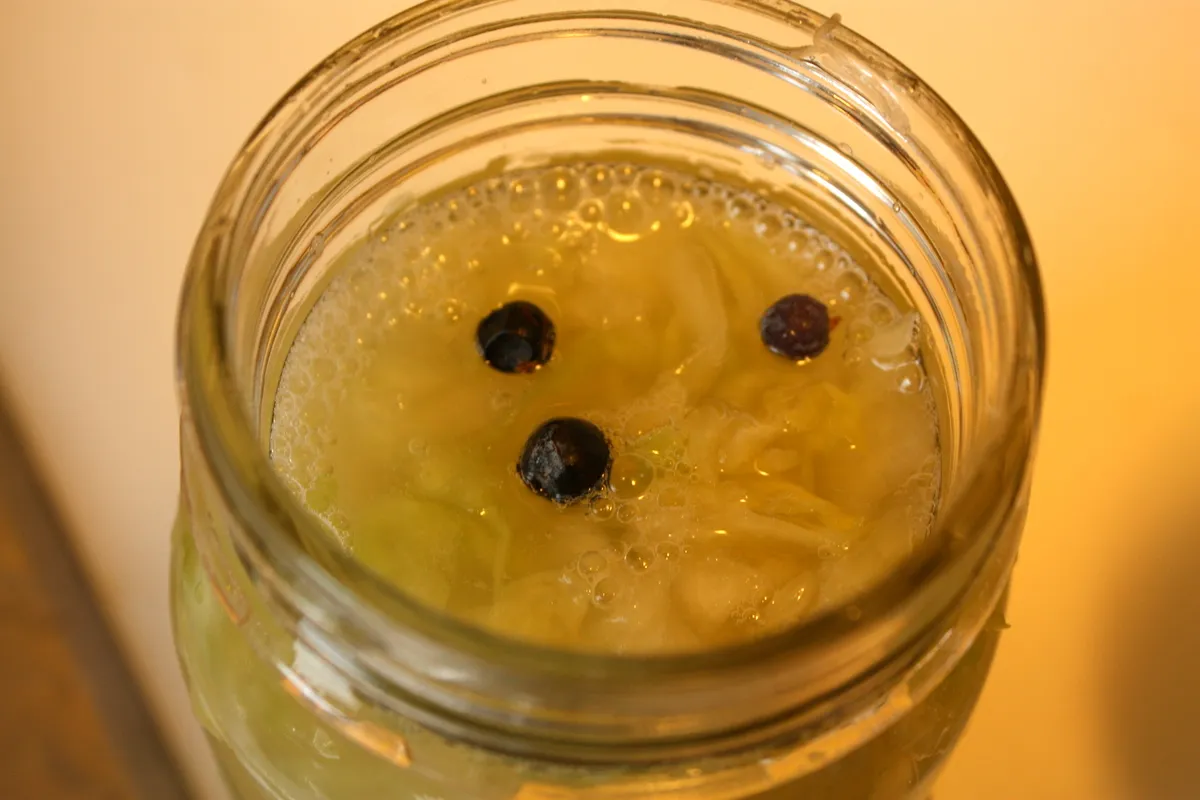 Photo: Leslie Seaton from Seattle, WA, USA, CC BY 2.0, via Wikimedia Commons
How to prepare the remedies
Juniper berry tea (infusion)
- Crush 1 teaspoon of dried berries (about 2-2.5 g) in a mortar or with a knife.
- Place them in a mug and pour over 200-250 ml boiling water.
- Cover and steep for 10 minutes.
- Strain and drink warm, 2-3 times a day, between meals.
For digestion, drink it 20-30 minutes before a meal. For the diuretic effect, pair it with at least 1.5-2 liters of water a day.
Combined digestive tea
Mix equal parts of crushed juniper berries, fennel seeds and peppermint leaves. Use 1 teaspoon of the blend per 250 ml boiling water, covered for 10 minutes. Drink after heavy meals, no more than 2 cups a day.
Chewing the berries
Traditionally, 2-3 dried berries are chewed slowly after a meal for bloating. It is a simple method, but do not exceed 5-6 berries a day.
Essential oil (external only)
Juniper oil is used diluted (2-3 drops in a tablespoon of vegetable oil) for massage in muscle and rheumatic aches, with a warming, counter-irritant effect. Do not apply it to irritated skin and do not swallow it.
Dosage guide
| Form | Adult dose | Frequency | Maximum duration |
|---|---|---|---|
| Tea from crushed berries | 2-2.5 g / 250 ml | 2-3 cups a day | 2 weeks, then a break |
| Chewed berries | 2-3 berries | after meals | occasionally |
| Total dried berries | 2-10 g a day | - | short courses |
| In food | 3-10 berries / pot | as food | no restriction |
| Essential oil | 2-3 drops, diluted | external, local | a few days |
The 2-10 g daily range comes from the classic German monographs (Commission E). Courses should not run longer than a few weeks without a doctor’s approval.
Contraindications and interactions
- Pregnancy: juniper berries are contraindicated because they may stimulate uterine contractions. Breastfeeding is not a time for courses either.
- Kidney disease: acute kidney inflammation (nephritis), kidney failure and kidney stones with colic are contraindications. Terpinen-4-ol may irritate kidney tissue at high doses or with long-term use.
- Swelling from heart or kidney disease: do not try to flush out water with diuretic teas if the swelling comes from the heart or kidneys. See also our article on water retention.
- Children: not recommended for children and adolescents under 18 due to lack of data.
- Diabetes: monitor your blood sugar if you use juniper regularly, as the effect might add to your medication.
- Diuretics and lithium: juniper may increase fluid loss; in people taking lithium, changes in water excretion can alter drug levels. Talk to your doctor.
- Allergy: people allergic to cypress or juniper pollen may react.
When to see a doctor
- Burning on urination, fever, chills, lower back pain or blood in the urine.
- Leg swelling that appears suddenly or comes with shortness of breath.
- Persistent stomach pain, vomiting or unexplained weight loss.
- Lower back pain, reduced or dark urine after taking juniper: stop it immediately.
Common mistakes
- The “1 to 15 berries” cure. The folk method of increasing chewed berries daily up to 15 and then decreasing exposes the kidneys to high doses for weeks. Modern herbal medicine no longer recommends it.
- Confusing it with savin juniper. Juniperus sabina is toxic. Do not forage without reliable identification.
- Green or stale berries. Green ones are unripe and bitter; scentless ones have lost their oil.
- Long boiling. The volatile oil escapes; make a covered infusion, not a decoction.
- Using it as a weight-loss “detox”. Losing water is not losing fat, and diuretics used carelessly upset electrolytes.
- Not drinking enough water. A diuretic tea without enough fluid overloads the kidneys.
Choosing and storing juniper berries
Choose whole berries, dark blue to black, slightly wrinkled, that release a strong resin and forest smell when crushed. Store them in a tightly closed glass jar in a cool, dark place. Whole berries keep their aroma for about a year; crush them just before use.
Conclusion
Juniper berries are a spice with personality, essential for cabbage, game and smoked meats, and a traditional remedy with European recognition for bloating and for increasing urine output in mild urinary complaints. Their power comes from the essential oil, which becomes irritating in large amounts. Use them in small doses, in short courses, with plenty of water, and avoid them completely in pregnancy and kidney disease. For other spices that help digest heavy meals, read about allspice and black pepper, and for another traditional diuretic herb, about lovage.
Frequently asked questions
Are juniper berries good for the kidneys? They increase urine output and are traditionally used as an adjunct in minor urinary complaints, but they do not “cleanse” the kidneys. With existing kidney disease they are contraindicated because they can irritate kidney tissue.
How many juniper berries can I eat per day? As a remedy, 2-3 berries chewed after a meal or 1 crushed teaspoon in tea, 2-3 times a day. The total should not exceed about 10 g a day, and courses should not last more than 2 weeks without medical advice.
Can I pick juniper berries in the mountains? Yes, if you reliably recognize common juniper (prickly needles in threes) and pick only blue, ripe berries. Avoid savin juniper, which has scale-like leaves and an unpleasant smell and is toxic.
Does juniper help with weight loss? It removes water, not fat. The drop on the scale after a diuretic tea disappears once you rehydrate. Using it for weight loss is not recommended.
Can I take juniper during pregnancy? No. Medicinal amounts are contraindicated during pregnancy. A few berries in a family dish usually pose no problem, but do not use teas or tinctures.
Why is juniper added to sauerkraut? For flavor and because its oil is carminative, making cabbage easier to digest. It also has a mild antimicrobial action, but proper fermentation depends mainly on salt and temperature.
Does gin have the benefits of juniper? No. Alcohol cancels any possible benefit, and the amount of berry compounds is small. Gin remains an alcoholic drink, not a remedy.
Sources and further reading
- European Medicines Agency (HMPC): Community herbal monograph on Juniperus communis L., pseudo-fructus (traditional use in dyspepsia, flatulence and increased urine output).
- German Commission E: monograph on Juniperi fructus (2-10 g daily and contraindications).
- PubMed: reviews on the essential oil composition of Juniperus communis and its antimicrobial and anti-inflammatory activity.
Informational content only. It does not replace advice from your doctor or pharmacist.