 Photo: Schlaghecken Josef, CC BY-SA 4.0, via Wikimedia Commons
Marjoram (Origanum majorana) is an aromatic herb from the mint family with a sweet, floral taste, milder than oregano. Traditionally it is used for bloating, sluggish digestion and menstrual cramps, and a small clinical trial suggested interesting hormonal effects in women with polycystic ovary syndrome. As a food it is safe; as a remedy it is used in short courses because the plant contains small amounts of arbutin.
In Romania, marjoram is “the sausage spice”: a must in homemade sausages, liver sausage, blood sausage and mashed white beans. It helps digest fatty food and has an aroma that ties garlic and meat together. Here is how to use it in the kitchen and as a tea.
Key takeaways
- The essential oil (1-3%) contains terpinen-4-ol and sabinene hydrate, with mild carminative and antispasmodic effects.
- Traditional uses: bloating, slow digestion, menstrual cramps, blocked nose.
- A small clinical trial in polycystic ovary syndrome reported improved insulin sensitivity after marjoram tea.
- Tea: 1-2 teaspoons of dried herb (1-2 g) per 250 ml boiling water, 5-10 minutes, 1-2 cups a day.
- The German Commission E monograph does not recommend prolonged medicinal use because of arbutin; marjoram ointments should be avoided in infants and small children.
What marjoram is
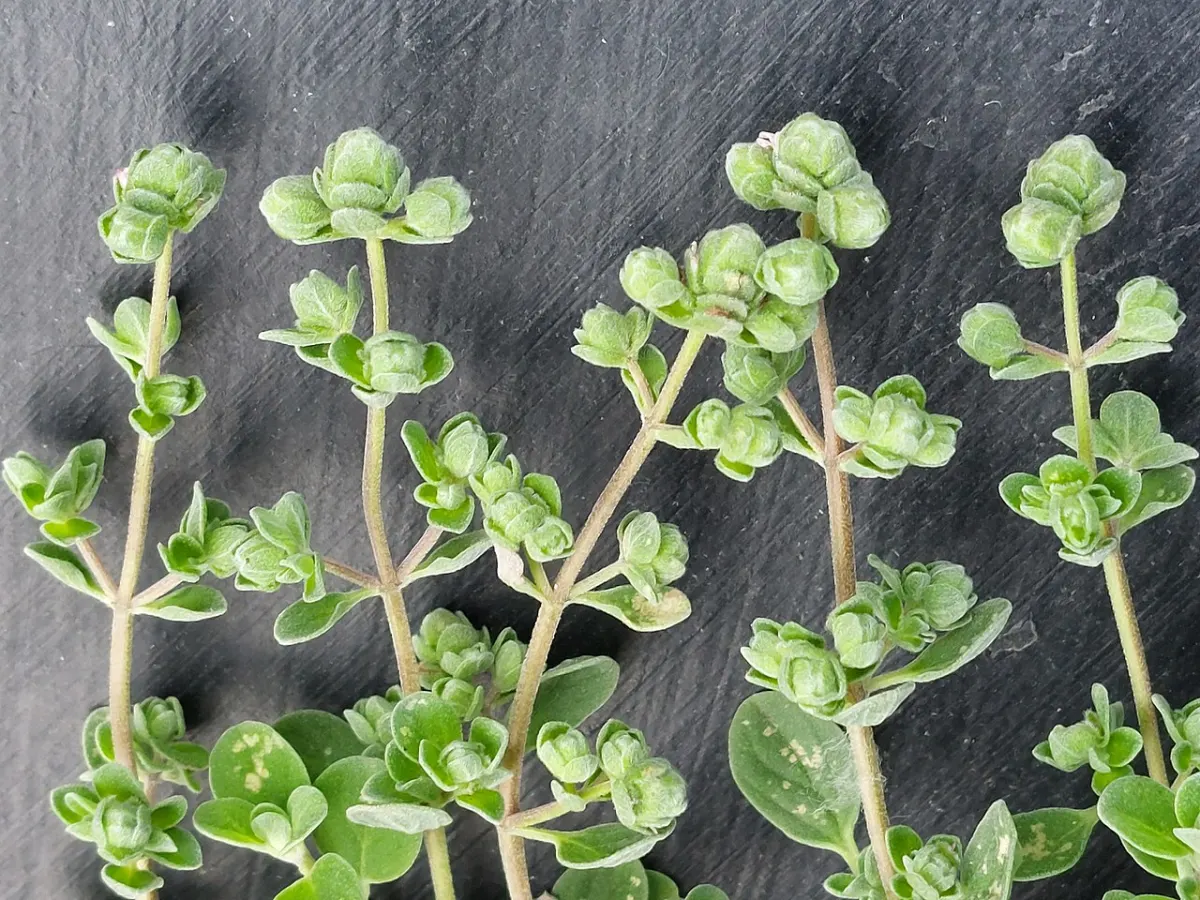
Marjoram belongs to the Lamiaceae family, along with mint, thyme, rosemary and oregano. In its native Mediterranean climate it is perennial, but in Romania it is usually grown as an annual because it cannot survive frost. It has thin stems, small oval velvety grey-green leaves and tiny white or pink flowers gathered in round “knots” (hence the old name “knotted marjoram”).
Marjoram vs. oregano
| Feature | Marjoram (O. majorana) | Oregano (O. vulgare) |
|---|---|---|
| Taste | sweet, floral, delicate | intense, peppery, slightly bitter |
| Main compounds | terpinen-4-ol, sabinene hydrate | carvacrol, thymol |
| Frost tolerance | tender, grown as an annual | perennial, hardy |
| Typical use | sausages, beans, soups, meat | pizza, tomato sauces, grills |
| When to add | at the end (delicate aroma) | can be cooked longer |
The two can stand in for each other, but oregano is stronger: use half the amount.
Active compounds
- Essential oil (1-3%): terpinen-4-ol, cis-sabinene hydrate, gamma-terpinene, linalool, alpha-terpineol.
- Rosmarinic acid and other phenolic acids: antioxidant and anti-inflammatory in lab studies.
- Flavonoids: luteolin, apigenin, diosmetin.
- Arbutin and hydroquinone in small amounts, which is why prolonged medicinal use is not recommended.
- Tannins and bitter compounds.
Benefits: tradition and evidence
Digestion and bloating
Marjoram has been used for centuries as a carminative and stomachic herb: it stimulates gastric secretion and helps expel gas. This explains why it goes into heavy dishes like sausages and beans that would otherwise cause bloating. For frequent digestive trouble, see also our guide to bloating.
Menstrual cramps and the cycle
Traditionally, marjoram tea was drunk for menstrual cramps and to “regulate” the cycle. A small randomized clinical trial published in 2016 tested marjoram tea in women with polycystic ovary syndrome and reported improved insulin sensitivity and lower levels of some adrenal androgens after one month. It is a single small study; the results are promising but do not justify replacing treatment.
Blocked nose
Marjoram steam inhalations and marjoram ointments have been used for a blocked nose. In adults, inhaling steam from a hot infusion may make breathing feel easier. In young children, ointments with essential oils should be avoided.
Antioxidant and antimicrobial
Marjoram extracts show strong antioxidant activity in the lab, thanks to rosmarinic acid and flavonoids, and inhibit some bacteria and fungi. The practical use is mainly culinary: it slows the rancidity of fats in meat products.
Calm and sleep
In folk medicine, marjoram was considered mildly calming and used in evening teas for nervousness and insomnia. There are no solid clinical studies for this effect.
Marjoram in the kitchen
Dried marjoram is more concentrated than fresh. General rule: 1 teaspoon dried = 1 tablespoon fresh. For maximum aroma, rub the dried herb between your palms over the pot.
- Homemade sausages: 1-1.5 tablespoons dried marjoram per 1 kg minced meat, with garlic, salt, pepper and paprika.
- Liver and blood sausage: 1 tablespoon per 1 kg of mixture.
- Mashed white beans: 1 teaspoon of dried marjoram rubbed into the fried onion topping.
- Potato soup (Transylvanian “goulash” soup): 1 teaspoon at the end.
- Roast pork: 1 tablespoon dried marjoram with garlic and oil, rubbed onto the meat.
- Vegetable stews: ½-1 teaspoon.
- Omelets and scrambled eggs: a pinch of chopped fresh marjoram.
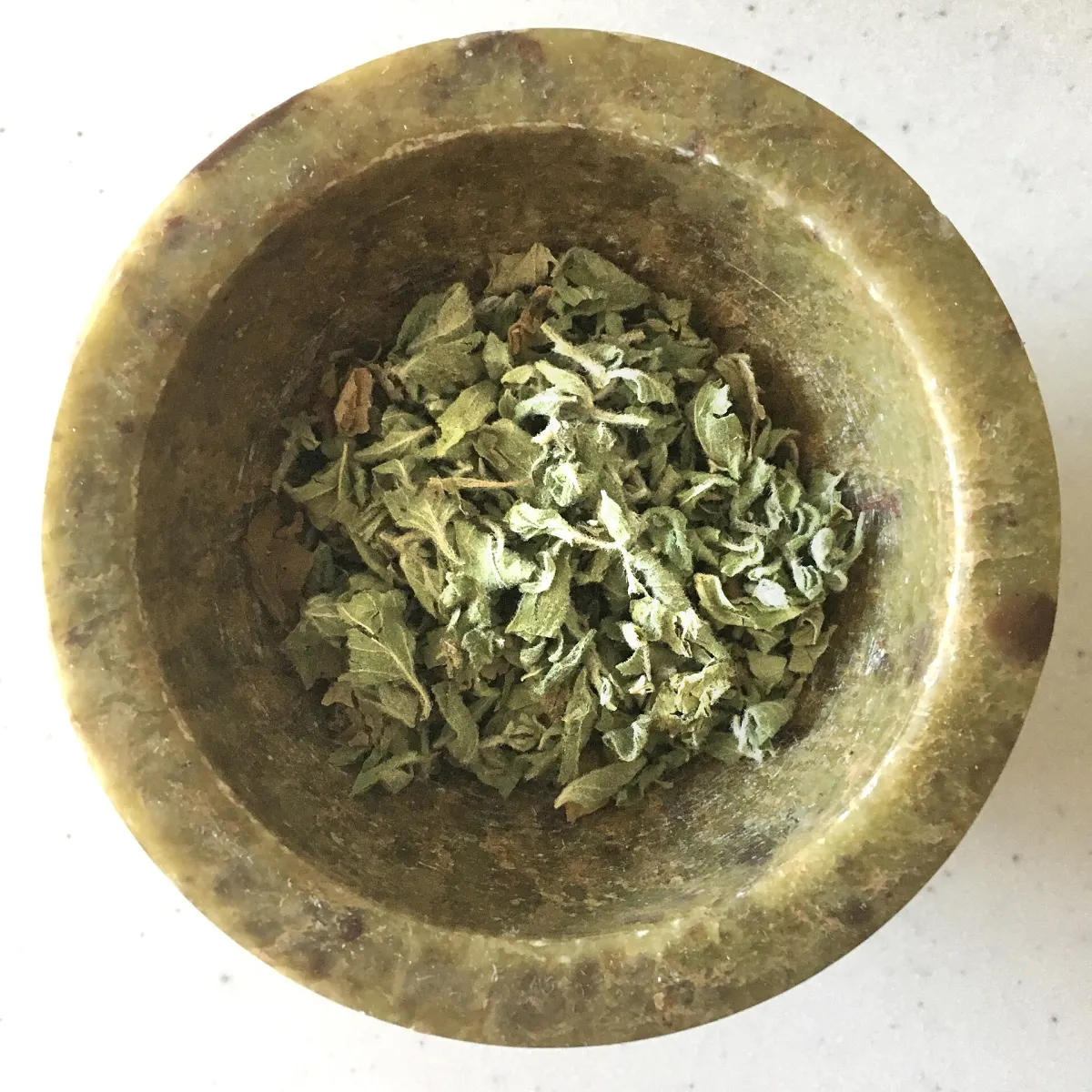 Photo: Misterneedlemouse, CC0, via Wikimedia Commons
Simple remedies for adults
Marjoram tea for digestion
- Place 1-2 teaspoons of dried marjoram (1-2 g) in a mug.
- Pour over 250 ml boiling water.
- Cover and steep for 5-10 minutes (longer makes it bitter).
- Strain and drink after meals, 1-2 cups a day.
Tea for menstrual cramps
Mix 1 teaspoon of marjoram with 1 teaspoon of chamomile flowers. Steep covered for 10 minutes in 250 ml boiling water. Drink warm twice a day during the first days of your period. A hot water bottle on the abdomen adds to the effect.
Steam inhalation for a blocked nose (adults)
Pour 1 liter of hot (not boiling) water over 2 tablespoons of dried marjoram. Cover your head with a towel and breathe the steam for 5 minutes, eyes closed, about 30 cm away. Not for children or people with asthma.
Massage oil (external)
Put 2 tablespoons of dried marjoram in 100 ml olive oil and leave to infuse for 2 weeks in the dark. Strain and use for massaging the abdomen or tense muscles.
Dosage guide
| Form | Adult dose | Frequency | Duration |
|---|---|---|---|
| Dried, in food | ½-1 teaspoon / family dish | as food | no restriction |
| Tea | 1-2 g / 250 ml | 1-2 cups a day | 1-2 weeks |
| Steam inhalation | 2 tablespoons / 1 liter water | 1-2 times a day | a few days |
| Infused oil | external | as needed | - |
| Essential oil | do not swallow | - | external only, diluted |
Contraindications and interactions
- Pregnancy: marjoram in food is safe. Daily teas and essential oil should be avoided, as the plant is traditionally used to stimulate menstruation.
- Infants and young children: do not apply marjoram ointments or essential oils to the face or chest of small children; they can trigger breathing reactions. Do not give medicinal tea without a pediatrician’s approval.
- Prolonged use: because of arbutin and hydroquinone, marjoram is not used medicinally for months on end.
- Lamiaceae allergy: people allergic to oregano, thyme, basil or mint may react.
- Anticoagulants: some extracts have affected platelet aggregation in the lab; at culinary doses the risk is minimal, but avoid courses before surgery.
- Diabetes: if you drink marjoram tea regularly, monitor your blood sugar, given the insulin sensitivity data.
- Hormonal treatments: if you are being treated for infertility or polycystic ovary syndrome, talk to your doctor before using the tea regularly.
When to see a doctor
- Very severe menstrual pain that does not respond to usual painkillers or has changed recently.
- Very irregular cycles, missed periods for several months, or signs of androgen excess (acne, excess hair).
- Persistent bloating with weight loss or blood in the stool.
- A blocked nose lasting more than 10 days or high fever.
Common mistakes
- Cooking marjoram for hours. The delicate aroma fades; add it at the end, except in sausages and roasts.
- Swapping 1:1 with oregano. Oregano is stronger; use half.
- Over-steeping the tea. After 10 minutes it turns bitter.
- Marjoram ointments on babies. Essential oils can cause laryngeal spasm in small children.
- Courses lasting months. Use it as a remedy only short term.
- Old, scentless marjoram. If it does not smell sweet when rubbed, replace it.
Conclusion
Marjoram is a quiet but essential spice in Romanian cooking: it gives soul to sausages and beans and makes them easier to digest. As a remedy, it is a traditional aid for bloating and menstrual cramps, with an interesting clinical trial in polycystic ovary syndrome, but not a treatment. Use it generously in food, in teas for short courses, and avoid ointments on small children. For other spices that help digest fatty food, read about cumin and juniper berries, and for a close relative, about thyme.
Frequently asked questions
What is the difference between marjoram and oregano? They are related species in the same genus. Marjoram has a sweet, floral, mild taste, while oregano is more intense and peppery because of carvacrol. Oregano is used in smaller amounts.
Does marjoram tea help with menstrual cramps? It is traditionally used for this and has a mild antispasmodic effect. Clinical evidence is limited, but as a comfort remedy, along with local warmth, it can help.
Does marjoram help with polycystic ovary syndrome? A small clinical trial reported favorable effects on insulin sensitivity and some hormones. It is a single study, so the tea can be at most an adjunct, discussed with your doctor.
Can I use marjoram during pregnancy? Yes, in food amounts. Avoid daily teas and essential oil.
How much marjoram goes into sausages? About 1-1.5 tablespoons of dried marjoram per 1 kg of meat. Rub it between your palms first to release the aroma.
Is fresh or dried marjoram better? Dried for sausages and long-cooked dishes. Fresh for salads, eggs and cold sauces. Dried is roughly three times more concentrated.
Can I give marjoram tea to children? It is not recommended for young children without a pediatrician’s approval. Ointments and essential oils containing marjoram should be avoided entirely in infants and small children.
Sources and further reading
- German Commission E: monographs on Majoranae herba and Majoranae aetheroleum (precautions on arbutin and use in small children).
- Haj-Husein I. et al., Journal of Human Nutrition and Dietetics (2016): pilot clinical trial of marjoram tea in polycystic ovary syndrome.
- PubMed: reviews on the phytochemistry and pharmacology of Origanum majorana.
Informational content only. It does not replace advice from your doctor or pharmacist.