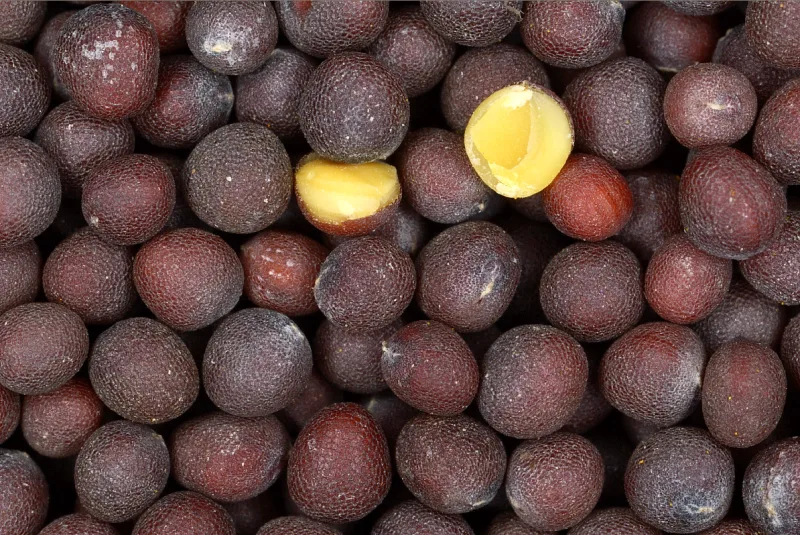

Mustard Seeds: Benefits for Circulation, Uses and How to Use Them
IMPORTANT: Mustard, especially as a poultice or bath, is a powerful skin irritant. Never apply it directly to sensitive skin without a protective layer, and never leave it on for more than 10-15 minutes, to avoid chemical burns. Mustard baths and poultices are contraindicated for people with severe heart problems, uncontrolled high blood pressure, advanced varicose veins, fragile veins, pregnant women, young children, and anyone with very sensitive skin or skin conditions. Consuming large amounts internally can irritate the stomach and intestines. If you take medication for your heart, blood pressure, or blood thinners, or if you have a chronic condition, talk to your doctor before using mustard as a remedy. This article is for informational purposes and does not replace medical advice.
Grandma Maria from the mountain village had a ritual that no one in the family dared to question. Whenever someone came home shivering with cold, with frozen feet after hours of work in the frost, she would immediately set out a basin of warm water and a good spoonful of mustard flour. “Put your feet in here and sit still,” she’d say, “and you’ll feel your blood wake up.” After a few minutes, the feet would begin to redden and tingle pleasantly, and the cold that seemed to have settled into the bones would vanish as if by magic. Grandma always said that mustard “calls the blood to the surface” and that this was why it kept colds away.
She used mustard in other ways too. When someone had a cough that wouldn’t go away or a chest ache from the cold, she would prepare a mustard paste, spread it on a clean cloth, and apply it to the back or chest, always carefully, always watching the clock. “Mustard is like a good fire,” she’d say, “it warms you and helps you, but if you leave it too long it burns you.” This simple wisdom — that mustard works through the heat and local irritation it produces — lies at the heart of all traditional remedies made with this spice.
Mustard seeds come from several related plant species in the cabbage family (Brassicaceae), the same family as cabbage, broccoli, and radish. The best known are black mustard (Brassica nigra), brown mustard (Brassica juncea), and white or yellow mustard (Sinapis alba). These small, round seeds have been used for thousands of years both as a food and spice and as a remedy. In Romanian folk tradition and in many other cultures, mustard was prized above all for its ability to “warm” — to stimulate local blood circulation, ease rheumatic pains, and clear the airways. Today, as we rediscover the value of everyday spices, mustard seeds are reclaiming their place of honor both in the kitchen and in the home remedy chest.
Table of Contents
- What mustard is and where it comes from
- Composition and active compounds
- Health benefits
- Mustard and blood circulation
- Traditional uses
- How to use mustard: step-by-step recipes
- Dosage and how to use it
- Mustard in the kitchen
- Lifestyle tips for good circulation
- Practical tips and common mistakes
- Conclusion
- Frequently Asked Questions
What mustard is and where it comes from
Mustard is one of the oldest plants cultivated by humans. Its seeds have been found in archaeological sites across the Middle East and the Mediterranean, and references to mustard appear in ancient texts from Egypt, Greece, and Rome. It was the Romans who mixed the ground seeds with grape must (which is thought to be the origin of the name: mustum ardens, meaning “burning must”), obtaining a spicy paste similar to today’s table mustard.
The mustard plant grows quickly, blooms abundantly with small yellow flowers, and produces pods full of tiny seeds. White mustard has larger, yellowish-beige seeds with a milder taste. Black and brown mustard have smaller, darker seeds with a stronger, hotter aroma. This difference in pungency is no accident: it depends on the chemical compounds each species contains and how those compounds are activated.
In the traditional household, mustard was grown both for its leaves (eaten as greens) and especially for its seeds, which stored easily through the winter and were used both for pickling and as a home remedy. Mustard flour — that is, finely ground seeds — was a fixture in every grandmother’s pantry.
Composition and active compounds
What makes mustard so special, both in flavor and in its effects, are the glucosinolates, compounds that in themselves have no smell or pungent taste. The magic happens when the seed is crushed and mixed with water: an enzyme called myrosinase comes into contact with the glucosinolates and transforms them into isothiocyanates — the substances responsible for the penetrating aroma and the sensation of heat. In black and brown mustard, allyl isothiocyanate forms in particular, which is very hot and volatile; in white mustard, a less volatile compound forms, giving a milder heat felt more on the tongue.
This enzymatic reaction explains why homemade mustard is so hot when freshly mixed with cold water, and why the heat fades over time or with heat. Besides glucosinolates, mustard seeds contain:
- fatty oils (over a third of the seed’s weight), rich in unsaturated fatty acids;
- good-quality proteins;
- dietary fiber, useful for digestion;
- minerals such as selenium, magnesium, phosphorus, iron, calcium, and manganese;
- mucilage (especially in white mustard), which gives a slightly viscous texture;
- antioxidant compounds from the family of protective plant substances.
Studies suggest that the isothiocyanates in cruciferous vegetables, including those in mustard, are among the most interesting plant compounds for research, thanks to the antioxidant and anti-inflammatory properties observed in the laboratory. Folk tradition intuited long beforehand that mustard “does good,” even without knowing the chemical mechanisms.
Health benefits
It stimulates local circulation
The best-known and most appreciated effect of mustard in folk medicine is its ability to stimulate blood flow where it is applied. When mustard paste touches the skin, the isothiocyanates gently irritate the nerve endings and cause the blood vessels in the area to dilate. The result is a sensation of warmth and a reddening of the skin (an effect called “rubefacient”). In effect, the blood is “called” to the surface. This is why mustard foot baths and poultices were the go-to remedy for cold hands and feet, for numbness, and for driving the cold out of the body.
It helps ease rheumatic and muscular pain
The same local heat that stimulates circulation also brings pain relief. Tradition used mustard poultices for back pain, rheumatism, muscles tense from exertion, and joint aches that worsened in cold, damp weather. The penetrating warmth distracts from the pain and relaxes the surrounding muscles.
It supports breathing and clears the chest
Mustard poultices applied to the chest or back were the classic remedy for cough, bronchitis, and chest colds. In folk tradition, the heat and the slightly irritating vapors helped clear the airways and made breathing easier. Many grandmothers combined the mustard poultice with steam inhalations for a better effect.
It stimulates digestion and appetite
Eaten in small amounts as a condiment, mustard has an appetizing effect: it stimulates the secretion of saliva and digestive juices, helping to digest heavier, fattier meals. This is why mustard is traditionally served alongside meat, cured meats, and rich dishes — not just for taste, but to ease digestion.
A source of minerals and antioxidants
Even in the small amounts in which it is consumed, mustard contributes selenium, magnesium, and other useful compounds. Tradition considered it a spice that “strengthens” and “warms from the inside,” and regular, moderate consumption as part of a varied diet is generally considered beneficial.
Mustard and blood circulation
Because the theme of circulation is so closely tied to mustard, it’s worth exploring further. The feeling of cold extremities — hands and feet that won’t warm up even under a blanket — is a common problem, especially in cold weather, in people with sluggish peripheral circulation. Folk tradition found in mustard a key ally for these situations.
The mechanism, as we understand it today, is simple: applied locally, mustard causes the small vessels at the skin’s surface to dilate, drawing warm blood toward that area. Mustard foot baths were used in the evening, before bed, to warm the feet and induce a state of relaxation that aided sleep. Hand baths were also recommended for those who worked a lot in the cold.
It is essential to understand, however, that mustard works at the level of local, surface circulation and is not a treatment for serious circulatory problems such as arterial disease, thrombosis, or venous insufficiency. These require medical consultation and treatment. Mustard remains a pleasant, traditional comfort remedy for the sensation of cold and numbness — not a substitute for medical care.
Traditional uses
In households of old, mustard had a well-established place. Here are some of the most common uses:
- The mustard foot bath, to warm cold extremities and relax in the evening.
- The mustard poultice on the chest and back, for cough and colds.
- The mustard poultice on painful areas, for rheumatism and muscle aches.
- Table mustard, made at home from ground seeds, vinegar, and spices, as an appetizer and digestive aid.
- Mustard in pickles, with whole seeds added to jars of cucumbers and green tomatoes, both for flavor and for their preserving effect.
How to use mustard: step-by-step recipes
Mustard foot bath
This is probably the gentlest and most pleasant use of mustard as a remedy.
- Prepare a roomy basin with warm water, pleasant to the touch but not hot (around 38-40°C / 100-104°F).
- Add one or two spoonfuls of mustard flour (finely ground seeds) for every 4-5 liters of water.
- Stir well so the mustard is evenly distributed.
- Place your feet in and keep them in the water for 10-15 minutes, no longer. You’ll feel a pleasant warmth and a slight tingling; if any burning or strong discomfort appears, remove your feet immediately.
- Afterward, rinse your feet with clean water, dry them well, and keep them warm, perhaps with a pair of thick socks.
Mustard poultice for the chest or painful areas
- Mix 1-2 spoonfuls of mustard flour with lukewarm water (not hot, so as not to destroy the enzyme that produces the effect) until you get a thick paste, like a soft dough. Many people add a little plain flour to soften the irritant effect.
- Spread the paste in a thin layer on a piece of clean cloth or folded gauze.
- Very important: place a protective layer over the clean skin — a thin piece of cloth or gauze — and only then the poultice, with the mustard side down. Never put mustard directly on the skin.
- Leave the poultice on for 10-15 minutes, checking the skin frequently. The skin should redden and warm up, but not burn or blister.
- Remove the poultice, gently rinse the skin with lukewarm water, and cover the area, keeping it warm.
Homemade table mustard
- Coarsely grind 4-5 spoonfuls of mustard seeds (you can combine white and brown mustard for a balanced heat).
- Gradually add wine vinegar or cold water until you reach the desired consistency. Cold water makes a hotter mustard; vinegar makes it milder and preserves it longer.
- Season with a pinch of salt, a little sugar or honey, and, to taste, spices (turmeric for color, a little garlic, apple cider vinegar).
- Let the paste “rest” for 1-2 days in the cold. The initial sharp heat softens and the flavors round out.
Pickles with mustard seeds
Put a teaspoon of whole mustard seeds in each jar of pickles, alongside the other spices. The seeds add flavor and help preserve the pickles.
Dosage and how to use it
As a food and condiment, mustard is consumed in small amounts — a teaspoon of table mustard per serving is enough for flavor and for the digestive effect. Whole seeds can be added to dishes and pickles to taste.
For external uses, the golden rule is: less, and for less time. Always start with a low concentration of mustard flour and a short duration (5-10 minutes), especially if you have never used this remedy before, and watch how the skin reacts. Never exceed 15 minutes for a poultice, and do not repeat the application on the same patch of irritated skin.
Mustard in the kitchen
Beyond its role as a remedy, mustard is a versatile and flavorful spice. Whole seeds, briefly toasted in hot oil until they start to pop, release a warm, nutty aroma used widely in Indian cooking. Mustard flour adds spiciness to sauces, marinades, and dressings. Table mustard is the classic partner of grilled meats, cured meats, and sandwiches.
A useful trick: if you want a milder mustard, mix it with warm liquids and let it stand; heat and time soften the heat. If, on the contrary, you want lively pungency, use cold water and eat it fresh.
Lifestyle tips for good circulation
Mustard helps at the local level, but good circulation is built through daily habits. Regular movement — walking, climbing stairs, light exercise — is circulation’s best friend. Proper hydration, avoiding sitting in the same position for long periods, elevating the feet when resting, and dressing appropriately in cold weather complete the picture. Mustard foot baths fit beautifully as a pleasant evening ritual, but they support — they do not replace — an active lifestyle.
Practical tips and common mistakes
Mistake no. 1: Applying mustard directly to the skin. This is the most dangerous mistake and frequently leads to chemical burns. Always use a protective layer between the mustard and the skin.
Mistake no. 2: Leaving the poultice on too long. “More is better” does not apply here. Beyond 15 minutes you risk burns and blisters. Watch the clock and the state of the skin constantly.
Mistake no. 3: Using hot water for the mustard paste. High heat destroys the enzyme that produces the rubefacient effect. Use lukewarm water, not boiling.
Mistake no. 4: Using mustard on people with contraindications. Young children, pregnant women, people with sensitive skin or with serious heart or circulatory problems should not use mustard baths and poultices without medical advice.
Mistake no. 5: Ignoring the skin’s reactions. Mild reddening and pleasant warmth are normal. Pain, strong stinging, or blisters are signs that you must stop the application immediately.
Mistake no. 6: Excessive internal consumption. Large amounts of mustard can irritate the stomach and intestines. Use it as a spice, in moderation.
Conclusion
Mustard seeds are a wonderful example of how a humble pantry spice can become a treasured remedy. Rich in compounds that activate on contact with water, they have earned over the centuries a reputation for “warming” the body, stimulating surface circulation, easing rheumatic pains, and clearing the chest during colds. Used wisely — in moderation, for short periods, and with respect for safety precautions — mustard remains a trusted ally of the home, exactly as it was for Grandma Maria and for generations before her. Always remember, though, that mustard is a comfort remedy and not a substitute for medical care: for serious circulatory or health problems, the right path remains a consultation with your doctor.
Frequently Asked Questions
How does mustard help circulation? Applied locally to the skin, as a bath or poultice, mustard causes the small blood vessels at the surface to dilate, “calling” warm blood toward that area. Hence the sensation of warmth and the reddening of the skin. This is a stimulation of local, surface circulation, useful for cold extremities — not a treatment for circulatory diseases.
Can I take a mustard foot bath every evening? In general, a gentle foot bath with a small amount of mustard and of short duration is well tolerated. If you notice irritation, excessive reddening, or skin discomfort, take breaks. People with sensitive skin or skin conditions should consult their doctor.
Why is homemade mustard so hot when fresh? The heat comes from the reaction between glucosinolates and the enzyme myrosinase, triggered when the crushed seeds meet cold water. This hot compound is volatile and fades over time, with heat, or in the presence of vinegar.
What is the difference between white and black mustard? White (yellow) mustard has larger seeds and a milder heat felt on the tongue. Black and brown mustard have smaller seeds and a stronger, more penetrating heat that “hits” the nose.
Is mustard safe for children? As a food, in small amounts, table mustard is generally accepted by older children, but it is hot and many children do not tolerate it. Mustard baths and poultices are not recommended for young children without medical advice, because of the risk of irritation and burns.
How much mustard can I eat per day? As a food, a teaspoon or two of table mustard per day is a reasonable amount for most people. Large amounts can irritate the stomach. Use it as a spice, in moderation.
Can I use mustard if I have varicose veins? Hot baths and poultices that dilate the vessels are generally not recommended for people with advanced varicose veins or fragile veins. Talk to your doctor before using such remedies.
How do I store mustard seeds correctly? Keep whole seeds in an airtight jar in a cool, dry place away from light. This way they keep their aroma for months. Mustard flour loses its potency faster, so it is best to grind the seeds as you need them.