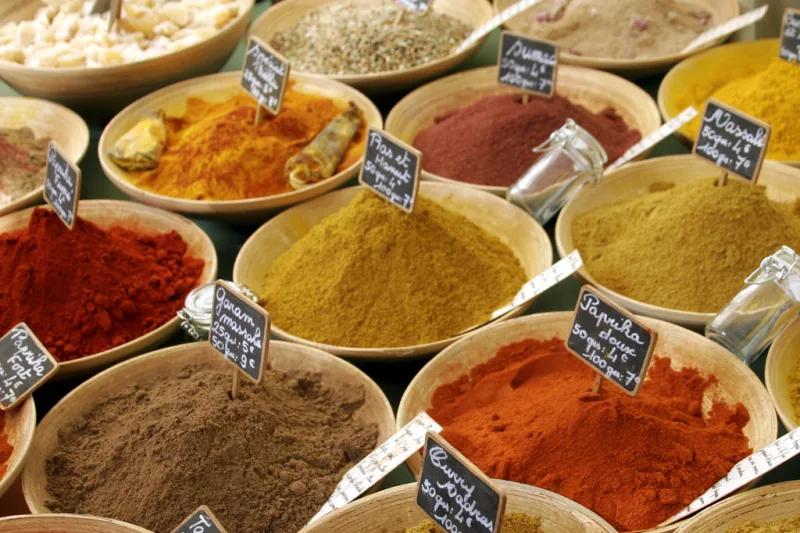

Paprika: Benefits, Uses and How to Use It Properly
IMPORTANT: Paprika is a safe spice for most people when used in the usual culinary amounts. However, hot paprika (which contains capsaicin) can irritate the stomach, esophagus and intestines, which is why people with gastritis, ulcers, acid reflux, hemorrhoids or irritable bowel syndrome should use it with caution or avoid it. In therapeutic amounts (capsaicin or capsicum supplements), paprika may interact with blood-thinning medications and with some blood-pressure drugs. Pregnant or breastfeeding women can use paprika as an ordinary seasoning, but should not take concentrated chili supplements without medical advice. If you experience severe burning, abdominal pain or allergic reactions, stop using it and consult your doctor. Paprika is never a substitute for medical treatment.
A story from the fireside
Aunt Veta, a woman from the Banat plains who dried her own red peppers every autumn, always said that “good paprika is recognized by its smell, not by its price.” In September, the porch of her house would fill with garlands of kapia peppers threaded on string, hanging from the eaves like little red lanterns. She let them shrivel in the sun for weeks, then took them to the village mill, where an old man with hands forever stained orange ground them between stones. Aunt Veta said that paprika, warm and fragrant, “set the blood in motion,” and that a spoonful of stew seasoned with homemade paprika “kept the cold at bay in winter.”
Her grandfather, she recounted, sprinkled paprika even over smoked bacon and fried eggs, not just for taste but because “that’s how you build an appetite.” And whenever a child in the family came home pale and listless from school, they received a golden-red soup, full of paprika, which everyone said “brought color back to the cheeks.” She knew nothing of vitamins and antioxidants, but the village tradition had intuitively preserved many of the things science confirms today about this humble spice.
What paprika is
Paprika is a spice made by drying and grinding red peppers of the species Capsicum annuum. Depending on the pepper variety used and on the presence or absence of seeds and inner membranes, paprika can be sweet, semi-hot or hot. Its color ranges from bright red to brick and orange, and its aroma can be delicate and slightly sweet or pungent and smoky.
Native to Central and South America, the pepper was brought to Europe after Columbus’s voyages and found extraordinarily fertile ground in the Balkans and the Pannonian Plain. Within a few centuries, Hungary, Serbia and western Romania became true homelands of paprika, where this spice became deeply woven into the culinary identity. In our cooking, paprika is indispensable in goulash, stews, soups, sausages, bacon and countless other traditional dishes.
Beyond its culinary role, paprika was also prized as a folk remedy: for stimulating the appetite, for “warming” the body in the cold, and for its tonic effect. Today we know this reputation has a real basis in the rich composition of dried peppers.
Table of Contents
- What paprika is
- Types of paprika: sweet, hot, smoked
- Composition and active compounds
- Health benefits
- Traditional remedy uses
- How to use it properly in cooking
- How to make homemade paprika
- How to choose and store it
- Practical tips and common mistakes
- Conclusion
- Frequently Asked Questions
Types of paprika: sweet, hot, smoked
Before discussing benefits, it helps to understand that there is no single “paprika.” The differences between varieties change both flavor and effect on the body.
Sweet paprika is made from ripe red peppers with their seeds and white membranes removed (the place where capsaicin concentrates). It has a beautiful red color, a warm, slightly fruity aroma, and almost no heat. It is the most widely used in everyday cooking and the most suitable for those with a sensitive stomach.
Hot paprika includes the pepper’s seeds and membranes, or is made directly from hot varieties. It contains capsaicin, the substance responsible for the burning sensation, and has a stronger effect on circulation and metabolism. It is the one that “sets the blood in motion,” but also the one that can irritate the digestive tract.
Smoked paprika (pimentón) is made from peppers dried over a wood fire, usually oak. It develops an intense, smoky aroma, much appreciated in Spanish dishes and increasingly popular elsewhere. It can be sweet or hot.
Composition and active compounds
Paprika is essentially concentrated pepper. Through drying, the water disappears and the active substances remain in a dense form. Here is what this spice generally contains:
- Carotenoids (capsanthin, capsorubin, beta-carotene, cryptoxanthin) — the pigments that give the red-orange color and that are powerful antioxidants. Beta-carotene and cryptoxanthin are precursors of vitamin A.
- Vitamin A (as provitamin) — important for vision, skin and immunity.
- Vitamin C — present in fresh peppers and partly retained in paprika, especially in quality products.
- Vitamin E — a fat-soluble antioxidant.
- B-group vitamins — in modest amounts.
- Capsaicin — present mostly in hot paprika; responsible for the heat sensation and for many of the studied physiological effects.
- Flavonoids and phenolic compounds — antioxidants that contribute to the protective effect.
- Minerals — iron, potassium, magnesium, in useful amounts given how concentrated the spice is.
Because paprika is used in small quantities, it is not a major source of calories or macronutrients. Its value lies in the density of antioxidants and bioactive compounds it brings in a seemingly negligible amount.
Health benefits
A rich source of antioxidants
Paprika’s most important asset is its high content of carotenoids and phenolic compounds. These antioxidants help the body neutralize free radicals, the unstable molecules that contribute to cellular aging and to many chronic conditions. Studies suggest that a diet rich in carotenoids is associated with better overall health. Capsanthin, the pigment specific to red peppers, is one of the most powerful carotenoids in the diet.
Support for vision and skin
Thanks to provitamin A and specific carotenoids (especially cryptoxanthin and beta-carotene), paprika contributes substances important for eye health. Folk tradition used red and orange foods “for good eyes,” and the basis of this intuition is real. Vitamin A and carotenoids also support the health of the skin and mucous membranes.
Stimulates appetite and digestion
Paprika has had a recognized appetizing effect for centuries. Its aroma and color stimulate digestive secretions and appetite, which is why it was given to weak children or to people recovering from illness. Hot paprika, through capsaicin, may further stimulate the flow of gastric juices, although in sensitive people the effect can instead be irritating.
Effect on circulation and “warming” the body
The capsaicin in hot paprika produces a sensation of warmth and a slight peripheral vasodilation — exactly the “blood set in motion” feeling described by the elders. Studies suggest that capsaicin consumption may have a mild stimulating effect on metabolism and thermogenesis (the body’s production of heat). This is why hot spices are used in many cold cultures with harsh winters.
Possible support for metabolism
Research on capsaicin suggests that it may contribute, as part of a balanced diet, to a feeling of fullness and to a slightly more active metabolism. It is by no means a weight-loss solution, but hot paprika can be a pleasant ally within a healthy lifestyle.
A source of iron and minerals
Being concentrated, paprika delivers useful amounts of iron and potassium relative to its weight. Combined with vitamin C from other foods, it supports better absorption of plant-based iron.
Traditional remedy uses
In folk medicine, peppers and paprika had many uses. Here are some of the best known, with the note that these belong to tradition and do not replace medical treatment:
- “Warming” poultices — in some villages, a paste was made from hot paprika mixed with lard or oil, applied (very carefully and briefly) on aching joints or the back, for the warming sensation it produced. Capsaicin is, in fact, the active ingredient in some modern creams against joint pain.
- A tonic in the cold — a spoonful of paprika-seasoned stew, a hot paprika soup, or even a cup of warm milk with a pinch of sweet paprika were given in cold weather for the “warming from within” sensation.
- Stimulating the appetite — paprika soups and dishes were given to convalescents and to children without appetite.
- For circulation — spicy foods were considered good for “moving the blood,” especially in people with cold hands and feet.
Caution: hot paprika poultices can cause skin burns if too concentrated or left on too long. They are never applied to irritated, broken skin or near the eyes.
How to use it properly in cooking
Paprika has one important quirk: it burns very easily. When fried too hard or over too high a heat, the carotenoids break down, the spice takes on a bitter taste and loses its beautiful color, turning brown. Here are the golden rules:
- Add paprika over low or no heat. The traditional technique for stews and goulash is to take the pan off the heat, add the paprika over the sautéed onion, stir quickly and then immediately pour in the liquid (water, stock or wine). This way the paprika releases its aroma and color without burning.
- Use fat. The carotenoids in paprika are fat-soluble, meaning they dissolve in fat, not water. Paprika first mixed with a little oil or lard reveals its color and flavor much better.
- Don’t overdo the quantity. Good paprika is intense. A teaspoon or two for a pot of stew is usually enough. Too much paprika can turn bitter.
- Combine sweet with hot. For a balanced taste, many cooks use mostly sweet paprika (for color and aroma) and just a pinch of hot paprika (for character).
Paprika pairs wonderfully with: goulash, meat and vegetable stews, soups, potato dishes, rice, eggs, cheeses (especially feta mashed with paprika), meat marinades, homemade sausages, bacon and paprikash.
How to make homemade paprika
Homemade paprika, like Aunt Veta’s, has an incomparable aroma. Here is the traditional method, step by step:
- Choose the right peppers. Varieties such as well-ripened kapia peppers, red bell peppers or special paprika varieties. For hot paprika, add hot peppers too.
- Clean and cut. Wash the peppers and remove the stems. For sweet paprika, also remove the seeds and inner membranes. For hot paprika, keep them.
- Dry the peppers. Traditionally, they were threaded on string and hung from the eaves, in the sun and air, until they shriveled completely. In modern times they can be dried in a dehydrator or in the oven at a very low temperature (50–60°C / 120–140°F), with the door ajar, until dry and brittle.
- Grind. Well-dried peppers are ground in a coffee grinder, a powerful blender or, traditionally, at a mill. Sift for a fine powder.
- Store. Place the paprika in airtight glass jars, in a dark, cool place.
The whole process requires patience and perfectly dry peppers — any trace of moisture leads to mold.
How to choose and store it
Quality paprika has a bright red color, without brownish tints (which indicate oxidation or age), and a strong, characteristic smell. Old paprika loses its color and aroma, becoming bland.
For storage:
- Keep paprika in airtight containers, away from light, heat and moisture.
- Don’t keep it above the stove or near a heat source.
- Light and air destroy carotenoids and capsaicin, so an opaque jar or a dark cupboard is ideal.
- Use paprika within a few months of opening for maximum aroma; after about a year it loses much of its quality.
Practical tips and common mistakes
Mistake no. 1: Frying paprika over high heat. This is the most frequent error. Burnt paprika becomes bitter and brown. Always add it over low heat or with the pan off the heat, followed immediately by liquid.
Mistake no. 2: Storing it next to the stove. Many people keep paprika handy by the cooktop. Heat and steam degrade it quickly. Move it to a cool, dark cupboard.
Mistake no. 3: Using old, faded paprika. A brown, odorless paprika brings neither color, nor aroma, nor antioxidants. Replace it.
Mistake no. 4: Confusing hot paprika with sweet. A teaspoon of hot paprika where the recipe called for sweet can ruin an entire dish. Label your jars clearly.
Mistake no. 5: Adding paprika only to water, without fat. Without fat, the carotenoids are not fully released. Mix the paprika with a little oil or add it over sautéed onion.
Mistake no. 6: Overdoing it for people with sensitive stomachs. Hot paprika, in excess, can trigger burning and discomfort. Choose sweet paprika if you have digestive issues.
Conclusion
Paprika is much more than a simple food coloring. Behind this red powder hides a spice dense in carotenoids, provitamin A and other antioxidants, which explains its traditional reputation as a food that “sets the blood in motion” and “brings color to the cheeks.” Used correctly — over low heat, with a little fat and in moderate amounts — paprika brings not only aroma and color to the plate, but also a useful dose of bioactive compounds. Whether you choose sweet paprika for a fragrant goulash or a pinch of hot paprika for the warming sensation, this humble spice deserves a place of honor in any pantry. And if you have the patience to make it yourself, from sun-ripened peppers, you will rediscover exactly the taste our grandparents cherished.
Frequently Asked Questions
What’s the difference between paprika and “boia”? They are practically the same thing. “Paprika” is the international name (of Hungarian origin) for ground red pepper spice; in Romanian it is called “boia de ardei.” Both are made from dried, ground red peppers of the species Capsicum annuum.
Does sweet paprika contain capsaicin? Very little or none. Capsaicin, the hot substance, concentrates in the seeds and white membranes of the pepper, which are removed for sweet paprika. That is why sweet paprika is also suitable for those with a sensitive stomach.
How much paprika can be used daily? As a simple seasoning in food, paprika has no strict limit; the usual culinary amounts (a teaspoon or two per pot) are perfectly safe. Concentrated capsaicin supplements are another matter and should not be taken without medical advice.
Does paprika help with weight loss? Hot paprika, through capsaicin, may mildly support metabolism and the feeling of fullness, but it is not a weight-loss solution in itself. It works only as part of a balanced diet and a healthy lifestyle.
Why does paprika turn bitter when I fry it? Because you burned it. Paprika scorches very easily over high heat; the carotenoids break down and take on a bitter taste. Always add it over low heat or with the pan off the heat, followed by liquid.
Can I be allergic to paprika? Yes, although it is rare. People allergic to peppers or to other plants in the nightshade family (eggplant, tomatoes, potatoes) may also react to paprika. At any sign of an allergic reaction, stop using it and consult your doctor.
How do I recognize quality paprika? By its bright red color (not brown), by its strong, characteristic smell and by its origin. A bland, faded or odorless paprika is old or of poor quality.
Is paprika good for children? Sweet paprika, in small amounts, has been used for generations in children’s food and is generally well tolerated. Hot paprika, however, is not recommended for young children, as it can irritate their stomach and mucous membranes.