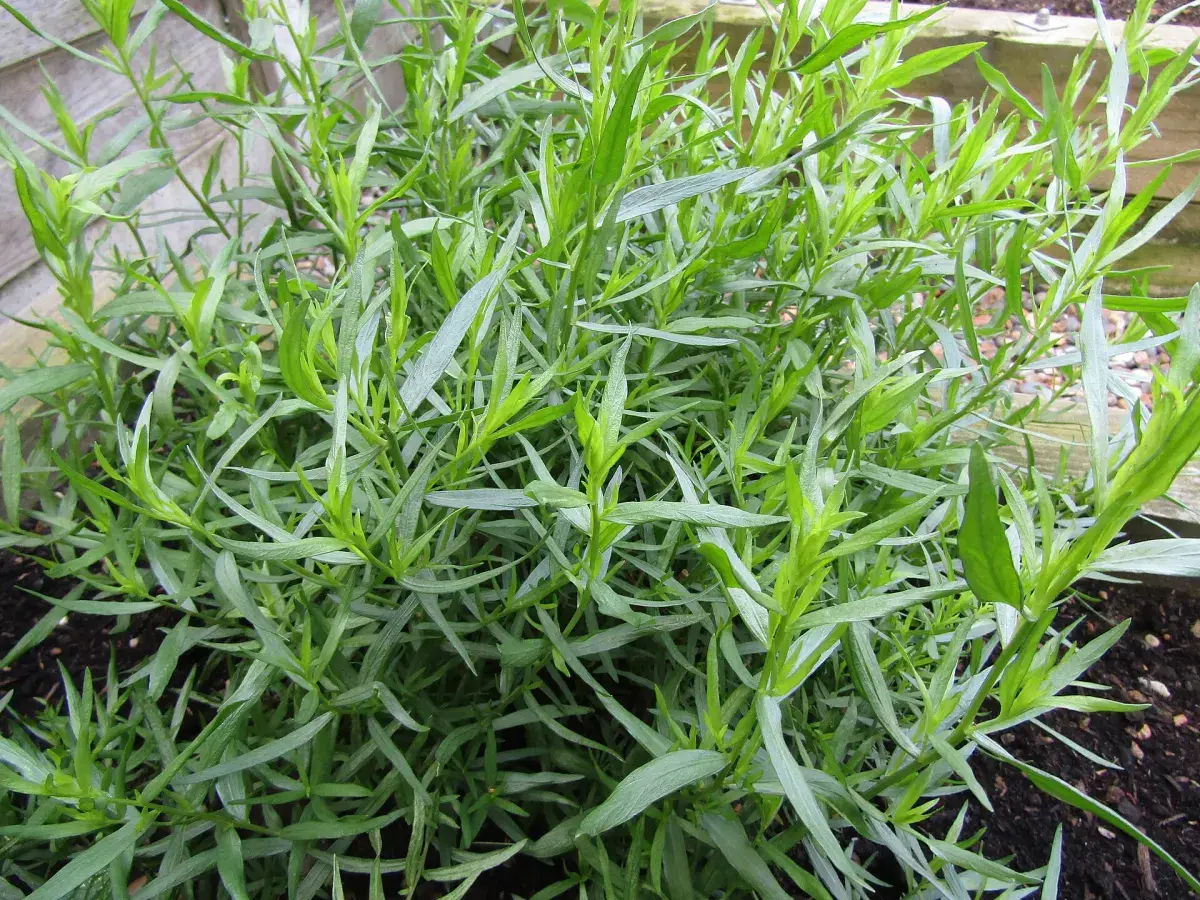
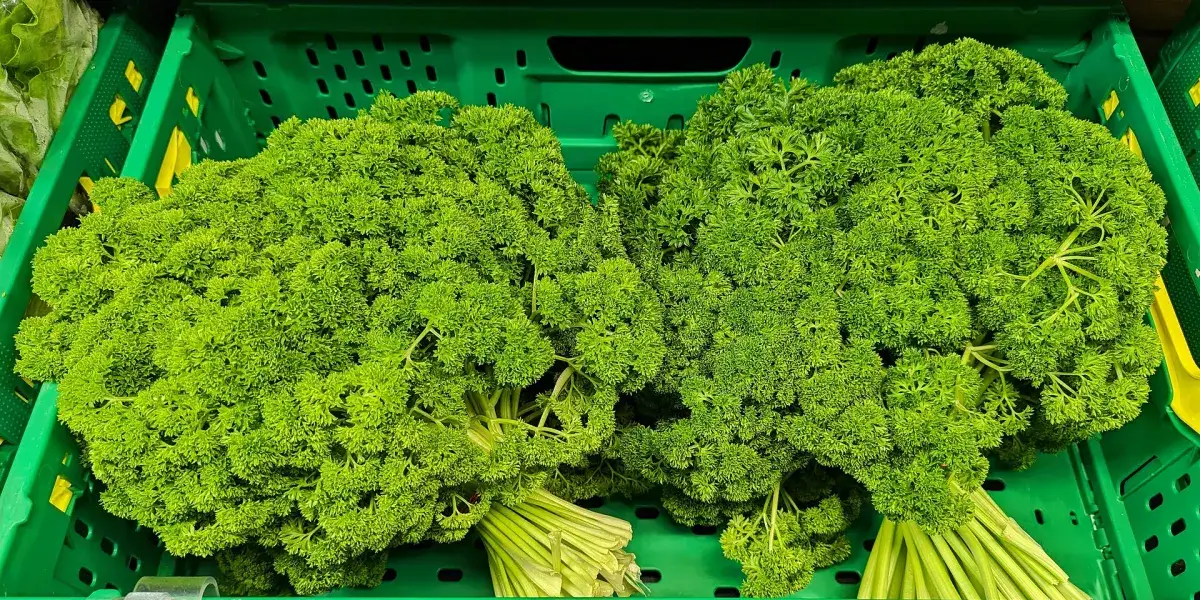
 Photo: Daderot, CC0, via Wikimedia Commons
Parsley (Petroselinum crispum) is far more than a garnish: 10 grams of fresh leaves (a small handful) provide more than the daily requirement of vitamin K, plus vitamin C, folate and flavonoids such as apigenin. As a remedy, the leaves and root have a traditional use recognized by the European Medicines Agency for increasing urine output in minor urinary complaints. Concentrated teas should be avoided during pregnancy and in kidney disease, and if you take blood thinners, your intake should stay consistent rather than going up and down.
The internet is full of recipes for “parsley water for weight loss” and even parsley tea “to bring on a late period”. The first promises too much; the second can be dangerous. Below is what parsley can really do and how to use it properly.
Key takeaways
- Fresh parsley is very rich in vitamin K, vitamin C, folate, plant iron and apigenin.
- The EMA recognizes the leaves and root as traditional herbal medicines for flushing the urinary tract, as an adjunct.
- Tea: 2 g dried leaves or a handful of fresh leaves per 250 ml, 2-3 times a day, in courses of no more than 2-4 weeks.
- The seeds and essential oil contain apiole and myristicin, toxic in high doses; do not use them at home.
- If you take warfarin, eat parsley in consistent amounts from day to day, not in sudden courses.
What parsley is
Parsley is a biennial in the Apiaceae family, like carrot, celery, lovage and dill. There are three cultivated types:
- Curly parsley: crinkled leaves, milder flavor, widely used as a garnish and in salads.
- Flat-leaf (Italian) parsley: broad leaves, stronger flavor, favored in Mediterranean cooking.
- Root parsley: grown for its thick white root, a staple of Romanian soups.
In its second year, the plant sends up flower stalks with greenish-yellow umbels and seeds. The seeds are far more concentrated in essential oil than the leaves.
What it contains: nutrients and active compounds
| Nutrient (per 100 g fresh leaves) | Approximate amount | What it means in practice |
|---|---|---|
| Vitamin K | 1,600 µg | a chopped tablespoon covers much of the daily need |
| Vitamin C | 130 mg | more than an orange, gram for gram |
| Folate | 150 µg | important for blood and pregnancy |
| Iron | 6 mg | plant iron; better absorbed with vitamin C |
| Potassium | 550 mg | contributes to fluid balance |
Values are approximate, based on nutrition databases. In real life you eat 5-20 g per serving, not 100 g.
Active compounds: flavonoids (apigenin, luteolin), essential oil with myristicin and apiole (concentrated mainly in the seeds), furanocoumarins (bergapten) and carotenoids (lutein, beta-carotene).
Benefits: tradition and evidence
Diuretic effect and the urinary tract
The EMA’s Committee on Herbal Medicinal Products has published monographs on parsley leaf (Petroselini herba) and root (Petroselini radix). Both recognize traditional use for increasing urine output to flush the urinary tract, as an adjunct in minor urinary complaints. The likely mechanism involves the essential oil and flavonoids, which affect sodium and water transport in the kidneys according to animal studies. For symptoms of a urinary tract infection, the tea is only a support, not a treatment.
Water retention
Parsley tea is a popular remedy for feeling “puffy” at the end of the day or before a period. It may help slightly with water elimination, but it does not treat the cause. If the swelling persists, read our article on water retention and talk to your doctor.
Antioxidant and anti-inflammatory
Apigenin from parsley is one of the most studied flavonoids, with anti-inflammatory and antioxidant effects in the lab. These data have not translated into proven clinical benefits, but they reinforce the idea that fresh herbs are a valuable part of the diet.
Fresh breath
Chewing a few sprigs after garlic or onion is an old habit. The effect is modest and temporary, probably due to its own aroma and enzymes that partly break down sulfur compounds. It does not treat chronic bad breath, which often has dental or digestive causes.
Bone and blood health
Vitamin K is needed for normal clotting and bone metabolism. Folate and vitamin C contribute to red blood cell formation and iron absorption. Adding parsley to your plate is a simple way to increase these nutrients.
Parsley in the kitchen
To preserve vitamin C, add parsley at the end or eat it raw.
- Tabbouleh: 2 bunches of chopped parsley, 50 g soaked bulgur, 2 tomatoes, ½ spring onion, mint, lemon juice and olive oil.
- Gremolata: 3 tablespoons chopped parsley, zest of 1 lemon, 1 garlic clove; over osso buco, fish or grilled vegetables.
- Parsley pesto: 1 bunch parsley, 30 g walnuts, 30 g parmesan, 1 garlic clove, 80 ml olive oil.
- Soups: 2-3 chopped tablespoons added after turning off the heat.
- Tomato, onion and parsley salad: a vitamin C-rich summer classic.
- Deviled eggs, vegetable spreads, eggplant salad: a chopped tablespoon at the end.
Storage: stand the bunch stems-down in a glass of water, cover the leaves with a bag and keep it in the fridge; it lasts 7-10 days. Parsley can be frozen chopped, in portions.
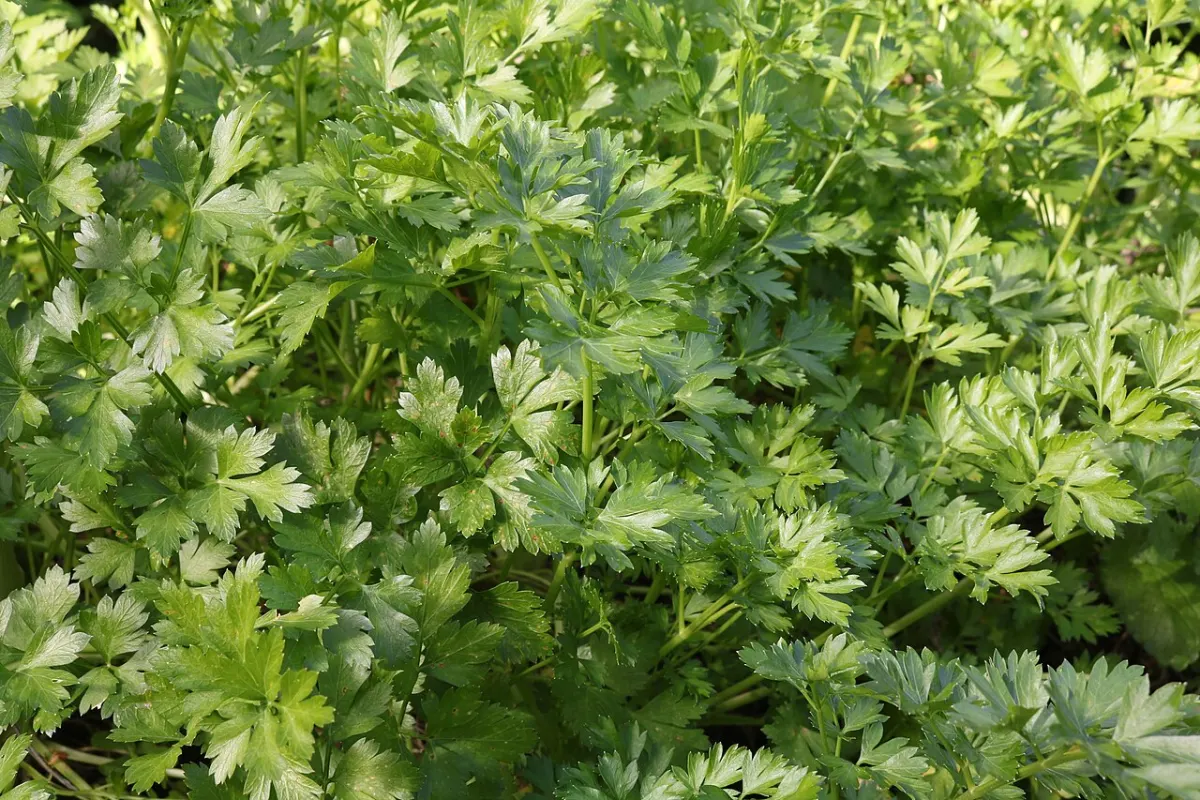 Photo: Bjankuloski06, CC BY 4.0, via Wikimedia Commons
How to prepare the remedies
Parsley leaf tea
- Place 2 g of dried leaves (about 1 teaspoon) or a small handful of chopped fresh leaves (10-15 g) in a mug.
- Pour over 250 ml boiling water.
- Cover and steep for 10 minutes.
- Strain and drink 2-3 times a day, in the morning and at midday.
Parsley root tea
Simmer 1 teaspoon of dried chopped root (2 g) or 15 g sliced fresh root in 250 ml water for 5 minutes on low heat. Leave covered for 10 minutes, then strain. Drink twice a day.
Parsley and lemon water
Put 4-5 parsley sprigs and 2 lemon slices in a liter of cold water and refrigerate for 2-4 hours. It is a refreshing drink that helps you drink more water; it is not a “detox” and does not melt fat.
Green juice
Blend a handful of parsley with 1 apple, ½ cucumber, the juice of ½ lemon and 200 ml water. Drink immediately, no more than a few times a week.
Dosage guide
| Form | Adult dose | Frequency | Duration |
|---|---|---|---|
| Fresh leaves, culinary | 5-20 g / serving | daily | as food |
| Dried leaves, tea | 2 g / 250 ml | 2-3 times a day | 2-4 weeks |
| Root, tea | 2 g dried / 250 ml | twice a day | 2-4 weeks |
| Green juice | 1 handful / glass | a few times a week | occasionally |
| Seeds, essential oil | not for home use | - | - |
During diuretic courses, drink at least 2 liters of fluids a day.
Contraindications and interactions
- Pregnancy: parsley in food is safe. Concentrated teas, large amounts of juice and especially seeds and essential oil are contraindicated. Apiole was historically used as an abortifacient and caused serious poisonings, including liver and kidney damage.
- Late period: do not use parsley tea to “bring on” a period. Besides the risks, a late period calls for a pregnancy test and, if needed, a doctor’s visit.
- Kidney disease: kidney inflammation and kidney failure rule out courses. Parsley also contains oxalates; with calcium oxalate kidney stones, avoid large amounts.
- Warfarin and other vitamin K antagonists: vitamin K counteracts these drugs. You do not need to cut out parsley, but keep your intake fairly consistent and tell your doctor if you change your diet significantly.
- Diuretics and lithium: the diuretic effect may add up; talk to your doctor.
- Umbellifer allergy: people allergic to celery, carrot or dill may react.
- Photosensitivity: contact with the plant sap plus sun exposure can irritate sensitive skin.
When to see a doctor
- Burning on urination, fever, lower back pain or blood in the urine.
- Swelling that does not go down overnight, with breathing difficulty or rapid weight gain.
- You are on anticoagulants and notice unusual bruising or bleeding.
- A late period: take a pregnancy test and see your doctor.
Common mistakes
- Parsley tea to induce a period. A risky practice, especially when seeds or oil are used.
- Sudden courses while on warfarin. Big swings in vitamin K can change your INR.
- “Parsley water” as a weight-loss fix. You lose water, not fat.
- Boiling the leaves in soup. Vitamin C is destroyed; add parsley at the end.
- Confusing it with hemlock or other wild umbellifers. Pick parsley only from your own garden or buy it.
- Essential oil as a “natural remedy”. Its high apiole and myristicin content makes it dangerous to swallow.
Conclusion
Parsley is one of the most valuable herbs in the kitchen: rich in vitamin K, vitamin C, folate and apigenin, cheap and easy to use. As a remedy, it has traditional European recognition for increasing urine output in minor urinary complaints. Use it generously on your plate and with moderation in teas, avoid the seeds and essential oil, and keep pregnancy, kidney health and anticoagulant therapy in mind. For other remedies from the same plant family, read about lovage, and for spices that help with bloating, about dill.
Frequently asked questions
Does parsley tea help with weight loss? It has a mild diuretic effect, so it may temporarily reduce body water. It does not burn fat, and the lost weight returns when you rehydrate.
Is parsley tea dangerous during pregnancy? Food amounts are safe. Concentrated teas, excess juice, seeds and essential oil are contraindicated during pregnancy because of apiole and the effect on the uterus.
Can I eat parsley if I take warfarin? Yes, but in consistent amounts. Vitamin K affects how warfarin works, so the key is not to alternate days without parsley with days of very large amounts. Tell your doctor if you change your diet.
Is curly or flat-leaf parsley healthier? Their nutritional values are similar. Flat-leaf has a stronger flavor; curly is hardier and more decorative. Choose the one you like, because you will eat it more often.
How long can I drink parsley tea? Courses of 2-4 weeks followed by a break. If urinary symptoms do not improve within a few days, see a doctor.
Does parsley help with kidney stones? The diuretic effect may help flush fine gravel, but parsley contains oxalates. People with calcium oxalate stones should eat it in moderation and talk to their urologist.
Does drying parsley destroy its vitamins? Vitamin C drops sharply when dried, but vitamin K and some flavonoids remain. For vitamins, fresh or frozen parsley is better.
Sources and further reading
- European Medicines Agency (HMPC): Community herbal monographs on Petroselinum crispum (Mill.) Nyman ex A.W. Hill, herba and radix.
- USDA FoodData Central: nutritional composition of fresh parsley.
- NIH Office of Dietary Supplements: vitamin K fact sheet and the interaction with warfarin.
- PubMed: reviews on apigenin and on the phytochemistry of Petroselinum crispum.
Informational content only. It does not replace advice from your doctor or pharmacist.