 Photo: Thomas Bresson, CC BY 3.0, via Wikimedia Commons
Poppy seeds (Papaver somniferum) are safe and nutritious in normal culinary amounts: one tablespoon supplies over 100 mg of calcium, along with magnesium, fibre and unsaturated fats. The seeds themselves do not make opiates, but traces of morphine and codeine from the pod’s latex can cling to their surface. That is why a slice of poppy seed cake is fine, while poppy seed tea made from unwashed seeds can be dangerous, and poppy-rich baked goods can trigger a positive drug test.
Key takeaways:
- Poppy seeds are a very good source of calcium, magnesium, manganese and fibre, plus unsaturated fats (mainly linoleic acid).
- Opiates are not inside the seeds but on the surface, as latex residue from harvesting; washing, scalding and baking reduce them considerably.
- Poppy seed tea made from unwashed seeds has caused deaths from respiratory depression: do not make it.
- Poppy seed foods can produce a positive opiate test for 1-2 days; avoid them before testing and tell the lab.
- Never give babies poppy tea, poppy milk or boiled poppy pods to help them sleep.
- For an adult, 1-2 tablespoons a day of shop-bought, properly processed poppy seeds is a sensible amount.
What poppy seeds are
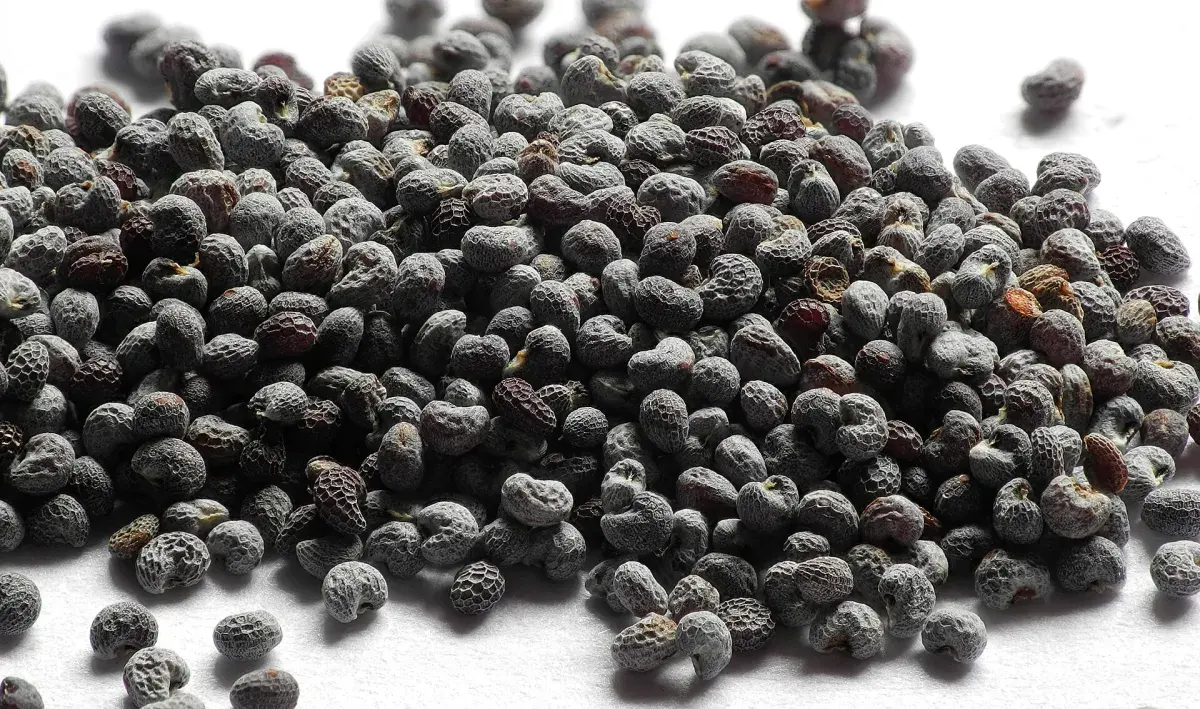
The seeds come from the ripe pods of the opium poppy, the same species from which opium is obtained by scoring the green, unripe pods. They are tiny and kidney-shaped, either blue-grey (the most common type in Central and Eastern Europe) or white (favoured in Indian and Turkish cooking). They taste nutty and slightly sweet, and toasting or grinding brings out their flavour.
Poppy seeds are a festive staple in Eastern European baking: Romanian cozonac with poppy filling, Polish makowiec, Hungarian beigli, strudels, poppy seed noodles and bread rolls sprinkled with seeds. They are also cold-pressed into a delicate culinary oil.
Where the opiates on the seeds come from
Opium alkaloids (morphine, codeine, thebaine, noscapine, papaverine) are found in the milky latex inside the pod walls, not inside mature seeds. During harvest, especially when pods are mechanically crushed or damaged by insects, latex contaminates the seeds. The amount varies enormously with variety, climate, harvesting method and industrial cleaning, so two bags of poppy seeds can be very different.
Because the issue is real, the European Food Safety Authority (EFSA) assessed the risk and set an acute reference dose for morphine, and since 2022 the European Union has enforced legal maximum levels of opium alkaloids in poppy seeds and in bakery products containing them. Poppy seeds sold legally in shops are generally far cleaner than so-called unwashed seeds sold in bulk from unregulated sources or online, often specifically for making tea.
Nutritional value
Poppy seeds are one of the richest plant sources of calcium, but they are eaten in small amounts, so what you actually get depends on the portion. The values below are approximate, calculated from USDA food composition data, for one tablespoon (about 9 g):
| Nutrient | Per tablespoon (about 9 g) | Notes |
|---|---|---|
| Energy | approx. 47 kcal | Mostly from fat |
| Fat | approx. 3.7 g | Mainly linoleic acid (omega-6) and oleic acid |
| Protein | approx. 1.6 g | Plant protein |
| Fibre | approx. 1.8 g | Mostly insoluble |
| Calcium | approx. 125 mg | Absorption partly limited by oxalates and phytates |
| Magnesium | approx. 30 mg | Important for muscles and nerves |
| Manganese | approx. 0.6 mg | A substantial share of daily needs |
| Iron | approx. 0.9 mg | Non-haem iron, better absorbed with vitamin C |
| Zinc | approx. 0.7 mg | Supports immunity and skin |
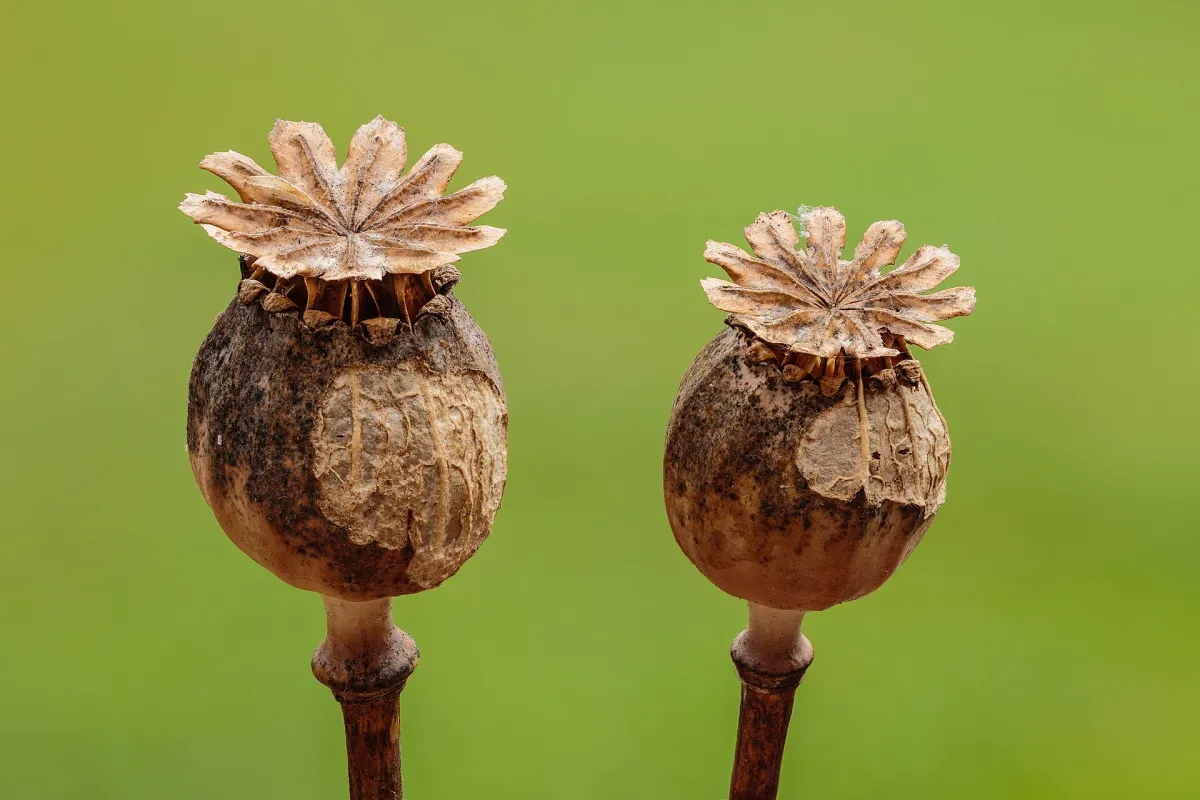 Photo: Agnes Monkelbaan, CC BY-SA 4.0, via Wikimedia Commons
Benefits: tradition versus evidence
Calcium for bones, with a caveat
The calcium content looks impressive on paper, but poppy seeds also contain oxalates and phytates that bind part of the mineral and reduce absorption. No clinical trials show that poppy seeds prevent fractures; the benefit is inferred from their composition. In practice, 1-2 tablespoons a day can top up calcium intake for people who eat little dairy, alongside sesame seeds, leafy greens and calcium-rich mineral water. If you already have osteoporosis, poppy seeds do not replace the treatment or supplements your doctor recommends.
Unsaturated fats and heart health
Most of the fat in poppy seeds is unsaturated, especially linoleic acid. Nutrition research consistently shows that swapping saturated fats for unsaturated ones lowers LDL cholesterol, and regular nut and seed intake is linked to lower cardiovascular risk. There are no studies specific to poppy seeds, though, and linoleic acid is omega-6, not omega-3, so balance it with walnuts, flax or chia seeds.
Fibre and bowel regularity
A tablespoon of poppy seeds provides almost 2 g of fibre, which adds bulk to stools. As part of a diet rich in vegetables, whole grains and fluids, poppy seeds can help regularity, but they are not a remedy for constipation on their own. Very large amounts eaten without enough water can have the opposite effect.
Sleep, calm and cough: a tradition tied to the pod, not the seeds
Folk medicine used boiled poppy pods for sleep, pain, coughs and to quieten restless children. The effect came from the pod’s alkaloids, in other words from opium at uncontrolled doses. The seeds used in baking have no proven sedative effect, and online claims that poppy seeds help you sleep are not backed by research.
A medical curiosity: iodised poppy seed oil
Iodised poppy seed oil is used in hospitals as a contrast medium, including to check whether the fallopian tubes are open. Some studies suggest that tubal flushing with oil-based contrast may improve pregnancy rates in certain women with infertility. It is a medicine given by a specialist, not a home remedy: eating poppy seed oil has no such effect.
Opiates: how real are the risks?
Poppy seed tea and poppy milk
Recipes circulating online involve soaking or shaking large quantities of unwashed seeds in water and drinking the liquid for a calming or euphoric effect. The water strips the alkaloids off the seeds, and the concentration is impossible to predict: the same recipe can be nearly inactive with one bag and dangerous with the next. Deaths from respiratory depression have been reported in the United States, the UK, Australia and elsewhere, including in healthy young people. The risk rises sharply when combined with alcohol, sleeping pills, anti-anxiety drugs or other opioids. Regular use leads to tolerance and dependence, with withdrawal when you stop. Boiling dried pods is even riskier, and poppy straw (the pods) is a controlled substance.
Poppy seeds and drug tests
Urine opiate tests detect morphine and codeine without knowing where they came from. After pastries loaded with poppy seeds, the result can be positive, usually within the first 1-2 days and sometimes longer after large amounts. This is why cut-off levels were raised in many testing programmes, and why a positive screen is confirmed with more precise laboratory methods that can also look for heroin-specific markers. If you face a workplace, licensing, roadside or treatment-programme test, avoid poppy seeds for 2-3 days beforehand and disclose what you ate.
Babies and young children
Relative to body weight, young children have the highest exposure. In parts of Eastern Europe the custom of giving babies poppy pod tea or milk boiled with poppy seeds to make them sleep or ease teething has survived. It is dangerous: infants are extremely sensitive to opiates and can stop breathing even at low doses. There is no reason to include poppy seeds in the diet of babies under one year; for older children, an occasional small slice of poppy seed cake made with properly processed seeds is not a concern.
How to use poppy seeds safely in the kitchen
Three steps that cut residues
- Buy packaged seeds from reputable brands, not bulk seeds of unknown origin, and never seeds marketed as unwashed or for tea.
- Rinse and scald: processing studies show that washing and heat treatment substantially reduce morphine on the seeds. Discard the soaking water.
- Cook or bake: simmering in milk and baking reduce alkaloids further, and grinding before heating helps.
Recipe: classic poppy seed filling
For one large sweet bread or a tray of poppy seed pie:
- 200 g poppy seeds
- 250 ml milk
- 80-100 g sugar or 3 tablespoons honey
- 30 g butter
- grated zest of one unwaxed lemon
- 1 teaspoon vanilla extract
- 50 g raisins (optional)
- 1 egg, to bind
Method:
- Put the seeds in a very fine sieve and rinse under cold running water for about a minute.
- Tip them into a bowl, pour over 500 ml boiling water, cover and leave for 30 minutes. Drain through a fine sieve or cheesecloth and throw the water away.
- Grind the damp seeds in a poppy seed mill or powerful blender for 2-3 minutes, until you get a slightly gritty paste.
- Bring the milk, sugar and butter to the boil, add the seeds and simmer on low heat for 8-10 minutes, stirring, until thick.
- Remove from the heat and stir in the lemon zest, vanilla and raisins. Once cooled to room temperature, mix in the egg.
- Spread over the dough, roll up and bake at 170-180°C for 45-50 minutes.
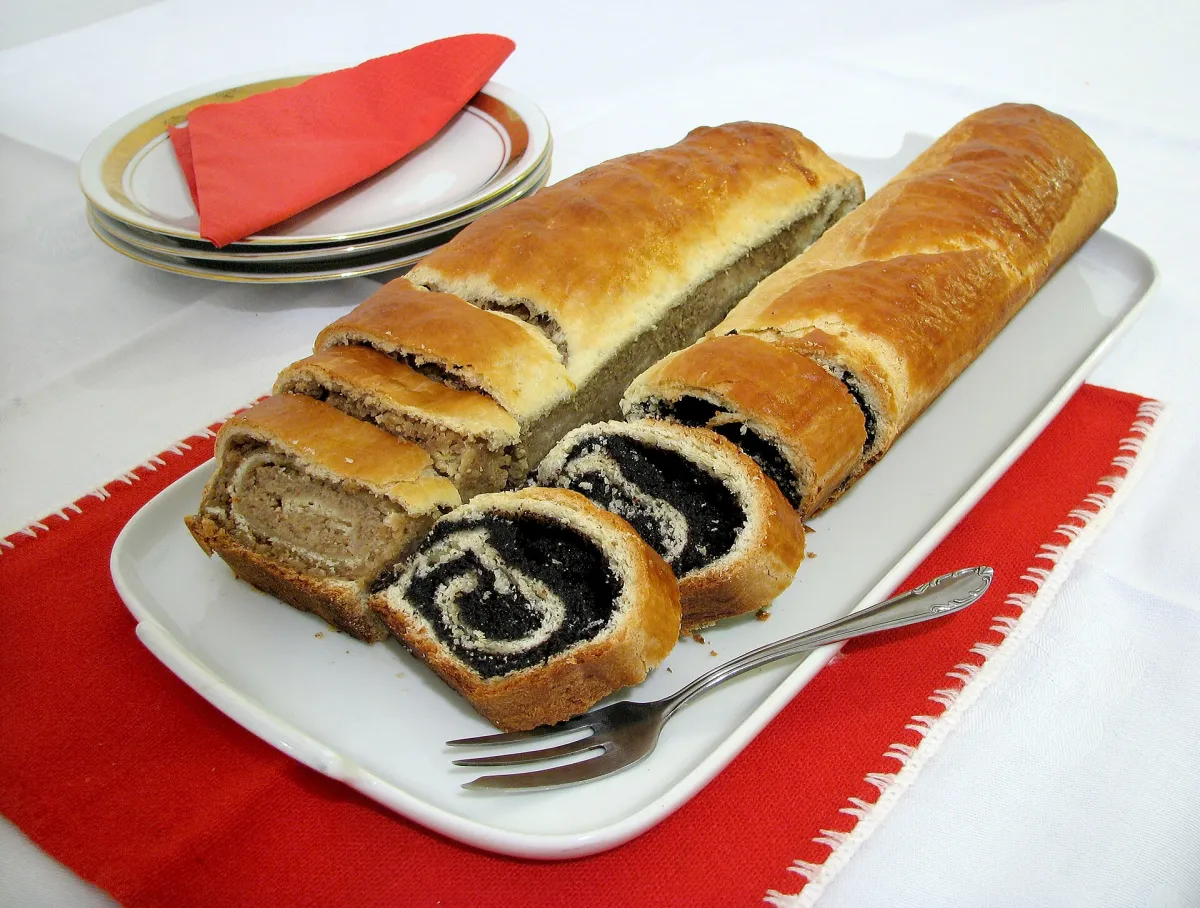 Photo: Hu Totya, CC BY-SA 4.0, via Wikimedia Commons
Other simple uses
- Sprinkle over bread, bagels or rolls before baking.
- Toast for 2-3 minutes in a dry pan over medium heat and add to salads or lemon-yogurt dressings.
- Poppy seed noodles: cooked noodles tossed with scalded, ground poppy seeds, a little sugar and melted butter.
Storage
Rich in polyunsaturated fats, poppy seeds go rancid quickly and turn bitter. Keep them in an airtight jar somewhere cool and dark; once opened, store in the fridge for a few months or in the freezer for longer. Use ground seeds within a few days. If they smell of old oil or paint, throw them out.
How much is safe: a situation guide
| Situation | Risk level | What we recommend |
|---|---|---|
| Seeds sprinkled on bread, bagels, rolls | Very low | No restriction for adults |
| 1-2 slices of poppy seed cake or roll | Low | Fine for adults; small portions for children |
| 1-2 tablespoons a day in food, shop-bought seeds | Low | Rinse and cook the seeds, store them properly |
| Large daily portions of unwashed bulk seeds | Moderate | Change supplier, scald and discard the water |
| Before a drug test | Possible false positive | Avoid for 2-3 days, tell the lab |
| Tea or milk from unwashed seeds | High, potentially fatal | Do not make it |
| Boiled poppy pods | Very high, controlled substance | Never |
| Any poppy preparation given to a baby for sleep | Very high | Never |
Contraindications and interactions
- Poppy seed allergy: rare but can be severe, up to anaphylaxis. Cross-reactions with hazelnuts, walnuts, sesame, kiwi and rye have been described.
- Calcium oxalate kidney stones: poppy seeds are high in oxalates. If you have had stones, keep portions small and drink plenty of fluids; see also kidney stone prevention.
- Pregnancy and breastfeeding: normal culinary amounts are acceptable. Teas and concentrated preparations are off limits, as opiates cross the placenta and pass into breast milk.
- Opioid substitution treatment (methadone, buprenorphine) or toxicology monitoring: avoid poppy seeds so test results are not muddied.
- Interactions: no relevant interactions are known at culinary amounts. Concentrated preparations, however, add to the effects of opioids, benzodiazepines, sleeping pills, sedating antihistamines and alcohol.
When to see a doctor
Call emergency services if, after poppy seed tea or any concentrated poppy preparation, someone shows deep drowsiness, is hard to wake, breathes slowly or shallowly, has pinpoint pupils, blue lips or nails, confusion or seizures. In a baby, warning signs are unusual floppiness, refusing to feed and slow breathing. Opioid overdose has an antidote, but it must be given by medical teams.
Swelling of the lips or tongue, difficulty breathing or widespread hives after a poppy seed food are also emergencies. See a doctor if you have been drinking poppy tea regularly and get sweating, restlessness, diarrhoea or aches when you stop: these are withdrawal signs and specialist help is available. If you get an unexpected positive drug test, ask for a confirmatory test.
Common mistakes
Assuming natural means harmless. The opiates on poppy seeds are the same substances found in opioid medicines, only at unknown doses.
Buying unwashed seeds for tea. That is precisely the product with the highest residues.
Keeping the scalding water. A good share of the alkaloids ends up there; pour it away.
Eating poppy seed cake the day before a test. You risk a false positive and a lot of explaining.
Storing ground seeds for months. They go rancid, turn bitter and their fats degrade.
Relying on poppy seeds as your only calcium source. Absorption is partial; you need a varied diet.
Conclusion
Poppy seeds are a valuable food and a lovely part of Eastern European baking traditions, offering calcium, magnesium, fibre and unsaturated fats. The danger lies not in the cake but in concentrated preparations: poppy seed tea, boiled pods and the old habit of sedating children with poppy. Buy good-quality seeds, rinse, scald and cook them, and keep drug tests in mind, and you can enjoy them without worry.
Frequently asked questions
Can poppy seeds get you high? Not in the amounts used in bread or cakes. Opioid effects come from concentrated preparations such as tea made from large quantities of unwashed seeds, which are dangerous.
How many poppy seeds can I eat a day? For a healthy adult, 1-2 tablespoons a day of shop-bought, heat-processed seeds is reasonable. Occasional larger portions in baking are not a problem.
How long after eating poppy seeds can you fail a drug test? Usually within the first 1-2 days, sometimes a little longer after large amounts. Avoid poppy seeds for 2-3 days before a test and tell the lab.
Can children eat poppy seed cake? Children over one year can occasionally have a small slice made with scalded, cooked seeds. Babies should not be given poppy seeds, and poppy teas or pod infusions are unsafe at any age.
Are poppy seeds safe during pregnancy? Normal culinary amounts are acceptable. Avoid poppy teas and large intakes, as opiates reach the baby.
Do poppy seeds help you sleep? There is no evidence that dietary poppy seeds improve sleep. Their reputation comes from the pods, which contain opium and are dangerous.
What is the difference between blue and white poppy seeds? Blue-grey seeds have a stronger flavour and are used in Eastern European baking. White seeds are milder and are ground to thicken sauces in Indian cooking. Their nutritional value is similar.
Sources and further reading
- EFSA CONTAM Panel, “Update of the Scientific Opinion on opium alkaloids in poppy seeds”, EFSA Journal, 2018.
- Commission Regulation (EU) 2021/2142 on maximum levels of opium alkaloids in certain foodstuffs.
- BfR (German Federal Institute for Risk Assessment), consumer information on morphine in poppy seeds and poppy seed foods.
- USDA FoodData Central, “Seeds, poppy”: nutrient composition of poppy seeds.
- SAMHSA, Mandatory Guidelines for Federal Workplace Drug Testing Programs: opiate cut-offs and confirmatory testing.
Informational content only; it does not replace a consultation with a doctor or pharmacist. If someone becomes very drowsy or struggles to breathe after a poppy preparation, call emergency services immediately.