
Vanilla: Benefits, Antioxidants, Uses and How to Use It
IMPORTANT: Natural vanilla is generally safe when used as a food flavoring in the usual culinary amounts. Still, a few precautions are worth remembering. Commercial vanilla extracts contain alcohol (often 35% or more), so they are not suitable for very young children, for people who avoid alcohol, or for those taking medications that interact with it. People with a known allergy to vanilla or vanillin may develop skin reactions (contact dermatitis), especially those who handle the pods frequently (so-called “vanillism”). During pregnancy and breastfeeding, vanilla used as a flavoring in foods is considered safe, but avoid consuming large amounts of alcohol-based extract. Synthetic vanillin (artificial flavoring) does not provide the same beneficial compounds as natural vanilla and may trigger headaches in some sensitive people. If you are following medical treatment or have a chronic condition, vanilla never replaces a doctor’s advice — use it as a pleasant spice, not as a medicine.
A story from Grandma Veta
Grandma Veta, a slim and ever-smiling woman from the village on the hill, kept a single vanilla pod in a little glass jar, buried in sugar. “It’s more precious than gold, dear,” she would say, lifting the jar to the light like a treasure. Whenever someone arrived at her house upset or weary, Grandma didn’t reach for pills or hand out grand advice. She would stir a pinch of that fragrant sugar into a cup of warm milk, mix it slowly, and offer it to her guest. “Drink, it’ll pass,” she’d say. And, strangely, it really did seem to help. The warm, sweet smell of vanilla filled the kitchen, and frowning faces would soften.
Later I understood that Grandma wasn’t doing magic — she was using something people have known for centuries: vanilla has the gift of soothing, of sweetening not just food but also one’s state of mind. That little jar of vanilla sugar was her pharmacy for the soul. And although today we buy vanilla far more easily than she did, it remains a spice straight out of a story — fragrant, precious, and surprisingly rich in benefits.
What is vanilla
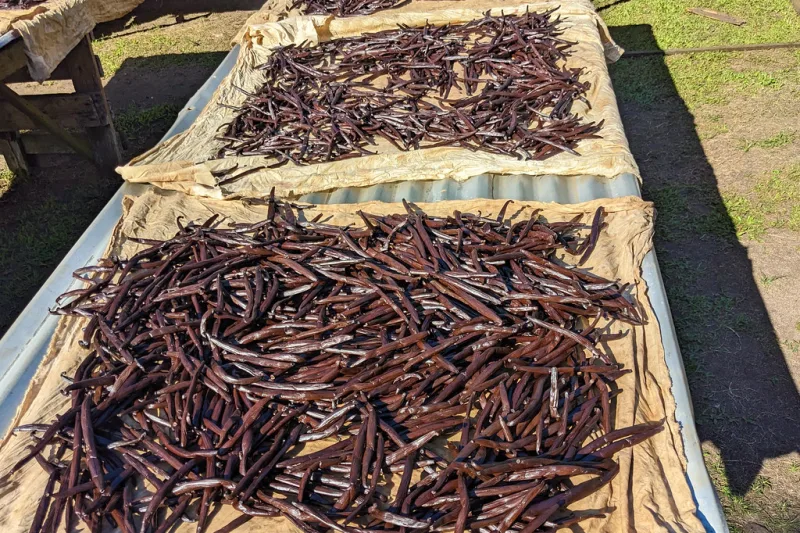
Vanilla is the flavoring obtained from the pods (beans) of a climbing orchid of the genus Vanilla, particularly the species Vanilla planifolia. After saffron, it is the most expensive spice in the world, and the reason is simple: growing and processing it requires an enormous amount of labor. The vanilla flower opens for just one day a year and, outside its native range in Central America, must be pollinated by hand, flower by flower. After harvesting, the green pods have almost no aroma; only after a long “curing” process (blanching, sweating, sun-drying, and maturing over many months) do they take on that deep brown color and the unmistakable fragrance we love.
Vanilla flavor is cherished all over the world — in cakes, ice creams, vanilla custard, coffee, hot chocolate, but also in perfumery and cosmetics. There is, however, a huge difference between natural vanilla and artificial vanilla flavoring (synthetic vanillin). Natural vanilla contains hundreds of aromatic compounds and a range of substances with beneficial effects, while artificial flavoring imitates only the main note. That is why, even though it costs more, real vanilla is worth every penny.
Table of Contents
- What vanilla is and where it comes from
- Composition and active principles
- Health benefits
- Vanilla and mood: the scent that soothes
- Traditional and modern uses
- How to use vanilla beans (step-by-step recipes)
- How to choose and store vanilla
- Lifestyle tips
- Practical Tips and Common Mistakes
- Conclusion
- Frequently Asked Questions
Composition and active principles
The richness of natural vanilla lies in its chemical complexity. While artificial flavoring boils down to a single molecule, real vanilla comprises hundreds of compounds working together.
- Vanillin is the main component and the one that gives the sweet, warm, characteristic note. Studies suggest that vanillin has antioxidant and anti-inflammatory properties.
- Phenolic compounds and aromatic acids — besides vanillin, the pod contains vanillic acid, p-hydroxybenzoic acid, and other phenolic compounds that contribute to its antioxidant capacity.
- Volatile oils — hundreds of fine aromatic molecules give the complex profile, with floral, woody, and balsamic notes that are impossible to fully reproduce artificially.
- Polyphenols — plant substances generally associated with protecting cells against oxidative stress.
Precisely because natural vanilla is a “choir” of compounds rather than a single voice, its effects are subtler and richer than those of a simple flavoring. The amounts used in cooking are small, so we should not expect dramatic, medicine-like effects — but every drop adds, alongside pleasure, a small dose of body-friendly compounds.
Health benefits
A source of antioxidants
The most studied benefit of vanilla is its antioxidant content. Vanillin and the other phenolic compounds are able to neutralize free radicals — the unstable molecules that, in excess, contribute to cell aging and various inflammatory processes. Laboratory studies suggest that vanilla extract has appreciable antioxidant activity. Of course, vanilla is not an “antioxidant pill,” but used consistently as a natural flavoring in place of artificial ones, it contributes to a diet richer in beneficial compounds.
A calming effect on mood
Folk tradition has always used the smell of vanilla to soothe. Its warm aroma is associated in many minds with safety, childhood, and comfort — a scent “of home.” Studies in the field of aromatherapy suggest that the smell of vanilla can have a relaxing effect, potentially reducing feelings of tension and anxiety in some people. This is why vanilla is so often found in scented candles, massage oils, and bath products designed for unwinding.
Support for digestion and comfort
In folk medicine, teas and milk flavored with vanilla were given to calm an upset stomach and to bring a sense of well-being after heavy meals. The pleasant aroma stimulates appetite in those who lack it and can make plain foods, like milk or porridge, easier to tolerate for those who are recovering.
Mild anti-inflammatory properties
The phenolic compounds in vanilla have, according to laboratory studies, anti-inflammatory potential. Tradition used poultices and vanilla-scented oils to ease mild discomfort. This is gentle support, not a treatment — but pleasant and free of side effects when used in moderation.
A friend to the skin
In natural cosmetics, vanilla is valued for its fragrance and its antioxidant effect. Vanilla oils and body butters are sought after for their velvety feel and comforting aroma. Those with sensitive skin should, however, do a patch test first, since vanilla can be an allergen.
Vanilla and mood: the scent that soothes
It’s worth dwelling on the link between vanilla and one’s state of mind, because much of this spice’s charm lies here. The sense of smell is closely tied to the brain areas that govern emotions and memories. That is why a fragrance can instantly transport us into a memory or change our mood in a heartbeat.
For a great many people, vanilla is a deeply soothing smell. It’s associated with grandmother’s cakes, with the warm milk of evening, with holidays. Aromatherapy uses vanilla precisely for this ability to induce a state of calm and comfort. A warm tea with a drop of vanilla, or a cup of fragrant milk in the evening before bed, are little rituals that combine the pleasure of taste with peace of mind. Grandma Veta knew this instinctively: when she sweetened milk with vanilla sugar, she was nourishing not just the body but also the mood of the weary.
Traditional and modern uses
Vanilla has traveled a long road, from the tropical forests of Central America to our kitchens. The ancient inhabitants of Mexico used it to flavor their cacao drink long before Europeans discovered it. Today, its uses are countless:
- In confectionery and pastry: it is the star of custards, ice cream, puddings, cakes, and cookies.
- In hot drinks: coffee, hot chocolate, fragrant milk, teas.
- In preserves and jams: a pod placed in quince jam or in compote lifts the aroma.
- In homemade vanilla sugar: the simplest and most economical use.
- In cosmetics and aromatherapy: oils, candles, bath products.
- In folk medicine: warm milk with vanilla for restful sleep and easy digestion.
How to use vanilla beans (step-by-step recipes)
Many people buy only store-bought vanilla extract, without realizing how simple and satisfying it is to use whole pods. Here are a few preparations within anyone’s reach.
How to scrape the seeds from a pod
- Place the vanilla pod on a clean wooden board.
- With a sharp knife, slit the pod lengthwise, from one end to the other, without cutting it completely in two.
- Open the two halves and, holding the blade almost flat, scrape out the fine black seeds inside.
- Use the seeds directly in custard, batter, or milk. Don’t throw away the empty pod! It still holds plenty of aroma — put it in your jar of sugar or use it to flavor milk.
Homemade vanilla sugar
This is the simplest way to always have vanilla aroma on hand.
- Put 200–300 g of sugar into a clean, dry jar.
- Add a vanilla pod cut in half (you can also use the empty pod after scraping out the seeds).
- Close the jar and leave it in the dark for 1–2 weeks, shaking it from time to time.
- The sugar will take on a wonderful fragrance. Use it in cakes, in coffee, or in milk. You can top up the sugar as you use it — the pod flavors it for a long time.
Warm milk with vanilla for the evening
- Pour a cup of milk (dairy or plant-based) into a saucepan.
- Add half a vanilla pod split lengthwise, or a teaspoon of vanilla sugar.
- Heat over low heat, without bringing it to a boil, stirring often, for 3–4 minutes.
- Sweeten, if you like, with a teaspoon of honey (after it has cooled a little).
- Strain and drink it warm, in the evening, as a small relaxation ritual.
Homemade vanilla extract
- Slit 3–5 vanilla pods lengthwise and place them in a clean bottle.
- Pour about 250 ml of odorless food-grade alcohol (good-quality vodka) over them.
- Cap it well and leave in the dark, shaking once a week.
- After 6–8 weeks (the longer it sits, the better), the extract is ready. Use a few drops in cakes and custards.
Vanilla-scented oil or butter for the skin
- Place a cut vanilla pod in a small jar with almond or coconut oil.
- Let it macerate for a few weeks in a warm place.
- Strain and use the fragrant oil for massage or to moisturize the skin (test on a small patch first).
How to choose and store vanilla
A quality vanilla pod is supple, slightly glossy, deep brown to black in color, and flexible — it can bend without snapping. Dry, brittle, scentless pods are old or poorly stored. The smell should be intense, sweet, and complex.
Keep the pods in an airtight container, in the dark and at room temperature — never in the refrigerator, where moisture can cause them to mold. Well stored, they remain fragrant for many months, even over a year. If you notice tiny white crystals on the surface that smell of vanilla (not fuzzy, greenish mold), that is “givre,” a sign of quality, formed from crystallized vanillin.
Lifestyle tips
Vanilla teaches us something beautiful: that small pleasures, savored attentively, make life better. Instead of a diet full of artificial flavors, try to bring natural fragrances into your home — a jar of vanilla sugar, a saucepan of warm flavored milk in the evening, a cake made with real vanilla. These small gestures turn routine into ritual.
Use vanilla’s aroma as a relaxation tool, too. A few drops of extract on a handkerchief, a naturally scented candle, or a warm vanilla tea can mark the transition from the day’s bustle to the evening’s calm. Combined with a regular sleep schedule, balanced meals, and moments of rest, vanilla becomes part of a lifestyle that’s gentler on ourselves.
Practical Tips and Common Mistakes
Mistake no. 1: Confusing natural vanilla with artificial flavoring. The label “vanilla flavor” or “vanillin” indicates a synthetic product. Real vanilla is listed as “vanilla extract,” “vanilla pods/beans,” or “vanilla powder,” costs more, and has a complex fragrance.
Mistake no. 2: Storing it in the refrigerator. The fridge introduces moisture and can cause mold. Vanilla should be kept in an airtight container, at room temperature, away from light.
Mistake no. 3: Throwing away the pod after scraping out the seeds. The empty pod still contains plenty of aroma — put it in sugar, in milk, or in a bottle of extract.
Mistake no. 4: Adding vanilla too early at very high temperatures. The fine vanilla aroma is volatile; during long boiling, some of it is lost. For custards and ice creams, add it toward the end or infuse it in warm liquid, not boiling.
Mistake no. 5: Using excessive amounts. Vanilla is powerful; half a pod or a teaspoon of extract is usually enough for an ordinary portion of cake or custard. Too much can turn slightly bitter.
Mistake no. 6: Ignoring sensitivities. Although rare, vanilla can trigger reactions in allergic people. Those who handle it often (the skin of the hands) should watch out for irritation.
Conclusion
Vanilla is far more than a simple sweet flavor. Behind its warm fragrance hides a painstaking orchid, an enormous amount of labor, and a wealth of beneficial compounds — antioxidants, calming substances, and a particular charm that combines the pleasure of taste with well-being of the soul. Used in moderation, natural vanilla enriches both the kitchen and moments of relaxation. Just as Grandma Veta sweetened milk with a touch of vanilla sugar to ease someone’s weariness, we too can make vanilla a small ritual of comfort. Always choose natural vanilla over artificial, store it carefully, and enjoy it — not as a medicine, but as a fragrant gift of nature.
Frequently Asked Questions
Is natural vanilla better than artificial flavoring? Yes, both in terms of taste and beneficial compounds. Natural vanilla contains hundreds of aromatic molecules and antioxidants, while artificial flavoring imitates only the main note (synthetic vanillin). For health and flavor, real vanilla is preferable, even though it costs more.
How much vanilla can I use each day? As a flavoring in food, vanilla is used in small amounts — half a pod or a teaspoon of extract per portion. There is no therapeutic “dosage”; use it to taste and pleasure, in moderation, especially if it’s an alcohol-based extract.
Does vanilla help with sleep? Tradition and some aromatherapy studies suggest that the warm smell of vanilla has a soothing effect and may help with evening relaxation. A warm milk with vanilla before bed is a pleasant ritual, but not a sleeping pill — it helps through relaxation and habit, not through any strong sedative substance.
Can I use vanilla during pregnancy? Vanilla used as a flavoring in foods, in the usual amounts, is considered safe during pregnancy and breastfeeding. Avoid, however, consuming large amounts of alcohol-based extract. For any doubts, ask your doctor.
Why is vanilla so expensive? Because it is extremely difficult to produce. The flower opens for just one day and, outside its native area, must be pollinated by hand. After harvesting, the pods go through a long curing and drying process lasting several months. All this labor makes it, after saffron, the most expensive spice in the world.
How do I recognize a quality vanilla pod? A good pod is supple, glossy, deep brown to black, flexible (it bends without snapping), and intensely fragrant. Dry, brittle, scentless ones are old. The white crystals that smell of vanilla on the surface (“givre”) are a sign of quality, not mold.
Can I use vanilla if I have diabetes? Vanilla itself, as a flavoring, contains no sugar and does not raise blood sugar. The problem comes from the sugar or sweets it is often paired with. By using pure vanilla (sugar-free extract, pods, powder), you can flavor desserts without extra added sugar. Still, ask your doctor for personalized recommendations.
Can vanilla cause allergies? Rarely, but yes. Some people develop contact dermatitis, especially those who handle the pods frequently. If you notice itching, redness, or other reactions, stop using it and consult your doctor.