
Artichoke Tea: Benefits for Liver and Bile, How to Prepare and Side Effects
IMPORTANT: Artichoke tea is a remedy with a powerful action on the liver and gallbladder. Precisely because it stimulates the secretion and flow of bile, it is contraindicated for people who have gallstones or obstructions of the bile ducts — in these cases it can trigger painful colic by setting the stones in motion. It should also be avoided in obstructive jaundice, in acute biliary conditions, and by people allergic to plants in the Asteraceae family (daisies, marigolds, chamomile, wormwood). It is not recommended during pregnancy and breastfeeding without medical advice, nor for young children. If you are being treated for cholesterol, diabetes, or are taking diuretics or medication metabolized by the liver, talk to your doctor before using it regularly, since artichoke can influence these processes. Artichoke tea does not replace any medical treatment — it is a support, not a miracle cure.
A story from the edge of the garden
Aunt Voica, a short and cheerful woman from a village near the Danube, had several large artichoke bushes at the bottom of her garden that no one else in the village understood. “What do you need that thorny weed for?” the neighbors asked her, used to growing only tomatoes and peppers. Aunt Voica would smile and say that her artichoke “washed the liver clean of all the year’s troubles.” After the heavy holiday meals, when relatives complained of nausea, bloating and a heaviness under the ribs, she would put the kettle on and brew a greenish, bitter infusion from the finely chopped leaves.
She remembered that her mother had brought the roots from a southern market, back in the days when artichoke was still a rarity in the region. “This bitterness is like a good slap on the liver, to wake it up to work,” she would say, pouring the warm tea into clay cups. Many listened with doubt, but they came back every time after the holidays because, they said, “it really did help.” Today, science confirms part of this woman’s intuition: the bitter substances in artichoke do indeed play a role in stimulating digestion and liver function.
What artichoke is and where it comes from
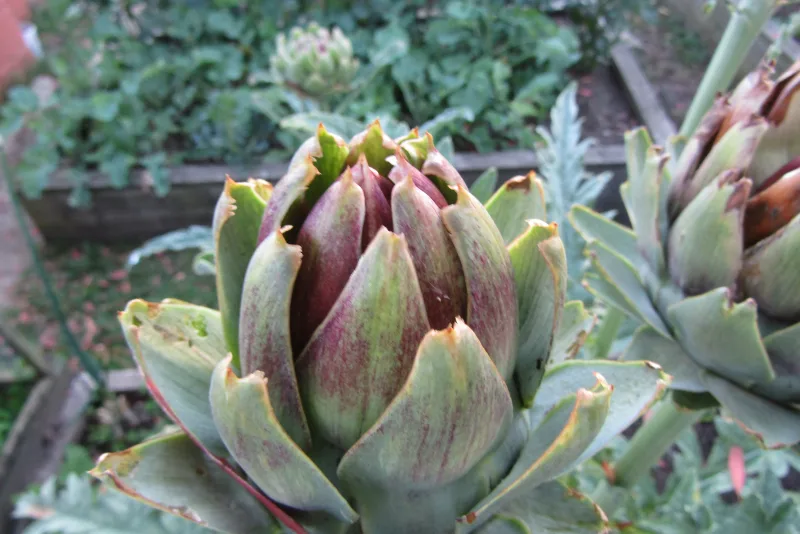
The artichoke (Cynara scolymus or Cynara cardunculus var. scolymus) is a perennial plant in the Asteraceae family, related to the thistle and the cardoon. It originates in the Mediterranean basin and has been cultivated since antiquity by the Greeks and Romans, who prized it both as food and as a remedy for the stomach and liver. The fleshy “head” we eat as a vegetable is actually the unopened flower bud, but for medicinal purposes it is mainly the large, jagged, slightly silvery leaves, rich in bitter active principles, that are used.
Artichoke leaves have been used for centuries in European folk medicine as a liver and digestive tonic. In Romanian tradition, artichoke tea earned a reputation as a “friend of the tired liver,” recommended after dietary excesses, in periods of sluggish digestion, or to support the elimination of “toxins.” Its characteristic bitter, greenish taste is in fact the very signature of its effectiveness: the bitterness reflexively stimulates the digestive secretions.
Table of Contents
- What artichoke tea is and what it contains
- Composition and active principles
- Health benefits
- How to prepare artichoke tea correctly
- When and how much to drink
- Combinations with other herbs
- Artichoke in the diet
- Practical tips and common mistakes
- Precautions and contraindications
- Conclusion
- Frequently Asked Questions
What artichoke tea is and what it contains
Artichoke tea is an infusion or decoction prepared from the dried leaves (sometimes also the roots) of the plant. Unlike the edible part of the vegetable, the leaves are much more concentrated in active substances and have a distinctly more bitter taste. That is precisely why the tea is not drunk “for pleasure,” like a fruit tea, but as a functional remedy with a well-defined role.
The color of the infusion is yellowish-green, and the aroma is herbaceous and bitter. For those who are not used to it, the taste may seem harsh, but it is exactly this bitter note that, through the receptors in the mouth and on the tongue, triggers a chain of reactions that prepare the digestive tract for work: saliva increases, gastric secretion is stimulated and, above all, the production and elimination of bile intensifies.
Composition and active principles
The effectiveness of artichoke is not merely a folk story — it is based on a series of compounds studied by researchers. The most important are:
- Cynarin — a dicaffeoylquinic acid, considered the main compound responsible for the effects on the liver and bile. Cynarin stimulates bile production (choleretic effect) and has antioxidant properties.
- Caffeoylquinic acids and chlorogenic acid — phenolic compounds with antioxidant action that help protect the liver cells.
- Flavonoids (luteolin, scolymoside, cynaroside) — substances with antioxidant and anti-inflammatory effects.
- Sesquiterpene lactones (especially cynaropicrin) — responsible for the bitter taste and for stimulating digestive secretions.
- Inulin — a soluble, prebiotic-type fiber, found mainly in the edible part, which feeds the beneficial bacteria in the gut.
- Minerals and vitamins — potassium, magnesium, iron, B-group vitamins.
The synergy between these compounds explains why artichoke is appreciated simultaneously as a liver tonic, a bitter digestive and an antioxidant. Studies suggest that artichoke leaf extracts can support hepatobiliary function and may have a favorable effect on the lipid profile, although homemade tea is less concentrated than standardized extracts.
Health benefits
Support for the liver
The liver is the organ that processes everything we eat, drink and breathe, and artichoke is one of the plants with the most solid reputation as a “liver protector.” The antioxidant compounds in the leaves, especially cynarin and the phenolic acids, help protect the liver cells against oxidative stress. Folk tradition recommends it after periods of dietary excess or alcohol consumption, when the liver needs support to return to its normal rhythm of work. Studies suggest that artichoke can support liver regeneration and proper function, but in already established liver disease it should not be used as a substitute for prescribed treatment.
Stimulating bile secretion and easier digestion
The best-known effect of artichoke is the choleretic one (it stimulates bile production) and the cholagogue one (it favors the emptying of bile from the gallbladder). Bile is essential for digesting fats, and a sluggish secretion shows up as a feeling of heaviness under the ribs, bloating after fatty meals, nausea and slow digestion. By stimulating the flow of bile, artichoke tea can ease these discomforts, which is why it is so prized after rich meals. It is precisely this effect, however, that makes it dangerous for people with gallstones.
Supporting balanced cholesterol
One of the most studied directions for artichoke is its influence on cholesterol. Bile is synthesized from cholesterol, and stimulating bile flow indirectly draws cholesterol into this process. Studies suggest that artichoke leaf extracts can help maintain a balanced cholesterol level as part of a healthy lifestyle. Homemade tea is gentler than concentrated supplements, but used consistently alongside a proper diet, it can be a support.
Digestive effect through bitterness
Bitter plants hold a special place in traditional medicine: their bitterness “prepares” the stomach for the meal. Consumed before eating, artichoke tea can stimulate appetite and digestive secretions in people with sluggish digestion or poor appetite. This principle of “digestive bitters” underlies many traditional tonics and aperitifs.
Support for transit and gut flora
The inulin in artichoke is a prebiotic fiber that feeds the beneficial bacteria in the colon and supports regular transit. Although inulin is found mainly in the edible part of the vegetable, the combined consumption of cooked artichoke and leaf tea can support overall gut health.
General antioxidant effect
The abundance of phenolic compounds and flavonoids gives artichoke an appreciable antioxidant capacity. Antioxidants help neutralize free radicals, which are associated with cellular aging and numerous imbalances. Including artichoke in a varied, plant-rich diet contributes to the overall antioxidant intake.
Support against water retention
Artichoke also has a mild diuretic effect, helping the body eliminate excess fluids. This makes it useful, in folk tradition, during periods marked by a feeling of “puffiness” and retention, especially combined with proper hydration and a lower-salt diet.
How to prepare artichoke tea correctly
Proper preparation makes the difference between an effective tea and a bland one. Here are the classic methods.
The simple infusion (the basic recipe)
- Measure one level teaspoon of dried artichoke leaves (about 1.5–2 g) for a cup of roughly 250 ml.
- Boil the water and let it settle for 1 minute after it reaches a rolling boil (the ideal temperature is around 90–95 °C).
- Pour the hot water over the leaves in a cup or teapot.
- Cover the vessel and let it steep for 10–15 minutes. Covering is important so that the volatile oils and aroma are not lost.
- Strain and drink the tea warm, adding a little warm water if the bitterness seems too intense.
The decoction (for a more concentrated effect)
If you want a stronger effect on the liver, you can make a short decoction:
- Put a teaspoon of leaves in a small pot with a cup of cold water.
- Bring to a slow boil and let it simmer for 3–5 minutes.
- Turn off the heat, cover and let it steep for another 10 minutes.
- Strain and drink. The decoction will be more bitter and more concentrated than the infusion.
How to tame the bitterness
Artichoke is usually not sweetened with much sugar, because the bitterness is exactly what is active. If the taste is too intense, you can:
- add a slice of lemon or a few drops of lemon juice;
- combine the leaves with a little mint or lemon balm for a refreshing note;
- add a teaspoon of honey after the tea has cooled a little (honey should not be added to boiling liquid).
When and how much to drink
In folk tradition and in phytotherapeutic practice, artichoke tea is usually drunk:
- Before meals (15–30 minutes beforehand), to stimulate appetite and digestive secretions — the “digestive bitter” effect.
- After heavy meals, to ease the digestion of fats and the feeling of heaviness.
The usual amount is 1–2 cups per day, in courses of 2–3 weeks, followed by a break. Long, uninterrupted courses are not recommended; as with all plants of powerful action, it is healthier to alternate periods of consumption with breaks. Always start with a small amount to see how your body, especially your digestion, reacts.
Combinations with other herbs
Artichoke goes well with other herbs that support the liver and digestion, forming traditional blends:
- Artichoke + milk thistle (silymarin) — the classic combination for liver support, very popular in phytotherapy.
- Artichoke + dandelion — both bitter plants, with a choleretic and mild diuretic effect, for a general “cleanse.”
- Artichoke + rosemary — rosemary adds an aromatic note and also supports bile secretion.
- Artichoke + mint — mint tames the bitterness and soothes the stomach.
- Artichoke + chicory — for digestive and liver support, with an earthy aroma.
These combinations are prepared following the same infusion rules. When you mix several plants, use smaller amounts of each so as not to obtain too high a concentration.
Artichoke in the diet
Besides the tea, artichoke as a vegetable deserves a place at the table, especially for those who want to benefit from its inulin and minerals. The flower buds are boiled or roasted, and the fleshy “heart” is eaten with light sauces, olive oil and lemon. The outer leaves are peeled off one by one and “scraped” with the teeth to extract the fleshy part at the base. When cooked, artichoke keeps its slightly bitter note, but much milder than the leaf tea. Regular consumption of cooked artichoke, alongside a vegetable-rich diet, nicely complements the effects of the tea on digestion and the liver.
Practical tips and common mistakes
Mistake no. 1: Using artichoke when you have gallstones. This is the most dangerous mistake. Stimulating bile can set the stones in motion and trigger a severe biliary colic. If you have, or suspect you have, gallstones, do not drink artichoke tea without medical advice.
Mistake no. 2: Drinking it in courses that are too long. Many believe that “if it’s good, the more the better.” False. Bitter plants with a liver action are used in short courses with breaks. Uninterrupted use for months brings no extra benefit and can overburden the digestive system.
Mistake no. 3: Over-sweetening. By adding a lot of sugar or honey, you cancel out the very bitterness that triggers the digestive secretions. If you want the digestive effect, keep the tea as natural as possible.
Mistake no. 4: Expecting quick miracles. Artichoke tea is a gentle support, not a medicine. The benefits appear gradually, within the context of a balanced lifestyle, not overnight.
Mistake no. 5: Ignoring the quality of the leaves. Old, damp or poorly stored leaves lose their active principles. Buy leaves from trustworthy sources and keep them in closed containers, away from light and moisture.
Mistake no. 6: Drinking it on an empty stomach if you are sensitive. In some people, intense bitterness on a completely empty stomach can cause gastric discomfort. If you are sensitive, drink the tea shortly before a meal, not long beforehand.
Precautions and contraindications
To recap the main situations in which artichoke tea should be avoided or used with caution:
- Gallstones and bile duct obstructions — major contraindication.
- Acute biliary conditions, obstructive jaundice — to be avoided.
- Allergy to Asteraceae plants (daisies, marigolds, chamomile, wormwood) — risk of allergic reactions.
- Pregnancy and breastfeeding — only with medical advice.
- Young children — not recommended.
- Medical treatments — for cholesterol, diabetes, diuretics or medication metabolized by the liver, consult your doctor.
If severe abdominal pain, persistent nausea, or yellowing of the skin or eyes appears, stop drinking it immediately and see a doctor. These signs may indicate a serious biliary problem.
Conclusion
Artichoke tea is one of the most prized traditional remedies for the liver and bile, and its reputation is also supported by modern research, which has identified active compounds such as cynarin and the phenolic acids. Its bitter taste is not a flaw but the signature of its effectiveness: it stimulates the digestive secretions and the flow of bile, easing the digestion of fats and supporting a tired liver. Used correctly — in short courses, in moderate amounts and with respect for the contraindications — artichoke tea can be a reliable ally for digestion. The important thing is to see it as a support, not a substitute for medical care, and to pay particular attention to the major contraindication: gallstones. As Aunt Voica used to say, artichoke “wakes the liver up to work” — provided we use it wisely.
Frequently Asked Questions
Is artichoke tea good for the liver? Yes, artichoke is one of the plants with the best reputation as a liver tonic. Its antioxidant compounds, especially cynarin, help protect the liver cells, while stimulating bile flow eases digestion. However, it does not replace medical treatment in liver disease.
Who should not drink artichoke tea? People with gallstones or bile duct obstructions, those with acute biliary conditions, those allergic to plants in the daisy family, pregnant or breastfeeding women (without medical advice), and young children.
When should artichoke tea be drunk, before or after a meal? Both options make sense: before the meal (15–30 minutes) it stimulates appetite and digestive secretions, while after heavy meals it eases the digestion of fats. Most often it is used after rich meals.
How many cups of artichoke tea can be drunk per day? Usually 1–2 cups per day, in courses of 2–3 weeks followed by a break. Continuous long-term use is not recommended.
Does artichoke tea help with weight loss? Not directly. Artichoke supports digestion, bile flow and has a mild diuretic effect, which can help reduce the feeling of bloating. Real weight loss, however, depends on diet and exercise, not on tea.
Does artichoke tea affect cholesterol? Studies suggest that artichoke leaf extracts can help maintain balanced cholesterol, through the link between bile and cholesterol. Homemade tea is gentler than concentrated supplements, but it can be a support alongside a healthy lifestyle.
Why is artichoke tea so bitter? The bitterness comes from the sesquiterpene lactones, especially cynaropicrin. This bitter taste is not a flaw but precisely the mechanism by which the plant stimulates digestive secretions and bile production.
Can I drink artichoke tea every day, long term? Continuous long-term use is not recommended. As with all bitter plants with a liver action, it is healthier to alternate courses of 2–3 weeks with breaks, so as not to overburden the digestive system.