
Chamomile and Lemon Balm Tea: The Calming Blend for Sleep and Relaxation
IMPORTANT: Although chamomile and lemon balm tea is considered one of the gentlest and safest herbal blends, it is not without precautions. People allergic to plants in the Asteraceae family (chamomile, ragweed, marigold, chrysanthemum) may react to chamomile. Lemon balm can influence thyroid function and may potentiate the effects of sedative medications, sleeping pills or anti-anxiety drugs. Pregnant or breastfeeding women, people with hypothyroidism, those taking anticoagulants or anyone on long-term medication should consult a doctor before drinking this tea regularly. Never replace a prescribed treatment with an herbal tea, and do not give large amounts to small children without the approval of a pediatrician.
Aunt Veta, from the village where my grandparents lived, had a habit she never abandoned: every evening, after finishing the household chores and finally settling into the chair by the stove, she would brew herself a large cup of tea from a mixture of dried herbs that she kept in a cloth pouch hanging in the pantry. She said that the “white flowers with golden hearts” and the “herb that smells of lemon” helped her fall asleep without dwelling on the worries of the day. Only later did I understand that the “white flowers” were chamomile gathered from the roadside, and the “lemon-scented herb” was lemon balm, which she grew in a corner of her garden, near the beehives.
That steaming cup of tea, drunk in the quiet of the evening, became for me the perfect symbol of a relaxation ritual. It was not only about the herbs themselves, but about the moment of peace it created. And the combination of chamomile and lemon balm was no accident chosen by generations of housewives and herbalists: the two plants complement each other almost perfectly, one calming the nerves and the stomach, the other chasing away restlessness and preparing the mind for rest.
Chamomile and lemon balm tea is, in essence, a blend of two classic medicinal plants of European and traditional folk herbalism. Chamomile (Matricaria chamomilla) is the calming flower par excellence, used for thousands of years for its soothing, anti-inflammatory and digestive effects. Lemon balm (Melissa officinalis), a plant from the mint family, has a delicate lemon fragrance and is prized for its relaxing effects on the nervous system. Together, they form one of the most popular evening teas, traditionally recommended for sleep, relaxation and balancing digestion.
Table of Contents
- What chamomile and lemon balm tea is
- Chamomile: the flower of calm
- Lemon balm: the herb with a lemon scent
- Why they work so well together
- Benefits of chamomile and lemon balm tea
- How to prepare it correctly (step-by-step recipe)
- When and how much to drink
- Combinations with other herbs
- The evening ritual: tips for relaxation
- Practical tips and common mistakes
- Conclusion
- Frequently Asked Questions
What chamomile and lemon balm tea is
Chamomile and lemon balm tea is an infusion made from dried chamomile flowers and dried (or fresh) lemon balm leaves. It is a caffeine-free tea with a gentle, slightly sweet flavor and citrus notes, pleasant even without a sweetener. Unlike green or black tea, which come from the Camellia sinensis plant and contain caffeine, this blend belongs to the category of “herbal teas” or tisanes – infusions prepared from various parts of medicinal plants.
The tradition of using both plants is very old. Chamomile appears in the medical writings of ancient Egypt, Greece and Rome, and has always been associated with calm and healing. Lemon balm was cultivated as far back as antiquity around beehives, because bees are attracted to its fragrance (in fact, “melissa” means “bee” in Greek). In traditional folk culture, both plants could be found in almost every rural household, either grown in the garden or gathered from the fields and dried for winter.
Combining them in a single tea arose naturally: people noticed that the calming effect intensified when the plants were used together. Today, this blend is one of the most recommended evening teas, considered a gentle and natural aid for restful sleep.
Chamomile: the flower of calm
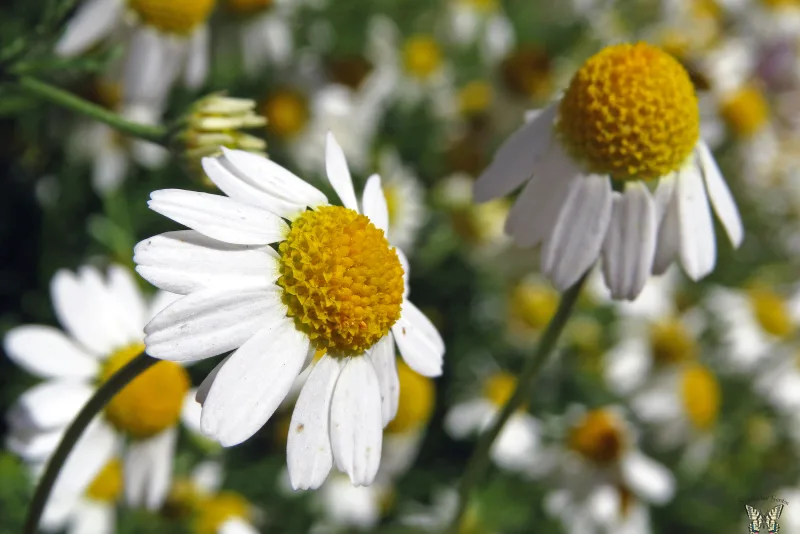
Chamomile is an annual plant with small, daisy-like flowers featuring white petals and a domed, golden-yellow center. It grows wild along roadsides, in fields and on uncultivated land, but is also cultivated on a large scale. The parts used are the flowers, gathered in full bloom and carefully dried in the shade.
Chamomile flowers contain volatile oils (including bisabolol and chamazulene, responsible for the bluish color of the essential oil), flavonoids such as apigenin, coumarins and mucilage. Apigenin is considered one of the key compounds for the calming effect, since studies suggest it binds to certain receptors in the brain involved in relaxation and the induction of sleep.
In folk tradition, chamomile has been used for a wide range of complaints: stomach aches and digestive cramps, bloating, restlessness in children, inflammation of the mouth and throat (as a gargle), skin irritation (as a compress) and, of course, for calming the nerves. It is one of the few plants that many mothers used even for infants, in small amounts, to relieve colic – always, however, only with a doctor’s approval.
Lemon balm: the herb with a lemon scent
Lemon balm is a perennial plant from the Lamiaceae family, the same as mint and basil. It has oval, slightly toothed leaves of a fresh green, which, when rubbed between the fingers, release an intense lemon fragrance. It is precisely this scent that makes it unmistakable and very pleasant in teas.
Lemon balm leaves contain volatile oils rich in citral, citronellal and geraniol, phenolic acids (such as rosmarinic acid), flavonoids and tannins. Rosmarinic acid and the volatile oils are associated with the plant’s relaxing and mildly antispasmodic effects.
Tradition uses lemon balm especially for the nervous system: against restlessness, states of tension, palpitations of an emotional nature and insomnia. In addition, lemon balm is also valued for its digestive effects – it helps calm an agitated stomach, especially when the digestive discomfort has a nervous component (that “knot in the stomach” that appears under stress). Many herbalists call it the “gladdening herb” for its reputation of lifting the mood and dispelling mild melancholy.
Why they work so well together
The secret of this blend lies in the complementarity of the two plants. Chamomile acts predominantly on the digestive system and has a general calming effect, while lemon balm targets more directly the nervous system, restlessness and mental tension. When combined, they cover together both the physical and the psychological components of stress.
Many people struggling with insomnia cannot fall asleep because of a mixture of factors: thoughts that will not stop, a slight physical restlessness and sometimes digestive discomfort after a late dinner. Chamomile soothes the stomach and relaxes the body, while lemon balm calms the racing mind. The result is a sensation of complete unwinding that prepares the body for rest.
Moreover, the aromas of the two plants blend very harmoniously: the floral, slightly honeyed sweetness of chamomile balances perfectly with the citrus freshness of lemon balm. This makes the tea not only effective but also particularly pleasant to drink – an important point, because a tea you enjoy drinking becomes far easier to make part of a daily ritual.
Benefits of chamomile and lemon balm tea
Support for restful sleep
The best-known benefit of this blend is its effect on sleep. Folk tradition and long-standing use suggest that a cup drunk 30 to 60 minutes before bed can help with falling asleep more easily and with less interrupted sleep. The mechanism is largely one of relaxation: by calming the nervous system and muscular tension, the tea creates favorable conditions for rest without forcing sleep the way some medications do.
Reducing restlessness and tension
Both chamomile and lemon balm have a long reputation as “anti-stress” plants. For those going through tense periods, a cup of warm tea can become a moment of pause that, in itself, has relaxing value. Studies suggest that certain compounds in these plants interact with the nervous system in a way that favors calm, although the tea should not be considered a treatment for diagnosed anxiety disorders.
Aid for digestion
Chamomile is one of the most appreciated plants for digestive discomfort. It has a mild antispasmodic effect, helping to relax the muscles of the digestive tract and to soothe cramps and bloating. Lemon balm complements this action, being especially useful when digestive problems arise on a nervous background. That is why the tea is traditionally recommended after heavier meals or during periods of stress that affect the stomach.
Calming states of agitation
For people who feel agitated, irritable or who have difficulty relaxing in the evening, this tea can offer gentle support. Many people use it as a natural alternative to drinking coffee or other stimulating beverages in the evening, replacing a ritual that excites the nervous system with one that calms it.
Support during colds and discomfort
Although it is not primarily a “cold tea,” chamomile has mild anti-inflammatory properties, and the warmth of the infusion and the hydration it provides help the body during periods of mild discomfort. Gargling with chamomile tea is a traditional remedy for throat irritation.
Comfort during tense times of the cycle
Tradition also uses chamomile to ease menstrual cramps, thanks to its antispasmodic effect on the muscles. Combined with the relaxing effect of lemon balm, the tea can offer pleasant comfort on tense days, although it does not replace a doctor’s advice in the case of severe pain.
How to prepare it correctly (step-by-step recipe)
Proper preparation makes the difference between a fragrant, effective tea and a bland or bitter one. Here is the basic recipe:
Ingredients for one cup (about 250 ml):
- 1 teaspoon of dried chamomile flowers (about 2 g)
- 1 teaspoon of dried lemon balm leaves (about 2 g) or 4-5 fresh leaves
- 250 ml hot water (but not at a violent boil)
- optional: a teaspoon of honey and a slice of lemon
Preparation steps:
Prepare the water. Bring the water close to boiling, then let it “rest” for 30-60 seconds. Water at a violent boil can destroy some of the delicate volatile oils, especially those in lemon balm.
Measure the herbs. Place one teaspoon of each plant in a cup or a tea infuser. If you use fresh lemon balm, you can gently tear the leaves to release more aroma.
Pour the hot water over the herbs, covering the cup immediately. Covering is essential: it prevents the aromatic volatile oils from evaporating with the steam, preserving both the flavor and part of the plants’ properties.
Let it steep for 7-10 minutes. For a calming effect, a longer infusion (toward 10 minutes) is preferable, as it extracts more active compounds. Be careful, however: an infusion that is too long, over 12-15 minutes, can become slightly bitter due to the tannins.
Strain the tea and, if you wish, add a teaspoon of honey only after the tea has cooled a little (honey added to very hot water loses some of its properties). A slice of lemon nicely completes the citrus notes of the lemon balm.
Drink the tea warm, slowly, savoring the moment. For the relaxing effect, the slow pace of drinking contributes as much as the herbs themselves.
When and how much to drink
The ideal time for this tea is in the evening, about 30 to 60 minutes before bed. This window allows the body to relax gradually and avoids the need to wake up at night to use the bathroom because of liquid consumed too close to sleep.
For general relaxation or digestive support, you can also drink a cup after the main meals or during the tense moments of the day. In general, 1-3 cups a day are considered a reasonable amount for a healthy adult. As with any herbal tea, it is advisable to take periodic breaks (for example, a few days every few weeks) rather than drinking it continuously, year after year, without interruption.
For children, the amounts must be reduced considerably and used only with the approval of a pediatrician. Diluted chamomile is sometimes recommended for colic, but always under supervision.
Combinations with other herbs
Chamomile and lemon balm tea lends itself well to enrichment with other herbs, depending on the desired effect:
- With linden flowers: for an even more pronounced calming effect, ideal on restless evenings.
- With lavender: a small amount of lavender flowers adds a remarkable floral aroma and strengthens the relaxing effect. Watch the dose, as lavender is strong in flavor.
- With fennel or anise: to emphasize the digestive side, useful after heavy meals or in case of bloating.
- With orange blossom (neroli): for a refined, pleasant and soothing blend.
- With valerian: only for a strong effect on sleep, although valerian has a more intense taste and smell, and combining it deserves caution and, ideally, consultation with a specialist.
The evening ritual: tips for relaxation
The effectiveness of this tea increases significantly when you integrate it into a conscious relaxation ritual, rather than drinking it hastily in front of your phone. Here are a few suggestions that turn a simple cup of tea into a moment of self-care:
Set a fixed time, every evening, when you prepare your tea. Repetition creates a signal for the brain that rest is approaching. Drink the tea away from screens – television, phone, laptop – whose blue light and stimulating content counteract the relaxing effect of the herbs. Read a few pages of a book, listen to quiet music, or simply sit in silence, savoring each warm sip.
The room where you drink the tea should be slightly dim and cool. Combining the warm tea with a quiet environment, slow and deep breathing, amplifies the state of relaxation. Many people discover that, over time, the simple act of putting the water on to boil in the evening becomes in itself a calming signal, even before drinking the tea.
Practical tips and common mistakes
Mistake no. 1: Using water at a violent boil. Water boiling in large bubbles destroys the delicate volatile oils, especially those in lemon balm. Let the water rest briefly after boiling, then pour it over the herbs.
Mistake no. 2: Steeping without a lid. If you leave the cup uncovered, the aromatic vapors are lost into the air. Always cover the tea during steeping – you will preserve both the flavor and the properties.
Mistake no. 3: Steeping for too long. Many believe that “more time = stronger.” Beyond 12-15 minutes, the tannins make the tea bitter and less pleasant, with no real benefit. Stick to the 7-10 minute range.
Mistake no. 4: Adding honey to very hot water. Honey added to boiling liquid loses some of its valuable properties. Let the tea cool slightly, then sweeten.
Mistake no. 5: Drinking it too close to bedtime. If you drink a large cup right before lying down, you risk waking up at night to use the bathroom, which interrupts sleep. Drink it 30-60 minutes before.
Mistake no. 6: Expecting “medication-like” effects. Herbal tea acts gently and gradually. It does not “knock you out” instantly like a sleeping pill, but creates the conditions for relaxation. Patience and consistency are the key.
Mistake no. 7: Using old, aroma-less herbs. Dried herbs lose their volatile oils over time. If the chamomile no longer smells of anything and the lemon balm no longer has a lemon fragrance, they have lost much of their value. Buy fresh herbs and store them in closed containers, away from light.
Conclusion
Chamomile and lemon balm tea is one of the finest examples of folk wisdom: a simple combination of two common plants that together offer more than each one alone. Chamomile soothes the stomach and the body, lemon balm calms the mind, and their aromas blend into a pleasant beverage, perfect for the evenings when you need to slow down. It is not a miracle medicine, but a gentle and reliable support for sleep, relaxation and digestion – exactly as our grandmothers used it, with a steaming cup drunk in the quiet of the evening. Prepared correctly and integrated into a conscious rest ritual, this tea can become a small act of self-care that makes your evening better, day after day.
Frequently Asked Questions
Can I drink this tea every evening? Yes, for most healthy adults, a cup in the evening is considered safe in the long term. Even so, it is advisable to take periodic breaks and to pay attention to how your body reacts. If you take sedative medications or other chronic treatments, consult your doctor first.
Does chamomile and lemon balm tea really help you sleep? Tradition and long-standing use suggest that it helps with relaxation and falling asleep more easily. The effect is not that of a sleeping pill, but one of gradual calming. For the best results, combine it with a screen-free evening ritual.
Can I give this tea to children? Only in very small amounts and preferably with the approval of a pediatrician. Diluted chamomile is sometimes used for infant colic, but it should not be given without medical supervision.
Is it safe during pregnancy? Here caution is essential. Both chamomile and lemon balm can have effects that are not fully recommended during pregnancy in large amounts. Pregnant or breastfeeding women should consult a doctor before drinking this tea regularly.
Can I use fresh herbs instead of dried ones? Yes, especially for lemon balm, the fresh leaves have a wonderful lemon aroma. For the same amount, use about three times more fresh plant than dried, since the fresh plant contains water.
Does the tea contain caffeine? No. Both chamomile and lemon balm are caffeine-free plants, which makes this blend ideal for the evening, unlike green tea, black tea or coffee.
Why does my tea turn out bitter? The most common reason is steeping for too long or using water that is too hot. Stick to the 7-10 minute range and let the water rest briefly after boiling.
Can I drink this tea if I take thyroid medication? Lemon balm can influence thyroid function, so people with thyroid conditions or who are undergoing thyroid treatment should consult their doctor before drinking this tea regularly.