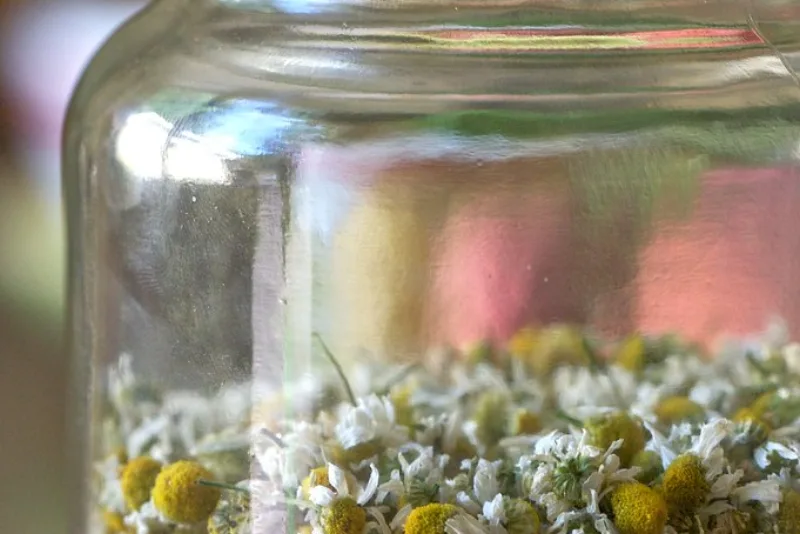

Chamomile Tea: Benefits, How to Prepare and Contraindications
IMPORTANT: Although chamomile is one of the gentlest and safest medicinal plants, it is not without its cautions. People allergic to plants in the Asteraceae family (daisies, marigolds, arnica, ragweed, chrysanthemums, mugwort) may develop allergic reactions, sometimes serious. Chamomile has a mild sedative and anticoagulant effect, which is why it should be used carefully before surgery, alongside blood-thinning medication (such as warfarin), or with sedatives and anti-anxiety drugs. During pregnancy and breastfeeding, moderate consumption is advised and only after consulting a doctor, since chamomile may slightly stimulate the uterus. Do not replace medical treatment for serious conditions with herbal teas. If a problem persists, worsens, or unusual symptoms appear, see a doctor.
Aunt Veronica, a short and cheerful woman from my grandparents’ village at the foot of the Carpathians, kept an entire shelf in her pantry filled with paper bags of chamomile flowers. She picked them herself in June, on the meadow by the river, and dried them in the shade, spread out on clean cloths in the attic. She said no summer evening was complete without a cup of chamomile tea, “to settle the stomach and the thoughts alike.” Whenever a child came in with a belly swollen from too many wild plums, or with red, watery eyes, chamomile was the first remedy pulled from the pantry.
I still remember that sweet, slightly bitter scent of baked apples and fresh hay rising from the cup. Aunt Veronica would pour boiling water over the flowers, place a small saucer on top “so the power wouldn’t escape,” and let us wait patiently for five minutes, counting out loud. It was an evening ritual the whole village seemed to honour, passed down from generation to generation, from grandparents to grandchildren. Today, when I drink a cup of chamomile tea before bed, I relive that warm stillness of long ago.
Chamomile (Matricaria chamomilla, also known as German chamomile) is an annual plant in the Asteraceae family, with small, daisy-like flowers — white petals and a domed yellow centre. It grows wild in fields, along roadsides, and on uncultivated land across Europe, and its characteristic apple-like fragrance has made it prized since antiquity. The Egyptians dedicated it to their sun god, the Greeks and Romans used it for relaxation and wound healing, and in folk tradition chamomile is without doubt “the grandmother’s plant” — the universal, gentle, friendly remedy found in every household.
Table of Contents
- What chamomile is and where it grows
- Composition and active compounds
- Health benefits of chamomile tea
- Traditional uses in folk medicine
- How to prepare chamomile tea correctly
- When and how much to drink
- Combinations with other herbs
- Chamomile in skin and hair care
- Practical tips and common mistakes
- Precautions and contraindications
- Conclusion
- Frequently Asked Questions
What chamomile is and where it grows
German chamomile is an annual herbaceous plant, 15–60 cm tall, with branched stems and fine, feathery leaves resembling tiny feathers. What we commonly call a “flower” is in fact an inflorescence: the central yellow disc is made up of hundreds of minuscule tubular florets, surrounded by the white petals (the ray florets). A useful detail for identification: in genuine chamomile, the receptacle (the yellow centre) is hollow inside and cone-shaped, and the plant releases that sweet apple fragrance when rubbed between the fingers.
It is harvested in May–July, when the flowers are fully open and the scent is at its peak. Tradition says the ideal moment is in the morning, once the dew has lifted, on a sunny day. The flowers are dried in the shade, in a well-ventilated place, spread out in a thin layer, and then stored in sealed jars or paper bags, protected from light and moisture.
It should not be confused with Roman chamomile (Chamaemelum nobile), a perennial species used mainly in perfumery and for fragrant lawns, or with scentless mayweed, which lacks the same medicinal qualities. For tea, German chamomile remains the staple choice in the Romanian tradition.
Composition and active compounds
Chamomile flowers contain a remarkable cocktail of bioactive compounds, which is why the plant is so highly valued. The volatile (essential) oil is responsible for the aroma and for a good part of the therapeutic effects. The main studied compounds include:
- Bisabolol — a compound from the essential oil with calming, anti-inflammatory, and skin-healing properties.
- Chamazulene — the pigment that gives chamomile essential oil its characteristic blue colour; it is valued for its anti-inflammatory effect.
- Apigenin — a flavonoid which, according to studies, binds to certain receptors in the brain and may explain the mild calming and sleep-inducing effect.
- Other flavonoids and phenolic acids — with antioxidant roles, helping to combat oxidative stress.
- Coumarins, mucilage, and matricin — which contribute to the emollient and antispasmodic effects.
This combination makes chamomile a plant with multiple actions: anti-inflammatory, antispasmodic (relaxing smooth muscle), mildly sedative, antibacterial, and wound-healing. Studies suggest that it is precisely the synergy between these compounds, rather than any single ingredient, that explains the plant’s remarkable versatility.
Health benefits of chamomile tea
Helps with more peaceful sleep
The best-known use of chamomile tea is supporting restful sleep. Folk tradition has always used it as an “evening tea,” and modern studies suggest that the flavonoid apigenin may have a mild calming effect on the nervous system. A cup drunk 30–45 minutes before bed can become part of a relaxation ritual that signals to the body that it is time to rest. It is not a strong sleeping pill, but a gentle aid, ideal for those who want to fall asleep more easily without resorting to medication.
Soothes digestion and the stomach
Chamomile is a classic remedy for digestive discomfort. Thanks to its antispasmodic effect, it relaxes the muscles of the digestive tract and can ease cramps, bloating, and the heavy feeling after large meals. Tradition recommends it for indigestion, colic, mild gastritis, and nausea. Many grandmothers gave diluted chamomile tea to colicky infants (with a doctor’s approval), precisely because of its gentleness.
Reduces inflammation and oxidative stress
The anti-inflammatory and antioxidant compounds in chamomile help the body cope with low-grade inflammation and the oxidative stress caused by free radicals. This effect is reflected both internally and externally — from an irritated stomach to inflamed skin.
Supports relaxation and a sense of calm
Beyond sleep, chamomile tea is a pleasant companion in moments of tension and agitation. Its warm aroma and the simple act of slowly sipping a hot cup have a soothing effect in themselves. Tradition considered it good for “the nerves,” mild anxiety, and that diffuse restlessness at the end of a busy day.
Helps ease menstrual pain
Thanks to its antispasmodic effect, chamomile tea has always been used to ease menstrual cramps. Drunk warm on uncomfortable days, it can relax the uterine muscles and bring gentle relief, making it a remedy appreciated by many women.
Supports the health of skin and mucous membranes
Applied externally, in the form of compresses or a rinse, chamomile is traditionally used for irritated skin, tired eyes, and minor inflammations of the mouth and throat. Its healing and anti-inflammatory effect makes it a trusted ally in daily care.
Traditional uses in folk medicine
In the Romanian household of old, chamomile was always on hand. Here are some of the uses passed down from generation to generation:
- Gargle for a sore throat — a lukewarm infusion used for mild throat pain and inflammation of the mouth.
- Baths for restless infants and children — a handful of flowers boiled in the bathwater, believed to soothe and aid sleep.
- Compresses for tired or irritated eyes — tea bags or compresses of cooled infusion applied to the eyelids.
- Steam for the face and colds — inhalations with chamomile vapours to cleanse the skin and ease breathing.
- Washes for irritated skin and minor wounds — the infusion used as a gentle rinse.
- Rinse for blonde hair — to give it shine and golden highlights.
These uses show how versatile the plant was: a single remedy answered dozens of small everyday troubles.
How to prepare chamomile tea correctly
Preparing chamomile tea is simple, but a few details make the difference between a dull infusion and an aromatic one full of strength.
The classic recipe, step by step
- Quantity: Use 1–2 teaspoons of dried chamomile flowers (about 2–3 grams) for a cup of roughly 200–250 ml. If using fresh flowers, double the quantity.
- The water: Boil the water, then let it “settle” for 30–60 seconds, until it is no longer boiling violently (around 90–95 °C). Vigorously boiling water can destroy some of the delicate aromatic compounds.
- Pouring: Place the flowers in a cup or an infuser and pour the hot water over them.
- Covering: Cover the cup with a small saucer or a lid. This is the step many people forget! The volatile oils are what give the tea its strength, and if you leave the cup uncovered, they evaporate along with the steam. The grandmothers were right when they said: “put a lid on, so the remedy doesn’t escape.”
- Steeping: Let it steep for 5–10 minutes. Five minutes for a delicate aroma and a mild effect; up to ten minutes for a stronger infusion, recommended for digestion or sleep.
- Straining: Strain out the flowers and drink the tea warm.
Chamomile tincture
For those who want a concentrated, long-lasting version, a tincture is an option. Fill a jar halfway with dried flowers, cover with food-grade alcohol of 40–60%, seal it, and leave to macerate for 2–4 weeks in a dark place, shaking daily. Strain and store in dropper bottles. Take a few drops diluted in a little water, as directed.
Compress and gargle
For external use, prepare a more concentrated infusion (2–3 teaspoons per cup), let it cool, and use it for compresses, washes, or gargling. Important: for the eyes, use a well-strained, cooled infusion and a clean compress for each eye.
When and how much to drink
Traditionally, and for balanced consumption, 1–3 cups of chamomile tea per day are considered a reasonable amount for a healthy adult. For sleep, one cup in the evening, 30–45 minutes before bed, is the ideal choice. For digestion, a cup after main meals can bring relief. For a relaxation cure, it can be drunk for a few weeks, followed by a break. As a general rule, herbal teas are taken in courses, not indefinitely, to avoid habituation and to let the body rest.
Combinations with other herbs
Chamomile pairs well with many other plants, and the combinations tailor the effect to the need:
- Chamomile + linden — for peaceful sleep and deep relaxation.
- Chamomile + lemon balm — to calm the nerves and mild anxiety.
- Chamomile + mint — for easy digestion and a refreshing taste.
- Chamomile + lavender — an aromatic blend, ideal in the evening.
- Chamomile + fennel or anise — for bloating and intestinal discomfort.
- Chamomile + honey and lemon — for an irritated throat and mild colds (the honey is added to slightly cooled tea, not boiling).
Chamomile in skin and hair care
Beyond the cup of tea, chamomile is a valuable natural cosmetic. A cooled infusion can be used as a gentle toner for sensitive skin, calming redness and irritation. Chamomile steam is prized for deeply cleansing the pores and refreshing tired skin. For blonde or light-brown hair, a final rinse with chamomile infusion gives golden highlights and natural shine. And compresses of cooled infusion remain a classic remedy for tired eyes after a long day in front of a screen.
Practical tips and common mistakes
Mistake no. 1: Not covering the cup while steeping. This is the most common mistake. The volatile oils, which give the tea its calming effect and aroma, are lost along with the steam. Always place a lid or a small saucer on top.
Mistake no. 2: Using violently boiling water. Water that is too hot destroys some of the delicate compounds. Let the water settle for a few dozen seconds after it has boiled.
Mistake no. 3: Steeping too little or too long. Under 5 minutes, the tea stays weak; over 10–15 minutes it can become bitter and too concentrated. Stick to the 5–10 minute window.
Mistake no. 4: Adding honey to boiling tea. Honey loses some of its properties at high temperatures. Add it only after the tea has cooled a little.
Mistake no. 5: Storing the flowers in light and moisture. Chamomile loses its aroma and strength if kept in transparent bags, in the sun, or in damp places. Use sealed jars, protected from light, and use the flowers within one year.
Mistake no. 6: Relying solely on tea for serious problems. Chamomile is a gentle aid, not a substitute for medical treatment. For persistent conditions, see a doctor.
Mistake no. 7: Ignoring a possible allergy. If you are allergic to ragweed, daisies, or other plants in the Asteraceae family, test cautiously and stop drinking it at the first signs of a reaction.
Precautions and contraindications
Although it is a gentle plant, chamomile has a few limits to keep in mind:
- Allergies: People allergic to plants in the Asteraceae family may have reactions, from mild itching to more serious responses.
- Pregnancy and breastfeeding: Moderation and consulting a doctor are advised, since chamomile may slightly stimulate the uterus.
- Drug interactions: Due to its mild anticoagulant and sedative effect, it is used with caution alongside blood-thinning medication, sedatives, anti-anxiety drugs, and before surgery.
- Excessive consumption: Very large amounts may rarely cause nausea or excessive drowsiness.
- Young children and infants: Only with the approval of a paediatrician.
Conclusion
Chamomile tea is perhaps the best example of a simple, wise remedy from folk tradition: a modest plant, growing at the roadside, capable of bringing calm to the stomach, sleep to tired eyes, and peace to a burdened soul. Its gentleness makes it suitable for almost everyone, and its versatility — from the evening cup to compresses for the eyes — explains why it was never missing from any pantry of old. Prepared correctly, with not-too-hot water and a covered cup, chamomile reveals its full, fragrant strength. Used in moderation and with attention to possible allergies or interactions, it remains a trusted companion for peaceful evenings and the small troubles of everyday life.
Frequently Asked Questions
How often can I drink chamomile tea? For a healthy adult, 1–3 cups per day are considered a reasonable amount. It is recommended to drink it in courses of a few weeks, followed by breaks, rather than indefinitely every day.
Does chamomile tea really help with sleep? Tradition has used it as an evening tea for centuries, and studies suggest the flavonoid apigenin may have a mild calming effect. It is not a strong sleeping pill, but a gentle aid, ideal as part of a relaxation ritual before bed.
Can I give chamomile tea to my baby? Chamomile was traditionally used for colicky infants, but today it is recommended to consult a paediatrician first, since babies’ needs are very delicate and not all teas are suitable at a young age.
How long should I steep the tea? Between 5 and 10 minutes, with the cup covered. Five minutes for a delicate aroma, up to ten minutes for a stronger effect useful for digestion or sleep.
Does chamomile have contraindications? Yes. People allergic to plants in the Asteraceae family (ragweed, daisies, marigolds) should be cautious. It is used carefully during pregnancy, breastfeeding, alongside anticoagulants or sedatives, and before surgery.
Can I use chamomile tea externally too? Absolutely. A more concentrated, cooled infusion is used for compresses on tired eyes, gargling for a sore throat, washes for sensitive skin, and rinses for blonde hair.
Why is it important to cover the cup while steeping? Because the volatile oils, responsible for the aroma and the calming effect, evaporate along with the steam. A saucer placed on top preserves the “power” of the tea, exactly as the grandmothers used to say.
How do I recognise good-quality chamomile? Quality dried flowers retain their sweet apple aroma, keep their natural colour (whitish-yellow, not faded), and are not completely crumbled to dust. A strong, pleasant scent is the best indicator of freshness.