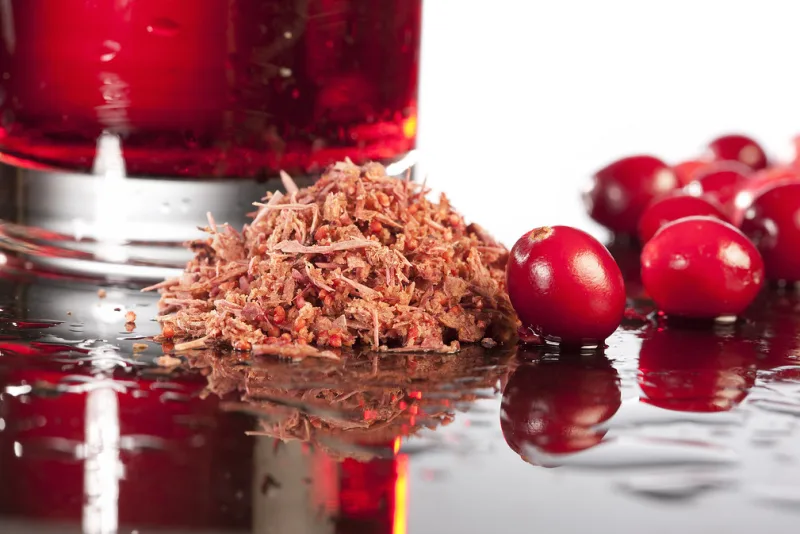

Cranberry Tea: Benefits for Urinary Health, Preparation and Side Effects
IMPORTANT: Cranberry tea can be a valuable support for urinary tract health, but it does NOT replace medical treatment. If you have a urinary tract infection accompanied by fever, severe pain, blood in the urine or back pain, see a doctor urgently — left untreated, a urinary infection can travel up to the kidneys. Cranberry interacts with anticoagulant medications (especially warfarin) and may increase the risk of bleeding, so people taking such drugs should consult their doctor before consuming it regularly. Cranberry is also high in oxalates, which is why people prone to calcium-oxalate kidney stones should be cautious. Pregnant or breastfeeding women should speak with their doctor before using cranberry therapeutically.
A story from the edge of the forest
Aunt Veronica, a short, nimble woman from the mountain villages of Maramureș, had a habit no one in the family dared question: at the first cold snaps of autumn she would take her wicker basket and head out to the damp clearings at the edge of the peat bog, where the low cranberry shrubs spread like a carpet through the moss. She came back with glossy, tart red berries, gathered with the patience of someone who knows that good things are not to be rushed. “These, my dear,” she would tell her granddaughter, “are the red gold of the forest. Whoever drinks cranberry tea all winter long never runs to the doctor with burning.”
The neighbours came to her whenever they felt that unpleasant burning sensation, when frequent trips to the bathroom tormented them. Aunt Veronica would set a handful of berries to simmer, strain the tart juice, and tell them to drink a cup in the morning and one in the evening. Many of them swore they felt better. Today we know that this folk tradition, passed from generation to generation across northern Europe and our own country, rests on a surprising biochemical reality that modern science has only begun to truly decode in the last few decades.
What cranberry is and where its tea comes from
“Cranberry” — merișor in Romanian — is the common name for several related plants of the genus Vaccinium, the same family that includes blueberries. In everyday use, the name most often refers to the mountain lingonberry (Vaccinium vitis-idaea), a low, evergreen shrub that grows on acidic soils in mountain and subalpine regions, and to the bog cranberry (Vaccinium oxycoccos), the close relative of the famous American cranberry (Vaccinium macrocarpon). All of them produce tart, intensely coloured red berries that are extraordinarily rich in bioactive compounds.
Cranberry tea is made either from the dried or fresh berries — gently simmered or infused — or from the plant’s leaves, which themselves have a long medicinal tradition. The resulting drink has a beautiful ruby colour, a tart-astringent taste and a delicate forest aroma. It has been prized for centuries in the folk medicine of Scandinavia, Russia, the Baltic countries and the mountain regions of Romania, not merely as a refreshing beverage but above all as a remedy for urinary tract health and for strengthening the body during the cold season.
Table of Contents
- What cranberry is and where it grows
- Composition and active principles
- Health benefits
- Why cranberry helps urinary health
- Traditional uses
- How to prepare cranberry tea (step-by-step recipes)
- When and how much to drink
- Combinations with other plants
- Lifestyle and practical tips for the urinary tract
- Practical Tips and Common Mistakes
- Conclusion
- Frequently Asked Questions
What cranberry is and where it grows
The mountain lingonberry is a perennial, dwarf plant that rarely exceeds 30 centimetres in height. Its small, oval, leathery, evergreen leaves allow it to survive the harsh winters of high altitudes. It grows wild in coniferous forests, on peat bogs, and in mountain regions with acidic, moist soil, often forming extensive thickets that, in late summer and early autumn, become covered with glossy red berries. In Romania it is found throughout the Carpathians, especially in the subalpine zones of Maramureș, Bukovina, the Apuseni Mountains and the Făgăraș range.
The bog cranberry, its relative, prefers marshy areas and peat bogs — wet places where its roots find the acidic environment they need. Its berries are larger and more tart. Regardless of species, harvesting takes place in autumn, after the first light frosts, which according to folk tradition slightly “sweeten” the berries and concentrate their aroma. The berries can be eaten fresh, but they keep remarkably well — thanks to their high content of natural benzoic acid, a mild preservative, cranberries can last for months kept cool without spoiling.
Composition and active principles
What makes cranberry such a prized food-medicine is its unusual density of bioactive compounds. Here are the main categories:
Type-A proanthocyanidins (PACs). This is probably the most important group of compounds in cranberry from the point of view of urinary health. Type-A proanthocyanidins have a special molecular structure that, according to laboratory studies, appears to prevent bacteria — especially Escherichia coli, the main culprit behind urinary infections — from adhering to the walls of the urinary tract. If the bacteria cannot “grip,” they are flushed out more easily with the urine.
Anthocyanins. These reddish-purple pigments are responsible for the intense colour of the berries and are powerful antioxidants that help neutralise free radicals.
Organic acids. Cranberry contains citric acid, malic acid, quinic acid and, especially, benzoic acid — which gives it its tart flavour and contributes to the natural preservation of the berries.
Vitamin C. The berries are a good source of vitamin C, essential for immunity and for collagen synthesis.
Flavonoids and quercetin. Compounds with anti-inflammatory and antioxidant roles.
Arbutin (in the leaves). Cranberry leaves, like those of bearberry, contain arbutin, a compound with antiseptic properties on the urinary tract.
Fibre and tannins. Which give the characteristic astringency and support digestion.
Health benefits
Support for the urinary tract
This is, without doubt, the main reason cranberry has become famous around the world. Studies suggest that the type-A proanthocyanidins in cranberry may reduce the ability of bacteria to attach to the lining of the urinary tract, which could help prevent recurrent urinary infections, especially in women prone to such problems. It is important to stress that cranberry plays a preventive rather than a curative role: it does not “kill” the bacteria of an infection that has already taken hold, but seems to stop them from fixing themselves and multiplying.
A powerful antioxidant
Thanks to its wealth of anthocyanins, flavonoids and vitamin C, cranberry tea has a remarkable antioxidant capacity. Antioxidants combat oxidative stress, a process involved in premature cell ageing and in many chronic conditions. Folk tradition has always regarded cranberry as a “strengthener” of the body, and this role is explained precisely by its density of protective compounds.
Support for immunity
The vitamin C content, combined with the general antioxidant effect, makes cranberry tea a suitable beverage for the cold season. Our grandmothers recommended it at the first signs of a cold, as a warm, tart cup that “gives strength.”
Cardiovascular health
Studies suggest that the polyphenols in cranberry may have beneficial effects on the health of the blood vessels, helping to maintain their elasticity and to support healthy circulation. These effects are still under research, but they fit within the general benefits of foods rich in polyphenols.
Oral health
Surprisingly, the same proanthocyanidins that prevent bacteria from adhering in the urinary tract also appear to act on the bacteria in the mouth, reducing their ability to fix onto the teeth. Folk tradition also used cranberry juice as a mouth rinse.
Digestive support
The tannins and organic acids in cranberry have a mildly astringent effect, traditionally valued in gentle digestive upsets.
Why cranberry helps urinary health
For a long time it was believed that cranberry worked by acidifying the urine, thereby creating an environment unfavourable to bacteria. Modern research has refined this idea. Today, the main mechanism is thought to be the so-called “anti-adhesion” effect: type-A proanthocyanidins alter the structures on the surface of the E. coli bacterium — specifically the fimbriae (a kind of microscopic hooks with which the bacterium clings to the bladder walls). Without these functional hooks, the bacterium can no longer fix itself and is more easily washed away by the urinary flow.
This mechanism explains why cranberry is valued mainly for the prevention of recurrent urinary infections, not for treating an acute infection. For an infection that has already taken hold, with clear symptoms, medical evaluation and often antibiotics are needed. Cranberry can be a background ally, a support to reduce the frequency of recurrences, but not a substitute for proper treatment.
Traditional uses
In the folk medicine of mountain regions, cranberry has had many uses over time:
- As a tea for “burning when urinating” — the best-known use, drunk in the morning and evening.
- As a winter syrup — berries simmered with honey were kept as a remedy for colds and coughs.
- As jam and fruit butter — not only as a delicacy but also as a “sweet medicine” for children.
- As a gargle for sore throats and mouth ulcers — the tart juice was used as a mild antiseptic.
- The dried leaves — prepared as a diuretic and urinary-antiseptic tea, like bearberry.
- Compresses with cranberry juice — traditionally applied to wounds and skin irritations.
How to prepare cranberry tea (step-by-step recipes)
The classic recipe from fresh berries
What you need:
- 2 tablespoons of fresh cranberries (about 30 g)
- 250-300 ml of water
- optional: a teaspoon of honey, added once it has cooled a little
Steps:
- Wash the berries well under cold running water and remove the stems and any spoiled berries.
- Lightly crush the berries with a fork or the back of a spoon to release the juice and active compounds.
- Place them in a cup or small pot and pour over water heated to just below boiling (not a violent boil).
- Cover and let steep for 10-15 minutes.
- Strain through a fine sieve.
- Let it cool until pleasantly warm, then, if you like, sweeten with a teaspoon of honey. (Honey is always added at the end, not to boiling water, to preserve its properties.)
The recipe from dried berries
What you need:
- 1 tablespoon of dried cranberries
- 250 ml of water
Steps:
- Place the dried berries in a small pot together with the water.
- Bring to a gentle simmer and let it cook over low heat for 5-7 minutes, so the berries rehydrate and release their compounds.
- Turn off the heat, cover, and let it steep for another 10 minutes.
- Strain and drink warm.
Cranberry leaf tea
What you need:
- 1 teaspoon of dried cranberry leaves
- 250 ml of boiled water
Steps:
- Place the leaves in a cup.
- Pour the boiled water over them.
- Cover and let steep for 10 minutes.
- Strain. This tea has a more pronounced diuretic and urinary-antiseptic effect, but it should not be consumed in prolonged courses without the advice of a specialist, because of its tannin and arbutin content.
A cold infusion for summer
For a refreshing summer drink, crush a handful of fresh cranberries, place them in a carafe with cold water and a few slices of lemon, and leave in the fridge overnight. Strain and sip throughout the day.
When and how much to drink
For supporting urinary health, both tradition and modern practice suggest one cup in the morning, on an empty stomach or before a meal, and possibly a second cup in the evening. For a preventive maintenance routine, many people drink one cup a day throughout the cold season or during periods of stress and fatigue, when the body’s resistance is lower.
It is wise not to overdo it: because of the acidity and oxalate content, very large quantities consumed daily over a long period are not recommended. A balanced approach — a few cups a week, with breaks — is more sensible than heavy, continuous consumption. Good overall hydration (enough plain water) is just as important as the tea itself for urinary tract health.
Combinations with other plants
Cranberry tea blends beautifully with other plants that support the urinary tract or immunity:
- With yarrow or horsetail — for an additional mild diuretic effect.
- With rosehips — for an extra boost of vitamin C and a pleasant aroma.
- With chamomile — for a soothing effect on irritated mucous membranes.
- With ginger and lemon — for the cold season, as a warm, tonic drink.
- With blueberry leaves — a combination of berries from the same family, traditionally valued.
Always start with small amounts when combining plants and observe how your body responds.
Lifestyle and practical tips for the urinary tract
Cranberry tea gives its best results when it is part of a lifestyle that protects the urinary tract. Here are some habits that herbalists and grandmothers have always recommended:
- Drink enough water. Good hydration naturally “flushes” the urinary tract. Aim for light-coloured urine.
- Don’t delay going to the bathroom. Holding it for long periods favours bacterial multiplication.
- Proper hygiene. For women, wiping from front to back reduces the risk of contamination.
- Clothing made of natural fibres. Cotton underwear, which lets the skin breathe, is preferable.
- Beware of cold and damp. Folk tradition has always warned against sitting on cold surfaces.
- Empty the bladder after intimate contact. A simple but protective habit.
Practical Tips and Common Mistakes
Mistake no. 1: Relying on tea to treat an acute urinary infection. This is the most dangerous mistake. Cranberry is a preventive support, not a treatment for an established infection. If you have clear symptoms (strong burning, fever, blood in the urine), see a doctor.
Mistake no. 2: Over-sweetening. Many people add plenty of sugar to mask the tart taste. Yet excess sugar can actually encourage bacterial growth. Use a little honey, added at the end, or gradually get used to the tart flavour.
Mistake no. 3: Boiling the berries too long or too violently. Prolonged, violent boiling destroys some of the vitamin C and the sensitive compounds. For dried berries a short simmer is enough; for fresh berries, infusion in near-boiling water is preferable.
Mistake no. 4: Consuming large amounts daily, with no breaks. Because of the oxalates and acidity, prolonged excess is not recommended, especially for those with a history of kidney stones.
Mistake no. 5: Ignoring drug interactions. If you take anticoagulants such as warfarin, do not consume cranberry regularly without talking to your doctor — there is a risk of increasing the anticoagulant effect.
Mistake no. 6: Using berries or leaves of uncertain origin. Harvest only from uncontaminated areas or buy from trustworthy sources. Berries from near roads or polluted areas are not suitable.
Conclusion
Cranberry tea is a wonderful example of a folk remedy that has stood the test of time and that modern research has confirmed, at least in part. The tart, ruby-red berries hide a wealth of proanthocyanidins, anthocyanins, vitamin C and organic acids that make this drink a genuine ally for urinary tract health, for immunity and for the body’s antioxidant protection. Aunt Veronica and countless grandmothers in the mountain villages were right to treasure the “red gold of the forest.”
Yet true wisdom lies in balance: cranberry tea is a preventive support, not a substitute for medical care when it is needed. Used in moderation, combined with good hydration and healthy habits, it can fully prove its worth. Enjoy its tart taste and forest aroma, and let it be part of a balanced way of life that pays attention to your body.
Frequently Asked Questions
Does cranberry tea cure urinary infections? No. Cranberry plays a preventive role: studies suggest it may help reduce the frequency of recurrent urinary infections by preventing bacteria from adhering to the walls of the urinary tract. For an infection that has already taken hold, with clear symptoms, medical treatment is needed, usually antibiotics. Do not delay seeing a doctor while relying on tea alone.
How often can I drink cranberry tea? For maintenance, one cup a day or a few cups a week is a reasonable amount, ideally with periodic breaks. Because of the acidity and oxalates, heavy continuous consumption is not recommended. Listen to your body and keep up good overall hydration.
Can I drink cranberry tea if I am pregnant? Talk to your doctor first. In normal dietary amounts cranberry is generally considered safe, but for therapeutic use, in larger amounts or in concentrated supplement form, it is prudent to seek your doctor’s advice.
Is it good for men too? Yes. Although urinary infections are more common in women, the antioxidant and urinary-tract-supporting benefits apply to anyone. Men with urinary problems should still be medically evaluated, since the causes can be different.
What is the difference between berry tea and leaf tea? Berry tea is rich in proanthocyanidins, anthocyanins and vitamin C, with a more preventive effect on bacterial adhesion. Leaf tea has a more pronounced diuretic and antiseptic effect, thanks to arbutin, but it should not be consumed in long courses without specialist advice.
Does cranberry contain oxalates? Is that a problem? Yes, cranberry contains oxalates. For most people, in moderate amounts, this is not a problem. However, people prone to calcium-oxalate kidney stones should be cautious and consult their doctor.
Can I use store-bought cranberry juice instead of tea? Many commercial juices contain a lot of added sugar and little real cranberry pulp, which greatly reduces their value. If you choose juice, look for unsweetened versions with a high cranberry content. Tea prepared at home from the berries remains the cleanest option, however.
How do I store cranberries for tea over the winter? Thanks to their natural benzoic acid, fresh cranberries keep for weeks in the fridge. For winter, you can freeze them (they retain their compounds well) or dry them at low temperature. Dried berries are convenient for winter tea.