
Fennel Tea: Benefits for Digestion, How to Prepare and Side Effects
IMPORTANT: Fennel tea is generally well tolerated, but it is not suitable for everyone. Pregnant women should avoid it or drink it only on a doctor’s advice, since fennel has mild estrogen-like effects and, in large doses, may stimulate the uterus. People allergic to plants in the Apiaceae family (celery, carrot, anise, caraway, dill) may develop cross-reactions. Fennel can interact with certain medications — particularly estrogen-based ones, blood thinners, and ciprofloxacin-type antibiotics. Never give pure fennel essential oil to small children, and do not confuse it with a gentle infusion. If bloating, abdominal pain or digestive problems persist for more than a few days, are severe, or are accompanied by fever, blood in the stool or weight loss, see a doctor — a cup of tea is not a substitute for a diagnosis.
A Remedy Handed Down from Grandparents
Grandma Veronica, from a village at the foot of the Carpathians, always kept a small glass jar of greenish-gold fennel seeds on her shelf. She harvested them herself in autumn, when the plant’s umbels dried in the garden, and treasured them. Whenever a grandchild came to the table complaining of a “tummy ache” after too much beans or cabbage, she immediately put the kettle on the stove. “Fennel chases the wind out of your belly,” she would say with a smile, and after a cup of warm tea the child really did feel better. She gave the same infusion, more diluted, to the young mothers in the village for babies tormented by colic, drop by drop, with a teaspoon.
Auntie Elena, her neighbor, swore that fennel tea also “cleared” her chest when she caught a cold, and the local housewives drank it in the evening, after heavy holiday meals, so they wouldn’t feel “like a barrel.” These habits were not accidental: fennel has appeared in the traditional pharmacopoeias of Europe for centuries, and folk wisdom preserved what modern research increasingly confirms today — that this aromatic seed has a genuine calming effect on the digestive tract.
What Is Fennel
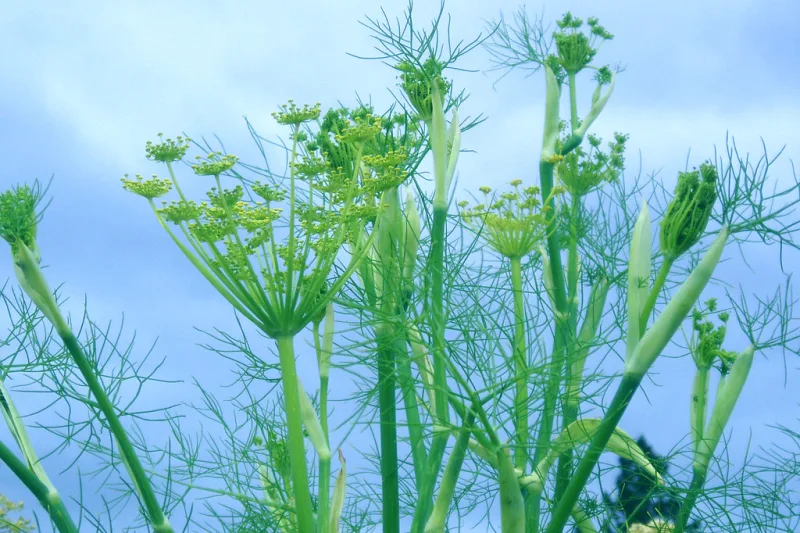
Fennel (Foeniculum vulgare) is an aromatic perennial plant in the Apiaceae family, the same family as dill, carrot and parsley. It has tall stems, fine thread-like leaves resembling green hairs, and yellow flowers grouped in umbels, exactly as seen in the image above. Native to the Mediterranean region, fennel has spread throughout Europe and Asia, cultivated both for its edible bulb (the Florence variety) and, above all, for its aromatic seeds, which form the basis of the tea.
Fennel seeds have a sweet, anise-like, refreshing and slightly woody taste, very distinctive. They are used in cooking as a spice, in confectionery, in bread and in liqueurs, but their most prized value remains medicinal. Fennel tea, a golden and fragrant infusion, is one of the oldest and safest remedies for digestive discomfort, recommended from babies to the elderly.
Table of Contents
- Composition and Active Compounds
- Health Benefits
- Traditional Uses
- How to Prepare Fennel Tea Correctly
- When and How Much to Drink
- Combinations with Other Plants
- Lifestyle and Practical Advice
- Practical Tips and Common Mistakes
- Conclusion
- Frequently Asked Questions
Composition and Active Compounds
The power of fennel tea comes from the volatile oil richly contained in the seeds. The main compound is anethole, responsible for the sweet anise aroma and for much of the relaxing effect on the digestive musculature. Alongside it are fenchone (which gives a slightly bitter note), estragole, limonene and alpha-pinene. These substances work together, giving fennel carminative (gas-relieving), antispasmodic and mildly antimicrobial properties.
Besides the essential oil, the seeds contain flavonoids with an antioxidant role (such as rutin and quercetin), fiber, fatty acids, B-complex vitamins, vitamin C, as well as minerals like potassium, calcium, magnesium and iron. The concentration of these compounds in the tea is moderate — the infusion mainly extracts the volatile oils and some of the flavonoids — but it is precisely this gentleness that makes fennel a safe remedy for everyday use. Studies suggest that anethole has a relaxing effect on the smooth muscles of the intestinal wall, which explains why the tea eases cramps and bloating.
Health Benefits
Soothes Bloating and Gas
The best-known benefit of fennel tea is its carminative effect. Anethole and the other volatile compounds help relax the intestinal musculature and expel accumulated gas, reducing the feeling of a swollen, tense belly. This is why, in folk tradition, a cup of fennel tea after a meal rich in beans, cabbage, onions or fermented foods brought almost immediate relief. Tradition recommends it especially after heavy holiday meals.
Helps Sluggish Digestion
Fennel mildly stimulates the secretion of digestive juices and the peristaltic movements of the intestine, helping digestion run more smoothly. People who feel a heaviness in the stomach, belching or slow digestion may find a gentle ally in fennel tea. Drunk warm, after a meal, it supports the breakdown of food and reduces the feeling of excessive fullness.
Calms Colic in Infants
One of the oldest uses of fennel, passed down from generation to generation, is calming colic in babies. Folk tradition and many mothers use a very weak, well-strained infusion, given by the teaspoon, to ease crying caused by painful gas. BE CAREFUL, however: in infants, any tea must first be discussed with the pediatrician, and the concentration must be minimal. Essential oil is never given to babies.
Supports Water Elimination and Eases the Abdomen
Fennel has a mild diuretic effect, helping the body eliminate excess fluid and contributing to a feeling of abdominal relief. This effect, combined with the carminative one, explains why the tea is perceived as “deflating” after days of water retention or salty meals.
Calms Coughs and an Irritated Throat
In folk medicine, warm fennel tea, possibly sweetened with honey, was used to calm coughing and thin bronchial secretions during mild colds. The anise aroma has a pleasant, mildly expectorant and soothing effect on an irritated throat. Studies suggest mild antimicrobial properties of fennel oil, which supports this traditional use.
Supports Breastfeeding (with Caution)
In the tradition of many peoples, fennel was considered a galactagogue plant, one said to stimulate milk production in nursing mothers. Many “nursing teas” contain fennel for this very reason. However, the plant’s estrogen-like effects call for caution, and consumption during this period should be discussed with a doctor.
Provides Antioxidants
The flavonoids in fennel have an antioxidant role, helping neutralize free radicals. Although a cup of tea is not a major source, regular consumption as part of a healthy lifestyle contributes to the body’s overall protection.
Freshens the Breath
Mediterranean and Indian traditions use fennel seeds chewed after a meal to freshen the breath and aid digestion. The tea inherits some of this property, leaving a clean, refreshing sensation in the mouth.
Traditional Uses
In the traditional Romanian household, fennel had its well-established place. The seeds were harvested in autumn, dried in the shade and kept in glass jars or cloth pouches, away from light and moisture. The tea was the basic remedy for “belly aches,” for children unsettled by gas, and for housewives who, after rich meals, wanted to ease their stomachs.
Beyond digestion, fennel was also part of chest-tea blends, soothing baths and even compresses for tired or irritated eyes — a cooled infusion, applied with a clean compress, was considered calming for the eyelids. In the kitchen, the seeds flavored bread, pies, pickles and homemade liqueurs. This dual use, culinary and medicinal, made fennel one of the most prized plants of the remedy garden.
How to Prepare Fennel Tea Correctly
The secret of an effective fennel tea lies in crushing the seeds and covering the cup during steeping, so the precious volatile oils don’t evaporate.
The Classic Recipe (Seed Infusion)
Ingredients:
- 1 teaspoon (about 2-3 g) of fennel seeds
- 250 ml water (one cup)
- optional: a little honey or a slice of lemon
Step-by-step preparation:
- Measure one level teaspoon of fennel seeds.
- Lightly crush the seeds in a mortar or with the back of a spoon. This step is essential: by breaking the husk, the aromatic oils release into the water far more easily.
- Boil the water and let it rest for a minute, until it stops bubbling (about 90-95°C).
- Pour the hot water over the crushed seeds in a cup.
- Cover the cup immediately with a saucer or lid, to retain the volatile oils.
- Let it steep for 10-15 minutes.
- Strain the tea through a fine sieve.
- Add a little honey or lemon if you like, once the tea has cooled slightly (honey should not go into boiling water).
A More Concentrated Decoction
For a stronger effect, the seeds can be lightly boiled: put one teaspoon of crushed seeds in 250 ml cold water, bring to a boil and simmer over low heat, covered, for 3-5 minutes. Turn off the heat and leave covered for another 10 minutes, then strain. The decoction has a more intense aroma and is used when a more pronounced carminative effect is desired.
Tea for Babies (Only with a Doctor’s Approval)
For infants, the infusion must be very weak: a quarter teaspoon of seeds to 250 ml water, briefly steeped and very well strained, then cooled to room temperature. Only a few teaspoons are given, and only after consulting the pediatrician.
When and How Much to Drink
For adults, the usual dose is 1-3 cups per day, preferably after the main meals, when the digestive and carminative effect is most useful. A cup drunk 15-30 minutes after eating helps prevent bloating and the feeling of heaviness.
The tea is drunk warm or lukewarm, never reboiled. Excessive consumption over long periods without breaks is not recommended: as with any plant containing volatile oil, “more” does not mean “better.” A reasonable course means a few cups per day for one to two weeks, followed by a break. Sensitive people can start with half a cup to check their tolerance.
Combinations with Other Plants
Fennel pairs very well with other digestive plants, forming classic traditional blends:
- Fennel + anise + caraway — the famous “carminative trio,” used in many baby teas and for bloating. The three seeds have complementary effects on gas.
- Fennel + mint — a refreshing blend, excellent for indigestion and nausea, although mint should be avoided in cases of acid reflux.
- Fennel + chamomile — a gentle, calming combination, suitable for the evening, for a settled stomach and better sleep.
- Fennel + ginger — for nausea and sluggish digestion, especially in cold weather.
- Fennel + linden — for relaxation and calming the nerves that “go to the stomach.”
For these blends, use equal amounts of each plant and follow the same steeping method.
Lifestyle and Practical Advice
Fennel tea delivers truly good results when it is part of a balanced lifestyle. Healthy digestion begins at the table: eat slowly, chew well, avoid drinking large amounts of cold liquids during the meal, and don’t lie down immediately after eating. Small, frequent meals are often easier to digest than a single, abundant one.
Identify the foods that cause you bloating — unsoaked legumes, cabbage, onions, carbonated drinks or an excess of artificial sweeteners are frequent culprits — and moderate them. A short walk after a meal helps peristalsis more than it seems. Proper hydration, with still water, supports transit, and fennel tea comes as a pleasant addition, not a substitute for these habits. Keep the seeds in an airtight jar, in the dark, and crush them only just before use, so they don’t lose their aroma.
Practical Tips and Common Mistakes
Mistake no. 1: Using whole, uncrushed seeds. The seed husk prevents the aromatic oils from being released. Crush them lightly before steeping for a tea that is twice as effective.
Mistake no. 2: Steeping with the cup uncovered. The volatile oils, the very active compounds, evaporate along with the steam. Always cover the cup during steeping.
Mistake no. 3: Pouring violently boiling water directly over the seeds. Water at a rolling boil can degrade some of the delicate compounds. Let it settle for a minute.
Mistake no. 4: Excessive consumption, day after day, without breaks. Fennel contains active compounds that, in excess, are not advisable. Respect the doses and take breaks between courses.
Mistake no. 5: Adding honey to hot water. High heat destroys the enzymes and properties of honey. Add it only after the tea has cooled down.
Mistake no. 6: Ignoring contraindications in pregnancy. Many people believe any herbal tea is completely harmless. Fennel, during pregnancy, should be avoided or used only on a doctor’s recommendation.
Mistake no. 7: Storing the seeds in light and heat. The volatile oils degrade. Keep the seeds in a closed container, away from light.
Conclusion
Fennel tea is one of the gentlest, safest and most appreciated traditional remedies for digestive health. Its sweet anise aroma conceals a real power to calm bloating, ease sluggish digestion and soothe cramps, which is why it has crossed centuries of folk wisdom, from grandparents’ kitchens to the shelves of modern pharmacies. Prepared correctly — with crushed seeds, a covered cup and a patient steeping time — and consumed in moderation, after meals, it becomes a pleasant and useful ritual. Like any natural remedy, it has its limits and contraindications: pregnancy, allergies to related plants and certain drug interactions call for caution. Used wisely, however, fennel tea remains a trusted friend of the stomach, a living legacy of grandparents’ remedies.
Frequently Asked Questions
Does fennel tea really help with bloating? Yes, it is one of the best-known carminative remedies. The anethole in the seeds relaxes the intestinal musculature and promotes the expulsion of gas, reducing the feeling of a swollen belly. The effect is more noticeable when the tea is drunk warm, after a meal.
How many cups can I drink per day? For an adult, 1-3 cups per day are sufficient and safe. Drinking large amounts over long periods without breaks is not recommended. Start with one cup if you have never had this tea before.
Can I drink fennel tea during pregnancy? It is recommended to avoid it or to consume it only on a doctor’s advice. Fennel has mild estrogen-like effects and, in large amounts, may stimulate the uterus, which is why caution is essential during this period.
Is it safe for babies? Tradition uses it for colic, but only as a very weak, well-strained infusion, and only after consulting the pediatrician. Fennel essential oil is never given to small children.
What’s the difference between seed tea and essential oil? The tea is a gentle, diluted infusion, suitable for consumption. The essential oil is extremely concentrated, is not drunk as such, and should not be confused with the tea. For internal use, always use the seed infusion.
How do I store fennel seeds so they don’t lose their aroma? Keep them in an airtight jar, in a dark, cool and dry place. Crush them only just before preparation, to preserve the maximum of aromatic oils.
Can I combine fennel with other plants? Yes, it pairs excellently with anise, caraway, mint, chamomile, ginger and linden. These combinations strengthen the digestive and calming effect. Use equal amounts and the same steeping method.
How long should fennel tea steep? Between 10 and 15 minutes, with the cup covered. For a stronger effect, the seeds can be lightly boiled for 3-5 minutes as a decoction, then left covered for another 10 minutes before straining.