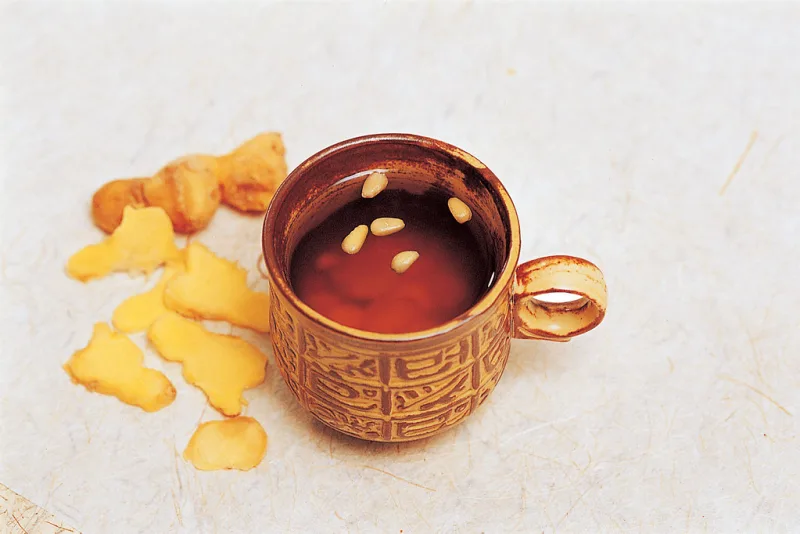

Ginger Tea: Benefits, How to Prepare and Side Effects
IMPORTANT: Ginger tea is generally safe for most people in moderate amounts, but it is not right for everyone. People taking blood-thinning medication (such as warfarin, aspirin or clopidogrel), those with gallstones, an active stomach ulcer, severe acid reflux or very low blood pressure should talk to a doctor before drinking it regularly. Pregnant women may use ginger for nausea in small amounts, but only after consulting their doctor, especially in the final trimester. Ginger can affect blood sugar and blood clotting, so people with diabetes and anyone about to have surgery should be cautious. This article is for informational purposes only and does not replace the advice of a doctor or pharmacist.
A story from beside the stove
Aunt Veta, from my grandparents’ village, had a habit I have remembered all my life. In winter, whenever someone walked in with a red nose and the shivers, her first move was toward the drawer beside the stove, where she kept a knobbly, yellowish piece of ginger. She would peel it quickly with a spoon, slice it thinly and toss it into a pot of water set on the fire. “Sit down, I’ll set you right,” she would say, while the kitchen filled with a warm, pungent smell, as if a little bit of sunshine had been dropped into the kettle.
I remember wrinkling my nose at the first sip — it was spicy, almost biting — but then Aunt Veta would add a spoonful of honey and a slice of lemon, and suddenly the whole thing turned into a drink that warmed your chest all the way to your fingertips. “This ginger gets your blood moving,” she used to say. “When the blood moves, illness has nowhere to settle.” She knew nothing about gingerols or bioactive compounds, but from the experience of dozens of winters she understood what science would only later confirm: ginger has a real power over a tired, chilled body.
What ginger tea is
Ginger tea is an infusion or decoction made from the rhizome of the plant Zingiber officinale, native to Southeast Asia and cultivated for thousands of years in India, China and the Indonesian islands. What we commonly call “ginger root” is in fact a rhizome — a knobbly underground stem with brown skin and pale yellow, aromatic, slightly fibrous flesh. Throughout history, ginger has been prized not only as a spice but also as a remedy: ancient merchants carried it along the Silk Road, and both traditional Chinese and Ayurvedic medicine considered it a “warming” plant, able to wake up digestion and drive cold out of the bones.
Unlike black or green tea, ginger tea does not come from the Camellia sinensis plant and, in its pure form, contains no caffeine. This makes it an excellent choice for the evening or for people sensitive to stimulants. Its characteristic taste — warm, spicy, slightly sweet and pungent — comes from the volatile compounds and resins the rhizome contains. These very substances are what give it most of its therapeutic properties.
Table of Contents
- Composition and active compounds
- Health benefits of ginger tea
- Traditional uses in folk medicine
- How to prepare ginger tea correctly (step-by-step recipes)
- When and how much to drink
- Combinations with other herbs and ingredients
- How to choose and store ginger
- Lifestyle and practical tips
- Practical Tips and Common Mistakes
- Conclusion
- Frequently Asked Questions
Composition and active compounds
Ginger’s power lies in a group of remarkable bioactive compounds. The best known is gingerol, the substance responsible for the pungent flavour of fresh rhizome. Gingerol is intensely studied for its antioxidant and anti-inflammatory properties. When ginger is dried or heated, some of the gingerols are transformed into shogaols and zingerone, compounds that also have beneficial effects and that explain why dried ginger has a slightly different, sweeter and warmer taste than fresh ginger.
Alongside these star compounds, ginger contains volatile oils (among them zingiberene, which gives the characteristic aroma), starch, fibre, small amounts of B-complex vitamins, vitamin C, and minerals such as magnesium, potassium, manganese and copper. The whole array of these substances works synergistically — meaning that together the effect is greater than the sum of the parts. This is why the tradition of using the whole rhizome, in the form of tea, often preserves more value than isolated extracts.
Studies suggest that ginger’s antioxidant properties help neutralize free radicals, the unstable molecules that contribute to cellular aging and chronic inflammatory processes. It is on this scientific foundation that many of the benefits observed over the centuries in folk medicine rest.
Health benefits of ginger tea
Supports digestion and soothes the stomach
The best-known benefit of ginger tea is linked to digestion. Folk tradition has always used it after heavy, copious meals to chase away the feeling of bloating and heaviness. Ginger appears to stimulate stomach emptying and to encourage the natural movements of the digestive tract, which explains why a cup after a meal brings, for many people, a pleasant sense of relief. It also supports the secretion of digestive juices and bile, helping the body break down fats more efficiently.
Eases nausea and motion sickness
If we had to choose a single well-documented use of ginger, it would be relieving nausea. Studies suggest that ginger can reduce the queasiness caused by motion sickness (in a car, on a boat or a plane), by pregnancy (morning sickness) or in the period after certain procedures. A cup of warm ginger tea, sipped slowly, is a classic remedy for an upset stomach. The exact mechanism is not fully understood, but ginger is believed to act both on the digestive tract and on the nerve centres that regulate the sensation of nausea.
Supports the immune system
In winter, ginger tea becomes a trusty ally. Thanks to its antioxidant compounds and its “warming” effect, it is traditionally used at the first signs of a cold or the flu. Combined with honey and lemon, it helps soothe an irritated throat, loosen secretions and bring a general sense of comfort. It is not a medicine that “cures” a cold, but many people feel that the symptoms become more bearable and that recovery seems gentler.
Has anti-inflammatory properties
Chronic, low-grade inflammation is now recognized as a factor involved in many conditions. The gingerols and shogaols in ginger are studied precisely for their ability to modulate the body’s inflammatory processes. In folk medicine, ginger tea was used to ease joint pain and muscle discomfort, especially in older people who felt “twinges” in cold, damp weather.
Helps circulation and warms the body
The feeling of warmth you get after a cup of ginger tea is not your imagination. Ginger is considered a mild “vasodilator,” meaning it may help blood flow more easily toward the extremities. This is one of the reasons it was so prized in winter by people who worked outdoors in the cold — a warm cup “got the blood moving,” as Aunt Veta used to say.
Supports comfort on difficult days of the menstrual cycle
Many women traditionally use ginger tea to ease menstrual cramps. Its anti-inflammatory properties and relaxing effect on the muscles may explain why a warm cup, drunk in the first days, brings relief. It is an old remedy, passed from mother to daughter, that modern studies view with interest.
Traditional uses in folk medicine
In the Romanian households of old, ginger was not as widespread as mint or linden, being a spice “from the town” or “from the merchant.” Still, wherever it reached, it was used with great respect. It was brewed into tea for colds and coughs, added to warm winter drinks, and sometimes a little piece of raw ginger was simply chewed for a sore throat or nausea.
In Ayurvedic medicine, fresh and dried ginger are considered almost two different remedies: the fresh kind is recommended for digestion and nausea, while the dried kind, “warmer” and more concentrated, is used to drive away cold and mucus. Traditional Chinese medicine used it to “harmonize the stomach” and to counter the effects of cold foods. These traditions, developed independently in different cultures, reach surprisingly similar conclusions — a sign that people’s empirical observation captured real truths about this root.
How to prepare ginger tea correctly (step-by-step recipes)
The classic recipe with fresh ginger
This method preserves the most aroma and active compounds of the rhizome.
- Take a piece of fresh ginger about 2-3 centimeters long (roughly the size of your thumb’s tip) for one cup.
- Peel the thin skin with the back of a spoon or with a knife. The skin is very thin on fresh ginger and barely needs removing if the rhizome is organic and well washed.
- Slice the ginger thinly or grate it — the larger the exposed surface, the better the aroma is released.
- Place the slices in a cup or teapot and pour 250-300 ml of boiling water over them.
- Cover the vessel (this step is important — it keeps the volatile oils from evaporating) and let it steep for 8-10 minutes. For a stronger tea, you can simmer the ginger over low heat for 5-10 minutes as a decoction.
- Strain, add honey and a slice of lemon if you like, and drink it warm.
The recipe with dried (powdered) ginger
When you do not have fresh ginger, the powder works very well, although the taste is a little different.
- Put a quarter to a half teaspoon of ginger powder into a cup.
- Pour in hot water (not necessarily boiling) and stir well.
- Let it settle for 3-5 minutes; the powder will gently sink to the bottom.
- Drink slowly without disturbing the sediment too much, or stir again if you prefer a more intense taste.
Concentrated “winter” decoction
For shivery days, many people prefer a stronger version.
- Bring 500 ml of water to a boil with 4-5 centimeters of sliced ginger.
- Let it simmer over low heat for 10-15 minutes, covered.
- At the end, add the juice of half a lemon and a tablespoon of honey (honey is always added at the end, after the tea has cooled a little, so it keeps its properties).
- You can also add a pinch of cinnamon or a few cloves for extra warmth.
When and how much to drink
For most healthy adults, 1-3 cups of ginger tea a day are considered safe and beneficial. The generally recommended amount of fresh ginger does not exceed 3-4 grams per day (the equivalent of a few good slices). The ideal moment depends on your goal:
- For digestion: a cup 20-30 minutes after a meal.
- For nausea: small, frequent sips from a warm cup.
- For immunity and colds: morning and evening, warm, with honey and lemon.
- For warming up: whenever you feel cold or have come in from the frost.
It is wise to start with small amounts, especially if you are not used to the spicy taste, and to watch how your stomach reacts. Excess can cause heartburn, discomfort or a feeling of irritation in the mouth.
Combinations with other herbs and ingredients
Ginger pairs wonderfully with many other flavours:
- Lemon and honey — the classic trio for the throat and immunity.
- Cinnamon — adds warmth and a sweet, spiced taste, ideal in winter.
- Turmeric — a powerful anti-inflammatory duo; add a pinch of black pepper to boost its effect.
- Mint — refreshing and soothing for the stomach.
- Cloves and anise — for an aromatic, festive tea.
- Chamomile — for a gentler, calming evening version.
How to choose and store ginger
Choose a rhizome that is firm, heavy for its size, with smooth, shiny skin, free of soft spots, mould or wrinkling. Fresh, quality ginger has a strong, pungent smell when you lightly scratch it with your nail. Avoid pieces that are dry, light or sprouting green buds.
For storage, unpeeled ginger keeps very well in the refrigerator, in the vegetable drawer, wrapped in a paper towel or placed in a perforated bag, where it lasts several weeks. For longer periods, you can freeze it whole — it grates easily straight from frozen — or slice and dry it. Powdered ginger keeps in an airtight jar away from light and moisture, holding its aroma for several months.
Lifestyle and practical tips
Ginger tea does not work like magic and should not be seen as a substitute for a balanced lifestyle. It gives the best results when it is part of a healthy whole: a diet rich in vegetables and fibre, adequate hydration, restful sleep and regular movement. Think of ginger tea as a pleasant ritual that marks your days with a moment of warmth and care for your own body.
A cup in the morning can be a gentle way to wake up your digestion, especially if you drink it slowly on an empty stomach before breakfast. A cup in the evening, in the caffeine-free version, can become a relaxation ritual. And on cold winter days, a thermos of ginger tea with honey and lemon can keep you company on a walk or while doing chores in the yard, exactly as the homesteaders of old used to do.
Practical Tips and Common Mistakes
Mistake no. 1: Using too much from the start. Ginger is strong. If you add too much, the tea becomes almost undrinkable and can irritate your stomach. Start small and increase gradually, according to your tolerance.
Mistake no. 2: Long, uncovered simmering. If you let the tea simmer for a long time without a lid, the aromatic volatile oils evaporate and the drink loses much of its value and fragrance. Always cover the vessel.
Mistake no. 3: Adding honey to boiling water. Honey placed in liquid that is too hot loses some of its properties. Add it after the tea has cooled slightly, when it no longer burns to the touch.
Mistake no. 4: Overdoing it “because it’s natural.” The fact that ginger is natural does not mean you can drink liters of it without consequences. Excess can cause heartburn, diarrhea and may interfere with some medications. Moderation remains the golden rule.
Mistake no. 5: Ignoring contraindications. If you take anticoagulants, have gallstones, an ulcer or are pregnant, do not treat ginger tea like ordinary water. Talk to your doctor first.
Mistake no. 6: Using spoiled ginger. A soft rhizome with spots or mould must be thrown away. No benefit is worth the risk of poisoning.
Conclusion
Ginger tea is one of those simple remedies that combine pleasure with usefulness. Warm, aromatic and easy to prepare, it supports digestion, helps fight nausea, offers support to the immune system and brings a pleasant feeling of warmth on cold days. Modern studies increasingly confirm what folk tradition has known for centuries: this knobbly root hides truly valuable compounds. Provided you consume it in moderation and keep its contraindications in mind, ginger tea can become a healthy and comforting habit. As Aunt Veta used to say, “when the blood moves, illness has nowhere to settle” — a folk truth now also dressed in the cloak of science.
Frequently Asked Questions
Can I drink ginger tea every day? Yes, for most healthy adults, 1-3 cups a day are considered safe. The important thing is not to overdo it and to pay attention to your own body’s reactions. If heartburn or discomfort appears, reduce the amount.
Does ginger tea contain caffeine? No. Ginger does not come from the tea plant and naturally contains no caffeine. This is why it can be drunk in the evening too, without fear that it will affect your sleep.
Does ginger tea help with weight loss? Ginger can support digestion and a feeling of fullness, but it is not a weight-loss solution in itself. It can be a useful support within a balanced diet and regular movement, not a replacement for them.
Is ginger tea safe during pregnancy? Ginger is traditionally used for morning sickness in small amounts, but pregnant women should consult their doctor before drinking it regularly, especially in the final trimester.
Can I use powdered ginger instead of fresh? Yes. Use a quarter to a half teaspoon of powder per cup. The taste is a little different, warmer and more concentrated, but the benefits remain.
Why does my throat sting after ginger tea? The tingling sensation comes from gingerols, the pungent compounds of the rhizome. If it is too intense, use less ginger, steep for a shorter time, or add honey and lemon to soften the taste.
Can I reuse the ginger slices for a second cup? Yes, you can make a second infusion, but it will be weaker in aroma and effect. For a strong tea, use fresh slices each time.
Does ginger tea interact with medications? It can interact with anticoagulants and with some medications for diabetes and blood pressure. If you are following a treatment, ask your doctor or pharmacist before drinking it regularly.