
Lavender Tea: Benefits, How to Prepare It and Side Effects
IMPORTANT: Lavender tea is generally well tolerated, but it is not without precautions. Pregnant and breastfeeding women should avoid it or use it only on a doctor’s advice, since the effects of lavender during pregnancy have not been sufficiently studied. People taking sedatives, anti-anxiety medication, antidepressants or sleep medicines should be cautious, because lavender may amplify their effects and cause excessive drowsiness. Lavender can slightly lower blood pressure, so those with low blood pressure or on blood-pressure medication should pay attention. Some people allergic to plants in the Lamiaceae family (mint, sage, basil) may also react to lavender. Do not give lavender tea to young children without medical advice, and do not use it as a substitute for the treatment of a diagnosed anxiety disorder or depression. If you have a chronic condition, consult your doctor before adding it regularly to your routine.
A story from the foot of the lavender hill
Aunt Veronica kept, behind her house on a gentle hill in Transylvania, a long row of lavender bushes she had tended for more than thirty years. She always said that lavender “isn’t just for the scent, but for the peace of the soul.” On summer evenings, when the village settled down and the crickets began their song, she would gather a few blooming spikes, hang them upside down in small bundles to dry in the attic. In winter, when the nights were long and her thoughts heavy, she would put a teaspoon of the dried flowers into a cup of boiled water and sit by the stove, the warm cup in her hands, until the floral fragrance chased her worries away.
I remember how, as a restless child after a day of running about, she would put me to bed in sheets that smelled of lavender, and before sleep she would give me a few sips of a warm tea, lightly sweetened with a spoon of honey. “Drink slowly and listen to the house grow quiet,” she would tell me. I would fall asleep almost at once. Only much later did I understand that what she did was not just a charming habit, but an old remedy used by generations of women in our villages and found, in one form or another, in nearly every folk tradition across Europe.
What lavender tea is
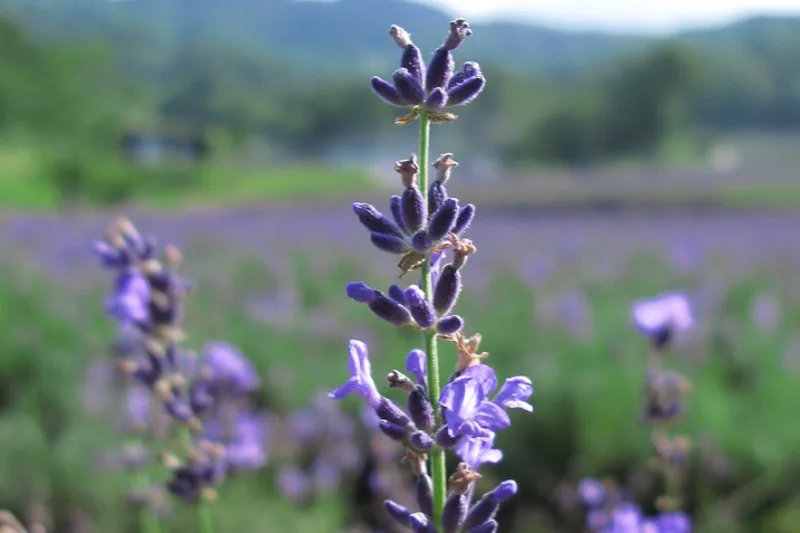
Lavender tea is an infusion made from the dried flowers (and sometimes leaves) of the lavender plant, most often the species Lavandula angustifolia, also known as true lavender or English lavender. It is a perennial plant, woody at the base, with slender stems and spikes of small, violet-blue, intensely fragrant flowers. Lavender is native to the Mediterranean region, especially the sunny, stony areas of southern France, but today it is widely cultivated throughout Europe, including Romania, in gardens as well as in fields grown for essential oil and tea.
What makes lavender so special is its unmistakable fragrance, the result of a rich blend of volatile oils. This fragrance is not only pleasant but is also the main “engine” of its calming effects. Folk tradition has always cherished lavender as a plant of tranquillity: it was placed in sachets among clothes, under pillows, in relaxing baths and, of course, in teas drunk in the evening. Today, lavender is one of the most studied medicinal plants in the world for its effects on anxiety and sleep, and tea remains the simplest and most accessible way to enjoy its qualities.
Table of Contents
- Where it grows and which species of lavender exist
- Composition and active principles
- The health benefits of lavender tea
- Traditional uses of lavender
- How to brew lavender tea correctly (step-by-step recipe)
- When and how much to drink
- Combinations with other herbs
- Lavender in everyday life
- Practical Tips and Common Mistakes
- Conclusion
- Frequently Asked Questions
Where it grows and which species of lavender exist
Lavender loves full sun and poor, well-drained, slightly chalky soils. It is an extremely drought-resistant plant that suffers more from too much water than from too little. That is why you often see it on sunny slopes and stony ground where few other plants thrive. This preference for rough, bright places is reflected in the quality of its aroma: the more sun the plant receives, the richer its flowers are in fragrant oils.
For tea, the most prized species is true lavender (Lavandula angustifolia), because it has a sweeter, more delicate and less “medicinal” scent than other varieties. There is also lavandin (Lavandula x intermedia), a more vigorous and productive hybrid used mostly for essential oil and cosmetics; its aroma is more penetrating and camphorous, which is why it is not the first choice for tea. Spike lavender (Lavandula latifolia) has a higher camphor content and a sharper smell. When buying lavender for tea, make sure it is culinary lavender intended for food use, not ornamental flowers treated with chemicals.
Composition and active principles
The fragrance and effects of lavender come from a complex mix of volatile compounds, the most important being linalool and linalyl acetate. These two molecules are thought to be largely responsible for the plant’s relaxing and mildly sedative effect. Studies suggest that linalool acts on the nervous system in a way that promotes calm, reduced tension and a state that prepares the body for rest.
Besides these, lavender also contains other interesting compounds:
- Cineole (eucalyptol) – with a mild expectorant and refreshing effect.
- Camphor – in small amounts, contributing to the characteristic aroma.
- Tannins – mildly astringent substances, useful for digestion.
- Phenolic acids and flavonoids – compounds with antioxidant properties that help the body cope with oxidative stress.
- Coumarins – in small amounts, contributing to the aromatic profile.
It should be stressed that in a cup of tea the concentrations of these substances are far lower than in lavender essential oil. This is precisely why tea is a gentle, accessible and safe way to enjoy the plant, without the risks associated with concentrated essential oil, which should never be taken internally without expert supervision.
The health benefits of lavender tea
It calms the mind and eases mild anxiety
Lavender’s best-known benefit is its effect on mood. Folk tradition used it for centuries for “the nerves,” for unease and for worry. Modern studies support this use, suggesting that the aroma and compounds of lavender may help reduce feelings of tension and agitation. A cup of warm tea drunk in the evening becomes a ritual that signals to body and mind that the day is over and it is time to slow down. For many people, the simple act of preparing the tea, breathing in the fragrant steam and sipping slowly has an almost immediate soothing effect.
It supports restful sleep
Lavender and sleep go hand in hand in almost every tradition. Lavender tea drunk about an hour before bed can help with falling asleep more easily and with a more restful night. The effect is not that of a strong “sleeping pill,” but a subtle one, releasing the tension accumulated during the day. For people who toss and turn with racing thoughts, lavender tea, combined with less screen time and a dark, cool room, can make the difference between a restless night and a restful one.
It soothes the stomach and supports digestion
Less well known but equally valued in folk medicine is lavender’s effect on digestion. The tea has mildly antispasmodic properties, meaning it can help relax the muscles of the digestive tract. Traditionally, it was drunk for bloating, mild abdominal cramps and that “uneasy stomach” feeling that often appears when we are stressed. The connection between stress and digestion is real, and lavender, through its general calming effect, can indirectly help on this front too.
It eases tension headaches
Headaches that arise from fatigue, strain and stress often respond well to relaxation. Lavender tea, drunk during a quiet moment, can help reduce this type of tension headache. Tradition often combined the tea with a warm lavender compress placed on the forehead or the back of the neck.
It supports general well-being in women
In folk tradition, lavender was recommended to women for mild discomfort during menstruation, especially for cramps associated with tension and irritability. The plant’s antispasmodic and calming effect explains this use. Of course, severe pain should be evaluated by a doctor.
A source of antioxidants
Like many aromatic plants, lavender contains antioxidants that help the body fight oxidative stress, a process involved in cellular ageing and in many chronic conditions. Although the tea is not a major source compared with antioxidant-rich foods, every cup contributes to a generally beneficial intake.
Traditional uses of lavender
Beyond tea, lavender has always been a plant of the home and the soul. Sachets of dried flowers were placed among clothes to perfume them and keep moths away. Lavender water was used to sprinkle bed linen. Baths with lavender flowers were an affordable luxury for relaxing a tired body. Warm compresses with lavender infusion were applied to the forehead for headaches and to irritated skin to soothe it.
In some villages, bundles of dried lavender were hung in the house not only for the scent but also out of a belief that they brought peace and protected the home. The fragrance of lavender was associated with cleanliness, rest and serenity. These traditions, while they also carry a symbolic dimension, rest on a real truth: the scent of lavender does have a calming effect on most people.
How to brew lavender tea correctly (step-by-step recipe)
Brewing lavender tea is simple, but a few details make the difference between a fragrant, pleasant infusion and one that is bitter or too weak.
Ingredients for one cup:
- 1 teaspoon (about 1–2 grams) of dried culinary lavender flowers
- 250 ml of hot water, but not at a rolling boil (around 90–95°C)
- optional: a teaspoon of honey and a few drops of lemon
Steps:
- Heat the water until just below boiling point. Water at a violent boil can “scorch” the delicate aromatic compounds and draw an unnecessary bitterness from the flowers.
- Place the flowers in a cup, an infuser or a small teapot. For an ordinary cup, a level teaspoon is enough; lavender has a powerful aroma, and too much makes it bitter and as fragrant as soap.
- Pour the hot water over the flowers and cover the cup. Covering is essential: it prevents the aromatic volatile oils from evaporating, keeping in the tea exactly the compounds we want.
- Let it steep for 5–7 minutes. For a stronger effect you can go up to 10 minutes, but be careful: the longer it sits, the more intense and bitter it becomes.
- Strain the flowers and, if you like, sweeten with a little honey and add a few drops of lemon for a fresher taste.
- Drink slowly, ideally in a quiet moment, breathing in the fragrant steam before each sip.
Lavender tincture (a variant for those who prefer a concentrated form) is made by placing dried flowers in a jar, covering them with 40% food-grade alcohol, leaving them to macerate for 2–4 weeks in the dark, shaking daily. It is then strained and used in drops, diluted in water. This is a more advanced use that requires knowledge of dosage.
When and how much to drink
For relaxation and sleep, the best time is in the evening, 30–60 minutes before bed. To soothe digestion or daytime tension, a cup can also be drunk in the afternoon. In general, 1–2 cups a day are enough and safe for a healthy adult. It is not advisable to overdo it: lavender in large amounts can cause excessive drowsiness, headaches or stomach discomfort in sensitive people.
It is wise not to drink lavender tea continuously, without breaks, for months on end. A balanced approach means using it during the periods when you need it – restless evenings, stressful times – and taking regular breaks.
Combinations with other herbs
Lavender blends beautifully with other calming herbs, and the mixtures can be more pleasant and more effective than the plant on its own:
- Lavender + chamomile – the classic combination for sleep and deep relaxation.
- Lavender + linden – for nights of frayed nerves and racing thoughts.
- Lavender + lemon balm – an excellent duo for anxiety and stress-related digestive discomfort.
- Lavender + valerian – for more pronounced insomnia (use with caution, as this is a strongly sedative blend).
- Lavender + mint – for a refreshing tea that also aids digestion.
When combining herbs, reduce the amount of each so that the total stays around one to one and a half teaspoons per cup.
Lavender in everyday life
Lavender tea gives the best results when it is part of a broader ritual of calming down. In the evening, try to create a “corner of calm”: turn off the bright lights, put the phone aside, perhaps play some quiet music, and savour the tea without hurry. This ritual, repeated daily, becomes in itself a signal to the body that it is time to slow down.
Lavender can enter other aspects of life too: a small pillow of dried flowers beside the bed, a few drops of essential oil (NOT in the tea, but on a handkerchief or in a diffuser) to scent the room, a warm bath with lavender flowers in a sachet. All these small habits support one another and amplify the general calming effect.
Practical Tips and Common Mistakes
Mistake no. 1: Using too many flowers. Lavender has a very strong aroma. The temptation to add “more so it works better” usually leads to a bitter tea that smells of soap and discourages drinking it. A level teaspoon per cup is enough.
Mistake no. 2: Using fully boiling water. Water at a violent boil degrades the delicate volatile oils and extracts bitterness. Let the water settle for a minute after boiling before pouring it over the flowers.
Mistake no. 3: Steeping without a lid. Lavender’s aromatic compounds are volatile. If you do not cover the cup, a good part of them is lost with the steam. Always cover it.
Mistake no. 4: Using ornamental lavender. Decorative flowers, bouquets and lavender from craft shops may be treated with pesticides or other substances that are not meant to be consumed. Use only culinary lavender intended for food use.
Mistake no. 5: Overconsumption in search of a stronger effect. More does not mean better. Large amounts can cause drowsiness, headaches and digestive discomfort. Stick to the limit of 1–2 cups a day.
Mistake no. 6: Expecting a “sleeping pill” effect. Lavender relaxes gently, it does not “knock you out.” If you suffer from severe chronic insomnia, the tea is a support, not a treatment; talk to your doctor.
Mistake no. 7: Storing it improperly. Dried flowers lose their aroma if left in the light, in heat or in open containers. Keep them in an airtight jar, in a dark, cool place, and use them within a few months of drying.
Conclusion
Lavender tea is one of the gentlest and most pleasant remedies of folk tradition, a real support for restless evenings, for sleep that is hard to catch and for a stomach upset by stress. Its power does not lie in a dramatic effect, but in a subtle calming that, repeated as an evening ritual, can change for the better the way we rest and the way we relate to our own worries. Prepared correctly – with restraint in the amount, with water that does not rage to a boil and with the cup covered – it becomes a fragrant cup that invites calm. Like any remedy, it should be used wisely, with breaks and with attention to your own body, and in the case of serious conditions or medications, always with your doctor’s blessing. As Aunt Veronica used to say, lavender “doesn’t heal overnight, but it teaches us to breathe and to grow calm” – and sometimes that is exactly what we need.
Frequently Asked Questions
Can I drink lavender tea every evening? For most healthy adults, a cup in the evening is safe for reasonable periods. It is still wise to take regular breaks and not to drink it continuously, month after month, without interruption. If you notice excessive drowsiness or other reactions, reduce the frequency.
Does lavender tea really help with sleep? Tradition and studies suggest that lavender has a calming effect that can ease falling asleep and improve the quality of rest, especially when it is part of a relaxing evening ritual. It is not, however, a strong sleeping pill but a gentle support.
Is it safe for children? Lavender should not be given to young children without medical advice. For older children, possibly in very small, diluted amounts, only with a doctor’s agreement. For infants, it should be avoided entirely.
Can I drink it if I take sleep or anxiety medication? This calls for caution. Lavender can amplify the effect of sedatives, anti-anxiety drugs and sleep medication, leading to excessive drowsiness. You must speak with your doctor before combining the tea with such treatments.
Can pregnant women drink lavender tea? Caution is advised. The effects of lavender during pregnancy have not been sufficiently studied, so pregnant and breastfeeding women should avoid it or use it only on a doctor’s recommendation.
Why does my tea come out bitter? Usually for three reasons: you used too many flowers, you used violently boiling water, or you steeped it for too long. Reduce the amount to a level teaspoon, use hot but not boiling water, and limit steeping to 5–7 minutes.
Can I use fresh lavender flowers? Yes, but fresh flowers have a more intense aroma, so use a smaller amount (about half a teaspoon). Make sure they come from a source free of pesticides.
What does lavender tea taste like? It has a floral, lightly sweet and aromatic taste that, for some people, can recall scented soap if it is too concentrated. Brewed correctly and balanced with a little honey and lemon, it becomes pleasant and soothing.