
Linden Tea: Benefits, How to Prepare and Side Effects
IMPORTANT: Linden tea is generally well tolerated, but it is not free of precautions. People with heart conditions, especially those taking heart medication, should consult their doctor, since older herbal literature associated very frequent consumption of large amounts of linden flowers with additional strain on the heart. Pregnant and breastfeeding women should speak with a doctor before including it daily in their diet. Linden tea may enhance the effect of sedatives, sleeping pills and diuretics, which is why it should not be combined with these without professional advice. If you notice a skin rash, difficulty breathing or swelling after drinking it, stop immediately and seek medical help, as allergic reactions can occur. Linden tea does NOT replace treatment for a serious infection, a persistent high fever or a diagnosed anxiety disorder — in these situations, see a doctor.
A story from the edge of the village
Aunt Veronica, a frail and cheerful woman from a village at the foot of the hills, had in her yard an old linden tree as tall as her house, planted — she would say — by her husband’s grandfather. Every year, around the middle of June, when the yellowish flowers filled the air with a sweet, honeyed fragrance, the whole street knew that “linden time had come.” Aunt Veronica would put a clean cloth over her shoulder, take an old wooden ladder and pick the flowers early in the morning, before the sun dried them out. She would then spread them on sheets of paper, in the attic, in the shade and cool, turning them daily so they would not mold.
In winter, when the wind whistled at the windows and the neighbors’ children caught colds, everyone would knock at her gate for “a handful of linden.” In the evening, if a man came home from working the fields with frayed nerves and could not sleep, his wife would set on the table a steaming cup of linden tea with a teaspoon of honey. “Drink, man, and leave your worries for tomorrow,” Aunt Veronica would say. Many said her linden had a special power — the truth is that the flowers were picked at the right time, dried properly and prepared with patience. And patience, in the world of remedies, is worth as much as all the active compounds put together.
What is linden tea
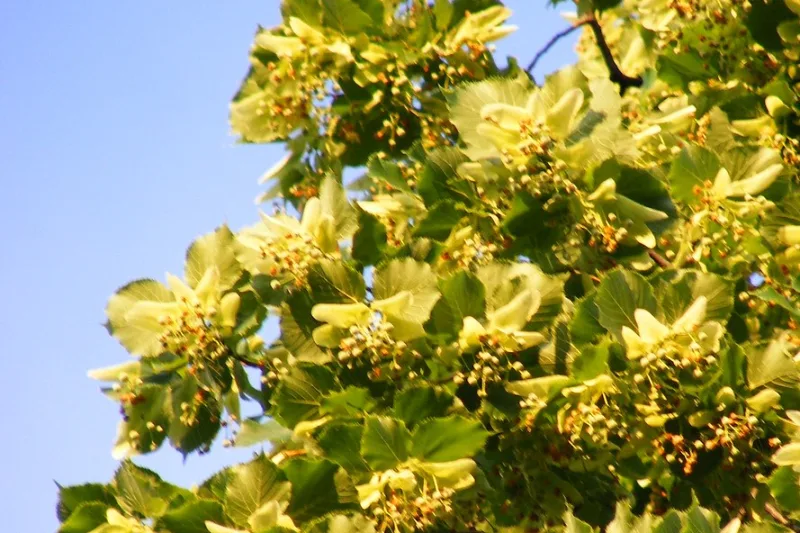
Linden tea is the infusion made from the dried flowers of the linden tree, a majestic tree of the genus Tilia, widespread throughout Europe and much loved in Romanian tradition. In our region, the most common species are the large-leaved linden (Tilia platyphyllos), the small-leaved linden (Tilia cordata) and the silver linden (Tilia tomentosa), all prized for their fragrant blossoms. The part used medicinally is the flower together with its bract — that thin, elongated little leaf, like a small wing, from which the cluster of flowers hangs.
For centuries, linden flowers have been among the most beloved healing plants in the Romanian household. Folk tradition has used them to calm the nerves, for restful sleep, to ease colds and coughs, and also as a pleasant warm drink on cold evenings. The unmistakable fragrance, the slightly sweet taste and the relaxing effect have made linden tea a constant presence in the natural pharmacy of our grandparents. Beyond its practical value, linden carries an emotional weight as well: the scent of linden flowers in June is, for many people, the very smell of summer.
Table of Contents
- Where linden grows and when the flowers are gathered
- Composition and active principles
- Health benefits of linden tea
- Traditional uses
- How to brew linden tea correctly (step-by-step recipes)
- When and how much to drink
- Combinations with other plants
- Lifestyle and practical tips
- Practical Tips and Common Mistakes
- Conclusion
- Frequently Asked Questions
Where linden grows and when the flowers are gathered
The linden is an imposing tree that can live for hundreds of years and has always accompanied villages, parks and alleys throughout Romania. We find it along roadsides, in churchyards, in deciduous forests and in the gardens of households. It blooms in late spring and early summer, usually between mid-June and early July, when the entire crown is covered with clusters of yellowish-cream flowers, intensely fragrant and full of bees.
The moment of harvesting is essential for the quality of the tea. The flowers are gathered when most of the buds have opened, but before the flower fades and wilts. The best time of day is late morning, after the dew has lifted, in dry and clear weather. The whole cluster of flowers is picked together with its bract, avoiding the large leaves and branches. It is recommended to harvest from clean areas, away from busy roads, where the flowers are not exposed to dust and exhaust fumes.
Drying is done in the shade, in an airy and cool place — never in direct sunlight, which destroys the fragrant volatile oils. The flowers are spread in a thin layer on paper or sieves and turned periodically. After a few days, when the bracts become dry and brittle, the flowers are kept in paper bags or glass jars, in the dark. Well dried and stored, linden flowers keep their properties for about a year.
Composition and active principles
Linden flowers contain a rich array of compounds that explain their soothing and warming effects. Herbal tradition and studies suggest that among the important active principles are:
- Volatile (essential) oils — responsible for the characteristic fragrance and for part of the calming and mildly antispasmodic effect.
- Flavonoids (such as quercetin, kaempferol and tiliroside) — compounds with antioxidant effects that support the tone of blood vessels and contribute to the relaxing action.
- Mucilage — viscous substances that, in contact with water, form a protective and soothing film, explaining the calming effect on an irritated throat and on coughs.
- Tannins — with a mildly astringent role, useful in soothing irritations.
- Phenolic acids and saponins — which round out the plant’s therapeutic profile.
This blend makes the linden flower a “gentle” plant, suitable even for children or the elderly when used in moderation. Unlike plants with a powerful action, linden works smoothly and softly, through relaxation and soothing, without forcing the body.
Health benefits of linden tea
A nerve calmer and an ally against stress
The best-known benefit of linden tea is its soothing effect on the nervous system. Folk tradition has always used it to calm agitation, restlessness and tension. A warm cup of linden tea in the evening, sipped slowly, helps ease a tired mind and prepares the body for rest. Studies suggest that the flavonoids and volatile oils in linden flowers contribute to a state of gentle relaxation, without strong drowsiness and without the side effects of certain synthetic sedatives.
Support for restful sleep
Closely tied to the calming effect is the help linden tea gives with mild sleep problems. People who fall asleep with difficulty because of worries or a busy day often find in linden tea a pleasant evening ritual that signals to the body that it is time to relax. Unlike strong sleeping pills, linden does not “knock you out” but rather eases the natural drift into sleep.
Help with colds, flu and mild feverish states
In Romanian folk medicine, linden tea is one of the first remedies brought out when someone catches a cold. Drunk hot, with honey and perhaps a slice of lemon, it induces a mild sweat, which tradition says helps the body “throw out” the cold. The mucilage soothes the irritated throat, while the warm drink hydrates and eases the feeling of dryness. It is one of the most pleasant ways to care for yourself when you have a cold.
Soothing coughs and an irritated throat
Thanks to the soothing mucilage, linden tea forms a fine film that eases throat irritation and helps calm a dry, troublesome cough. This is one reason why many traditional cough tea recipes include linden flower alongside other mucilaginous plants.
Support for digestion
Folk tradition also attributes to linden tea a mild antispasmodic and soothing effect on the stomach. Drunk after a heavier meal or in moments of digestive discomfort linked to stress, it may help reduce the sensation of bloating and tension in the abdomen.
A mild diaphoretic and cleansing effect
Through the sweating it stimulates when drunk hot, linden tea has been traditionally used as a “cleansing” drink during colds and feverish states. At the same time, being a warm and pleasant liquid, it encourages good hydration, essential in any illness.
Comfort in restlessness and emotional palpitations
Many people describe a feeling of “the heart settling” after a cup of linden tea drunk during moments of agitation. Tradition recommends it for mild palpitations arising from emotion or stress — with the important note that any frequent palpitation, or one accompanied by other symptoms, must be evaluated by a doctor.
Traditional uses
Beyond the cup of tea drunk in the evening, linden flower has had many uses in the traditional household. Here are a few of them:
- Calming baths — a concentrated decoction of linden flowers, added to bathwater, was used for relaxation and to soothe irritated skin, especially in restless children.
- Compresses for the skin — the cooled infusion, applied with a cotton pad, was used on irritated skin, tired eyes or areas with mild itching.
- Throat gargle — the warm infusion, used as a gargle, eased the feeling of a dry, irritated throat.
- Scenting the room — sometimes, bunches of dried flowers were hung in the house for their soothing fragrance.
- Linden honey — though not a tea preparation, the honey made from linden flower nectar is highly prized and beautifully complements the plant’s calming effect.
How to brew linden tea correctly (step-by-step recipes)
The secret of a good linden tea lies in the water temperature and the infusion time. Water that is too hot, boiled at length over the flower, destroys the fragrant volatile oils and can make the tea bitter.
The classic linden tea recipe (infusion)
Ingredients:
- 1 heaped teaspoon of dried linden flowers (about 1.5–2 g)
- 250 ml water
Method:
- Boil the water and let it “settle” for a minute, until it stops bubbling (the ideal temperature is around 90–95°C, not boiling water).
- Place the linden flowers in a cup or teapot.
- Pour the hot water over the flowers.
- Cover the cup with a small plate or lid — this step is essential, so that the fragrant volatile oils do not evaporate.
- Let it steep for 8–10 minutes.
- Strain and drink it warm.
For an extra calming effect and a pleasant taste, add a teaspoon of honey only after the tea has cooled a little (honey is not added to very hot liquid, so it keeps its properties). A slice of lemon rounds out the drink nicely, especially during colds.
Concentrated decoction for baths and compresses
Ingredients:
- 2–3 tablespoons of linden flowers
- 1 liter of water
Method:
- Place the flowers and water in a pot.
- Bring to a boil and simmer over low heat for 5 minutes.
- Cover and let it steep for another 15–20 minutes.
- Strain and add the liquid to the bathwater, or use it, cooled, for compresses.
Linden tea in a thermos for the whole day
For those who wish to drink linden tea throughout the day, a larger amount can be prepared: 3–4 teaspoons of flowers per 1 liter of hot (not boiling) water, steeped for 10 minutes, then strained and kept in a thermos. The important thing is not to leave the flowers steeping for hours, because the tea becomes bitter and astringent.
When and how much to drink
For the calming effect and for sleep support, the most suitable approach is a cup of linden tea in the evening, about 30–60 minutes before bed. During colds, you can drink 2–3 cups a day, warm, preferably with honey. As a general rule, a moderate consumption of 1–3 cups a day is considered safe for most healthy adults.
Herbal tradition recommends, as with most plants, avoiding uninterrupted daily consumption over very long periods. A wise approach is to use the tea in courses of a few weeks, with breaks, especially when you drink it for a therapeutic effect rather than simply as an occasional pleasant drink.
Combinations with other plants
Linden flower gets along very well with many other healing plants, and these combinations enhance the desired effects:
- Linden + chamomile flowers — for a gentle calming and digestive effect, ideal in the evening.
- Linden + lemon balm (melissa) — an excellent combination for relaxation, calming the nerves and restful sleep.
- Linden + elderflower — traditionally used for colds and flu-like states, for the sweating effect and respiratory support.
- Linden + thyme or plantain — to soothe coughs and an irritated throat.
- Linden + lavender — for deep relaxation and a fragrant evening ritual.
When combining plants, use smaller amounts of each (for example, half a teaspoon of each plant per cup) to achieve a balanced blend.
Lifestyle and practical tips
Linden tea gives the best results when it is part of a calm, balanced lifestyle. For those who drink it for sleep and relaxation, the ritual matters enormously: turning off screens at least an hour before bed, warm and dim lighting in the room, calm breathing and the cup of tea sipped slowly, without hurry, all turn a simple drink into a genuine moment of peace.
During colds, linden tea pairs naturally with rest, good hydration and a room that is aired out yet warm. Tradition says that “a person with a cold must sweat and sleep” — and linden tea supports exactly that. For the cold season, it is worth always keeping in your pantry a jar of well-dried linden flowers, alongside good-quality honey.
Practical Tips and Common Mistakes
Mistake no. 1: Boiling the flowers at length. Many people put linden flowers directly into boiling water and let them simmer for several minutes. This is the most widespread mistake: intense heat destroys the fragrant volatile oils and extracts too many tannins, making the tea bitter and less aromatic. The correct way is to pour hot — but not boiling — water over the flowers and steep covered.
Mistake no. 2: An uncovered cup. Leaving the cup uncovered allows the very volatile compounds responsible for the fragrance and for part of the calming effect to evaporate. Always cover the tea while it steeps.
Mistake no. 3: Steeping for too long. A tea left over the flowers for hours becomes bitter and astringent because of the tannins. Respect the 8–10 minute time.
Mistake no. 4: Adding honey to boiling tea. Adding honey to very hot liquid diminishes its properties. Wait until the tea has cooled to a pleasantly warm temperature.
Mistake no. 5: Picking flowers from the roadside. Flowers gathered from polluted, dusty areas or sprayed with chemicals are not suitable for consumption. Always choose clean places.
Mistake no. 6: Drying in the sun. Direct sunlight bleaches the flowers and destroys the fragrant oils. Always dry in the shade, in an airy place.
Mistake no. 7: Excessive daily consumption without breaks. Even a gentle plant like linden should be used in moderation. Avoid large amounts, drunk daily, over very long periods, especially if you have heart conditions.
Conclusion
Linden tea is one of the most beautiful gifts of the Romanian summer: a fragrance that stays in your memory and a gentle remedy handed down from the hands of our grandparents. Used in moderation and prepared correctly — with hot but not boiling water, steeped covered and not for too long — it calms the nerves, eases sleep, soothes an irritated throat and brings comfort during colds. It is not a miracle drug and does not replace medical advice when needed, but it is a trusted ally for hard days, restless evenings and the moments when you need a touch of peace. Pick the flowers at the right time, dry them in the shade, store them well, and in winter enjoy a steaming cup that brings summer back into your home.
Frequently Asked Questions
How often can I drink linden tea? For most healthy adults, 1–3 cups a day are considered safe. For a therapeutic effect, it is wise to use it in courses of a few weeks, with breaks, rather than consuming it daily and uninterrupted for a long time.
Does linden tea really help with sleep? Folk tradition and the experience of countless generations recommend it for relaxation and restful sleep. Studies suggest that the flavonoids and volatile oils contribute to a state of calm. The effect is gentle, so do not expect to be “knocked out” as with sleeping pills, but rather a smooth drift into rest.
Can I give linden tea to children? Linden flower is considered a gentle plant and has traditionally been used with children too, in low concentrations and small amounts. However, for infants and small children, it is essential to consult a pediatrician first.
Is linden tea safe during pregnancy and breastfeeding? There is no solid evidence forbidding it, but caution is recommended. Pregnant and breastfeeding women should speak with a doctor before consuming it regularly.
Why does my tea turn out bitter? Most likely you boiled the flowers too long or left them steeping for hours. Use hot but not boiling water, and respect the 8–10 minute covered steeping time.
Does linden tea lower blood pressure? Tradition attributes to it a relaxing effect that may indirectly contribute to a state of calm. However, people with blood pressure problems or heart conditions should speak with a doctor and not replace prescribed treatment with tea.
Can I use fresh flowers instead of dried ones? Yes, but dried flowers are more concentrated and easier to dose. If you use fresh flowers, use a larger amount, because they contain a lot of water.
How long do dried linden flowers keep? Well dried and stored in paper bags or glass jars, in the dark and protected from moisture, linden flowers keep their properties for about a year. After that, the fragrance and effectiveness gradually decline.