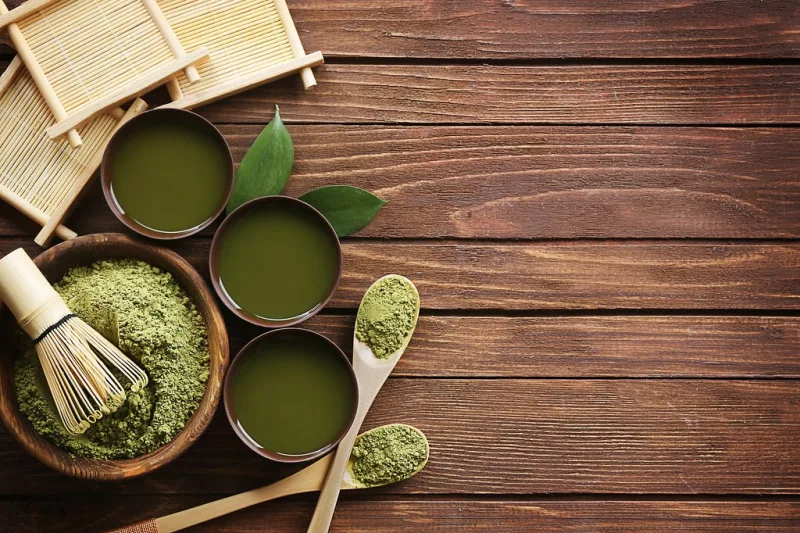

Matcha Tea: Benefits, How to Prepare and Side Effects
IMPORTANT: Matcha contains a significant amount of caffeine — a single gram of powder can hold several times more caffeine than an ordinary cup of steeped green tea, because you consume the whole ground leaf, not just an infusion. For this reason, people who are sensitive to caffeine, or who have anxiety disorders, palpitations, uncontrolled high blood pressure, chronic insomnia, or heart rhythm problems should be cautious and limit the amount. Pregnant or breastfeeding women should only drink matcha with their doctor’s approval and in small amounts, due to the caffeine. Matcha may interact with certain medications (anticoagulants such as warfarin, because of its vitamin K content, but also with stimulants or blood-pressure drugs). Its tannins can reduce iron absorption, so it is best not to drink it with iron-rich plant meals, especially if you are anemic. Matcha does not replace medical treatment; if you have a chronic condition, talk to your doctor before adding it to your daily routine.
A story from the tea table
Aunt Veronica, a woman who had spent years working as a cook in a hotel in Brașov, came home one winter with a small green tin, a gift from a colleague who had moved to Japan. “Look at this — grass dust,” my grandmother joked when she saw the fine, emerald powder. Aunt Veronica laughed, took an old clay bowl, poured in a little warm water — not boiling — and began to whisk with a strange bamboo tool, moving her hand in the shape of the letter “M,” just as her colleague had taught her. Within seconds, a fine, light-green foam rose in the bowl, and a fresh, vegetal, slightly sweet aroma spread through the kitchen.
The next morning, instead of her usual coffee, Aunt Veronica made herself a bowl of matcha. She said it didn’t “hit” her like a strong coffee, but gave her a calm energy, with no jitters, keeping her focused until midday without that sudden mid-morning crash. From then on, matcha became a small ritual in our house — not a miracle cure, but a warm habit that blends the tradition of green tea with the quiet of a moment that is yours alone.
What matcha tea is
Matcha is a fine, intensely green powder made from green tea leaves (Camellia sinensis) grown and processed in a special way that originated in Japan. Unlike ordinary green tea, where the leaves are steeped and then discarded, with matcha you consume the entire ground leaf, suspended in water. That is exactly why matcha concentrates far more nutrients and antioxidants than a simple infusion.
What makes matcha special begins in the field: about three to four weeks before harvest, the plants are shaded with nets or mats. The lack of direct light forces the plant to produce more chlorophyll (hence the vivid green color) and more amino acids, especially L-theanine, which is responsible for the smooth “umami” taste and the calming effect. After harvest, the leaves are quickly steamed, dried, and stripped of veins and stems, producing “tencha,” which is then ground very slowly with granite stones until it becomes a velvety powder. This slow process explains why good-quality matcha is expensive.
Matcha was brought to Japan by Zen Buddhist monks, who used it to stay awake and focused during long meditations. Over the centuries, the tea ceremony (chanoyu) developed around it — a ritual of elegance, attention, and gratitude. Today, matcha has won over the entire world, prized both for its taste and for its remarkable nutritional profile.
Table of Contents
- Composition and active compounds
- Health benefits
- Types of matcha: ceremonial vs. culinary
- How to prepare matcha correctly (step by step)
- Recipes with matcha
- When and how much to drink
- Pairings and culinary uses
- Lifestyle and practical tips
- Practical Tips and Common Mistakes
- Precautions and side effects
- Conclusion
- Frequently Asked Questions
Composition and active compounds
The value of matcha comes from the fact that you consume the whole leaf. As a result, a small serving concentrates several important substances:
- Catechins, especially EGCG (epigallocatechin gallate) — powerful antioxidants from the polyphenol family, associated in studies with cell-protective effects.
- L-theanine — a rare amino acid that induces a state of alert relaxation; combined with caffeine, it produces matcha’s characteristic “calm energy.”
- Caffeine — present in a significant amount, released more slowly than in coffee thanks to L-theanine.
- Chlorophyll — the green pigment, valued in folk tradition for its “detoxifying” effect and for supporting clear skin.
- Vitamins — amounts of vitamin C, B-group vitamins, vitamin A (as beta-carotene), and vitamin K.
- Minerals — potassium, calcium, iron, magnesium, in modest but real amounts, since the whole leaf is consumed.
- Fiber — the whole-leaf powder also provides some plant fiber.
This combination makes matcha more than a simple energy drink: studies suggest that a regular intake of catechins and antioxidants may support overall health as part of a balanced diet.
Health benefits
Stable energy and focus
Matcha’s most appreciated effect is its balanced energy. Caffeine provides a lift, while L-theanine smooths out the sharp peaks, so the jitters and anxiety typical of strong coffee don’t appear. Many drinkers describe a feeling of mental clarity and “calm focus,” ideal for work, study, or creative tasks. Zen tradition relied on exactly this property for long meditations.
A wealth of antioxidants
Matcha is one of the richest dietary sources of catechins, especially EGCG. Antioxidants help neutralize free radicals, molecules involved in cellular aging and oxidative stress. Studies suggest that a diet rich in polyphenols may support long-term health. Because you consume the whole leaf, the amount of antioxidants in a serving of matcha is far higher than in a cup of steeped green tea.
Support for metabolism
In the modern tradition of healthy eating, matcha is valued for the possible support it offers metabolism. Studies suggest that green tea and its catechins may contribute to slightly more efficient fat oxidation, especially when combined with exercise. Matcha is not a “weight-loss pill,” but it can nicely complement an active lifestyle, particularly when it replaces sweetened drinks with empty calories.
Supporting cardiovascular health
The polyphenols in green tea are studied for their role in maintaining the health of the heart and blood vessels. Tradition and research suggest that moderate green tea consumption can fit into a heart-friendly eating pattern, helping to maintain normal cholesterol levels alongside a balanced diet.
Clarity and a sense of well-being
L-theanine is associated with a state of calm without drowsiness. Many people use matcha as a gentler alternative to coffee when they need focus but don’t want to feel agitated. This “attentive relaxation” can also be helpful in managing everyday stress.
Support for immunity and skin
Chlorophyll, vitamin C, and antioxidants make matcha a drink valued in folk tradition for a radiant complexion and general support of the body. It is not a remedy for skin conditions, but it fits naturally into a “beauty from within” routine.
Types of matcha: ceremonial vs. culinary
To choose well, it helps to know the difference:
- Ceremonial matcha — made from the first, young leaves harvested in spring. It has an emerald-green color, a very fine texture, and a sweet, delicate taste with no aggressive bitterness. It is prepared the classic way, with water, and drunk on its own.
- Culinary matcha — slightly lower quality, with a stronger, sometimes faintly bitter taste. It is ideal for recipes: lattes, smoothies, cakes, desserts, where it is combined with milk and sweeteners.
A practical tip: if you want to drink matcha plain, choose ceremonial grade; if you use it in lattes or cooking, culinary matcha is sufficient and more economical.
How to prepare matcha correctly (step by step)
The traditional preparation (called usucha, thin matcha) takes a little attention but is not complicated. Here is the classic method:
- Sift the powder. Pass 1–2 level teaspoons (about 1–2 grams) of matcha through a fine sieve straight into the bowl. This avoids lumps.
- Heat the water. Use hot water, but not boiling — the ideal temperature is around 70–80°C (160–175°F). Water that is too hot ruins the flavor and makes matcha bitter. If you don’t have a thermometer, boil the water and let it cool for 2–3 minutes.
- Add the water. Pour about 60–70 ml of water over the sifted powder.
- Whisk vigorously. Use a bamboo whisk (chasen) and move from the wrist quickly in an “M” or “W” shape, not in circles. Whisk for 15–30 seconds until a fine, even foam forms on the surface.
- Drink immediately. Matcha is best enjoyed freshly made, while it is warm and frothy, in one sitting or a few sips.
If you don’t have a bamboo whisk, you can use a small electric milk frother or a shaker with a lid (shake vigorously). The result won’t be as creamy as the traditional one, but it will be good.
Recipes with matcha
Matcha latte (hot)
- 1 teaspoon sifted matcha
- 60 ml warm water (70–80°C)
- 200 ml milk (dairy or plant-based: oat, almond, coconut)
- optional sweetener (honey, maple syrup, to taste)
Whisk the matcha with the warm water until foamy, heat and froth the milk, then pour the milk over the matcha base. Add sweetener if you like. Oat milk gives the creamiest texture.
Iced matcha latte
Prepare the matcha base with a little warm water, pour it over a glass of ice, and top with cold milk. Perfect for summer days.
Green matcha smoothie
Blend 1 teaspoon of matcha with a banana, a handful of spinach, plant milk, and a little yogurt. You get an energizing, nutrient-packed drink, ideal for breakfast.
Matcha with lemon (to support absorption)
Add a few drops of lemon juice to cold matcha. Vitamin C may help stabilize the catechins, and the taste becomes brighter.
When and how much to drink
In general, 1–2 servings of matcha per day are considered a reasonable amount for a healthy adult. The best time is in the morning or the first half of the day, when you need energy and focus. Because of the caffeine, it is advisable to avoid matcha in the evening, especially if your sleep is sensitive.
To enjoy the stable-energy effect, many people prefer to drink matcha 30–60 minutes after breakfast rather than on an empty stomach, since on an empty stomach it can cause nausea or acidity in sensitive people.
Pairings and culinary uses
Matcha is not limited to a drink. Its intensely colored, fragrant powder is used in:
- cakes, cookies, pancakes, and green loaf cakes
- ice cream and dessert creams
- dusting white chocolate truffles
- stirring into yogurt or chia puddings
- breakfast bowls and granola
It pairs beautifully with vanilla, white chocolate, coconut, lemon, and pistachio. For cooking, culinary matcha is preferred, since it holds up better when combined with other ingredients and has a more pronounced flavor.
Lifestyle and practical tips
Matcha integrates best into a balanced lifestyle. A few useful ideas:
- Swap a coffee for a bowl of matcha on days when you need focus without agitation.
- Store the powder properly — in an airtight, opaque container, away from light, heat, and moisture, ideally in the fridge after opening. Matcha oxidizes easily: the color darkens and the aroma fades. Use it within 1–2 months of opening.
- Hydrate extra — caffeine has a mild diuretic effect; drink water throughout the day.
- Pair it with a snack if your stomach is sensitive, to avoid gastric discomfort.
Practical Tips and Common Mistakes
Mistake no. 1: Using boiling water. Water at 100°C “scorches” matcha, bringing out the bitterness and destroying the delicate aroma. Let the water cool to 70–80°C.
Mistake no. 2: Skipping the sifting. Unsifted powder forms lumps that won’t dissolve, no matter how much you whisk. Sifting takes a few seconds and completely changes the texture.
Mistake no. 3: Whisking in circles. A circular motion doesn’t incorporate air. Whisk quickly in an “M” or “W” shape, from the wrist, for a fine foam.
Mistake no. 4: The wrong amount. Too much powder makes it bitter and too concentrated in caffeine; too little makes it watery and flavorless. Start with 1 teaspoon and adjust.
Mistake no. 5: Buying low-grade matcha to drink plain. Cheap culinary matcha, drunk plain, disappoints with its bitterness. For classic drinking, invest in ceremonial grade.
Mistake no. 6: Improper storage. Left in light and heat, matcha loses its color and aroma within weeks. Use an airtight container, darkness, and cold.
Mistake no. 7: Drinking too much. More is not healthier. Excess caffeine and tannins can cause palpitations, insomnia, or iron-absorption problems.
Precautions and side effects
In addition to the warning at the beginning, keep the following in mind:
- Caffeine sensitivity — if you react strongly to coffee, start with small amounts of matcha.
- Pregnancy and breastfeeding — consult your doctor; caffeine reaches the fetus and breast milk.
- Iron-deficiency anemia — tannins reduce iron absorption; don’t drink matcha with meals and space it away from iron supplements.
- Liver conditions — very high doses of concentrated green tea extract have rarely been associated with liver problems; matcha drunk in moderation does not raise these concerns, but avoid concentrated supplements without medical advice.
- Medications — vitamin K can interfere with anticoagulants; caffeine can interact with stimulants and some drugs. Ask your doctor or pharmacist.
- Children — because of the caffeine, matcha is not recommended for young children.
Conclusion
Matcha tea is more than a trend: it is a drink with a centuries-old history and a remarkable nutritional profile, thanks to the fact that you consume the whole, finely ground leaf. Rich in antioxidants, especially EGCG, and in L-theanine, matcha offers calm energy, a state of focused calm, and general support for the body, as part of a balanced diet. Prepared correctly — with un-boiled water, sifted powder, and a good whisk — it becomes a pleasant little ritual that blends taste with well-being. As with any caffeinated food, moderation is key, and people with conditions or sensitivities should seek their doctor’s advice. Used in moderation, matcha can be a refined and healthy alternative to the morning coffee.
Frequently Asked Questions
Does matcha have more caffeine than coffee? A serving of matcha generally contains less caffeine than a double espresso, but more than an ordinary green tea infusion, because you consume the whole leaf. The key difference is that, thanks to L-theanine, the caffeine in matcha is released more slowly, without sharp peaks or the energy “crash” typical of coffee.
Can I drink matcha every day? Yes, for most healthy adults, 1–2 servings a day are safe. What matters is moderation and listening to your own body, especially if you are sensitive to caffeine.
Does matcha help with weight loss? Matcha alone does not cause weight loss. Studies suggest that green tea and catechins may slightly support metabolism, but the real effect appears only alongside a balanced diet and exercise. Replacing sugary drinks with unsweetened matcha can help indirectly.
Can I drink matcha on an empty stomach? In some people, matcha on an empty stomach can cause nausea or acidity, due to the caffeine and catechins. If your stomach is sensitive, drink it after a light snack.
How do I choose quality matcha? Look for a vivid emerald-green color (not yellowish-green or brownish), a very fine texture like talcum powder, a clearly stated Japanese origin, and, for plain drinking, the “ceremonial grade” label.
Does matcha go bad? Matcha doesn’t spoil like a perishable food, but it loses its aroma, color, and antioxidants through oxidation. Use it within 1–2 months of opening and keep it airtight, in the dark and cold.
Can I give matcha to children? It is not recommended for young children because of the caffeine. For teenagers, perhaps very small amounts occasionally, but always with caution and preferably with a doctor’s approval.
Is a matcha latte as healthy as plain matcha? A matcha latte keeps the antioxidants but adds the calories of the milk and any sweetener. For maximum benefit with minimal calories, plain, unsweetened matcha remains the “cleanest” option.