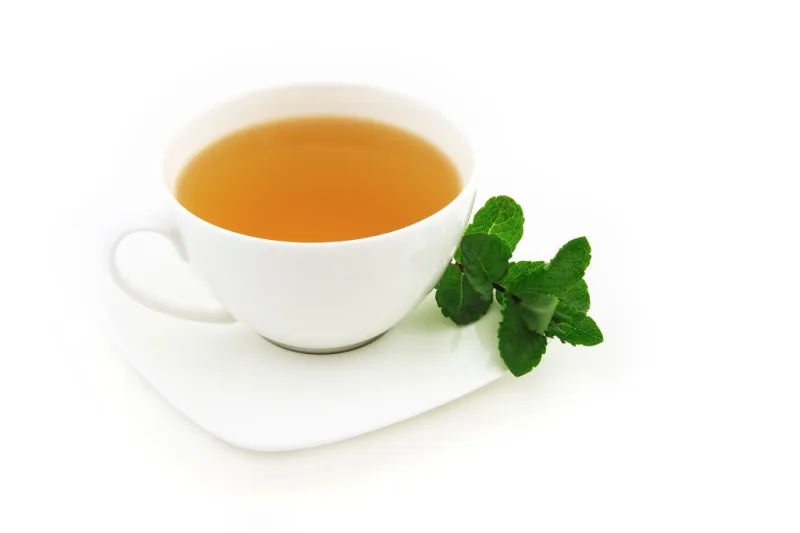

Nettle Tea: Benefits, How to Prepare and Side Effects
IMPORTANT: Nettle tea (Urtica dioica) is generally safe for most adults, but it is not without precautions. Pregnant women should avoid it, as nettle may stimulate uterine contractions. People taking diuretic medication, blood thinners (such as warfarin), blood pressure medication, or diabetes medication should consult their doctor before using it, because nettle can intensify the effects of these treatments. Those with serious kidney disease or fluid retention caused by heart conditions should also seek professional advice. Nettle tea does not replace medical treatment for anemia, prostate conditions, or other illnesses — it is a support, not a substitute. When using it for the first time, start with a small amount to check for any allergic reaction.
Grandmother Floarea, from the village at the foot of the hill, had a habit that no one in the family dared to question: every spring, as soon as the snow melted and the first green clumps appeared by the fence behind the house, she would go out with a wicker basket and an old pair of leather gloves and gather nettles. She always said, rubbing her hands stung by the rough caress of the leaves: “The nettle stings you in order to do you good. Whoever runs from it runs from their own health.” For a few weeks the whole family would drink her greenish, faintly bitter tea, and the children, who complained all winter of fatigue and pallor, seemed to regain the color in their cheeks.
Years later, when one of the grandchildren moved to the city and started complaining of chronic tiredness and brittle nails, the grandmother sent a little cloth pouch full of dried nettle through the mail, with a note written in her trembling hand: “Drink it in the morning, before your coffee. The earth gives you for free what the pharmacy sells dear.” That little jar of tea became, for many, the first lesson that a humble remedy growing for free at the roadside can do more than we suspect. That is also the subject of this article.
Nettle is a plant that most people know as an enemy of barefoot walks through the grass rather than as an ally of health. And yet, for thousands of years, this “ill-mannered” plant has been used in folk medicine across Europe, Asia, and North America as a tonic, a depurative, and a remedy for a wide range of ailments. Nettle tea, made from dried or fresh leaves, concentrates a significant part of the plant’s virtues and remains one of the most accessible and beloved medicinal teas in traditional practice.
Table of Contents
- What nettle is and where it grows
- The composition and active compounds of nettle
- The health benefits of nettle tea
- Traditional uses of nettle in the village household
- How to properly prepare nettle tea (step-by-step recipe)
- When and how much nettle tea to drink
- Combinations with other plants
- Nettle in food and hair care
- Practical tips and common mistakes
- Conclusion
- Frequently Asked Questions
What nettle is and where it grows
The common nettle, known scientifically as Urtica dioica, is a perennial herbaceous plant from the Urticaceae family that can reach heights of a meter and a half or even more in favorable conditions. It is immediately recognized by anyone who has touched it by accident: the leaves and stems are covered with fine, stinging hairs that, at the slightest contact, break and release a mixture of irritating substances — formic acid, histamine, serotonin, and acetylcholine — causing that all-too-familiar sensation of burning and itching.
The plant is extremely widespread and grows almost everywhere in temperate regions: along roadsides, around households, near fences, on riverbanks, in moist places rich in nitrogen. It can be found from the lowlands up to the hills and mountains, being one of the most common wild plants. Precisely because it prefers nitrogen-rich soils, nettle often appears where there was once an old homestead, a heap of manure, or a place of human activity.
For tea, young leaves are used in particular, gathered in spring before flowering, when the content of active substances is at its highest. After flowering, the leaves develop tiny mineral concretions called cystoliths, which may irritate the kidneys, which is why early harvesting is preferred. The stems, roots, and seeds also have their uses, but for everyday tea the leaf remains the prized part.
The composition and active compounds of nettle
Nettle’s reputation as “nature’s multivitamin” is not poetic exaggeration but rests on a truly impressive nutritional profile for a wild plant. Nettle leaves are a remarkable source of minerals and vitamins, which is why folk tradition valued it so highly as a spring tonic.
Among nettle’s main components are:
- Iron, in significant amounts, alongside vitamin C, which favors its absorption — a combination that explains the historical use of nettle in states of anemia and fatigue.
- Calcium, magnesium, and potassium, minerals essential to the health of bones, muscles, and the cardiovascular system.
- B-complex vitamins, as well as provitamin A (beta-carotene) and vitamin K, important in blood clotting.
- Abundant chlorophyll, the green pigment that gives the plant its intense color and that is valued as a depurative and “blood purifier” in herbal tradition.
- Flavonoids (including quercetin) and phenolic acids, compounds with antioxidant action that help combat oxidative stress.
- Organic acids, silicon, and a notable amount of plant protein, making nettle one of the most nourishing wild greens.
The root contains specific compounds — phytosterols, lectins, and polysaccharides — which explain the use of nettle root preparations in prostate problems, but these are less present in ordinary leaf tea.
The health benefits of nettle tea
Support in anemia and fighting fatigue
The best-known use of nettle tea, passed down from generation to generation, is connected with fighting anemia and states of weakness. Thanks to its content of iron, vitamin C, and chlorophyll, nettle has always been considered a “tonic of the blood.” Studies suggest that a regular intake of iron-rich plants can support the body, but it is important to stress that nettle tea cannot treat severe anemia on its own — it is an aid that complements a balanced diet and medical advice.
Diuretic effect and kidney support
Nettle is recognized for its mild diuretic effect, helping to eliminate excess water and metabolic byproducts through urine. Folk tradition used nettle tea to “cleanse” the body, to combat fluid retention, and as support in mild urinary tract conditions. This effect also explains the sense of “lightness” that many feel after a course of nettle tea.
Support in spring detoxification
One of the most cherished traditions among herbalists is the spring nettle cure. After the cold months, when the diet was poorer in fresh greens, nettle tea was seen as a way to “wake up” the body, stimulate the elimination of toxins, and bring a wave of minerals and vitamins. The combination of chlorophyll, minerals, and a diuretic effect makes nettle a classic choice for this seasonal renewal.
Joint support
In traditional medicine, nettle was used as support for people suffering from joint pain and rheumatism. Both internal consumption of the tea and the old (and painful) practice of “urtication” — touching the skin with fresh nettle — were empirically recommended to ease joint discomfort. The antioxidant compounds in nettle may contribute to supporting a balanced inflammatory response in the body.
Benefits for skin, hair, and nails
The richness in silicon, iron, and minerals makes nettle a traditional ally of beauty. Regularly drinking the tea is valued for its effect on the hair — stronger, shinier hair — and on brittle nails. In addition, nettle tea used externally as a hair rinse is a classic remedy against dandruff and for a healthier scalp.
Support for blood sugar and men’s health
Some preliminary studies suggest that nettle may have a modest effect on regulating blood sugar, which is why people with diabetes should be careful about interactions with their medication. Nettle root preparations are also being researched for their role in supporting prostate health in middle-aged and older men, although leaf tea plays a more limited role here than root extracts.
Traditional uses of nettle in the village household
In the peasant household, nettle was not only a remedy but an entire way of living in harmony with the season. In spring, young nettles were turned into dishes — soups, stews, pies — that brought the longed-for green to the table after winter. The tea was prepared both for people and for animals, given to chicks and poultry to make them grow healthy and vigorous.
The village women used nettle water to rinse their hair, convinced that it “made the hair like silk.” Men who worked hard and complained of back and joint pain resorted, in desperation, to “beating with nettle,” a practice in which fresh leaves were rubbed on the painful areas. And the grandmothers, keepers of healing wisdom, dried nettle in bunches hung in the attic, so they would have “medicine” in winter too, when the fresh plant was no longer available.
How to properly prepare nettle tea (step-by-step recipe)
Preparing a good nettle tea is not complicated, but a few details make the difference between a weak infusion and a truly valuable one.
Ingredients needed:
- 1-2 teaspoons of dried nettle leaves (or roughly a handful of fresh, well-washed leaves) per cup of about 250 ml;
- hot water, but not violently boiling (around 90-95 °C);
- optional: a teaspoon of honey and a few drops of lemon for taste.
Preparation steps:
- Prepare the plant. If using fresh nettle, wash it well and handle it with gloves until you scald the leaves, at which point the stinging hairs lose their effect. If using dried nettle, measure the amount into a cup.
- Heat the water to just below boiling. Do not let the water boil for a long time, so as not to destroy some of the vitamins, especially vitamin C.
- Pour the water over the leaves and cover the cup immediately with a lid or a saucer. Covering is important, as it traps the volatile oils and substances that would otherwise be lost in the steam.
- Let it steep for 7-10 minutes. For a stronger effect, some prefer a longer infusion of up to 15 minutes, or even an overnight cold maceration, which extracts the minerals more gently.
- Strain the tea and drink it warm. If you like, add honey and lemon after the tea has cooled a little, to preserve the properties of the honey.
For a more concentrated version, used as a mineral tonic, you can prepare an “overnight infusion”: put 2-3 tablespoons of dried nettle in a jar, pour hot water over it, cover, and let it steep for 4-8 hours (or overnight). The next day, strain and drink it throughout the day. This method extracts a larger amount of minerals.
When and how much nettle tea to drink
For a tonic and depurative effect, nettle tea is usually drunk as a course, not permanently. A common traditional recommendation is 2-3 cups a day for 2-3 weeks, followed by a break. Many prefer to drink one cup in the morning on an empty stomach for its energizing effect, and possibly a second cup at midday. It is not recommended to drink it late in the evening because of the diuretic effect, which could disturb sleep.
The classic spring cure lasts between two and four weeks and coincides with the period when young nettles are abundant. After this cure, a break of a few weeks is taken before resuming, so as not to overload the kidneys and to avoid accumulating diuretic effects. Extra hydration with still water is important throughout the cure, precisely to compensate for fluid losses.
Combinations with other plants
Nettle combines beautifully with other plants, both for taste and for effect:
- Nettle and mint — mint softens the slightly “green, grassy” taste of nettle and brings a refreshing note; a pleasant combination in summer.
- Nettle and horsetail — both rich in silicon, this combination is valued as a tonic for hair, nails, and skin.
- Nettle and dandelion — a classic spring duo, both with a depurative effect and support for the liver.
- Nettle and rosehips — rosehips add extra vitamin C, supporting the absorption of iron from nettle.
- Nettle and chamomile — for a milder and more soothing tea, pleasant in the evening (in a small amount).
Nettle in food and hair care
Beyond tea, nettle is a precious green in the kitchen. Nettle soup, nettle stew, pies, and nettle purée are traditional spring dishes that bring the same minerals and vitamins in a substantial form. Important: nettle must always be cooked or scalded before consumption, as boiling destroys the stinging hairs and makes it perfectly edible and safe.
For the hair, nettle water (a more concentrated, cooled tea) used as a final rinse after washing is a trusted grandmother’s remedy. It is prepared by boiling a few handfuls of nettle in water for 10-15 minutes, straining, letting it cool, and using it to rinse the scalp and hair. Tradition says that against hair loss and dandruff, this rinse works wonders if applied consistently.
Practical tips and common mistakes
Mistake no. 1: Harvesting nettle from polluted places. Many people gather nettle from roadsides or near industrial areas. Nettle easily absorbs heavy metals and pollutants from the soil, so harvest only from clean places, far from traffic and sources of contamination.
Mistake no. 2: Using old nettle, after flowering. Leaves harvested late contain cystoliths, tiny mineral concretions that may irritate the kidneys. Gather nettle in spring before flowering, or use only the young tips of larger plants.
Mistake no. 3: Boiling the tea for a long time. Many believe that “if it boils longer, it’s stronger.” In reality, boiling destroys vitamin C and some of the valuable compounds. Tea is made by infusion, not by prolonged boiling.
Mistake no. 4: Unlimited consumption without breaks. Because of the diuretic effect, continuous consumption month after month can unbalance the elimination of fluids and minerals. Respect the principle of courses with breaks.
Mistake no. 5: Ignoring drug interactions. People taking diuretics, blood thinners, or medication for blood pressure and diabetes should consult their doctor, as nettle can amplify these effects.
Mistake no. 6: Handling fresh nettle with bare hands. It seems obvious, but many people get stung. Always use gloves when harvesting and handling, until the leaves are scalded or dried.
Conclusion
Nettle tea is one of the most beautiful proofs that nature offers us, for free and within reach, remedies of surprising value. This “ill-mannered” plant, which stings and which many people pull from the garden like a weed, hides a treasure of iron, minerals, vitamins, and chlorophyll. Used in moderation, in the form of short courses with breaks, nettle tea can be a precious spring tonic, a support for a tired body, and an ally of the hair, skin, and nails. Just as in Grandmother Floarea’s wisdom, nettle “stings you in order to do you good” — provided we treat it with respect, harvest it from clean places, and never forget that it complements, but does not replace, a doctor’s advice and a balanced diet.
Frequently Asked Questions
How often can I drink nettle tea? In general, 2-3 cups a day is recommended, as a course of 2-3 weeks followed by a break. Permanent consumption without breaks is not recommended because of the diuretic effect.
Does nettle tea help with anemia? Nettle is rich in iron and vitamin C, which is why tradition uses it as support in anemia. However, diagnosed anemia must be treated according to your doctor’s instructions; the tea is only a complementary aid.
Can I drink nettle tea during pregnancy? It is not recommended. Nettle may stimulate uterine contractions, so pregnant women should avoid it and consult their doctor before using any medicinal plant.
Does nettle tea have side effects? For most people, consumed in moderation, it is well tolerated. However, reactions may occur in allergic individuals, and the diuretic effect may be bothersome for some. People with serious kidney disease or taking certain medications should be cautious.
Can I use fresh nettle for tea or only dried? Both options are good. Fresh nettle must be washed and scalded to deactivate the stinging hairs, while dried nettle is convenient and available all year round.
Why is nettle good for the hair? Thanks to its content of silicon, iron, and minerals, nettle is valued for strengthening the hair. Used as a rinse, it is a traditional remedy against dandruff and for a healthier scalp.
When is the best time to gather nettle? In spring, before flowering, when the young leaves have the richest content of active substances and do not yet contain the irritating cystoliths that appear later.
Does nettle tea help with weight loss? Indirectly, through its diuretic and “cleansing” effect, it may give a sense of lightness, but it is not a weight-loss remedy in itself. Any weight loss should be based on a balanced diet and exercise, not on the elimination of fluids.