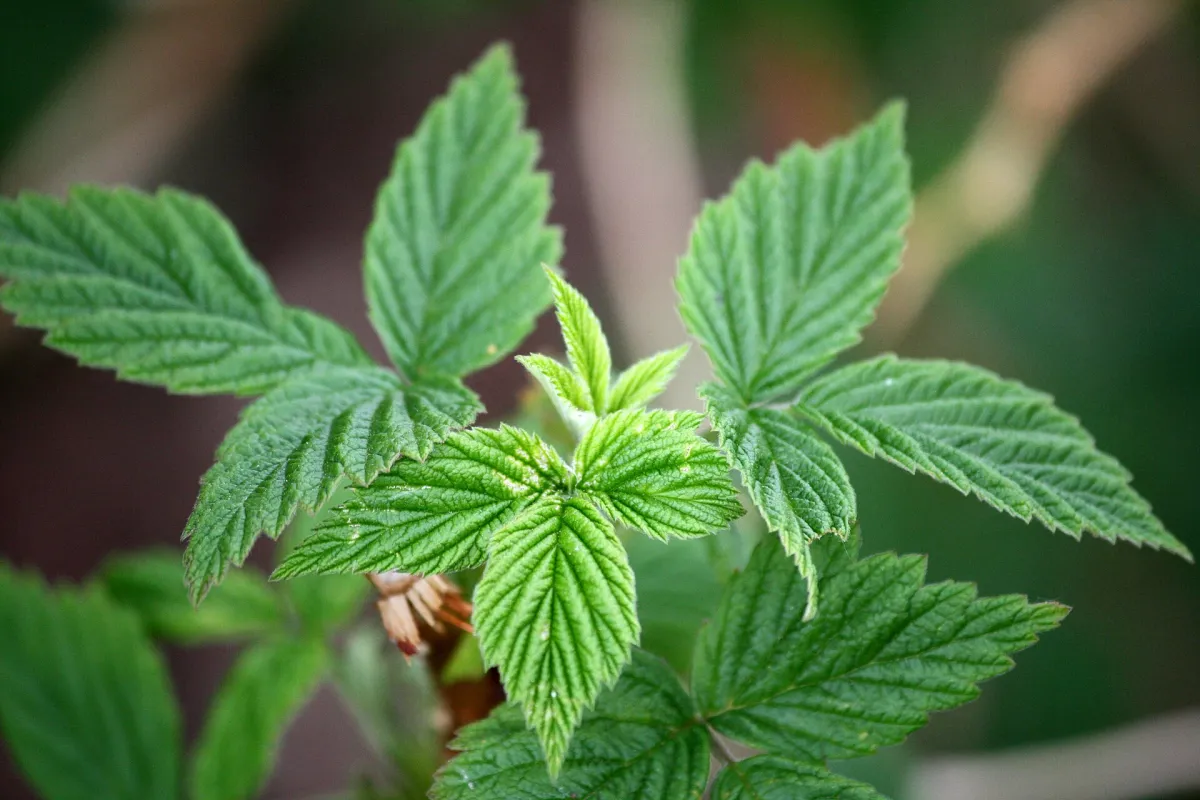
 Photo: Photos Public Domain, Public domain, via Wikimedia Commons
Raspberry leaf tea (Rubus idaeus) is a traditional herbal infusion drunk mainly in late pregnancy, in the hope that it “tones the uterus” for birth. The few small studies available do not show that it shortens labour or brings labour on, but they suggest it is generally well tolerated when started from around 32-36 weeks, at 1-3 cups a day, with your midwife’s or doctor’s agreement. It is not suitable for women with a history of preterm birth, placental problems or bleeding in pregnancy.
Key takeaways:
- Raspberry leaves contain mainly tannins (ellagitannins) and flavonoids; they are astringent, not hormonal.
- The only randomised trial (2001) found no meaningful shortening of labour; the small differences seen were not statistically reliable.
- Midwives who suggest it usually start at 32 or 36 weeks with one cup a day, increasing gradually.
- For period cramps it is a traditional use without clinical trials; ginger has better evidence.
- Avoid it without medical advice if you have had a preterm birth, a short cervix or cerclage, placenta praevia, bleeding, twins or a planned caesarean.
- Tannins reduce iron absorption: keep the tea at least 2 hours away from iron supplements.
What raspberry leaf tea is
It is an infusion made from the dried leaves of the garden or wild red raspberry, the same plant that gives us the fruit. Leaves are picked in spring and early summer, before or during flowering, then dried in the shade. The taste is close to a mild black tea, slightly grassy, with none of the berry flavour.
Active compounds
Raspberry leaf contains:
- tannins, especially ellagitannins, which give the astringent effect (tightening mucous membranes and reducing secretions);
- flavonoids such as quercetin and kaempferol glycosides, with antioxidant activity;
- phenolic acids, traces of vitamin C and minerals (potassium, magnesium, manganese, iron, in small amounts once infused).
It has no meaningful phytoestrogens and does not act like a hormone. The classic theory is that certain leaf constituents “tone” the uterine muscle so it contracts more efficiently. Lab work on animal uterine tissue has given conflicting results, though: in some experiments the extract relaxed the muscle, in others it stimulated contractions, depending on dose and stage of pregnancy. How it acts in humans remains unclear.
Leaf or berry?
Raspberries themselves are a healthy food with no restrictions in pregnancy. Everything in this article refers strictly to the leaves. Many “raspberry flavoured” teas on supermarket shelves are blends of hibiscus, apple and flavourings rather than raspberry leaf, so read the label.
Raspberry leaf tea in pregnancy: what we actually know
Where the reputation comes from
Drinking raspberry leaf in the last months of pregnancy has a long tradition in Europe, North America and Australia. Midwives and grandmothers recommended it for an “easier” birth, and today parenting forums often present it as a sure way to shorten labour or avoid forceps. That picture is not supported by research.
What the studies show
- An Australian retrospective study (Parsons and colleagues, 1999) compared women who drank raspberry leaf with women who did not. Users seemed to have fewer interventions, but an observational study cannot prove cause and effect: women who choose herbal remedies may differ in many other ways.
- The only randomised, placebo-controlled trial (Simpson and colleagues, 2001), in nearly 200 first-time mothers, used raspberry leaf tablets (1.2 g twice daily) from 32 weeks until birth. The first stage of labour was not shorter. The second (pushing) stage was a few minutes shorter and there were slightly fewer forceps deliveries, but neither difference was statistically significant. No adverse effects were seen in mothers or babies.
- Later reviews concluded that the evidence is too thin to recommend raspberry leaf for shortening labour, and also too thin to guarantee full safety, especially earlier in pregnancy.
In short, raspberry leaf does not induce labour, has no proven effect on labour length and is no substitute for antenatal preparation. What can honestly be said is that, in the one trial we have, it was well tolerated during the last 8 weeks of pregnancy.
When to start drinking it
There is no official guideline. The most common approaches are:
- from 32 weeks, following the randomised trial, starting with a small amount;
- from 36-37 weeks, the more cautious option preferred by many midwives, when birth would no longer count as preterm.
It is avoided in the first and second trimesters precisely because its effect on the uterus is unclear. Some women notice more Braxton Hicks (practice, painless tightenings) after starting the tea. If they become regular, painful or appear before 37 weeks, stop the tea and call your maternity unit.
To see which other infusions are fine at this stage, read our guide to teas safe in pregnancy.
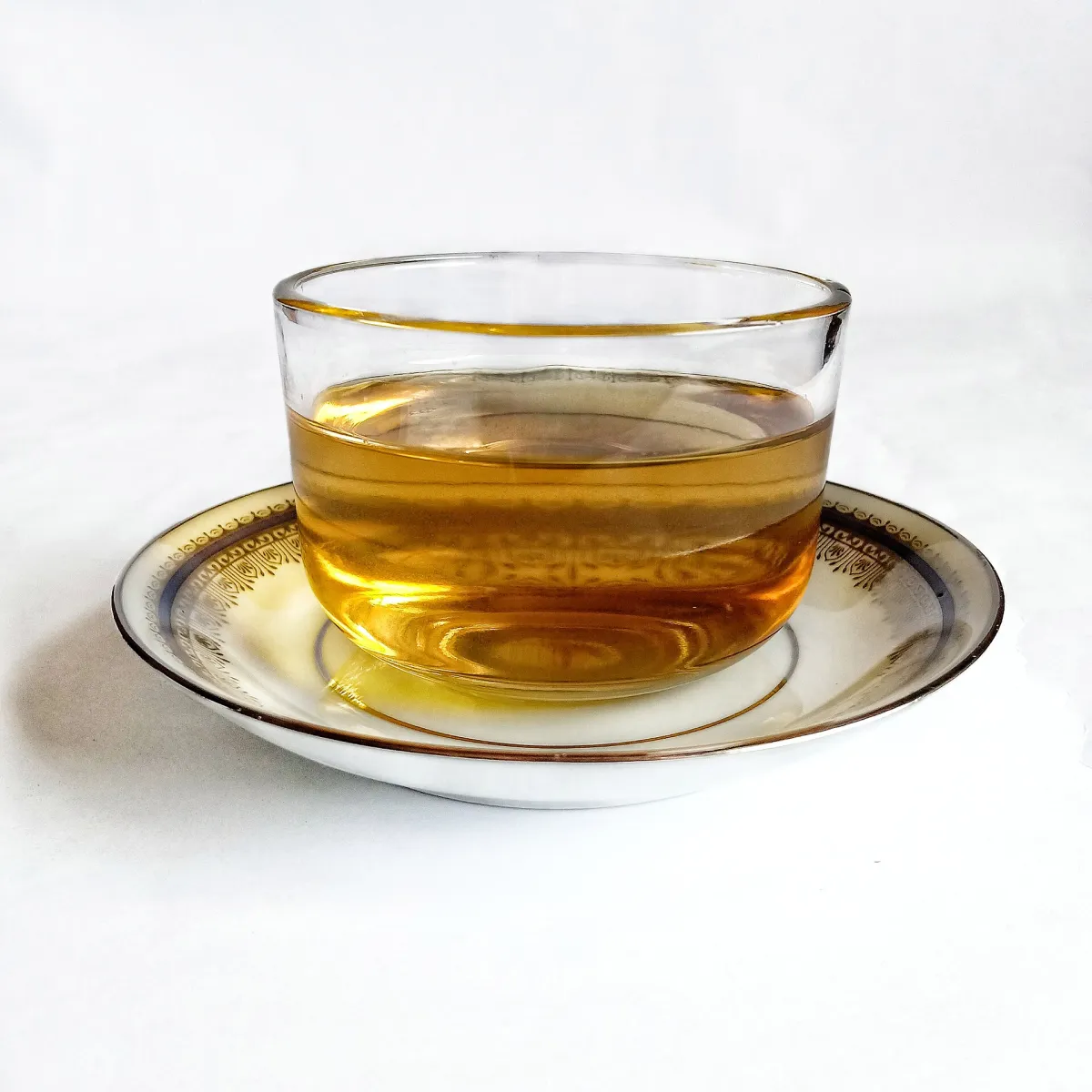 Photo: PagesAndPathsPH, CC0, via Wikimedia Commons
How to make raspberry leaf tea properly
Hot infusion (the standard method)
- Put 1 heaped teaspoon of dried, cut leaf (about 1.5-2 g) or one tea bag into a mug.
- Pour over 250 ml of freshly boiled water (95-100 °C).
- Cover the mug with a saucer to keep the steam in.
- Steep for 10-15 minutes. Less than 5 minutes gives a very weak tea.
- Strain and drink warm. A slice of lemon or a little honey is fine.
Iced version
Brew 1 litre with 4 teaspoons of leaf, steep 15 minutes, strain, cool and keep in the fridge for up to 24 hours. Handy in summer or if hot drinks feel too much at the end of pregnancy. Count the total for the day rather than sipping freely.
Tablets and capsules
Raspberry leaf tablets usually contain 300-400 mg each. The randomised trial used 2.4 g a day. Strengths vary widely between brands, so follow the label, check with your midwife and don’t combine tablets with the tea.
Leaf quality
Buy from a pharmacy or reputable herbal supplier, with the botanical name Rubus idaeus on the pack. If you pick your own, choose plants away from roads and sprayed crops, take young healthy leaves and dry them fully in the shade until they crumble between your fingers. Throw away half-dried or mouldy leaves.
How much to drink: a practical schedule
The table reflects common midwifery practice, not a clinical standard. Always start with the lowest amount, and only after talking to whoever is looking after your pregnancy.
| Period | Amount per day | Notes |
|---|---|---|
| First and second trimester | None | Effect on the uterus unclear; avoid |
| 32-34 weeks (only with medical agreement) | 1 cup (250 ml) | Watch for tightenings |
| 34-36 weeks | 1-2 cups | Drink between meals, away from iron |
| 36 weeks until birth | 2-3 cups | Don’t exceed 3 cups; it won’t speed birth |
| Painful periods | 2-3 cups, from 1-2 days before and in the first days | Traditional use |
| Mild diarrhoea in adults | 2-3 cups, up to 3 days | Rehydration still comes first |
More is not better. Large amounts can cause nausea, loose stools or, because of the astringency, constipation.
Raspberry leaf tea for periods
In folk medicine raspberry leaf is sometimes called “the woman’s herb”: it is drunk for menstrual cramps, heavy periods (thanks to the astringent tannins) and premenstrual tension. These uses are traditional; no clinical trials show that the tea reduces period pain or blood loss.
What it can realistically offer is a warm, caffeine-free, comforting drink that fits easily into difficult days. How to use it:
- 2-3 cups a day, starting 1-2 days before your period and continuing for the first 2-3 days;
- together with local heat (a hot water bottle on the lower belly) and gentle movement;
- blended with fresh ginger (2-3 slices per cup), which has better evidence for period pain.
For better-studied options see tea for period cramps and our guide to menstrual cramps. For heavy periods, a more specific traditional herb is shepherd’s purse, but heavy bleeding always needs a gynaecological check first.
Other traditional uses
- Mild diarrhoea: tannins reduce intestinal secretions. This is one of the more plausible uses, similar to black tea or blackberry leaf.
- Gargle for a sore throat and mouth ulcers: a stronger infusion (2 teaspoons per 250 ml), cooled, used 3-4 times a day.
- Compresses for irritated skin: cooled infusion applied for 10 minutes to mildly inflamed areas.
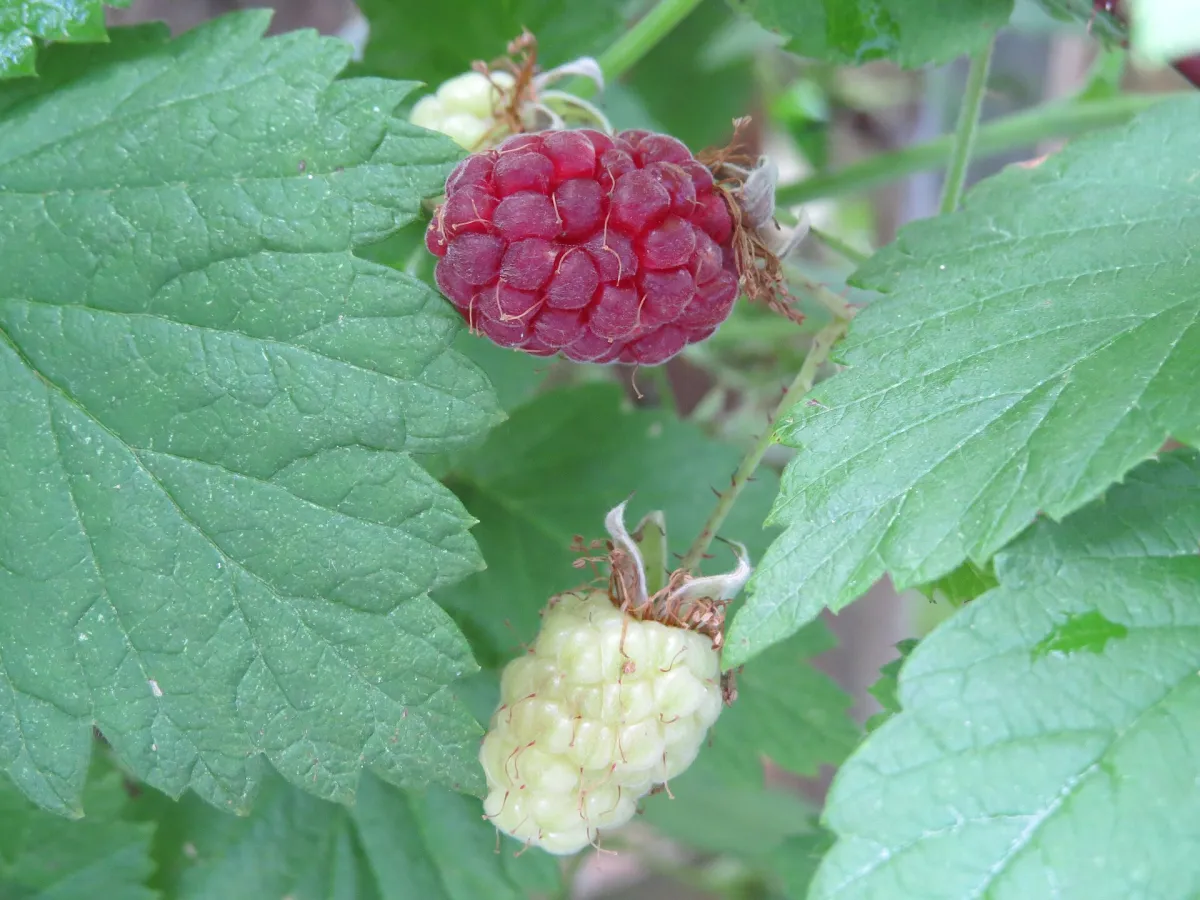 Photo: GT1976, CC BY-SA 4.0, via Wikimedia Commons
Who should avoid raspberry leaf tea
Do not drink raspberry leaf tea in pregnancy, unless your doctor explicitly approves, if you:
- have had a preterm birth or are currently at risk of one;
- have a short cervix, cervical insufficiency or a cerclage;
- have placenta praevia (low-lying placenta) or a history of placental abruption;
- have had vaginal bleeding in this pregnancy;
- have a planned caesarean for medical reasons;
- are expecting twins, have a breech baby or other complications under monitoring;
- have pre-eclampsia or high blood pressure in pregnancy;
- have previously had a very fast labour (under 3 hours);
- have gestational diabetes: some sources flag a possible effect on blood sugar, so monitor your readings.
Outside pregnancy, avoid it with chronic constipation (astringency can worsen it), untreated iron-deficiency anaemia and allergy to plants in the rose family.
Breastfeeding: raspberry leaf is traditionally used after birth too, but safety data are lacking. One cup a day is a common use; stop if your baby has unusual stools or seems unsettled.
Interactions
- Iron: tannins lower absorption of iron from supplements and plant foods. Leave at least 2 hours between the tea and your iron tablet.
- Diabetes medication: a theoretical additive effect on blood sugar.
- Labour-stimulating drugs (oxytocin, prostaglandins) used on the labour ward: tell the team you have been drinking the tea.
- Other oral medicines: tannins can bind some drugs in the gut; separate tea and medicines by 1-2 hours.
When to see a doctor
Stop the tea and seek urgent care if, in pregnancy, you notice:
- regular or painful contractions before 37 weeks;
- any vaginal bleeding, however small;
- leaking fluid (possible waters breaking);
- reduced or absent baby movements;
- severe, constant abdominal pain;
- a bad headache, visual disturbances or sudden swelling of the face or hands.
For periods, see a gynaecologist if you change pads or tampons every hour or more often, pass large clots, the pain doesn’t respond to standard anti-inflammatories, the pain started or worsened after age 25, or you also have pain outside your period.
Common mistakes
Starting in the first trimester “to prepare the uterus”. There is no proven benefit, and the effect on the uterus in early pregnancy is unknown.
Drinking large amounts to “get labour going”. Raspberry leaf does not induce labour. Litres of tea at 40 weeks only bring nausea or an upset bowel.
Drinking it with meals or with iron. You lose some of the iron you need in pregnancy.
Not telling your midwife or doctor. Your care team should know everything you take, teas included.
Confusing raspberry leaf with “raspberry flavoured” tea. A hibiscus blend is not the same thing, and hibiscus is not recommended in pregnancy.
Treating very painful periods with tea alone for years. Severe pain can hide endometriosis or fibroids.
Conclusion
Raspberry leaf tea is a pleasant, traditional drink that, in the last weeks of an uncomplicated pregnancy, is generally well tolerated. It is not the shortcut to a quick birth that forums promise: the evidence is scarce and shows no clear effect on labour. If you want to drink it, talk to your midwife or doctor, start at 32-36 weeks with one cup a day, stay at or below 3 cups, and skip it entirely if you have a history of preterm birth, placental problems or bleeding.
Frequently asked questions
Does raspberry leaf tea induce labour? No. Studies have not shown that it starts labour or brings it forward. It is traditionally used to “tone” the uterus, not to trigger birth.
When should I start drinking raspberry leaf tea? Most midwives allow it from 32 weeks or from 36-37 weeks in an uncomplicated pregnancy, with medical agreement. It is avoided in the first two trimesters.
How many cups of raspberry leaf tea a day are safe? Common practice is 1 cup a day at first, building up to a maximum of 2-3 cups a day in the final weeks. There is no proven benefit from drinking more.
Can I drink raspberry leaf tea if I have a planned caesarean? It is usually not advised, since the traditional aim (preparing for labour) doesn’t apply and the reason for the caesarean may itself be a contraindication. Ask your doctor.
Does raspberry leaf tea help period cramps? It is a traditional use without clinical trials. It can be a warm, soothing drink, but ginger and anti-inflammatory painkillers have better evidence.
Does raspberry leaf tea help fertility? There is no evidence it improves fertility. If you are trying to conceive, it is more prudent to avoid it, since it is not recommended in the first trimester.
Can I drink it while breastfeeding? It is traditionally used after birth, but safety data are limited. One cup a day is a typical use; watch how your baby responds.
Does raspberry leaf tea contain caffeine? No. Although it tastes a little like black tea, raspberry leaf is naturally caffeine-free.
Sources and further reading
- Simpson M., Parsons M., Greenwood J., Wade K., “Raspberry leaf in pregnancy: its safety and efficacy in labor”, Journal of Midwifery & Women’s Health, 2001.
- Parsons M., Simpson M., Ponton T., “Raspberry leaf and its effect on labour: safety and efficacy”, Australian College of Midwives Incorporated Journal, 1999.
- Holst L., Haavik S., Nordeng H., “Raspberry leaf: should it be recommended to pregnant women?”, Complementary Therapies in Clinical Practice, 2009.
- European Medicines Agency, Committee on Herbal Medicinal Products (HMPC), assessment and public statement on Rubus idaeus L., folium.
- Blumenthal M. (ed.), The Complete German Commission E Monographs, American Botanical Council, 1998 (raspberry leaf listed as unapproved for lack of documented efficacy).
Informational content only; it does not replace advice from your doctor, midwife or pharmacist. In pregnancy, use any herbal tea only with the agreement of the professional caring for you.