Rosehip Tea: Benefits, How to Prepare and Side Effects
IMPORTANT: Rosehip tea is generally safe and well tolerated, but there are situations that call for caution. Because of its high vitamin C content, people with oxalate kidney stones, hemochromatosis (excess iron accumulation) or those taking blood-thinning medication should consult a doctor before drinking it regularly. The fine hairs found around the seeds inside the fruit can irritate the throat and skin if not strained out properly. Pregnant or breastfeeding women, as well as people with chronic conditions or who take medication, should talk to their doctor before making this tea a daily habit. Rosehip tea does not replace medical treatment for a serious infection.
Grandma Veta, from a mountain village in the Transylvanian highlands, kept a ritual that no one in the family dared break. At the first autumn frosts, when the rosehips on the hedge turned deep red and softened slightly under a finger, she would take her wicker basket and go picking. “Now they are sweet, now they have power,” she used to say, returning with hands scratched by thorns but content. She spread the fruit to dry on a clean cloth over the chest in the hallway, and all winter long the house smelled faintly of ripe fruit and of summer sun stored away. Whenever one of the grandchildren started to sneeze or came home from school with cheeks red from the cold, Grandma would bring out the cast-iron pot, drop in a handful of rosehips, and let the tea steep overnight. In the morning she strained it, sweetened it with a spoonful of honey, and gave it to us warm, saying that “this is the remedy that keeps the cold away.”
Similar stories can be found in almost every Romanian village, because the wild rose has always been the pharmacy at the edge of the road. Today science confirms what the old people knew from experience: rosehips are one of the richest natural sources of vitamin C, far more concentrated than citrus fruit. The tea made from them has been used for centuries to strengthen the body, to get through harsh winters more easily, and to restore vitality to those weakened by illness.
The rosehip is the fruit of the wild rose, known botanically as Rosa canina, and of several related species. It grows wild at the edges of forests, on pastures, on hedges and on neglected land, from the lowlands almost up to the mountains. The reddish-orange fruit ripens in late autumn and reaches its best flavor after the first frosts, when the starch in the pulp partly turns into sugars. That is precisely why grandmothers waited for the frost before picking.
Table of Contents
- What the rosehip is and where it grows
- Composition and active compounds
- Health benefits
- Traditional uses of rosehips
- How to prepare rosehip tea correctly
- When and how much to drink
- Combinations with other plants
- Lifestyle and practical advice
- Practical tips and common mistakes
- Conclusion
- Frequently asked questions
What the rosehip is and where it grows
The rosehip, Rosa canina, is a thorny shrub from the rose family, directly related to the garden rose. It grows as dense thickets with arching branches covered in curved thorns, and it flowers in early summer with delicate, pale-pink, five-petaled blossoms. After the flower fades, the false fruit forms, commonly called the hip: a fleshy red or orange capsule containing many hard seeds surrounded by fine hairs.
In Romania the wild rose is extremely widespread. You will find it along country roads, on fallow land, on sunny hillsides, near orchards and forests. It is a hardy plant, resistant to drought and frost, that needs no care and bears fruit abundantly. This very availability turned it into a remedy of the poor, accessible to anyone willing to brave the thorns. Besides Rosa canina, the fruit of other wild rose species is also used, all with similar properties.
Picking is done in autumn, ideally after the first frosts, when the fruit has softened and its flavor becomes pleasantly sweet-tart. Rosehips can be used fresh, but they are most often dried so they can be kept through the winter. Drying must be done correctly, in the shade or at a moderate temperature, so as not to destroy the heat-sensitive vitamin C.
Composition and active compounds
The fame of rosehips is owed first of all to their impressive vitamin C (ascorbic acid) content. Fresh fruit can contain several times more vitamin C than oranges or lemons, making it one of the most powerful plant sources of this nutrient. Vitamin C is an essential antioxidant involved in dozens of bodily processes, from collagen production to the proper functioning of the immune system.
Besides vitamin C, rosehips offer a rich mix of beneficial compounds. Studies suggest that the fruit contains significant amounts of carotenoids, including lycopene and beta-carotene, the pigments that give the reddish-orange color and that also act as antioxidants. There are also flavonoids and polyphenols, plant substances traditionally associated with protecting blood vessels and with anti-inflammatory effects.
Rosehips also provide B-complex vitamins, vitamin E, vitamin K, and minerals such as potassium, calcium, magnesium and iron. The pulp is rich in pectins, soluble fibers that contribute to healthy digestion. A particular compound studied in recent years is a galactolipid known as GOPO, which research suggests may have anti-inflammatory properties, especially in the joints. All these elements work together, which is why folk tradition has always regarded the rosehip as a fruit that “gives strength.”
Health benefits
Strengthening immunity
The best-known benefit of rosehip tea is the support it offers the immune system. Thanks to its high vitamin C content, the tea helps the body defend itself better against colds and seasonal infections. Folk tradition has always used it as a winter drink, precisely to get through the cold season more easily. Vitamin C contributes to the proper functioning of defense cells and has an antioxidant role, neutralizing the free radicals that appear during illness and stress.
Support during colds and flu
Once a cold has set in, warm rosehip tea remains a trusted ally. Drunk warm and sweetened with honey, it hydrates, warms and provides a steady supply of vitamin C, which supports recovery. Studies suggest that an adequate intake of vitamin C may slightly shorten the duration of colds and ease the discomfort. In folk medicine, rosehip tea was given to children and to weakened elderly people to help them regain strength.
Antioxidant effect and cell protection
The wealth of antioxidants in rosehips, from vitamin C to carotenoids and polyphenols, makes this tea a drink that supports the protection of cells against oxidative stress. Free radicals are unstable molecules that, in excess, contribute to premature aging and to various ailments. The antioxidants in rosehips help maintain balance, which is why the fruit is valued as a food of vitality and longevity.
Joint health
One of the most interesting modern research directions concerns the effect of rosehips on the joints. Studies suggest that rosehip powder, thanks to its anti-inflammatory compounds, may ease joint discomfort in people with chronic problems. In folk tradition, rosehips were recommended to those with “bone aches” and “twinges,” especially in the cold season, and tea drunk regularly was considered a support for mobility.
Support for digestion
The pectins and fibers in the pulp of rosehips have a gentle regulating effect on intestinal transit. Rosehip tea has traditionally been used as a soothing drink for the stomach, mildly astringent and able to calm minor upsets. Drunk in moderation, it supports balanced digestion and can be helpful during periods when the stomach is sensitive.
General tonic and fighting fatigue
Owing to its wealth of vitamins and minerals, rosehip tea has always been considered a natural tonic. During periods of fatigue, convalescence or intense effort, a cup of warm rosehip tea brings an extra dose of vitality. Tradition recommended it to those who “had no strength,” as a drink that restores and refreshes without burdening the body.
Support for skin and blood vessels
Vitamin C is indispensable in producing collagen, the protein that gives firmness to the skin and resilience to blood vessels. A good intake of vitamin C, together with the flavonoids in rosehips, supports tissue health, skin elasticity and good circulation. This is why rosehips have also been used traditionally as an ally of beauty, not only of inner health.
Traditional uses of rosehips
In the Romanian household, rosehips always had their place. Besides tea, they were most often made into rosehip jam, a dense, fragrant preserve eaten on bread or given to children by the spoonful as a sweet remedy against colds. Rosehip butter and rosehip syrup were other ways the fruit was kept through the winter, offering a constant source of vitamins.
Dried, ground rosehips were sometimes added to soups or fruit broths to enrich the flavor and for their vitamin content. Rosehip tincture, used more rarely, was made by macerating the fruit in alcohol and was considered a tonic. The most widespread use, however, remained the tea, simple to make and accessible, drunk both for pleasure and as a remedy.
In folk tradition, rosehips were also linked to the symbolism of protection. Thorny rosehip branches were sometimes placed at the gate or the window as a sign of guarding, and the flowering of the wild rose in early summer announced fair weather. Beyond beliefs, the fruit’s real value was recognized by whole generations who used it as a natural winter medicine.
How to prepare rosehip tea correctly
Making rosehip tea is not complicated, but a few details make the difference between a weak drink and a truly valuable one. The key lies in crushing the fruit and in a sufficiently long infusion, so that the active substances pass into the water.
Basic recipe (infusion)
You need about one tablespoon of dried rosehips (whole or, better, lightly crushed) per cup of water, that is around 250 milliliters.
- Lightly crush the dried rosehips with a pestle or the back of a spoon, to break the skin and release the pulp. The larger the contact surface, the more substances pass into the tea.
- Place the crushed rosehips in a vessel or directly in the cup.
- Boil the water and let it cool for about a minute, until it is no longer boiling. Water that is too hot, at a rolling boil, destroys some of the vitamin C.
- Pour the hot water over the rosehips.
- Cover the vessel and let it infuse for 10 to 15 minutes. For a stronger tea, you can leave it for up to 20 minutes.
- Strain well through a fine sieve or a piece of cheesecloth to hold back the fine powder and the hairs from inside the fruit, which can irritate the throat.
- Sweeten, if you wish, with honey added once the tea has cooled a little (honey added to hot liquid loses some of its properties).
Cold-maceration variant
To preserve the heat-sensitive vitamin C as well as possible, many people prefer cold maceration. Place the crushed rosehips in a vessel with cold water, leave them to macerate overnight (8 to 12 hours), then strain. The resulting tea is milder in taste and retains a larger amount of vitamin C.
The stronger decoction
If you want a more concentrated tea, you can make a decoction: put the crushed rosehips in cold water, bring to a boil and simmer over low heat for 5 to 10 minutes, then cover and let infuse for another 10 to 15 minutes before straining. The decoction extracts more of the pectins and minerals, but loses a little more vitamin C because of the boiling.
When and how much to drink
Rosehip tea can be drunk daily, in moderation, especially during the cold season. For an adult, a usual amount is 2 to 3 cups a day. In the morning, a cup of rosehip tea offers an invigorating start and a supply of vitamins, while in the evening a warm cup soothes and warms.
During periods of colds or fatigue, intake can increase for a few days, but without excess. It is good to take a short break after 3 to 4 weeks of regular use, as with most herbal teas. Children can be given it in smaller, more diluted amounts according to age, ideally with a pediatrician’s approval. Drunk warm, rosehip tea is also a good way to stay hydrated on cold days.
Combinations with other plants
The slightly tart, fruity taste of rosehips blends beautifully with many other plants, enhancing both the flavor and the beneficial effects.
- Rosehips and hibiscus: a classic combination, tart and vividly colored, rich in antioxidants, excellent for immunity.
- Rosehips and sea buckthorn: both fruits are extremely rich in vitamin C; together they form a true vitamin bomb for winter.
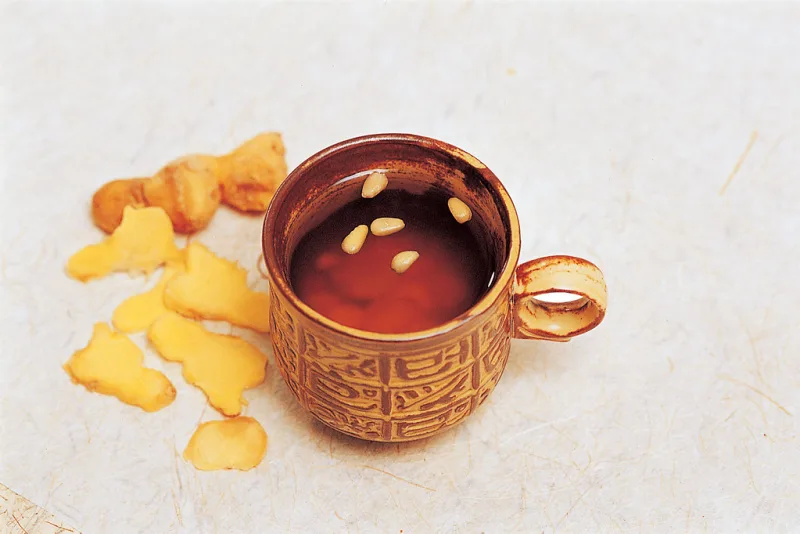
- Rosehips and ginger: ginger adds warmth and a tonic effect, very suitable against colds.
- Rosehips and cinnamon: the warm aroma of cinnamon turns the tea into a comforting cold-season drink.
- Rosehips and mint: mint brings freshness and an extra refreshing aroma.
- Rosehips and dried apples: a gentle, sweet combination that children enjoy.
Honey and a slice of lemon round out almost any variant, adding even more vitamin C.
Lifestyle and practical advice
Rosehip tea gives the best results when it is part of a balanced lifestyle. No plant, however valuable, can make up for a poor diet, lack of sleep or a sedentary life. Use the tea as a support, not as a substitute for health built up day by day.
To benefit fully from the vitamin C intake, pair the tea with a diet rich in fresh vegetables and fruit, especially in the cold season when the body needs extra support. Stay well hydrated, sleep enough and spend time outdoors, even if only for a short walk. Regular movement supports both immunity and mood.
If you have the chance to pick your own rosehips, do so from clean places, far from busy roads and from land treated with chemicals. Dry them properly, in the shade, in a well-ventilated spot, and keep them in jars or paper bags, away from light and moisture. This way you will have your own source of vitamins through the winter, just as our grandparents did.
Practical tips and common mistakes
Mistake no. 1: Using boiling water. Vitamin C is sensitive to intense heat. If you pour boiling water directly over the rosehips, you destroy some of their most precious compound. Let the water cool for a minute after boiling, or opt for cold maceration.
Mistake no. 2: Too short an infusion. Rosehips have a hard skin, and the active substances pass into the water slowly. An infusion of only 2 to 3 minutes gives a watery, powerless tea. Leave it at least 10 to 15 minutes, ideally with the fruit crushed beforehand.
Mistake no. 3: Not straining out the hairs. Inside the fruit, around the seeds, are fine hairs that can irritate the throat and that, indeed, were once used as itching powder. Always strain the tea through a fine sieve or a piece of cheesecloth.
Mistake no. 4: Adding honey to boiling tea. Honey loses some of its properties at high temperatures. Wait until the tea has cooled to a pleasantly warm temperature, then sweeten.
Mistake no. 5: Picking from polluted places. Rosehips from roadsides or from chemically treated land accumulate unwanted substances. Choose clean places sheltered from pollution.
Mistake no. 6: Drinking too much. Even a healthy fruit can become problematic in large amounts. Excessive consumption of rosehip tea, through its high vitamin C intake, can cause digestive discomfort. Stick to the measure of 2 to 3 cups a day.
Mistake no. 7: Improper storage. Dried rosehips kept in moisture or in light degrade and lose their vitamins. Use sealed containers, away from light, and check periodically that no mold appears.
Conclusion
Rosehip tea is one of the most precious winter remedies that Romanian folk tradition has handed down to us. Rich in natural vitamin C, in antioxidants and in beneficial compounds, it supports immunity, helps in getting through colds, protects cells and brings an extra dose of vitality in a warm and pleasant form. Simple to prepare from the fruit of the wild rose that grows at the edge of every road, the rosehip remains a shining example of a natural pharmacy accessible to all.
As with any natural remedy, the key lies in using it with measure and wisdom. Prepared correctly, drunk in moderation and integrated into a healthy lifestyle, rosehip tea can become a trusted companion in the cold months, just as it was for the grandmothers who waited for the autumn frost to fill their baskets with red fruit. And if you suffer from a chronic condition or take medication, a conversation with your doctor will help you enjoy its benefits in complete safety.
Frequently Asked Questions
How much vitamin C do rosehips contain? Rosehips are among the richest plant sources of vitamin C, containing several times more ascorbic acid than citrus fruit. The exact amount varies with the species, the degree of ripeness and the way they are dried. What matters is that a properly prepared cup of tea provides a significant intake of vitamin C, especially through cold maceration or with water that is not too hot.
Can I drink rosehip tea every day? Yes, rosehip tea can be consumed daily, within reasonable limits, generally 2 to 3 cups a day. For balance, it is good to take a short break after a few weeks of regular use. People with chronic conditions or who take medication should consult a doctor.
Does rosehip tea really help with colds? Folk tradition has used it for this purpose for centuries, and studies suggest that a good intake of vitamin C can support immunity and ease the discomfort of a cold. Drunk warm, it hydrates and warms, which helps the body during illness. It does not, however, replace medical treatment for a serious infection.
Why must rosehip tea be strained? Inside the fruit, around the seeds, are fine hairs that can irritate the throat and mucous membranes. That is why the tea is always strained through a fine sieve or a piece of cheesecloth, to hold back these hairs and the fine powder.
Can I use fresh rosehips instead of dried ones? Yes, fresh rosehips are very good, especially after the first frosts when they are sweeter. They are crushed and prepared in the same way. Many people prefer dried fruit, however, because it keeps through the winter and is more concentrated by weight.
Who should avoid rosehip tea? Caution is advised for people with oxalate kidney stones, with hemochromatosis (iron accumulation) or who take blood thinners. Pregnant or breastfeeding women and people with chronic illnesses should talk to their doctor before regular consumption.
When are rosehips harvested? Rosehips are harvested in autumn, ideally after the first frosts, when the fruit has softened and its flavor becomes sweet-tart. Choose them from clean places, far from roads and chemically treated land, and dry them in the shade in a well-ventilated spot.
Is rosehip tea suitable for children? Yes, it is generally well tolerated by children and was traditionally given to little ones as a winter remedy. Serve it in smaller, more diluted amounts according to age, well strained and lightly sweetened with honey (after the age of one). For young children, a pediatrician’s approval is advisable.