 Photo: Dolon Prova, CC BY-SA 4.0, via Wikimedia Commons
The best tea for a cold or the flu is a hot infusion of elderflower and linden blossom, optionally with ginger and lemon: it supports sweating during a fever, soothes the throat and keeps you well hydrated. Tea does not kill the virus and will not dramatically shorten the illness, but it makes the sick days far more bearable and delivers the fluids your body needs. Below are the recipes that make sense, with exact amounts, what the research says and the warning signs that mean it is time to see a doctor.
Key takeaways
- Elderflower and linden are the classic “diaphoretic” herbs for fever and chills, recognised in European traditional use for the common cold.
- Ginger, thyme and honey help with a sore throat and cough; honey has the best evidence of all for cough during a cold (never under age 1).
- Hydration is the main benefit: 3-5 cups of warm tea a day cover a good part of your fluid needs during a fever.
- Tea does not replace prescribed antivirals for flu and does not treat a bacterial infection.
- Red flags: fever above 39.5 °C (103 °F) that will not come down, laboured breathing, chest pain, confusion, fever lasting more than 3 days.
Cold or flu: why the difference matters
The common cold is mostly caused by rhinoviruses and starts slowly: runny nose, sneezing, scratchy throat, mild or no fever. It usually clears in 7-10 days. Flu, caused by influenza viruses, hits suddenly: high fever, chills, intense muscle aches and fatigue that puts you in bed. In older adults, pregnant women, young children and people with chronic illness, flu can lead to pneumonia.
For both, tea plays the same role: supportive, symptomatic care. The difference is that with flu, especially in at-risk people, a doctor may prescribe an antiviral, which works best within the first 48 hours. If you suspect flu and belong to a risk group, do not wait for tea to sort it out.
How a hot tea actually helps
- Hydration: fever and mouth breathing increase water loss. A warm, pleasant-tasting drink goes down more easily than plain water.
- Steam and warmth: breathing in the steam from the cup moistens the mucous membranes and makes the nose feel clearer. An older British study found that a hot drink improved the subjective feeling of a blocked nose, cough and chills more than the same drink at room temperature.
- Diaphoretic effect: elderflower and linden blossom promote sweating, which helps the body regulate its temperature during the chills phase.
- Throat soothing: mucilages (in linden, marshmallow, plantain) and honey form a protective film over irritated tissue.
- Antimicrobial or anti-inflammatory compounds: thymol in thyme, gingerols in ginger, flavonoids in elderflower. Effects are mainly shown in the lab; in people the benefit remains modest and symptomatic.
The best herbs for a cold tea
| Herb | Part used | Helps with | Strength of evidence |
|---|---|---|---|
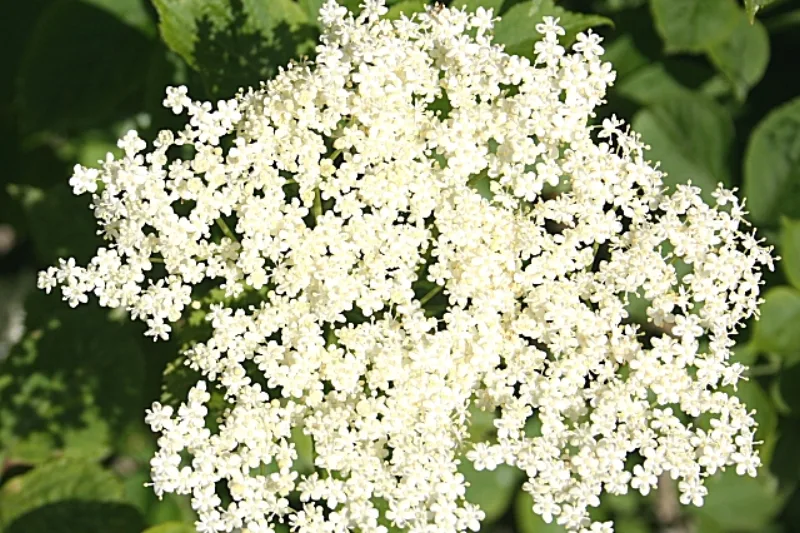
| Elder (Sambucus nigra) | flowers | fever, chills, stuffy nose | recognised traditional use (EMA) |
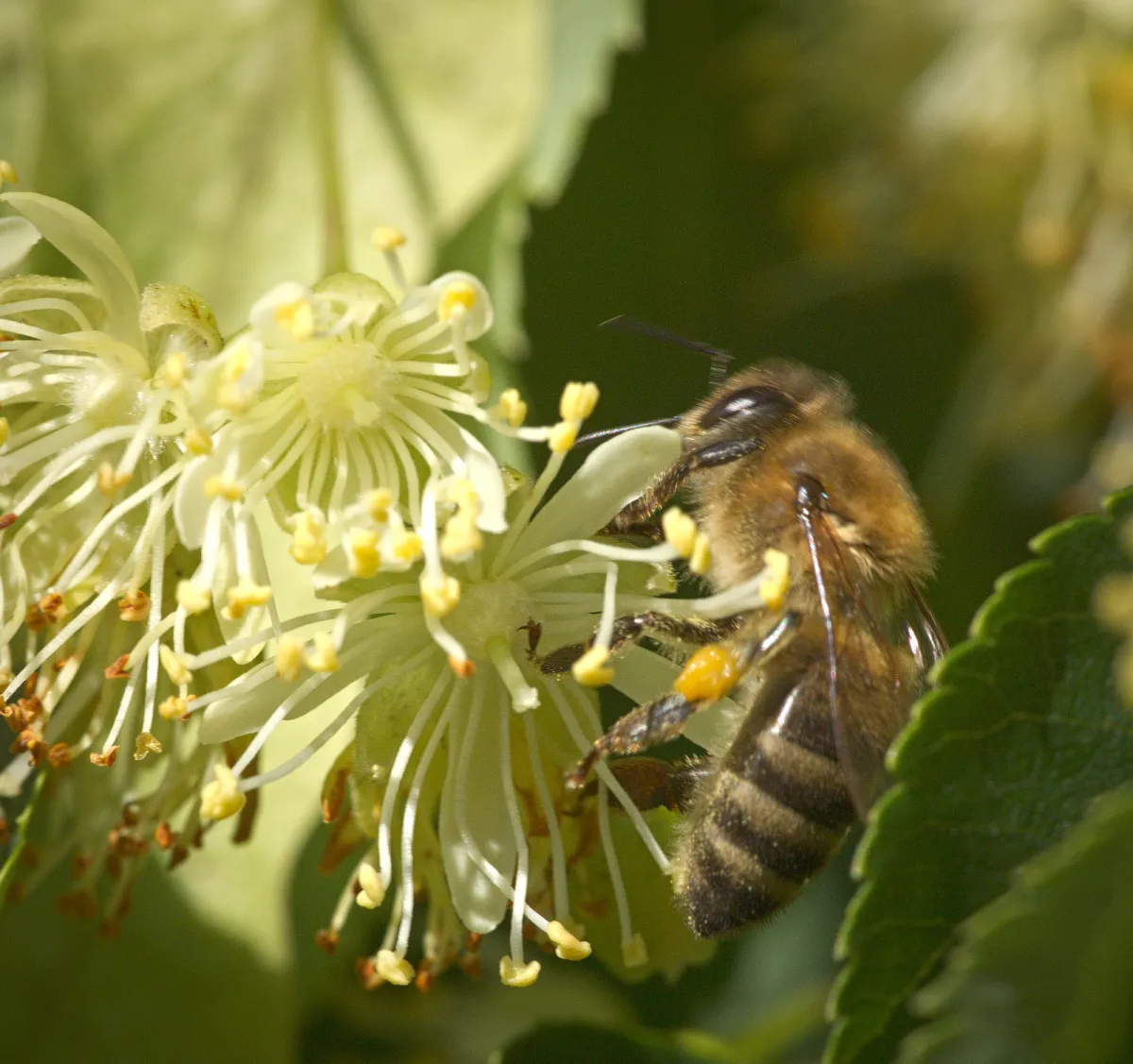
| Linden (Tilia) | flowers with bracts | fever, irritating cough, restlessness | recognised traditional use (EMA) |
| Ginger | fresh root | chills, nausea, throat | limited data, plausible |
| Thyme | aerial parts | cough, throat | recognised traditional use for cough (EMA) |
| Rosehip | fruit | vitamin C, flavour | vitamin C does not prevent colds in the general population |
| Honey (added) | - | cough, throat | best data in children over 1 year |
| Peppermint | leaves | feeling of a clearer nose | cooling, symptomatic effect |
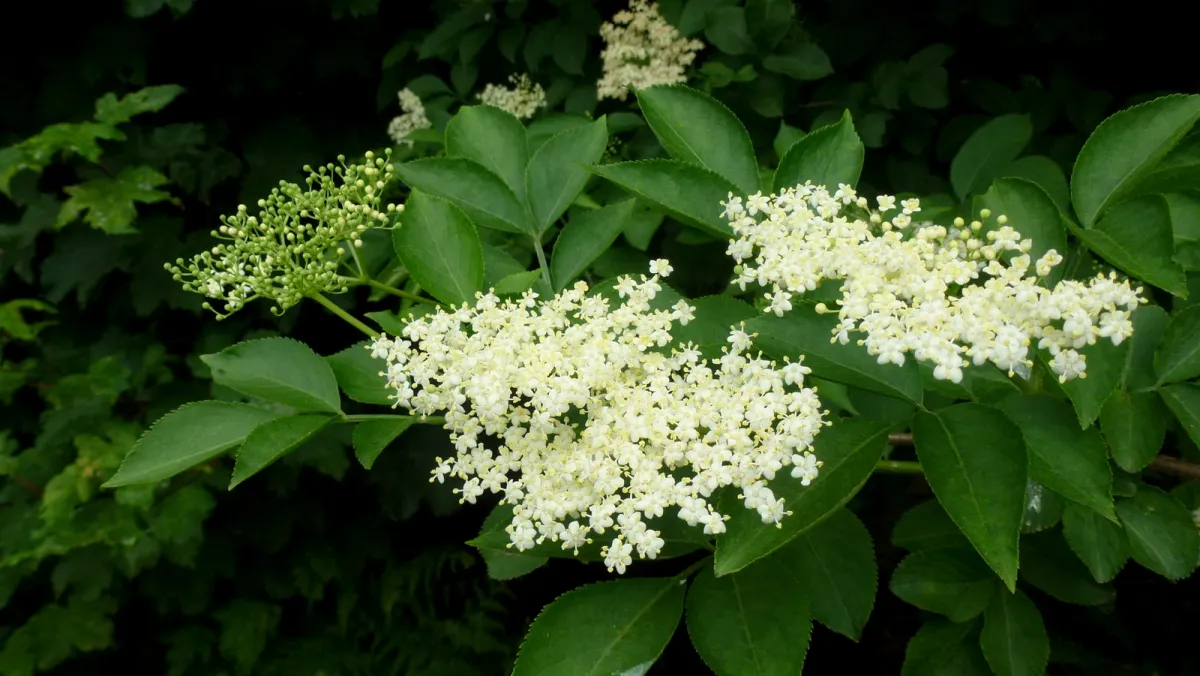 Photo: Jonathan Billinger, CC BY-SA 2.0, via Wikimedia Commons
7 tea recipes for colds and flu
For every recipe: freshly boiled water, cover the cup while it steeps (so volatile oils do not escape with the steam), and add honey once the tea has cooled below roughly 60 °C.
1. Classic elderflower and linden tea (for fever and chills)
- 1 teaspoon dried elderflowers (about 1.5 g)
- 1 teaspoon linden flowers (about 1.5 g)
- 250 ml boiling water
Steep covered for 10 minutes, strain, drink hot and then stay warm under a blanket. Have 2-3 cups a day, ideally in the afternoon and evening, when fever tends to rise. For more on each herb, see the guides to elderflower tea and linden tea.
2. Ginger, lemon and honey (for chills and throat)
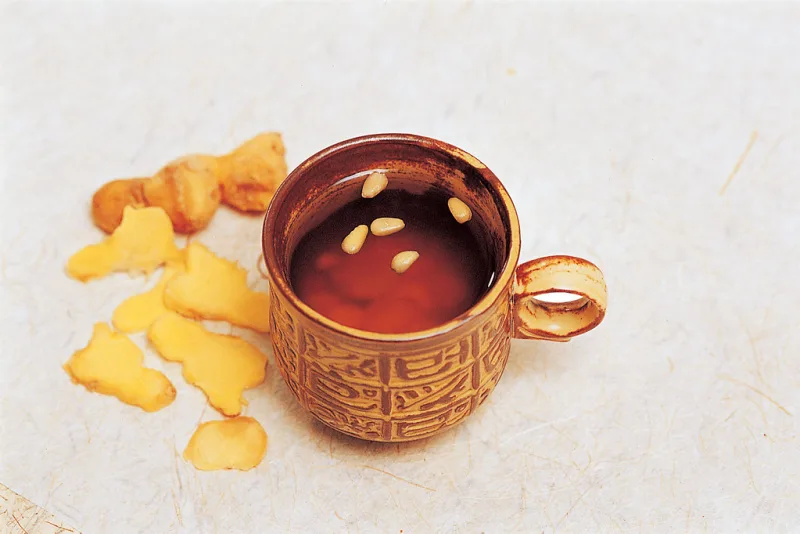
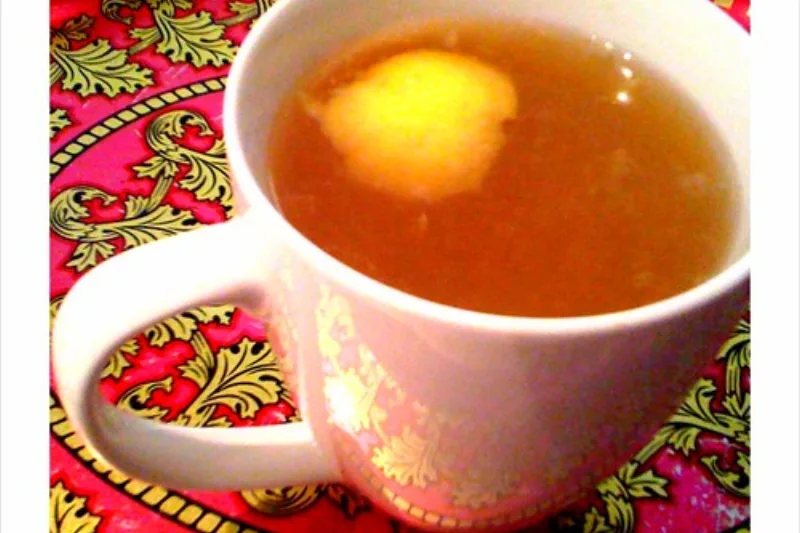
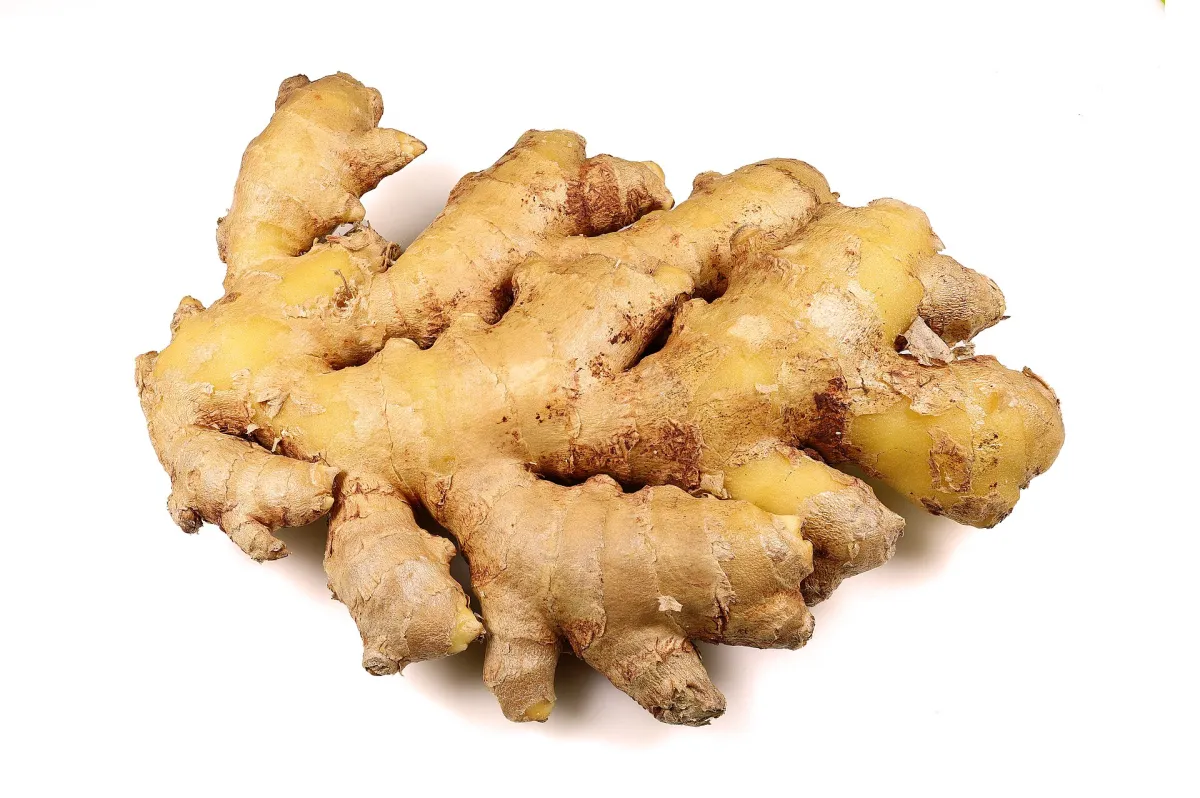
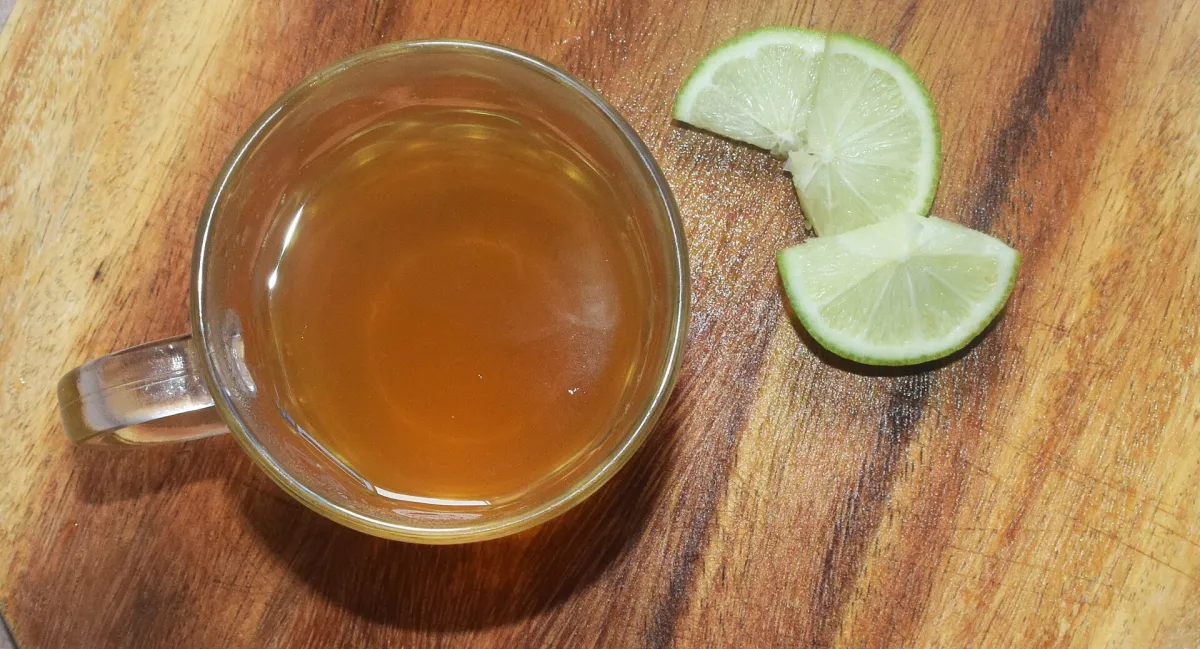
Cut 3-4 thin slices of fresh ginger (about 2 cm of root), simmer them for 5 minutes in 300 ml water, then leave covered for another 5 minutes. Add the juice of half a lemon and a teaspoon of honey. It is the most popular “warming” drink; see also the full article on ginger tea.
3. Thyme and honey (when the cough sets in)
1 teaspoon dried thyme to 250 ml boiling water, 10 minutes covered, then a teaspoon of honey. Thymol and carvacrol in thyme have a mild expectorant and bronchial antispasmodic effect. Especially good in the evening, when a tickly cough keeps you awake.
4. Rosehip with linden (for recovery)
Soak 2 teaspoons of crushed rosehips in 300 ml cold water for 8 hours, then warm gently (long boiling destroys vitamin C) and pour over a teaspoon of linden. Pleasantly tart, and children like it too.
5. Peppermint and elderflower (for a stuffy nose)
1 teaspoon elderflower plus half a teaspoon of peppermint to 250 ml boiling water, 8 minutes. Breathe in the steam before drinking. Do not give it to children under 3: menthol can trigger laryngeal spasm in infants and very young children.
6. The home-made cold blend (3 days)
Mix equal parts elderflower, linden, crushed rosehip and thyme. Use 1 tablespoon of the blend per 300 ml boiling water, 10 minutes covered. Three cups a day, the last one before bed.
7. The version for children over 1 year
Half a teaspoon of linden and half a teaspoon of chamomile to 200 ml water, 7 minutes, served lukewarm with a teaspoon of honey. Total per day: 1-2 small cups. Under 1 year, no honey (risk of infant botulism) and no herbal teas without the paediatrician’s approval.
How many cups a day and for how long
- Adults: 3-5 cups a day for as long as symptoms last (usually 5-7 days). Rotate the recipes rather than drinking large amounts of a single one.
- Children 1-6 years: 1-2 small cups (100-150 ml) of gentle herbs (linden, chamomile, rosehip).
- Children 6-12 years: up to 2-3 cups of 200 ml.
- Older adults, people with heart or kidney failure: watch your total fluid intake and ask your doctor how much you may drink per day.
For hydration, tea adds to water and soups rather than fully replacing them. Pale urine is a good sign you are drinking enough.
What else to do besides tea
- Real rest: sleep plays an active role in the immune response.
- Steam inhalation, plain or with chamomile, 5-10 minutes twice a day.
- Gargle with warm salt water (half a teaspoon of salt in a glass of water) for the throat.
- Saline nasal rinses.
- Warm chicken or vegetable soup, which hydrates and nourishes.
- Home-made cough syrups: see home-made cough syrup recipes.
For an overview of all remedies, not just teas, read the guide to natural remedies for colds and flu. If the cough lingers after the fever is gone, see tea for cough.
Contraindications and interactions
- Allergy to the daisy family (Asteraceae) such as chamomile, calendula or ragweed: avoid blends containing chamomile or calendula.
- Elder: use only dried flowers or cooked berries; raw berries, leaves and bark are toxic.
- Ginger: caution with anticoagulants (warfarin) and before surgery; large doses can cause heartburn.
- Liquorice (found in many commercial blends): raises blood pressure and lowers potassium; avoid it if you have hypertension, heart disease or are pregnant.
- Peppermint: not for children under 3; may worsen reflux.
- Pregnancy: linden, chamomile and ginger in usual amounts are generally considered acceptable, but check the list in our guide to teas that are safe in pregnancy.
- Cold medicines: tea can be taken alongside paracetamol or ibuprofen, but do not add salicylate herbs (willow bark) if you already take aspirin or anti-inflammatories.
When to see a doctor
Tea is for an ordinary cold. Seek medical help if any of the following appear:
- fever above 39.5 °C (103 °F) that does not respond to fever reducers, or fever lasting more than 3 days;
- laboured or wheezy breathing, chest pain when breathing in;
- bluish lips or nails;
- confusion, unusual drowsiness, stiff neck;
- improvement followed by sudden worsening with fever again (possible secondary infection);
- in children: refusing fluids, dry nappies for more than 6-8 hours, crying without tears, any fever in a baby under 3 months;
- any flu symptoms in pregnant women, adults over 65 or people with chronic heart, lung, diabetes or immune conditions.
Common mistakes
- Scalding tea on an inflamed throat. Very hot liquids (above 65 °C) irritate the lining. Let the cup cool a little.
- Honey stirred into boiling water. It does not become toxic, but it loses aroma and some enzymes. Add it at the end.
- “If one is good, five are better.” Blends of ten herbs are not more effective; they only increase the risk of allergy and interactions.
- Liquorice teas sipped all day by people with high blood pressure.
- Dropping treatment when the doctor has prescribed an antiviral or antibiotic. Tea goes alongside, not instead.
- Self-prescribed “preventive” antibiotics. Colds and flu are viral; antibiotics do not help and disturb your gut flora.
Conclusion
A good tea for colds and flu is not a magic potion but a well-targeted helper: elderflower and linden for fever and chills, thyme and honey for cough, ginger and lemon for the shivers and an irritated throat. Its real value is that it hydrates, soothes and helps you get through a few days of illness more easily. Combine it with rest, warm soup and saline rinses, respect the contraindications and watch closely for red flags. For prevention, our guide to boosting winter immunity shows what genuinely works.
Frequently asked questions
What is the best tea for a cold? An infusion of elderflower and linden is the classic choice for fever and chills, while thyme tea with honey is the best fit when coughing dominates. Ginger with lemon is good for feeling cold and for the throat.
Does elderflower tea bring down a fever? Elderflowers are diaphoretic: they help you sweat, which can contribute to lowering the temperature during the chills phase. They do not replace a fever reducer when the fever is high.
Can I drink tea with lemon and honey when I have a fever? Yes. It is a safe combination for most adults and children over 1 year and helps with hydration and a sore throat.
Does the vitamin C in rosehip tea prevent colds? Cochrane reviews show that regular vitamin C does not prevent colds in the general population, though it may slightly shorten symptoms. Rosehip remains a pleasant extra, not a shield.
How many days can I drink tea for a cold? For as long as symptoms last, usually 5-10 days. If you do not feel better after 10 days or symptoms get worse, see a doctor.
What tea can I give a child with a cold? For children over 1 year: linden, chamomile or rosehip, in small amounts, with a teaspoon of honey. Avoid peppermint under age 3 and do not give herbal teas to babies without the paediatrician’s approval.
Does tea help with flu too, not just colds? It helps with comfort and hydration in flu as well, but flu can have serious complications. At-risk people should contact a doctor within 48 hours, when antivirals work best.
Is ginger tea good for a sore throat? Yes, a warm ginger tea with honey can soothe the throat and the feeling of cold. In large amounts it can irritate the stomach, so 2-3 cups a day is enough.
Sources and further reading
- European Medicines Agency (EMA/HMPC): community herbal monographs on Sambuci flos (elderflower), Tiliae flos (linden flower) and Thymi herba (thyme).
- Cochrane Review: “Vitamin C for preventing and treating the common cold” (Hemilä and Chalker).
- Cochrane Review: “Honey for acute cough in children” (Abuelgasim et al.).
- NCCIH (National Center for Complementary and Integrative Health): “Common Cold” and “Flu and Colds: In Depth”.
- World Health Organization: fact sheet on seasonal influenza.
This article is for information only and does not replace medical advice. For severe or persistent symptoms, see a doctor.