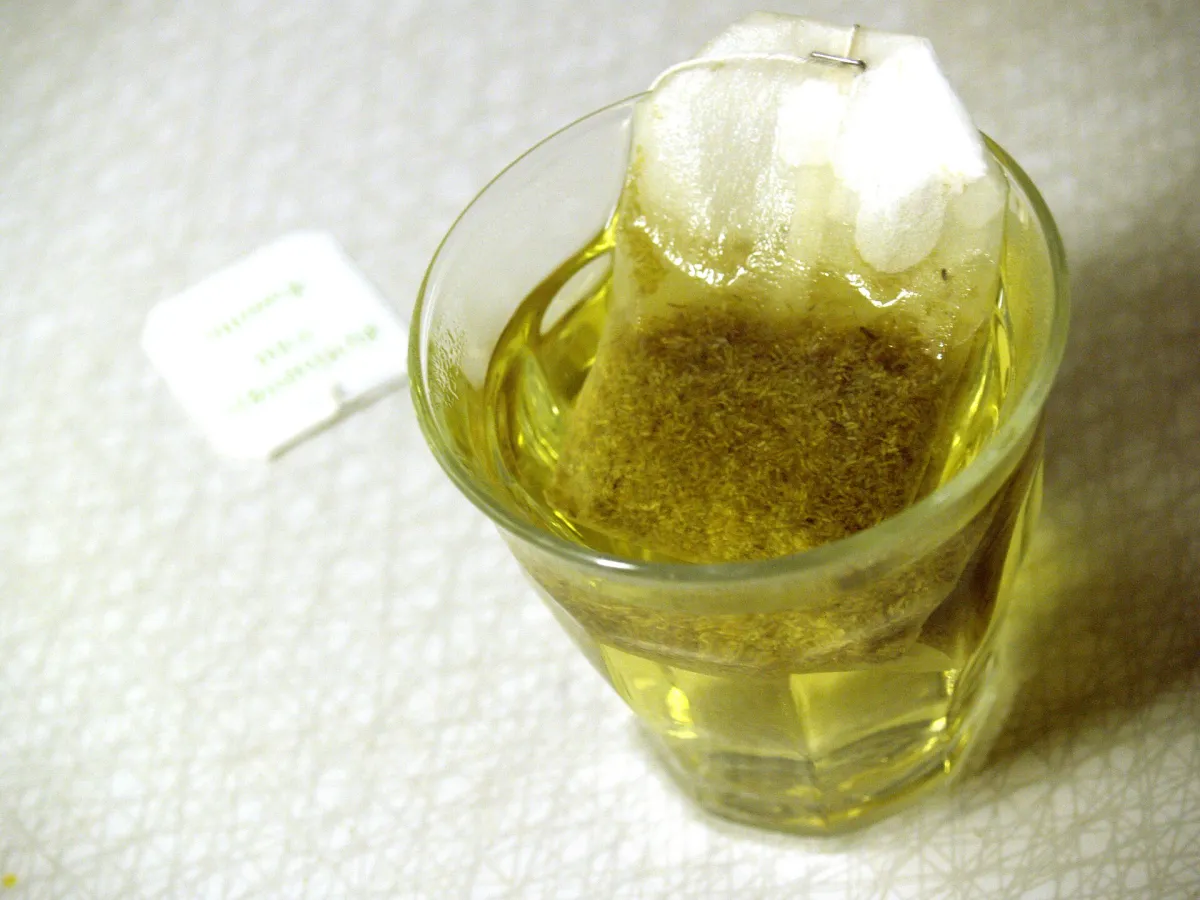
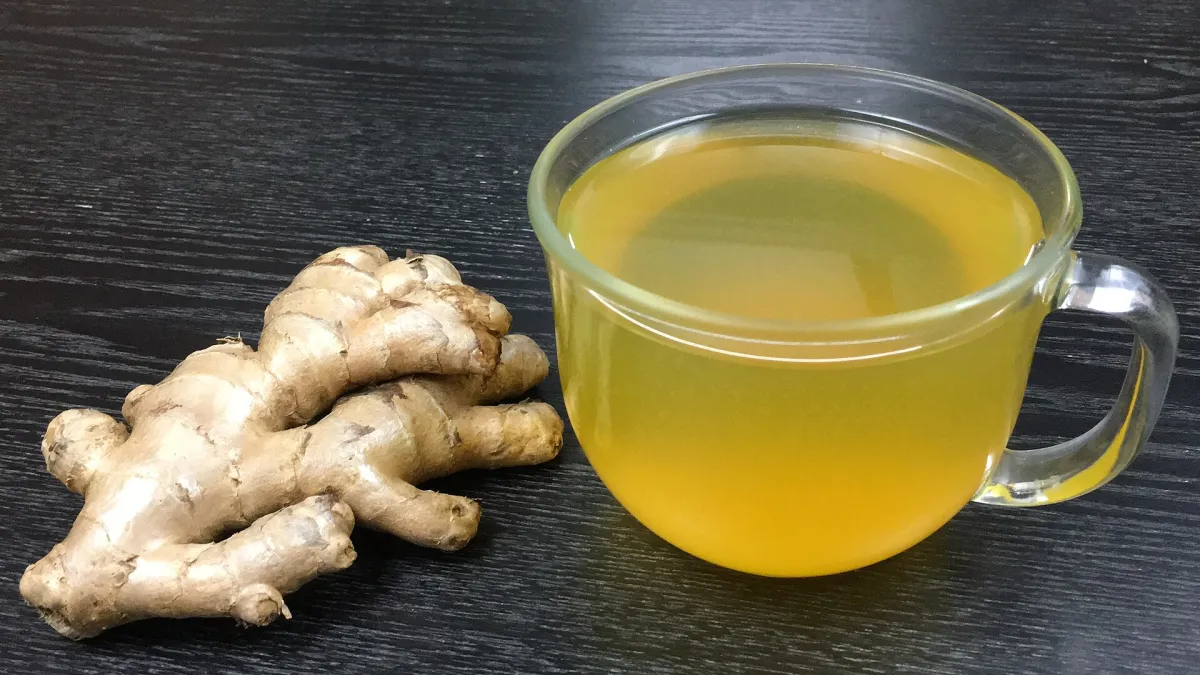
 Photo: Trupti.gauns, CC BY-SA 4.0, via Wikimedia Commons
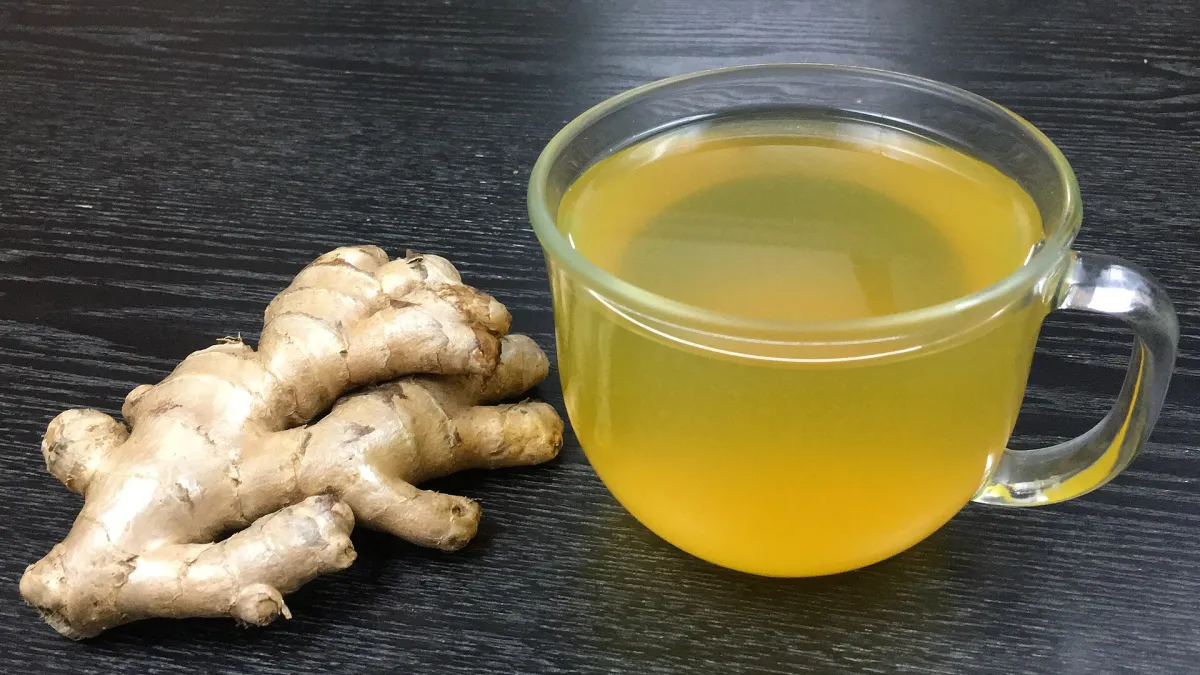
The best tea for period cramps is ginger tea, started 1-2 days before your period and continued through the first 3 days: in several small trials, ginger reduced pain about as well as some common anti-inflammatory painkillers. Chamomile relaxes cramps and calms, fennel has promising data, and yarrow is the traditional “women’s herb” in Romanian herbal practice. Tea helps with ordinary period pain, but pain that keeps you in bed, worsens year after year or comes with very heavy bleeding needs to be investigated.
Key takeaways
- Ginger has the best data: it reduces pain when taken early, not only once pain has started.
- Chamomile and lemon balm relax the uterine muscle and help with sleep and irritability.
- Fennel reduces cramps in a few small studies; watch the amount and avoid it in pregnancy.
- Heat (a hot water bottle on the abdomen) adds a real effect; warm tea plus local heat work well together.
- Warning signs: pain that does not respond to anti-inflammatories, bleeding that soaks a pad every hour, pain during sex, new period pain after age 25.
Why periods hurt
Primary dysmenorrhoea, the most common type, does not hide a disease. Pain occurs because the uterus produces prostaglandins, substances that trigger strong contractions and briefly reduce blood flow to the uterine muscle. The more prostaglandins, the stronger the cramps, sometimes with nausea, diarrhoea, back pain and headache.
Secondary dysmenorrhoea is pain caused by a condition: endometriosis, adenomyosis, fibroids or pelvic infection. It tends to start later, worsen over the years and respond poorly to usual treatments. For an overview, read our guide to menstrual cramps.
How teas help
- Ginger appears to reduce prostaglandin production, the same mechanism as anti-inflammatories, but gentler.
- Chamomile contains apigenin and other compounds with antispasmodic and mildly calming effects.
- Fennel has an antispasmodic effect on smooth muscle.
- Yarrow is traditionally used for cramps and irregular periods; the European Medicines Agency recognises its traditional use for minor menstrual cramps.
- The warmth of the drink relaxes muscles and improves local circulation.
Comparing teas for cramps
| Tea | Mechanism | Evidence | When to drink |
|---|---|---|---|
| Ginger | anti-prostaglandin | several small clinical trials, good results | 1-2 days before and first 3 days |
| Chamomile | antispasmodic, calming | small studies, wide traditional use | from the first signs |
| Fennel | antispasmodic | a few small studies in teenagers and young women | first 2-3 days |
| Yarrow | antispasmodic, tonic | traditional use (EMA) | first days |
| Cinnamon | mildly anti-inflammatory | small studies | first days |
| Lemon balm, linden | calming | traditional use | evening |
| Raspberry leaf | “uterine tonic” | weak data for pain | not in pregnancy without medical advice |
More on the main herbs in our guides to ginger tea, chamomile tea and yarrow tea.
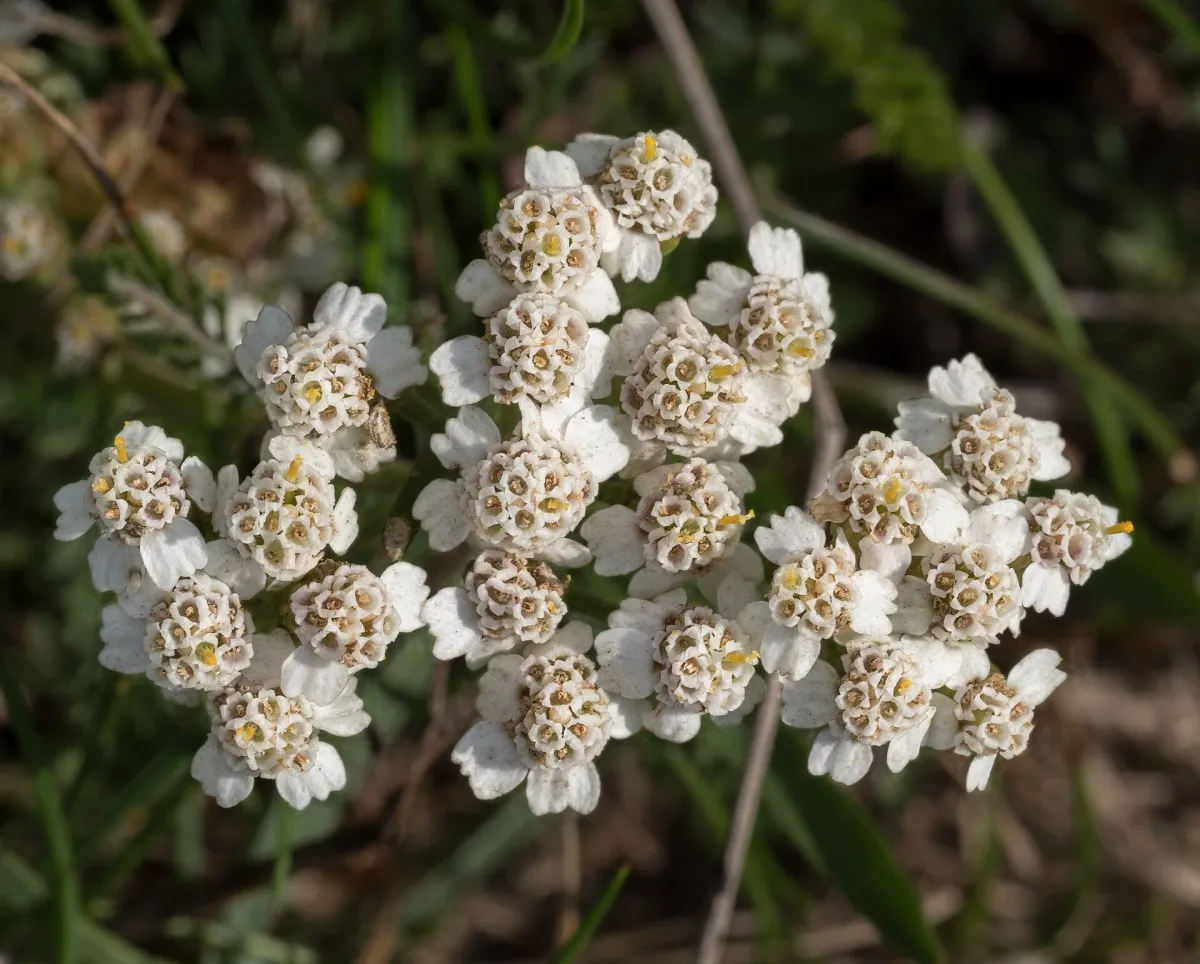 Photo: Rhododendrites, CC BY-SA 4.0, via Wikimedia Commons
Tea recipes for painful periods
1. “Get-ready” ginger tea
- 2-3 cm fresh ginger, thinly sliced (about 5-8 g)
- 300 ml water
Simmer gently for 10 minutes, covered, then leave for another 5 minutes. Drink 2-3 cups a day, starting 1-2 days before your expected period and continuing until day three. Trials used around 750-2,000 mg of ginger powder a day in divided doses; 2-3 cups of a strong tea come close to that range.
2. Chamomile with fennel (for cramps and bloating)
1 tablespoon chamomile flowers and 1 teaspoon crushed fennel seeds to 300 ml boiling water, 10 minutes covered. 2-3 cups a day in the first days. It also helps with the bloating that often comes with periods.
3. The traditional “women’s days” blend
Equal parts yarrow, chamomile and lemon balm. 1 tablespoon to 300 ml boiling water, 10 minutes. Yarrow tastes slightly bitter; lemon balm softens it. 2 cups a day.
4. Ginger with cinnamon (the warming version)
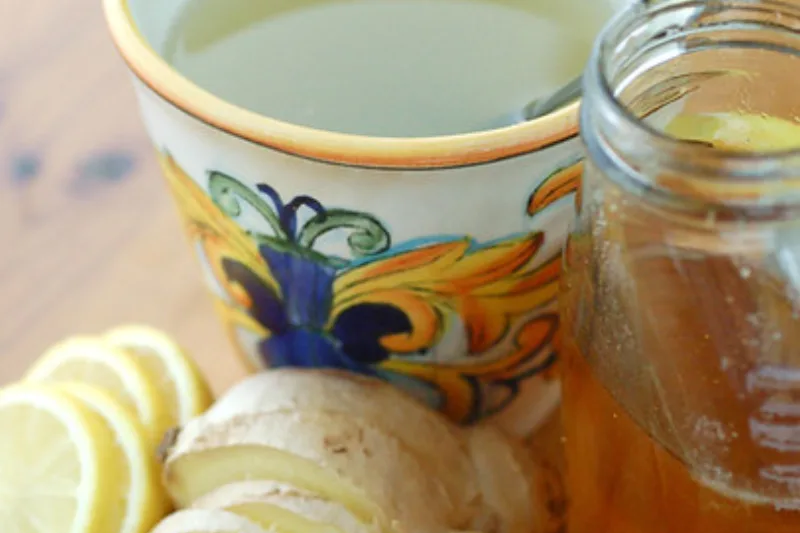
1 cinnamon stick and 2 cm ginger, simmered for 10 minutes in 350 ml water. Add a teaspoon of honey if you like. Good if you feel cold and have strong cramps.
5. The evening tea
Lemon balm and linden, a teaspoon of each, to 250 ml boiling water, 10 minutes. For sleep and the irritability of the days before a period. See also our guide to PMS.
Dosage and duration
- Adults: 2-3 cups a day of your chosen tea, from 1-2 days before your period until day three. There is no need to drink it throughout the cycle.
- Teenagers (over 12): 1-2 cups a day of gentle teas (chamomile, lemon balm, weak ginger, a small amount of fennel).
- One tea at a time: try a single tea for 2-3 cycles and rate your pain on a scale of 0 to 10, so you can see whether it really helps.
- Know when to switch: if a tea makes no difference after 3 cycles, change it or talk to your doctor.
What else helps, with evidence
- Local heat: a hot water bottle or heat patch on the lower abdomen works about as well as mild painkillers in some studies.
- Exercise: regular aerobic exercise reduces pain intensity over time.
- Anti-inflammatories (ibuprofen, naproxen) taken at the start of pain remain first-line treatment; tea can be used alongside.
- Sleep and less caffeine in the days before your period.
- Magnesium from food (seeds, nuts, pulses, whole grains).
Contraindications and precautions
- Pregnancy or possible pregnancy: avoid yarrow, raspberry leaf, large amounts of fennel and any tea marketed “to bring on a period”. If your period is late, take a pregnancy test first.
- Daisy family allergy: chamomile and yarrow may cause reactions.
- Ginger with anticoagulants (warfarin, antiplatelet drugs) or bleeding disorders: take care, especially with heavy periods.
- Heavy periods: high-dose ginger and cinnamon may theoretically increase bleeding in some women; if you notice this, stop.
- Fennel: avoid large long-term amounts if you have oestrogen-sensitive conditions.
- Reflux or gastritis: strong ginger can cause heartburn.
When to see a doctor
- pain does not ease even with anti-inflammatories taken correctly;
- you miss school or work every month because of pain;
- period pain appeared or worsened after age 25;
- you have pain during sex, urination or bowel movements during your period;
- bleeding soaks a pad or tampon every hour for several hours, or you pass large clots;
- you bleed between periods or after sex;
- you have fever and foul-smelling discharge;
- you have sudden, severe pain on one side, especially if your period is late (emergency: possible ectopic pregnancy).
Endometriosis is often diagnosed years late precisely because severe period pain is considered “normal”. It is not.
Common mistakes
- Starting tea only when pain peaks. Ginger works better preventively.
- Teas “to bring on a period” drunk without a pregnancy test.
- Too many herbs in one blend.
- Avoiding anti-inflammatories when pain is severe, out of a wish to be “natural”.
- Ignoring pain that worsens year after year.
- Lots of caffeine and little sleep in the days before a period.
Conclusion
A well-chosen tea for period cramps, ginger started early, chamomile with fennel for cramps and bloating, yarrow with lemon balm for the hard days, can make the first days of your cycle much easier. It works even better with local heat, exercise and, when needed, an anti-inflammatory. But intense pain that turns your life upside down is not something to just put up with: it deserves a gynaecological check-up. If your cycle is also irregular, read our guide to irregular periods.
Frequently asked questions
Which tea helps period cramps fastest? Ginger tea has the best data, and chamomile with fennel quickly relaxes cramps. Combined with a hot water bottle on the abdomen, the effect is usually felt within 30-60 minutes.
When should I start ginger tea for my period? 1-2 days before your expected period and until day three. Taken preventively, ginger reduces prostaglandin production more effectively.
Does chamomile tea help with period pain? Yes, it has antispasmodic and calming effects. It is a gentle choice that also suits teenagers.
Can I drink yarrow tea during my period? Yes, if you are not pregnant and not allergic to the daisy family. It is traditionally used for minor cramps.
Does ginger tea increase menstrual bleeding? For most women, not noticeably. If you have heavy periods or take anticoagulants, use small amounts and talk to your doctor.
Can tea replace ibuprofen? For mild pain, sometimes. For moderate or severe pain, anti-inflammatories remain more effective; tea can be used alongside.
Which tea is good for period bloating? Fennel and chamomile, with a little peppermint if you do not have reflux.
Sources and further reading
- European Medicines Agency (EMA/HMPC): community herbal monographs on Millefolii herba (yarrow), Matricariae flos (chamomile) and Foeniculi amari fructus (fennel).
- Cochrane Review: “Dietary supplements for dysmenorrhoea” (Pattanittum et al.), including data on ginger and fennel.
- ACOG (American College of Obstetricians and Gynecologists): patient guide “Dysmenorrhea: Painful Periods”.
- NCCIH: “Ginger” and “Chamomile” fact sheets.
This article is for information only and does not replace a gynaecological consultation. For severe pain or heavy bleeding, see a doctor.