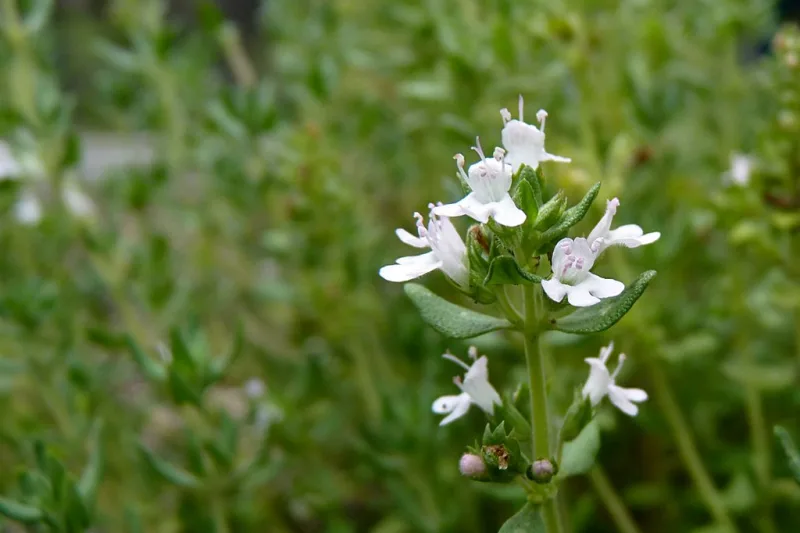

Thyme Tea: Benefits for Cough, How to Prepare It and Side Effects
IMPORTANT: Thyme tea is generally safe when consumed in the ordinary amounts found in an infusion. However, thyme contains powerful volatile oils (especially thymol and carvacrol), which is why certain groups of people should be cautious. Pregnant women should avoid large amounts or thyme essential oil, since folk tradition considered it a plant that stimulates uterine contractions. People allergic to plants in the Lamiaceae family (mint, oregano, basil, sage) may also react to thyme. Thyme may also have mild effects on blood clotting and thyroid function, so people taking anticoagulants, those with thyroid conditions, or anyone on long-term medication should consult a doctor before using it regularly. Thyme tea is not a substitute for medical treatment: if a cough lasts more than a week, is accompanied by high fever, breathing difficulties, or blood in the sputum, see a doctor.
A Sprig of Thyme on the Kitchen Windowsill
Grandma Veronica, from a village in the Olt Valley, always kept a bundle of dried thyme hanging upside down beside the kitchen window. She used to say that “thyme catches the light and keeps it inside,” and whenever one of her grandchildren started coughing in autumn, her first move was not toward the cupboard full of syrups but toward that dusty bundle. She would break off a few sprigs, rub them between her palms until the warm, slightly pungent smell filled the room, then steep them in a large mug of hot water. She would add a teaspoon of honey from the neighbor’s hives and hand us the tea while it was still steaming, with the firm instruction to drink it slowly, “so we could feel the steam on our throat.”
Many years later I understood that Grandma’s gesture was not mere superstition. Thyme is one of the most studied traditional medicinal plants, and its reputation as an ally of the respiratory tract is recognized even by modern pharmacopoeias. The warm steam she urged us to inhale carried with it the very volatile compounds that make thyme such a valued remedy. In this article we will explore in detail what thyme is, why its tea helps with coughs, how to prepare it correctly, and what you need to know to use it safely.
What Thyme Is and Where It Comes From
Thyme (Thymus vulgaris for cultivated thyme and Thymus serpyllum for wild thyme or creeping thyme) is an aromatic perennial plant in the Lamiaceae family, the same as mint, oregano, and sage. Native to the Mediterranean region, thyme has spread throughout Europe, having been cultivated for centuries both for cooking and for its therapeutic properties. In Romania it grows both cultivated in gardens and wild on sunny hillsides, meadows, and rocky terrain, where wild thyme forms genuine fragrant carpets.
The plant has woody stems at the base, small elongated leaves, and pinkish-violet flowers that attract bees. The entire aerial part is aromatic, but the concentration of volatile oils peaks just before and during flowering, which is why this is the ideal time to harvest it. The Romans used thyme to purify the air and as a symbol of courage, and in the Middle Ages it was placed under pillows for a peaceful sleep and burned to “ward off plagues.” This long tradition is no accident: over thousands of years, people empirically observed the plant’s real effects.
Thyme tea is simply the infusion obtained from the dried (or fresh) leaves and flowers of the plant. It is a beverage with a warm, slightly spicy, balsamic aroma, very pleasant especially when sweetened with honey and brightened with lemon.
Composition and Active Compounds
Thyme’s therapeutic power comes from a combination of bioactive compounds, the most important of which are:
- Thymol — thyme’s main volatile oil, a phenol with well-recognized antiseptic, antibacterial, and antifungal properties. Thymol has historically been used as a disinfectant and is still found today in many mouthwashes and oral hygiene products.
- Carvacrol — another related phenol with antimicrobial and anti-inflammatory action, contributing to the characteristic aroma.
- Flavonoids (apigenin, luteolin, naringenin) — compounds with antioxidant and anti-inflammatory roles that help protect cells against oxidative stress.
- Phenolic acids such as rosmarinic acid and caffeic acid — powerful antioxidants.
- Tannins — substances with a mild astringent effect, useful for soothing irritation.
- Saponins — which play a role in the expectorant effect, helping to thin and clear secretions.
This synergy of substances explains why thyme does not act in a single way but on several fronts at once: it soothes, disinfects, thins, and relaxes.
Health Benefits of Thyme Tea
Soothing Cough and Supporting the Airways
The best-known benefit of thyme tea, and the reason Grandma Veronica preferred it, is its effect on coughs. Thyme has a dual action prized in respiratory conditions. On the one hand, it is an expectorant: it helps thin the thick mucus in the bronchi and clear it through a productive cough. On the other hand, it has a bronchodilating and mildly antispasmodic effect, meaning it relaxes the airway muscles and can calm bouts of dry, irritating cough, including spasmodic or whooping-type coughs.
Studies suggest that thyme extracts, especially in combination with primrose (Primula), may ease the symptoms of acute bronchitis and cough associated with colds. This is precisely why thyme is a frequent ingredient in pharmacy cough syrups. Thyme tea offers a gentle, natural version of these preparations, suitable for seasonal coughs, an irritated throat, and a sense of chest congestion.
Antibacterial and Antiseptic Action
Thanks to thymol and carvacrol, thyme has antimicrobial properties well documented by the phytotherapeutic tradition. Gargling with cooled thyme tea is a popular remedy for sore throats, mild tonsillitis, and mouth sores, precisely because these volatile oils can inhibit the growth of certain bacteria and fungi. In oral hygiene, thyme has been used since ancient times to freshen breath and soothe inflamed gums.
Support for Digestion
Like many aromatic plants in its family, thyme is an excellent carminative — that is, it helps reduce bloating and intestinal gas. A cup of thyme tea after a heavy meal can stimulate the secretion of digestive juices, soothe cramps, and ease a feeling of stomach heaviness. Romanian folk tradition also recommended thyme for poor appetite and for combating intestinal fermentation.
Antioxidant Effect and Immune Support
The flavonoids and phenolic acids in thyme act as antioxidants, helping to neutralize free radicals. Consumed regularly during the cold season, thyme tea is valued as general support for immunity, especially when combined with honey, lemon, and other plants. It is not a “miracle cure” against viral infections, but it is part of the gentle arsenal that helps the body get through colds more easily.
Calming and Relaxing
Thyme’s warm aroma and its content of volatile compounds also have a mild relaxing effect. A cup of thyme tea in the evening, perhaps combined with a little linden or chamomile, can help you unwind after a tiring day and prepare for sleep — exactly as thyme was placed under the pillow in the Middle Ages.
Traditional Uses of Thyme
Besides tea, thyme has had numerous uses in folk medicine:
- Inhalations: the steam from a hot thyme infusion was inhaled, with a towel over the head, to decongest the nose and sinuses.
- Gargle: cooled tea for sore throats and inflammations of the mouth.
- Aromatic baths: a concentrated infusion added to bathwater for muscle relaxation and a tonic effect.
- Poultices: boiled thyme applied warm to the chest to aid breathing during colds.
- Digestive seasoning: sprinkled on fatty dishes (beans, pork, soups), precisely to ease digestion.
How to Prepare Thyme Tea — Step by Step
Correct preparation is essential to preserve the precious volatile oils, which evaporate easily during prolonged boiling.
The Classic Recipe (Infusion)
You will need:
- 1 teaspoon (about 1–2 g) of dried thyme OR 1 tablespoon of fresh thyme
- 250 ml of hot water (not violently boiling)
- optional: 1 teaspoon of honey and a few drops of lemon juice
Steps:
- Place the thyme in a mug or infuser.
- Boil the water and let it “settle” for 30 seconds after it comes to a boil (the ideal temperature is around 90–95 °C).
- Pour the water over the thyme.
- Cover the mug with a small saucer — this is the most important step, so that the volatile oils are not lost with the steam.
- Let it steep for 7–10 minutes.
- Strain.
- Add honey only after the tea has cooled a little (below 40 °C), to preserve the honey’s enzymes and properties. Squeeze in a little lemon as well.
The Decoction (For a Stronger Effect)
For a more persistent cough, some prefer a light decoction: place the thyme in cold water, bring it to a boil, and let it simmer very gently, covered, for 3–5 minutes, then leave it to steep for another 5 minutes. This method extracts more compounds but loses some of the fine aroma. Use it occasionally, for a therapeutic effect.
Thyme Inhalation
Place 1–2 tablespoons of thyme in a bowl of hot water, lean over it at a safe distance (to avoid scalding), cover your head with a towel, and breathe in the steam for 5–10 minutes. Excellent for a stuffy nose and a congested chest feeling.
Combinations with Other Plants
Thyme tea pairs beautifully with other plants, depending on your goal:
- Thyme + honey + lemon — the classic combination for cough and an irritated throat.
- Thyme + primrose — a recognized expectorant synergy for bronchitis.
- Thyme + plantain — for a dry, irritating cough.
- Thyme + linden or chamomile — for a calming evening effect.
- Thyme + ginger — for a warming, tonic tea on cold days.
- Thyme + sage — for gargling with sore throats.
When and How Much to Drink
To support the airways during a cold, you can drink 2–3 cups a day, preferably between meals, for a few days up to a week. For digestion, one cup after the main meal is enough. For relaxation, one cup in the evening.
Chronic consumption in large doses over very long periods is not recommended. As a general rule in phytotherapy, after 2–3 weeks of regular use it is wise to take a break. For children, thyme tea should be given more diluted and in small amounts, only from over one year of age and after consulting the pediatrician for the youngest ones.
Lifestyle: How to Bring Thyme into Your Routine
Thyme should not be just a crisis remedy, pulled from the cupboard when a cough appears. It can become a quiet daily ally. Use it as a seasoning in the kitchen — on roasted vegetables, in soups, in marinades — to benefit from its antioxidants and ease your digestion. Keep a sprig of fresh or dried thyme within reach, like Grandma Veronica, so you remember to brew a cup at the first signs of a cold. In the cold season, a cup of thyme tea with honey, drunk in the evening, can become a small soothing ritual.
If you have a garden or even just a balcony, thyme is a rewarding plant: it tolerates drought, loves the sun, and dries easily. Harvest the sprigs on a sunny morning, before noon, tie them into small bundles, and hang them upside down in an airy, shaded spot. After 1–2 weeks you will have your own dried thyme, far more aromatic than the store-bought kind.
Practical Tips and Common Mistakes
Mistake no. 1: Boiling thyme for a long time. Many people put thyme directly into boiling water and let it simmer for whole minutes. The volatile oils — exactly the compounds that help with cough — almost completely evaporate this way. Use the covered infusion method instead.
Mistake no. 2: Not covering the mug while steeping. The lid (or a saucer) traps the steam and returns the volatile compounds to the liquid. Without it, you lose a good part of the effectiveness.
Mistake no. 3: Adding honey to boiling tea. High temperatures destroy the enzymes and some of honey’s properties. Wait for the tea to cool a little.
Mistake no. 4: Using old, aroma-less thyme. Dried herbs gradually lose their volatile oils. If your thyme barely smells of anything, it will have no notable therapeutic effect either. Buy small amounts and store it in airtight containers, away from light.
Mistake no. 5: Overconsumption, on the idea that “more is better.” Thyme contains powerful compounds. Large doses over the long term bring no extra benefit and may irritate the stomach or interfere with certain functions. Stick to the recommended amounts.
Mistake no. 6: Ignoring contraindications in pregnancy. Pregnant women should avoid medicinal amounts of thyme and the essential oil, limiting themselves at most to using it as a simple food seasoning, after speaking with their doctor.
Conclusion
Thyme tea is a perfect example of a traditional remedy that has stood the test of time precisely because it works. Its combination of volatile oils, flavonoids, and phenolic acids gives it expectorant, antiseptic, digestive, and relaxing properties, making it a valuable support especially for cough and mild respiratory conditions. Prepared correctly — by covered infusion, without prolonged boiling — and consumed in moderation, it can become a gentle and pleasant ally in the cold season. As Grandma Veronica taught us, sometimes the best remedies are the simple ones, kept within reach, hanging beside the kitchen window. Use it wisely, respect the contraindications, and remember that when symptoms persist or worsen, tea is no substitute for a doctor’s advice.
Frequently Asked Questions
Does thyme tea really help with cough? Yes. Thyme has an expectorant effect (it thins mucus) and a mild antispasmodic one (it calms a dry, irritating cough). That is why it is a frequent ingredient in cough syrups. The tea offers a gentle, natural version, suitable for seasonal coughs and an irritated throat.
How many cups of thyme tea can I drink per day? For a cold, 2–3 cups a day for a few days up to a week are generally considered safe for a healthy adult. For maintenance or digestion, one cup a day is enough.
Can I give thyme tea to children? With caution. For young children (under 1 year) it is not recommended. Above that age it is given diluted, in small amounts, and ideally after consulting the pediatrician. Honey should not be given to babies under 1 year.
Is thyme tea safe during pregnancy? Thyme used as a simple food seasoning is generally accepted, but medicinal amounts and thyme essential oil should be avoided in pregnancy, since tradition associated it with uterine stimulation. Consult your doctor.
Are cultivated thyme and wild thyme the same? They are related and have similar properties. Cultivated thyme (Thymus vulgaris) has a higher concentration of thymol and a more intense aroma, while wild thyme (Thymus serpyllum) is more delicate. Both can be used for tea.
How do I store thyme so it keeps its properties? Dried, in airtight containers, away from light, heat, and moisture. Check the aroma periodically: if it has disappeared, the plant has lost its effectiveness and it is time to replace it.
Can I use fresh thyme instead of dried? Yes. Use about one tablespoon of fresh thyme instead of one teaspoon of dried thyme, since the fresh plant contains more water and has a lower concentration of active compounds per gram.
Does thyme tea interact with medications? It may have mild effects on clotting and thyroid function. If you take anticoagulants, have thyroid problems, or are on long-term treatment, consult your doctor before using it regularly.