
Valerian Tea: Benefits, How to Prepare and Side Effects
IMPORTANT: Valerian tea has a sedative effect and should not be consumed before driving or operating machinery. It must not be combined with sleeping pills, sedatives, anti-anxiety medication, antidepressants, or alcohol, as it can dangerously intensify their effects. It is not recommended during pregnancy and breastfeeding and should not be given to children under 3 without medical advice. People with liver conditions should be cautious. If you are on any medication, or if your insomnia lasts more than a few weeks, consult your doctor before using this tea regularly.
I can still remember the strong, earthy smell rising from the little pot on my grandmother Veta’s stove. As a child, I did not love that smell at all — it carried something of a damp root just pulled from the garden. But Grandma had an evening ritual, especially during the long winter nights when her thoughts would not let her sleep: she would put a teaspoon of chopped root to steep, leave it covered, and sip it slowly while sitting on the chair by the stove. “This is the herb that tames the nerves,” she would say. “It doesn’t knock you out by force; it calms you just enough to let sleep come on its own.”
Many years later, I understood how precise her observation was. Aunt Veta had never read a single book on herbal medicine, but through experience she had grasped the essence of valerian: it is not a brutal sleeping drug, but a plant that soothes inner agitation and prepares the body for rest. In the villages of old, valerian was the go-to remedy for those “with a restless heart” and for women overwhelmed by worries who could no longer sleep.
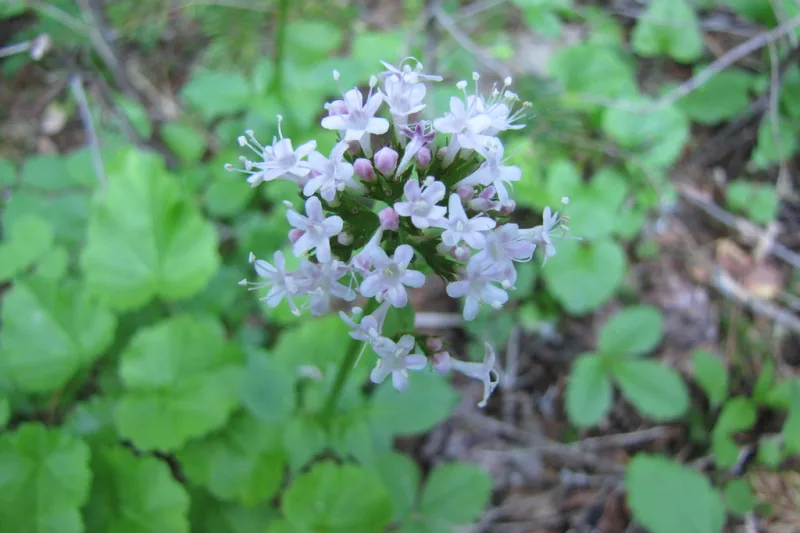
Valerian tea is made from the root of the plant Valeriana officinalis, a perennial species that grows wild in damp meadows, along riverbanks, and at the edges of forests throughout Europe. Although the aerial part bears delicate, fragrant white or pink flowers, the truly precious part is the root, harvested in autumn when the plant has concentrated its active compounds in it. That root, dried and chopped, gives the tea its characteristic smell and the calming effect for which it has been treasured for centuries.
Table of Contents
- What valerian is and where it comes from
- Composition and active compounds
- The benefits of valerian tea
- How to prepare valerian tea correctly
- When and how much to drink
- Combinations with other calming herbs
- The lifestyle that supports sleep
- Practical tips and common mistakes
- Precautions and contraindications
- Conclusion
- Frequently asked questions
What valerian is and where it comes from
Valerian (Valeriana officinalis) is one of the oldest medicinal plants used by humans to calm the nervous system. Its name is thought to come from the Latin valere, “to be healthy, to be strong.” It was mentioned as far back as Antiquity by physicians such as Hippocrates and Dioscorides, and throughout the Middle Ages it was used for a wide range of complaints, from insomnia and palpitations to states of restlessness.
The plant grows as a tall stem that can reach well over a meter and a half, bearing pinnate leaves and clusters of small white or slightly pinkish flowers with a sweetish scent. It thrives in cool, damp places. In traditional folk medicine, valerian was one of the herbs that country herbalists gathered with great care, knowing that the root had to be dug up in autumn, cleaned of soil, washed quickly, and dried in the shade, in a thin layer.
The strong, distinctive smell of the dried root is, in fact, its calling card. Some find it unpleasant, but the very volatile compounds that give it that smell are among those responsible for its calming effect.
Composition and active compounds
Valerian root is a small natural laboratory. It contains a complex mixture of substances that work together, which is why the effect of the whole plant seems more harmonious than that of any single isolated compound. Among the main groups of active substances are:
- Volatile oil, rich in valerenic acid and its derivatives — considered among the main contributors to the sedative and relaxing action.
- Valepotriates — compounds specific to valerian, unstable, that break down over time and contribute to the calming effect.
- Phenolic acids and flavonoids with antioxidant roles.
- Amino acids, including small amounts of GABA and glutamine, substances involved in regulating nervous activity.
- Mineral salts and other trace elements.
Studies suggest that valerenic acid and the other compounds may influence the activity of a neurotransmitter called GABA, which plays an important role in “braking” nervous excitability. This is precisely why valerian is perceived as a gentle sedative that does not “knock you out” but rather reduces inner tension.
The benefits of valerian tea
It supports more restful sleep
The best-known use of valerian tea is to improve sleep. Folk tradition has used it for centuries to help people who struggle to fall asleep, who wake often during the night, or who have restless sleep. Unlike powerful sleeping pills, valerian does not force sleep upon you; instead, it seems to shorten the time needed to fall asleep and to make rest deeper. Many people describe it as a “gentle letting go” of the day’s thoughts.
It calms restlessness and nervous tension
Valerian is also valued for its effect on states of agitation. In traditional medicine, the tea was recommended for those overwhelmed by worries, exhausted, or going through periods of prolonged stress. The diffuse feeling of unease, the “knot in the stomach,” emotionally driven palpitations — all these were reasons the elders reached for a cup of valerian tea.
It helps with muscle relaxation
Beyond its effect on the mind, valerian has a reputation as a gentle muscle relaxant. Tradition associates it with the easing of mild cramps, including digestive ones or menstrual tension, precisely because it helps the muscles relax. For this reason, it was sometimes also used for stomach aches that appeared on a background of stress.
It supports balance during hectic times
The pace of modern life brings with it an almost permanent agitation. Valerian tea, drunk in the evening, was traditionally seen as a small ritual of “closing the day” — a moment when the body receives the signal that it can slow down. This effect of framing the evening can, in itself, be an important part of the benefit.
It may ease digestive discomfort of nervous origin
Because the stomach often reacts to emotions, valerian was also used against the bloating and cramps that appear when we are tense. Its calming effect on the nervous system is reflected, indirectly, in digestion as well.
How to prepare valerian tea correctly
Unlike teas made from flowers or leaves, valerian tea is made from the root, and this changes the preparation method. The root is a dense part of the plant, and its active compounds are best extracted either by cold maceration or through a somewhat longer infusion. Here are the classic methods.
Method 1 — Cold maceration (the gentlest)
This method best preserves the heat-sensitive volatile compounds.
- Put one level teaspoon of chopped valerian root in a cup.
- Pour over 250 ml of cold or room-temperature water.
- Cover the cup and let it macerate for 8–10 hours (usually overnight or during the day).
- Strain, and before drinking you may gently warm the liquid without boiling it.
Method 2 — Classic infusion
- Put one teaspoon of chopped root in a cup.
- Pour over 250 ml of hot water, but not vigorously boiling.
- Cover the cup immediately so the volatile oils are not lost.
- Let it infuse for 10–15 minutes.
- Strain and drink lukewarm.
Method 3 — Short decoction
Some prefer to simmer the root for a few minutes for a stronger extraction:
- Put one teaspoon of root in a small pot with 250 ml of cold water.
- Bring to a boil and simmer gently for 3–5 minutes.
- Turn off the heat, cover, and let it stand for 10 minutes.
- Strain.
Whatever the method, covering the vessel is essential: the volatile oils responsible for the effect are sensitive and can be lost in the steam. If you find the smell too strong, you can sweeten it with a little honey (once the tea has cooled enough) or combine it with more fragrant herbs.
When and how much to drink
To support sleep, valerian tea is usually drunk about 30–60 minutes before bedtime. The traditional dose is one cup (250 ml) in the evening. During periods of nervous tension, some people also drink a cup in the afternoon, but it is best to avoid consuming it in the morning or before activities that require alertness, because of its sedative effect.
An important point: valerian does not always work “from the very first evening.” In some people the effect is felt immediately; in others it builds up gradually, after a few days of regular use. For this reason, tradition recommends it more as short courses of 2–4 weeks, followed by a break, rather than as unlimited consumption.
Exceeding 2–3 cups a day is not recommended. More does not mean better — on the contrary, large amounts can cause dizziness, nausea, or headaches.
Combinations with other calming herbs
One of the beauties of traditional herbal medicine is the art of blends. Valerian pairs excellently with other soothing herbs, and combining them can also temper its strong smell.
- Valerian + lemon balm: a classic blend for sleep and calming the nerves; lemon balm adds a pleasant lemony aroma.
- Valerian + hops: a traditional pair for insomnia, with hops reinforcing the sedative effect.
- Valerian + linden: for relaxation and restful sleep, with a sweeter aroma.
- Valerian + lavender: for unwinding and a pleasant aromatic note.
- Valerian + chamomile: for calming both the nerves and the stomach.
- Valerian + motherwort: traditionally used when restlessness is accompanied by palpitations.
For a blend, you generally use one teaspoon of the herb mixture per 250 ml of water, following the same preparation method.
The lifestyle that supports sleep
Valerian tea delivers truly good results when it is part of a healthy evening routine. Folk tradition always tied remedies to a balanced way of life, and for sleep this is essential.
Try to go to bed at roughly the same time each evening, so your body forms a rhythm. Avoid heavy meals and coffee in the late afternoon. Reduce bright light and screens in the hour before sleep, because blue light tricks the brain into thinking it is still daytime. A cool, dark, quiet room helps a great deal. And a cup of valerian tea, sipped slowly, becomes the ritual signal that the day has ended.
An evening walk, a warm bath, a few minutes of slow breathing — all of these, together with the tea, make a far more powerful “recipe” than any single element on its own.
Practical tips and common mistakes
Mistake no. 1: Expecting an instant sleeping-pill effect. Valerian does not “knock you out.” It soothes and prepares sleep. If you expect to drop off in five minutes, you will be disappointed. Give it time and combine it with an evening routine.
Mistake no. 2: Boiling the root too hard and too long. Strong, prolonged boiling drives off the volatile oils responsible for the effect. Prefer cold maceration or a covered infusion.
Mistake no. 3: Drinking it in the morning or before driving. Being sedative, valerian can reduce alertness. Do not drink it before driving, operating machinery, or doing activities that require concentration.
Mistake no. 4: Using it endlessly, without breaks. Tradition recommends short courses with breaks. Uninterrupted consumption for months on end is not advisable.
Mistake no. 5: Combining it with sleeping pills or alcohol. This combination is dangerous, because the sedative effects add up. Do not mix valerian with sleep medication, sedatives, anti-anxiety drugs, or alcohol.
Mistake no. 6: Using too large an amount “to make it work better.” Excessive doses can cause dizziness, nausea, and headaches. Stick to one teaspoon per cup.
Mistake no. 7: Buying root with no smell. Quality valerian root has a strong, characteristic smell. Its absence may indicate an old or poor-quality plant.
Precautions and contraindications
Although it is a gentle plant, valerian is not without precautions. Here are the most important ones:
- Pregnancy and breastfeeding: not recommended, due to insufficient safety data.
- Young children: not to be given to children under 3 without medical advice.
- Driving and machinery: avoid consumption before activities requiring alertness.
- Combining with medication: do not combine with sleeping pills, sedatives, anti-anxiety drugs, antidepressants, or other substances that depress the nervous system. If you take medication, ask your doctor or pharmacist.
- Alcohol: do not consume together.
- Surgery: stop consumption at least two weeks before an operation, as it may interact with anesthesia.
- Liver conditions: people with liver problems should be cautious and seek medical advice.
- Individual reactions: in some people valerian can, paradoxically, cause agitation or insomnia. If you notice this effect, stop using it.
As always, if insomnia persists for a long time or is accompanied by other symptoms, it is important to consult a doctor, because poor sleep can be a sign of a health problem that needs investigation.
Conclusion
Valerian tea is one of the oldest and most cherished remedies for restful sleep and calm nerves. It is not a miracle solution, nor a powerful sleeping drug, but a gentle plant that tames inner agitation and prepares the body for rest. Prepared correctly — preferably by cold maceration or covered infusion — and used in moderation, in short courses and as part of a healthy evening routine, it can bring relief to those who wrestle with their thoughts at night. As Grandma Veta used to say, valerian “doesn’t knock you out by force; it calms you just enough to let sleep come on its own.” And if insomnia persists, the wisest move remains talking to your doctor.
Frequently Asked Questions
How quickly does valerian tea work? In some people the calming effect is felt the very first evening, within an hour of drinking it. In others, the benefit for sleep sets in gradually, after a few days or even one to two weeks of regular use. This is why it is recommended in short courses rather than just occasionally.
Can I drink valerian tea every evening? Tradition recommends courses of 2–4 weeks, followed by a break, rather than uninterrupted consumption for months. For long-term use, ask your doctor.
Why does valerian tea smell so strong? The intense, earthy smell comes from the volatile oils in the root — the very compounds responsible for the calming effect. A strong smell is actually a sign of quality root. You can temper it by combining valerian with lemon balm, linden, or lavender.
Is valerian tea safe for children? It should not be given to children under 3 without medical advice. For older children, the decision and the dose must be discussed with the pediatrician.
Can I take valerian if I already take sleep or anxiety medication? No, not without your doctor’s approval. Valerian can intensify the effect of sedatives, sleeping pills, anti-anxiety drugs, and antidepressants, which can be dangerous. Always talk to your doctor or pharmacist.
Is valerian tea addictive? Valerian is not considered a plant that causes physical dependence, unlike some sleeping pills. Still, to avoid habituation and to keep it effective, it is best used in courses with breaks.
Can I drive after drinking valerian tea? It is not recommended. Being sedative, valerian can reduce alertness and reaction time. Avoid driving and operating machinery after consumption.
What is the best time to drink valerian tea? For sleep, the most suitable moment is about 30–60 minutes before bedtime. During tense periods, some people also drink a cup in the afternoon, but not in the morning, because of its calming effect.