
White Tea: Benefits, How to Prepare and Side Effects
IMPORTANT: White tea contains caffeine (sometimes called theine) in smaller amounts than coffee, but enough to affect sensitive people. If you have palpitations, high blood pressure, anxiety, insomnia, a stomach ulcer, or if you take medication (especially blood thinners, iron supplements, or thyroid medication), talk to your doctor before drinking white tea regularly. Pregnant or breastfeeding women should limit their caffeine intake and seek medical advice. White tea does NOT replace medical treatment; it can be a pleasant support within a healthy lifestyle.
Grandma Veta, a slim and lively woman from the Bucovina region, had a habit she never gave up, even in old age: every morning, before starting her household chores, she would make herself a cup of tea she called “the tea of youth.” She said she had learned about it from a granddaughter who had gone abroad and brought her a little box of silvery, downy buds that looked more like willow catkins than ordinary tea. “This one isn’t scalded like black tea,” her granddaughter had taught her. “You treat this one gently, with water that’s neither too hot nor too cold, like something precious.”
And indeed, Grandma Veta had luminous skin and a quiet kind of energy, without the jitteriness that coffee gave her. She never claimed the tea cured any illness, but she was convinced that it “helped her grow old gracefully.” For a long time, the villagers thought it was an expensive city eccentricity, yet today white tea has become one of the most prized teas in the world, precisely because of its delicacy and richness in antioxidants. In this article, we will discover together what this tea really is, what it contains, how it can help us, and—above all—how to brew it correctly so we don’t ruin its fine aroma.
White tea is, along with green, oolong, and black tea, one of the types of tea made from the same plant: Camellia sinensis. What sets it apart is not a different plant, but the moment of harvest and the minimal degree of processing. For white tea, young buds and the first tiny leaves are picked while still covered with a fine, silvery-white down—hence the name. These buds are simply allowed to wither gently and are then dried, without intensive rolling and without deliberate oxidation (fermentation). Precisely because it undergoes the least transformation, white tea retains a significant portion of the natural compounds found in the fresh leaf.
Table of Contents
- What white tea is and where it comes from
- Composition and active compounds
- Health benefits
- Traditional and modern uses
- How to brew white tea correctly (step-by-step recipe)
- When and how much to drink
- Combinations with other herbs and flavors
- How to choose and store good white tea
- Lifestyle: how to fit white tea into your daily routine
- Practical tips and common mistakes
- Conclusion
- Frequently Asked Questions
What white tea is and where it comes from
White tea originated in China’s Fujian province, a region known for its mild climate and soils well suited to growing Camellia sinensis. Classic white teas—such as “Bai Hao Yin Zhen” (Silver Needle) and “Bai Mu Dan” (White Peony)—are recognized worldwide. Silver Needle is made almost entirely of unopened buds, while White Peony includes the bud plus the first one or two tiny leaves.
Unlike black tea, which is fully oxidized, or green tea, which is heated quickly to halt oxidation, white tea is made using the simplest method possible: natural withering and drying. This “minimalist” approach gives the liquor (the brewed liquid) a very pale, light yellowish color, with a fine, slightly sweet aroma, floral or with notes of fresh hay and apricot. It is precisely this delicacy that makes it a tea cherished by connoisseurs—but also more sensitive to brewing mistakes.
In Chinese tradition, white tea was long considered an “elite” tea, offered to emperors and reserved for special occasions. Today it is available all over the world, including in specialty shops and herbalists, in the form of whole buds or finely cut tea in bags.
Composition and active compounds
The value of white tea lies largely in its richness in bioactive compounds, preserved precisely because of the minimal processing. Here is what it contains, broadly speaking:
- Polyphenols (catechins) — especially epigallocatechin gallate (EGCG), a powerful antioxidant catechin present in remarkable amounts. Studies suggest white tea may have a catechin content comparable to, or even higher than, green tea, depending on the variety and processing.
- Flavonoids — plant compounds with a protective role, associated in the literature with cardiovascular health.
- Caffeine (theine) — in moderate amounts, usually less than in black tea and coffee, but variable depending on the buds and steeping time.
- L-theanine — an amino acid specific to the tea leaf, associated with a state of calm alertness that balances the stimulating effect of caffeine.
- Tannins — responsible for the slight astringency and the “clean” feel in the mouth.
- Small amounts of minerals such as potassium, manganese, and fluoride, plus traces of vitamins.
Because it is not oxidized, white tea loses fewer of these delicate compounds during processing. Hence its reputation as “the tea with the most preserved antioxidants”—a claim supported by tradition and some studies, although the exact proportions always depend on the quality of the raw material.
Health benefits
It must be said honestly from the start: white tea is not a medicine and does not cure disease. The benefits mentioned below are suggested by the tradition of tea drinking and by the direction of research, but they should not be seen as promises. With that caveat, here is why white tea is so appreciated.
A rich source of antioxidants
Antioxidants are compounds that help the body cope with oxidative stress—that is, the action of free radicals on cells. The polyphenols in white tea, especially catechins, are among the most studied plant-based antioxidants. Studies suggest that regular tea consumption, within a balanced diet, may help protect cells against premature wear. Grandma Veta didn’t know the word “antioxidant,” but she grasped the idea perfectly when she said the tea “helped her grow old gracefully.”
Support for heart health
Tradition and part of the scientific literature associate moderate tea consumption with better cardiovascular condition. The flavonoids in tea are studied for their possible role in maintaining blood vessel elasticity and a balanced lipid profile. Important to remember: white tea can be one element of a heart-friendly lifestyle—alongside exercise, healthy eating, and not smoking—not a substitute for medical advice.
Gentle energy, without the jitters
The combination of moderate caffeine and L-theanine gives white tea a much-appreciated quality: it provides calm energy without the “nervousness” some people feel after coffee. L-theanine is associated with a state of relaxed focus, which is why white tea is a good choice for peaceful mornings or working afternoons.
Support for the skin
White tea is valued in natural cosmetics for its antioxidant content, which is studied for its protective effect against factors that contribute to skin aging. Both drinking it and applying it externally (in the form of cool compresses made with cooled white tea) are used in folk tradition for a brighter complexion. We are not talking about miracles, but about a small, gentle care habit.
Pleasant, calorie-free hydration
An often-forgotten benefit: white tea, drunk unsweetened, is a pleasant way to increase your fluid intake throughout the day, without calories and without sugar. For people who get bored of plain water, a cup of white tea—hot or cold—can be a refined alternative.
Possible support for weight management
The catechins and caffeine in tea are studied for their role in metabolism. Folk tradition attributes a “lightening” effect to teas from Camellia sinensis after rich meals. Realistically speaking, white tea does not melt fat on its own, but it can be an ally of a balanced diet, especially when it replaces sugary drinks and juices.
Traditional and modern uses
In China, white tea was used for centuries as a refined beverage but also as a home remedy for “cooling” the body, especially in hot weather. In traditional Chinese medicine, it was considered a “cooling” tea, suitable for sweltering days.
Today, white tea has gone far beyond Asia. It is a staple of specialty tea menus, appears in flavored blends with flowers and fruit, and has even entered the cosmetics industry as a frequent ingredient in creams and serums. In good herbalists and tea houses, white tea is recommended to those who want a delicate tea, lower in caffeine than black tea and with a subtle aroma.
How to brew white tea correctly (step-by-step recipe)
Here lies the real secret. White tea is so delicate that water that is too hot “burns” its fine buds and brings out an unpleasant bitterness. Here is how to brew it correctly, step by step:
- Choose the right water. Use filtered or spring water, not heavily chlorinated water. Quality water makes a huge difference for such a fine tea.
- Heat the water, but do not bring it to a rolling boil. The ideal temperature for white tea is about 70–80°C (160–175°F). If you don’t have a thermometer, let boiled water sit uncovered for 3–5 minutes after boiling so it can cool down.
- Measure the leaves. For one cup (about 200–250 ml) use a heaped teaspoon of buds or finely cut white tea (around 2–3 g). For whole, large, fluffy buds you can use a little more, since they take up more volume.
- Pour the water over the leaves. Place the leaves in a cup, a glass teapot, or an infuser with wide holes, so the buds have room to unfurl.
- Steep for 3–5 minutes. White tea calls for patience. For the first infusion, 3 minutes may be enough for a delicate taste; if you want it stronger, go up to 5 minutes. Don’t leave it too long, or it will become astringent.
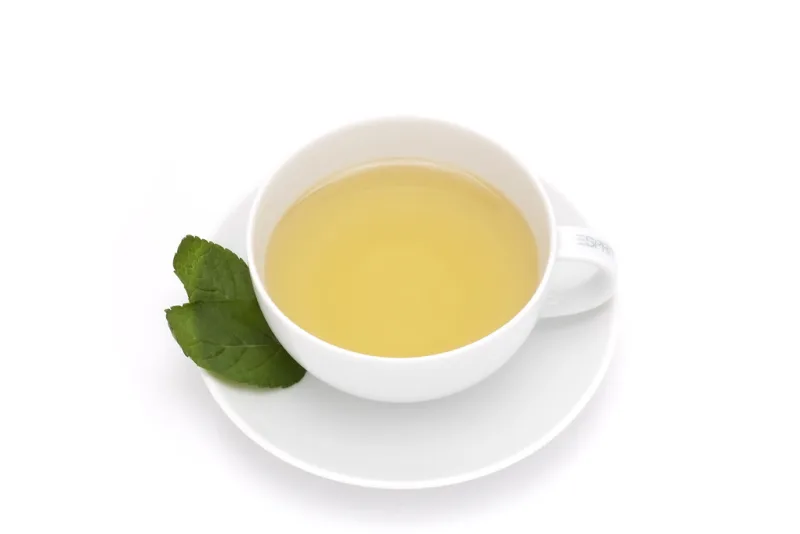
- Strain (if needed) and enjoy. The liquor should be a very pale, light yellow, with a floral, slightly sweet aroma.
A great advantage of good-quality white tea: the buds can be re-steeped 2–3 times. The second and third infusions reveal slightly different, gentler aromas. Increase the steeping time a little with each re-steep.
Cold brew variation
For hot days, white tea lends itself beautifully to cold brewing. Place the buds in a jar with cold water (about 2–3 g per 250 ml), cover, and let it sit in the fridge for 6–8 hours or overnight. Strain and drink plain or with a slice of lemon. Cold brew has a particularly gentle aroma and is almost entirely free of astringency.
When and how much to drink
For most healthy adults, 2–3 cups of white tea a day is a reasonable amount. Because white tea contains caffeine, it is best to drink it in the first part of the day or at most in the early afternoon, so it doesn’t disturb your sleep. People sensitive to caffeine should limit themselves to one cup, drunk in the morning.
Tradition recommends tea as a drink between meals or after light meals. Drunk immediately after a meal rich in iron (for example, with meat or leafy green vegetables), tea—through its tannins—can reduce iron absorption, which is why it is wise to leave a one-hour gap.
Combinations with other herbs and flavors
Although purists prefer white tea plain, to appreciate its finesse, there are some very pleasant combinations:
- With jasmine — the classic “white jasmine,” floral and fragrant.
- With a slice of lemon or fresh ginger — for an extra touch of freshness.
- With dried rose petals — for a delicate aroma and an elegant note.
- With mint or lemon balm — for a refreshing summer version.
- With dried fruit (apricot, peach) — which naturally complement the tea’s fruity notes.
Tip: add flavors sparingly so you don’t cover the subtle taste of white tea. Less is better than too much.
How to choose and store good white tea
Quality white tea can be recognized by its whole buds, covered with that fine, silvery-white down. The leaves should have a natural silvery-green color, not brown or too dark (a sign of unwanted oxidation). The dry aroma should be fresh and slightly sweet, with no smell of mold or “staleness.”
For storage:
- Keep the tea in an airtight, opaque container, away from light.
- Store it away from heat sources, moisture, and strong odors (tea easily absorbs surrounding smells—don’t keep it next to coffee or spices).
- Use it preferably within a few months of opening, for optimal aroma.
Lifestyle: how to fit white tea into your daily routine
White tea fits beautifully into a calm and mindful rhythm of life. A cup in the morning, savored without haste, can become a small ritual to start the day—just like Grandma Veta’s habit. At the office, a cup of white tea instead of a third coffee offers gentler energy, without the jitters.
For those trying to cut back on sugar, unsweetened white tea is a refined alternative to juices and sugary drinks. And in summer, the cold brew version replaces commercial soft drinks, with no sugar and no calories. The important thing is not to turn tea into a “magic solution,” but to see it as a pleasant piece of a larger puzzle: good sleep, exercise, a balanced diet, and peace of mind.
Practical tips and common mistakes
Mistake no. 1: Using boiling water. This is the number one mistake with white tea. Water at 100°C (212°F) burns the fine buds and brings out an unpleasant bitterness. Let the water cool to 70–80°C before pouring it.
Mistake no. 2: Over-steeping. “Longer = healthier” is a myth. Beyond 5–6 minutes, white tea becomes astringent and loses its finesse. Stick to the 3–5 minute window.
Mistake no. 3: Throwing away the buds after a single infusion. Quality white tea can be re-steeped 2–3 times. You’re throwing away aroma if you use it only once.
Mistake no. 4: Drinking it right after a meal when you need iron. The tannins in tea can reduce the absorption of iron from food. Leave about a one-hour gap between your meal and your tea, especially if you tend toward anemia.
Mistake no. 5: Over-sweetening. By adding a lot of honey or sugar, you cancel one of tea’s great advantages—the fact that it is a calorie-free drink. If you must sweeten it, do so in moderation, ideally with a little honey, after the tea has cooled slightly.
Mistake no. 6: Storing it near strong odors. White tea easily absorbs smells. Kept next to coffee, spices, or detergents, it loses its delicate aroma. Use an airtight, opaque container.
Mistake no. 7: Drinking it late in the evening. Even though it has less caffeine than coffee, white tea can keep you awake if you are sensitive. Drink it preferably in the first part of the day.
Conclusion
White tea is, in many ways, the gentlest and most delicate member of the Camellia sinensis family. Minimally processed, it retains a good portion of the leaf’s natural antioxidants and offers calm energy, balanced by L-theanine. Its benefits—from support for the skin and heart to pleasant hydration and possible help within a balanced diet—are appreciated by both tradition and modern research, with the important caveat that we are not talking about a medicine, but about a drink that can nicely round out a healthy lifestyle.
The secret, as with many good things, lies in patience and moderation: water that is not too hot, a short steep, quality buds, and a cup savored without haste. Just as Grandma Veta did every morning, white tea can become a small ritual for “growing old gracefully”—a moment of calm in a hurried world.
Frequently Asked Questions
Does white tea contain caffeine? Yes, white tea contains caffeine (also called theine), generally in smaller amounts than black tea and coffee, but variable depending on the buds and the steeping time. Sensitive people should consume it in moderation and in the first part of the day.
What is the difference between white tea and green tea? Both come from the Camellia sinensis plant, but they differ in processing. White tea is made from young buds that are simply withered and dried, with minimal processing. Green tea is heated quickly to stop oxidation. White tea usually has a more delicate and slightly sweeter aroma.
At what temperature should white tea be brewed? Ideally around 70–80°C (160–175°F), so below boiling point. Boiling water burns its buds and gives an unpleasant bitterness.
How many cups of white tea can I drink per day? For most healthy adults, 2–3 cups a day is reasonable. People sensitive to caffeine should limit themselves to one cup. In case of medical conditions or treatments, seek your doctor’s advice.
Does white tea help with weight loss? The catechins and caffeine in tea are studied for their role in metabolism, but white tea does not cause weight loss on its own. It can be a helpful ally within a balanced diet, especially when it replaces sugary drinks.
Can I re-steep white tea buds? Yes. Quality white tea, especially whole-bud tea, can be re-steeped 2–3 times, increasing the steeping time a little with each round.
Is white tea good for the skin? It contains antioxidants studied for their protective effect against factors that contribute to skin aging. Both drinking it and applying cooled tea externally (as compresses) are used in care traditions, without being a medical treatment.
Can I drink white tea during pregnancy? Because white tea contains caffeine, pregnant or breastfeeding women should limit their total caffeine intake and seek their doctor’s advice before drinking it regularly.